
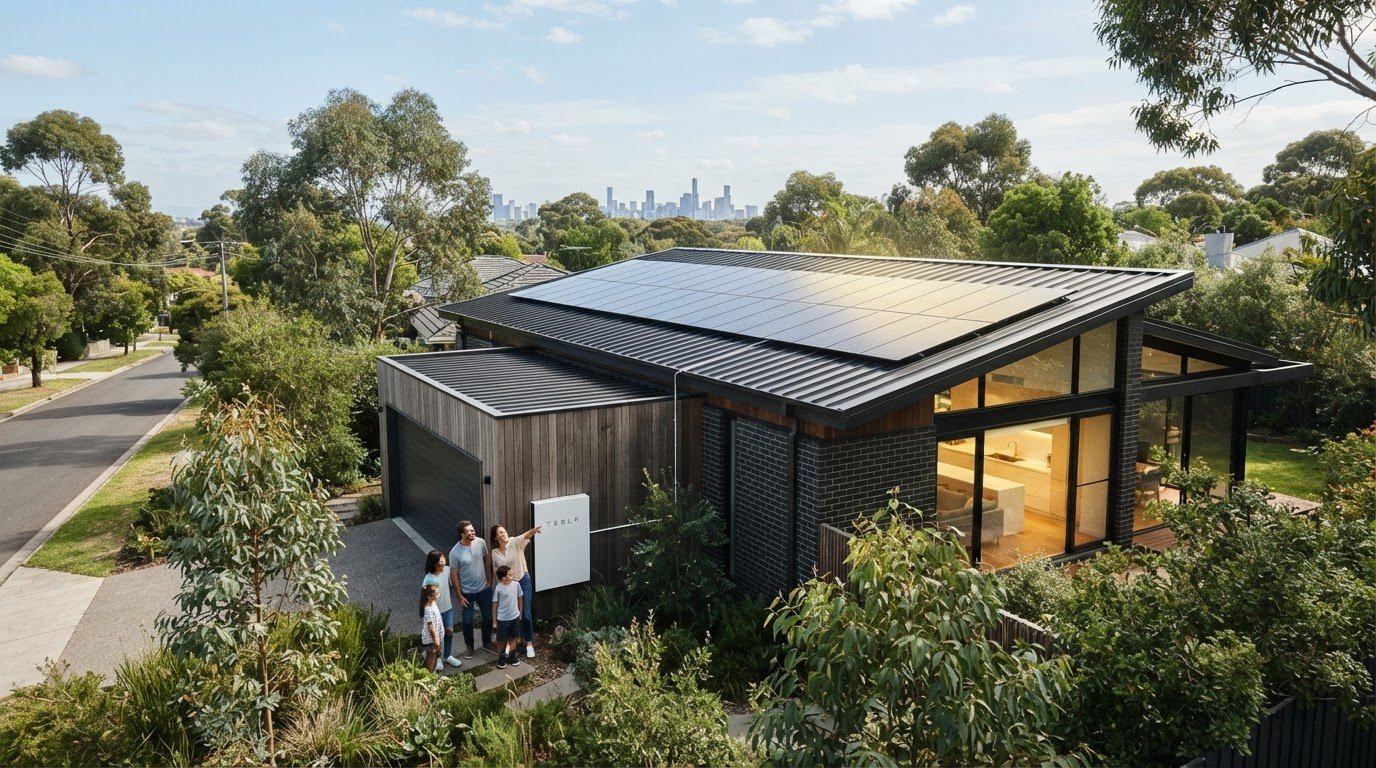
A high-output solar system doesn’t automatically deliver the biggest bill savings. For long term savings with solar panels Melbourne households need a design that matches when they use electricity, as well as their roof’s orientation, shading and seasonal generation. A sunny-day estimate may look compelling, but it won’t show how much electricity your home will use directly or what you’ll still need to buy from the grid.
If advertised savings feel hard to apply to your own bills, look beyond the headline figure. Your results depend on how much solar power you use as it’s generated, how much you export and what you pay for electricity when solar generation is low. A battery may help shift solar energy into the evening, but it isn’t the right fit for every household.
This practical 2026 guide explains the factors that shape solar savings over time, compares solar-only systems with solar and battery options, and shows how Melbourne weather and property conditions affect an estimate. You’ll also learn what to gather before requesting a tailored system design, so you can assess the potential using realistic household assumptions rather than a blanket payback promise.
Key Takeaways
- Use recent electricity bills and interval data, where available, to build an estimate around your household’s actual consumption.
- Compare system options using consistent assumptions for usage, tariffs and projected generation, rather than relying on a single headline savings figure.
- Assess whether a battery suits your evening electricity use and solar export pattern. Stored energy doesn’t automatically mean greater savings.
- For long term savings with solar panels Melbourne households should weigh system design and property conditions alongside estimated generation.
- Gather your bills, usage patterns and roof details before requesting a tailored residential solar design from GridFree Solar.
What drives long-term savings with solar panels in Melbourne?
Long-term solar savings are the bill reductions a household accumulates over time, assessed against the system design and the assumptions behind its performance. Panel output matters, but it isn’t the same as savings. The key questions are how much generated electricity you use at home, how much you export and how much electricity you still need to buy from the grid.
That’s why the long term savings with solar panels Melbourne households can achieve depend on more than a system’s size. Roof orientation, usable space, shading and seasonal generation all affect when and how much electricity is available. Household consumption matters just as much. Who is home during the day, work patterns and appliance use influence whether solar power is used onsite or sent to the grid.
Keep the different financial effects separate. Using solar electricity at home can reduce the amount you purchase from your retailer. Exporting surplus may earn a feed-in credit, but this is treated differently and depends on your retailer’s plan. Incentives may reduce eligible upfront costs, while battery storage can shift some solar use to later in the day. These benefits aren’t interchangeable, and rules and retailer arrangements can change. For a general overview of how solar power works, including grid-connected systems, see Wikipedia.
How does rooftop solar reduce a Melbourne household’s electricity bill?
Solar panels generate electricity during daylight. When your home uses that electricity as it’s produced, you draw less from the grid. For example, running a washing machine during a sunny part of the day may let it use available solar generation. Any surplus can be exported for a retailer-set credit, which may be worth less than the electricity you avoid buying. When estimating savings, compare your current plan’s feed-in tariff with its usage rates.
Which Melbourne property factors influence solar savings?
Roof direction and the amount of usable, unshaded space influence system layout and the timing of generation. Nearby trees, buildings or roof features may cast shade, while Melbourne’s seasonal conditions mean generation varies across the year. No two roofs perform identically. A household using more electricity during daylight may consume more solar directly; a home that’s mostly empty then may export more. Consider your roof and daily routine together, since either one alone gives an incomplete picture.
How to estimate long-term solar savings in Melbourne realistically
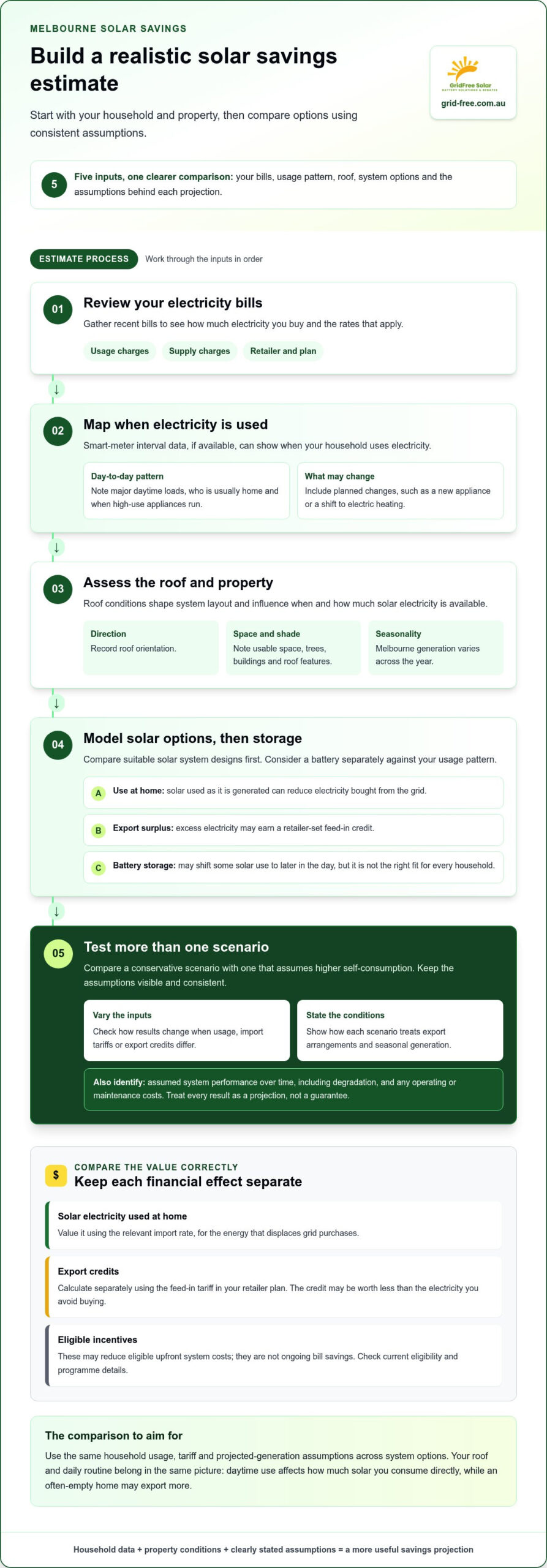
A useful estimate starts with your household, not a generic system-size promise. Work through the inputs in order, then compare scenarios using the same assumptions. This makes it easier to see what could drive long term savings with solar panels Melbourne homes, and which parts of the estimate are uncertain.
- Review your bills. Gather recent electricity bills and note your usage charges, supply charges, retailer and plan. Bills show how much electricity you buy and the rates applied.
- Map your usage. Smart-meter interval data, if available, can show when electricity is used. Note major daytime loads, who is usually home and any planned changes, such as a new appliance or a shift to electric heating.
- Assess the roof. Record its direction, usable space and any shade or property constraints. These details help shape a realistic system design and generation estimate.
- Model options. Compare suitable solar system designs, then consider storage separately against your usage pattern.
- Test assumptions. Run more than one scenario and check how the result changes when usage, tariffs or export credits differ.
Keep the financial components distinct. Estimate the value of solar electricity used at home by applying your relevant import rate to the energy that displaces grid purchases. Then calculate export credits separately using the feed-in tariff in your retailer plan. Eligible incentives can reduce upfront system costs, but they aren’t ongoing bill savings. Check current eligibility and programme details on the Solar Victoria official website.
What information should you gather before comparing solar options?
Alongside bills and plan details, gather interval data, if your meter provides it, and note when high-use appliances typically run. Record household occupancy, likely changes to energy use, roof orientation, shade and usable space. This gives a system assessment a practical picture of both the property and the people using its electricity.
How should a long-term solar savings estimate account for changing conditions?
Compare a conservative scenario with one that assumes higher self-consumption, rather than relying on a single forecast. Make sure each scenario clearly states how it treats import tariffs, export arrangements and seasonal generation. Don’t assume today’s rates will continue unchanged. Identify the assumed system performance over time, including degradation and any operating or maintenance costs. Check performance assumptions against relevant product documentation, and treat every result as a projection, not a guarantee.
For a project-specific estimate, GridFree Solar can use your bill data and property conditions to inform a residential solar design. Explore tailored Melbourne solar system design to compare options on a consistent basis.
Solar-only or solar with a battery: which option may save more?
The right comparison isn’t simply “panels versus panels and a battery”. It’s how each option fits your household’s electricity use, property and priorities. Solar-only has a narrower upfront scope. Solar with storage adds a way to use some daytime generation later, when panels aren’t producing. But shifting energy doesn’t automatically deliver greater savings. The result depends on how much stored electricity you use and what grid electricity it replaces.
To assess long term savings with solar panels Melbourne households can reasonably expect, model both options using the same consumption profile and current tariff assumptions. Compare estimated self-consumption, grid imports and export credits separately. For a deeper look at storage, see the Melbourne energy storage guide.
When might a solar-only system suit a household?
Solar-only may suit a household that can use a meaningful share of its generation during daylight. Flexible routines can help: running appliances or scheduling suitable household tasks while solar is available may increase direct use. If most electricity demand occurs after dark, more generation may be exported instead. Roof conditions and household consumption still matter, so no single system size or savings outcome suits every property.
When is a battery worth including in the comparison?
Include a battery scenario if your household has substantial evening use, values access to stored energy during an outage, or wants to reduce reliance on grid power after sunset. Model usable capacity, system compatibility and the amount of surplus generation available to store. Backup preferences are a separate consideration from bill savings and should be assessed on their own merits.
Tariffs affect the comparison. A battery’s potential bill benefit depends partly on the price of grid electricity it displaces compared with the value of exporting that energy instead. Use current retailer rates and export arrangements, then test how the result changes under different usage assumptions. Don’t treat a rebate as a recurring saving. Check current eligibility and terms before including an incentive in your upfront-cost calculation. GridFree Solar’s Victorian battery rebate guide offers further information.
Keep the decision practical: compare solar-only and solar-plus-battery designs against your actual evening demand, expected self-consumption and priorities. A tailored design can show how each option fits your property and usage, without assuming storage is automatically the better financial choice.
A practical Melbourne checklist for weighing solar savings
Use the same household information to compare each system option. A projection is only useful if its inputs are clear and applied consistently. For long term savings with solar panels Melbourne households should focus on realistic generation and usage assumptions, not just the system’s headline output.
- Check the design: Does it reflect the roof’s orientation, usable space and shading?
- Separate the energy figures: Compare estimated generation with the portion expected to be used onsite and the amount likely to be exported.
- Match your household: Use your actual consumption and usage patterns, not a generic household profile.
- Keep comparison inputs consistent: Apply the same usage, retailer tariff and export-credit assumptions to each option.
- Review incentives separately: Confirm eligibility and current programme settings before including any incentive in the upfront-cost calculation.
Use this checklist alongside local Melbourne roof and property conditions when comparing system designs.
What should a useful solar savings projection make clear?
Look for separate estimates of generation, onsite use and exported energy. The projection should identify the electricity tariff, export-credit rate, any included incentive and system-performance assumptions. It should also explain uncertainty, such as how household use or actual generation may differ from the model. Treat projected bill impacts as estimates, not guaranteed reductions or promised payback dates.
How do Melbourne conditions affect system comparisons?
Local roof orientation and shading influence the design and timing of generation, while seasonal conditions affect output across the year. Compare options against your property’s actual conditions and your own energy use. Victorian incentive eligibility and programme settings can change, so check current information from Solar Victoria and the Clean Energy Regulator before making assumptions about support.
GridFree Solar designs residential systems around household consumption and property conditions. Explore a tailored Melbourne solar design using your bills, roof details and usage profile as the starting point.
Turn your Melbourne solar savings estimate into a tailored system plan
An estimate becomes more useful when it reflects your actual bills, household routines and roof conditions. GridFree Solar designs and installs residential solar systems in Melbourne, using project details to shape a system around how your home uses electricity and what the property can support.
The aim isn’t to promise a particular bill reduction. It’s to turn your comparison into a practical design, with generation, onsite use and exports considered against your household’s needs. That’s a stronger basis for weighing long term savings with solar panels Melbourne homes may achieve than relying on a generic system assumption.
How GridFree Solar can translate your usage into a solar design
Household consumption helps inform system planning: when energy is used, which appliances drive demand and how much activity happens during daylight. Roof orientation, shading and usable space also shape the design. If evening use is high, GridFree Solar can assess an integrated battery option against that pattern and your project goals. Storage is a choice to evaluate, not an automatic addition. Guidance on applicable rebates can also form part of the planning, with eligibility assessed against current official rules.
What to prepare before discussing a Melbourne solar project
Bring the information that makes your estimate specific. A clear starting point includes:
- Recent electricity bills, retailer details and your current plan’s usage and export rates.
- Available smart-meter data, plus a note of major appliances and when they’re usually used.
- Household occupancy and expected changes, such as new appliances or changing work patterns.
- Known roof details, including orientation, shade, usable space and property constraints.
- Your priorities, including whether you want to compare solar-only with battery storage.
These details help connect the projected savings framework to the system design. If incentives are part of your comparison, check current programme requirements before treating a rebate as available or including it in the upfront-cost estimate.
With your bills and property information in hand, request a tailored residential solar assessment from GridFree Solar. A project-specific design can help you compare options using your household’s real usage and roof conditions, without relying on blanket savings or payback promises.
Turn your savings estimate into a confident next step
Long-term solar value comes down to fit. Your roof, household usage, electricity plan and the share of solar power you use at home all shape the result. For long term savings with solar panels Melbourne households should compare realistic system scenarios, not rely on a one-size-fits-all payback promise. A battery can shift solar energy into the evening, but it should be assessed against your usage and goals, not treated as essential.
GridFree Solar provides residential and commercial solar installation, with integrated solar and battery design and guidance on applicable rebates. A tailored assessment can connect your bills, roof conditions and usage profile to system options, while keeping projected savings grounded in clear assumptions.
Ready to turn your comparison into a project-specific plan? Request a tailored solar and battery assessment from GridFree Solar. Bring your recent bills and any available usage data to start comparing options for your Melbourne home.
Frequently Asked Questions
Can solar panels deliver long-term savings in Melbourne?
Yes, solar panels can reduce a Melbourne household’s electricity bills over time, but the result depends on the system and how the home uses its generation. The long term savings with solar panels Melbourne households may achieve are shaped by onsite solar use, retailer tariffs, export credits and property conditions. A tailored estimate can help show how these factors interact. Treat projections as estimates, not guaranteed savings or payback periods.
How are long-term savings with solar panels estimated?
Estimates use household electricity bills and, where available, smart-meter interval data to model when and how much power is used. The assessment then compares projected solar generation with expected onsite use and exported energy. Avoided grid purchases and feed-in credits should be calculated separately, using your current plan’s rates. Incentives can be considered against upfront costs if you’re eligible. The result depends on the assumptions used, so compare scenarios rather than relying on one forecast.
Does a battery increase long-term solar savings?
A battery can store surplus solar energy for use later, including during the evening, but it doesn’t guarantee greater financial savings. The potential benefit depends on your after-dark consumption, how much solar energy is available to store, usable battery capacity and the electricity tariffs in your plan. Compare a solar-only design with a solar-and-battery option using the same household usage assumptions. Also consider backup preferences separately from bill savings.
Are solar savings the same throughout the year in Melbourne?
No. Solar generation varies by season, and the amount produced at a particular property also depends on roof direction and shading. Household electricity use can change too, so the proportion of generation used onsite may shift across the year. A realistic Melbourne estimate should account for seasonal generation rather than treating every month as identical. Review projected generation and consumption across the year, not only a strong summer period.
Do Victorian solar rebates affect long-term savings?
Victorian solar rebates can reduce the upfront cost for eligible households, which may affect the overall financial case for a system. They don’t directly change ongoing electricity use or bill reductions. As of October 2026, the Solar Victoria solar panel rebate is up to A$1,400 for eligible households; eligibility and programme settings apply and can change. Check current Solar Victoria guidance before including a rebate in your estimate.
What information do I need for a Melbourne solar savings estimate?
Gather recent electricity bills, your retailer plan details and available smart-meter interval data. Note when major appliances are used, who is usually home during the day, and any expected changes to household energy use. Roof orientation, shading, usable space and known property constraints help inform the system design. If you’re considering a battery, include your evening usage and storage priorities so the options can be compared against your actual needs.