
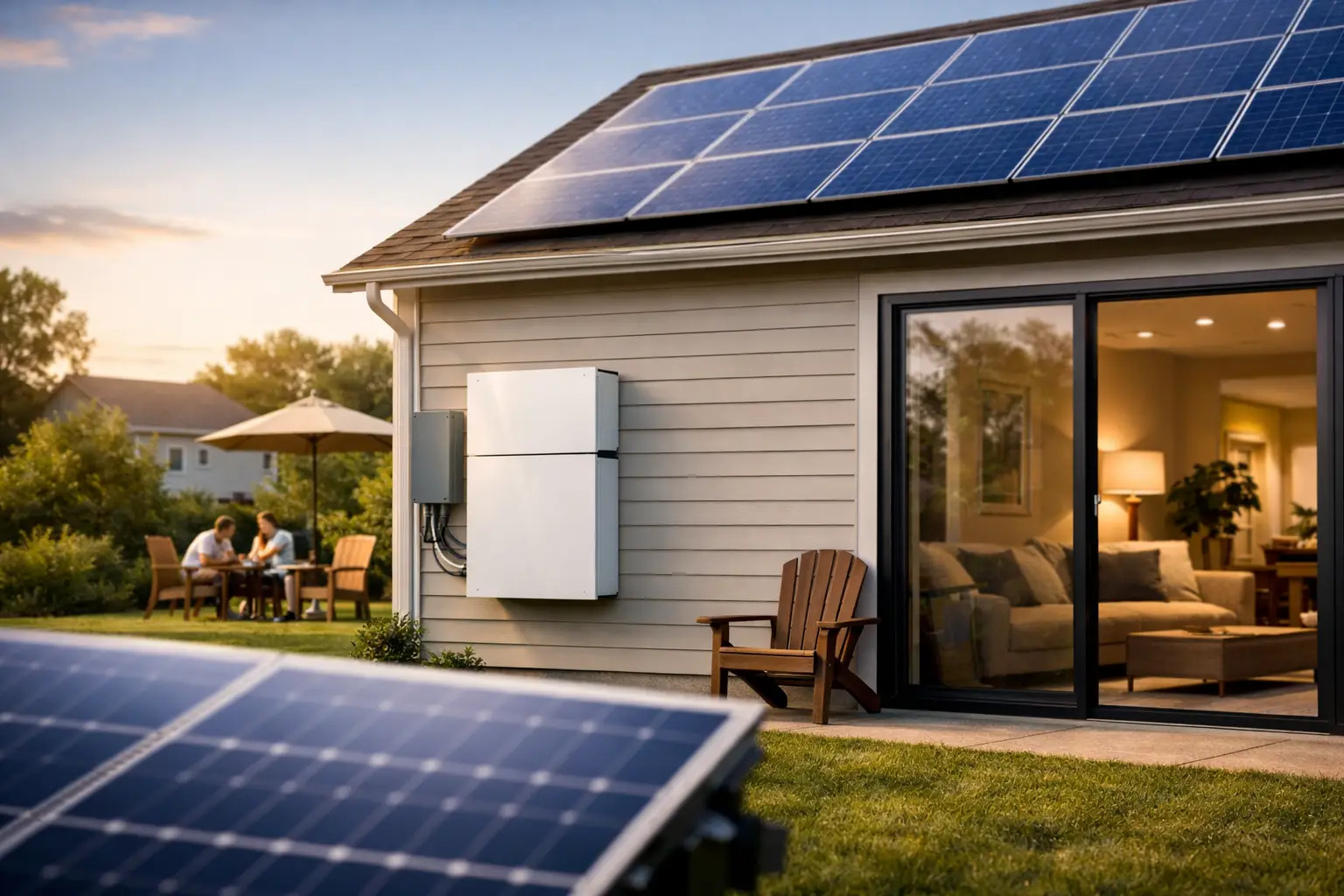
If your solar panels are sending cheap power back to the grid for a modest feed-in tariff while you buy it back at a much higher rate after sunset, a battery changes that equation. That is the real reason so many homeowners ask how solar batteries work – not for the theory alone, but to understand how storage turns daytime generation into usable power when it matters most.
How solar batteries work with a solar system
A solar battery stores excess electricity your panels generate during the day. Instead of exporting all that unused energy to the grid, your system directs part of it into the battery so it can be used later, usually in the evening, overnight, or during a blackout if the system is designed for backup.
In a typical home, solar panels generate direct current, or DC, electricity. Your home uses alternating current, or AC, so that electricity needs to be converted by an inverter. Depending on the battery setup, the battery may store power on the DC side or AC side of the system. Either way, the principle is the same: generate, convert, store, then discharge when household demand is higher than solar production.
The battery does not create electricity. It simply stores energy that would otherwise be exported or wasted. Think of it as shifting your solar usage from the middle of the day to the hours when your household actually needs it most.
What happens during the day
When the sun is up, your panels start producing electricity. That solar energy is used by your home first. If the fridge is running, the air con is on, or someone is boiling the kettle, solar will usually cover those loads before anything else.
Once your home’s immediate demand is met, any extra solar power has somewhere to go. If you have a battery, the system will usually charge it before exporting excess energy to the grid. A smart inverter or energy management system controls this flow automatically.
How quickly the battery charges depends on several factors: your panel output, the size of the battery, the weather, and how much electricity your property is using at the same time. A bright day with low daytime usage will generally fill a battery faster than an overcast day with heavy appliance use.
What happens after sunset
When solar production drops in the late afternoon and evening, the battery starts doing its main job. It discharges stored electricity back into the home so you can power lights, appliances, and other loads without importing as much power from the grid.
This is where the financial benefit becomes clear. Evening electricity is often the most expensive power your household uses. If your battery can cover those peak usage hours, you buy less electricity at retail rates. Over time, that can make a noticeable difference to power bills, especially for homes with good solar generation and consistent evening demand.
Once the battery reaches its minimum reserve level, your property will draw electricity from the grid again unless your panels are producing enough to cover usage. Most systems are programmed not to fully drain the battery, because keeping some reserve helps protect battery life.
The key parts that make it work
To understand how solar batteries work properly, it helps to know the role of each component. The panels generate electricity. The inverter converts and manages power flow. The battery stores energy. The monitoring platform tracks performance and shows when power is being produced, stored, imported, or exported.
The inverter is especially important. It is the traffic controller of the system, deciding whether solar energy should power the home, charge the battery, or flow to the grid. In more advanced systems, it can also respond to tariffs, weather forecasts, backup settings, or virtual power plant signals.
Battery chemistry matters too. Most residential systems now use lithium-ion chemistry, particularly lithium iron phosphate in many modern products. These batteries are popular because they offer strong cycle life, good efficiency, and a compact footprint. Older battery types exist, but for most homes and small businesses, lithium-based systems are now the standard.
Why battery efficiency and capacity matter
Not all stored energy comes back out one-for-one. Batteries lose a small amount of energy during charging and discharging, which is why you may hear about round-trip efficiency. If a battery has a round-trip efficiency of around 90 per cent, about 90 per cent of the energy put in can typically be used later.
Capacity is another key term. This tells you how much electricity a battery can store, usually measured in kilowatt-hours. A 10 kWh battery can theoretically supply 10 kilowatts for one hour, 5 kilowatts for two hours, or smaller household loads over a longer period. In practice, actual performance depends on discharge limits, reserve settings, and what appliances are running.
This is where system design matters. A battery that is too small may fill early and leave excess solar still exporting to the grid. A battery that is too large may cost more than the savings justify if your usage pattern does not support it. The right size depends on your daytime generation, evening demand, tariff structure, and backup goals.
How solar batteries work during a blackout
This is one of the most misunderstood parts of battery storage. Many people assume that if they have solar panels and a battery, the power will stay on automatically in a blackout. Sometimes that is true, but not always.
For blackout protection, the system must be designed with backup capability. During an outage, the battery system needs to safely isolate your property from the grid. This protects network workers and allows the battery and solar system to continue supplying selected circuits or, in some cases, the whole property.
Without that backup configuration, a battery may still help with bill savings every day but provide no usable power during an outage. That is why it is worth being clear about your priorities before installation. If resilience matters as much as savings, the backup design should be part of the system plan from the start.
Smart controls make batteries more valuable
Modern battery systems do more than charge and discharge on a fixed schedule. They can respond to your usage habits, tariff periods, and even weather conditions. Some systems learn household consumption patterns and adjust behaviour to maximise self-consumption or reduce peak imports.
This matters because the value of a battery is not just in storing energy. It is in using that stored energy at the most useful time. In some homes, that means covering the evening peak. In others, it may mean preserving reserve for overnight loads or backup protection.
Some battery owners can also participate in a virtual power plant, where stored energy is coordinated across many properties to support the grid. That can create additional value, but it depends on the product, location, retailer arrangements, and whether the incentives outweigh any trade-offs in battery availability.
Are solar batteries worth it for every property?
Not automatically. The answer depends on your energy habits and what outcome matters most to you.
If your household is out all day, generates plenty of solar, and uses most electricity after sunset, a battery can make a lot of sense. It captures daytime excess and shifts it into the expensive evening period. If you already use most of your solar directly during the day, the savings from adding a battery may be smaller.
For small businesses, the picture can vary even more. Some commercial sites use most of their electricity during daylight hours, which means solar panels alone may already offset a large share of grid consumption. Others have refrigeration, security systems, or evening operations that make storage more attractive.
Rebates, feed-in tariffs, battery pricing, and electricity rates all influence payback. So does system quality. A well-matched battery with proper monitoring, compliant installation, and clear warranty support will generally outperform a cheaper option that is poorly sized or poorly integrated.
What homeowners should look for
The best battery system is not just the one with the biggest capacity. You want a system that suits your property, usage profile, and future plans. That includes checking usable capacity, warranty terms, backup capability, inverter compatibility, monitoring features, and how the battery performs under Australian conditions.
It is also worth asking how the installation will be handled, what certifications apply, and whether the provider helps with rebate paperwork and compliance requirements. Those details affect the real-world experience just as much as the battery brand itself.
For many households, the biggest benefit is not only lower bills. It is predictability. You know more of your power is being generated and used on site, and you are less exposed to rising electricity prices and changing feed-in tariffs. That sense of control is why battery storage has become a serious upgrade rather than a nice-to-have extra.
A well-designed battery system should make your energy simpler, not more complicated. If you understand how power moves through your home, you are in a much better position to choose a setup that delivers savings, backup confidence, and long-term value.