
Table of Contents
- How Solar Batteries Provide Backup Power During Outages
- What Happens the Moment the Grid Goes Down
- How Long Does a Solar Battery Last During a Power Outage?
- What Can a Solar Battery Power During an Outage?
- Solar Battery Backup vs Generator: Which Suits Your Home?
- Solar Battery Backup Installation: What the Process Involves
- Why a Solar Battery Backup Sometimes Fails When You Need It Most
- Frequently Asked Questions
Last Updated: October 13, 2026
How Solar Batteries Provide Backup Power During Outages
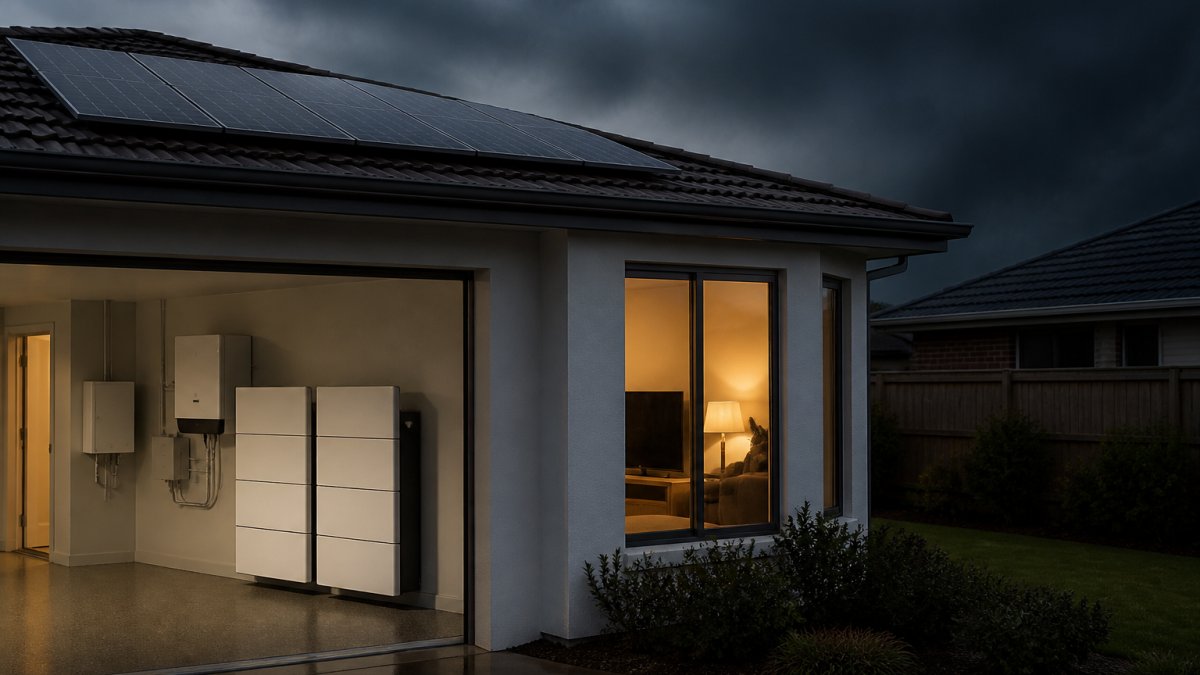
A home battery works like a tank of stored electricity sitting in your garage. When the grid fails, that tank keeps the lights on. Understanding how solar batteries provide backup power during outages starts with one simple fact: the battery does not need the grid to work. We design and install battery systems for homes, and the question we hear most is whether the battery will actually carry the house when the power drops. The short answer is yes, provided the system is wired for backup.
Most blackouts last minutes. Some last days. The difference between a minor inconvenience and a spoiled fridge full of food comes down to whether your battery was set up to run the house on its own.
Here is what happens, how long it lasts, and what to expect from installation.
What Happens the Moment the Grid Goes Down
The battery takes over in under a second. When the grid voltage disappears, an automatic switch inside your system disconnects your home from the street supply. This is called islanding, and it protects linespeople working on the network.
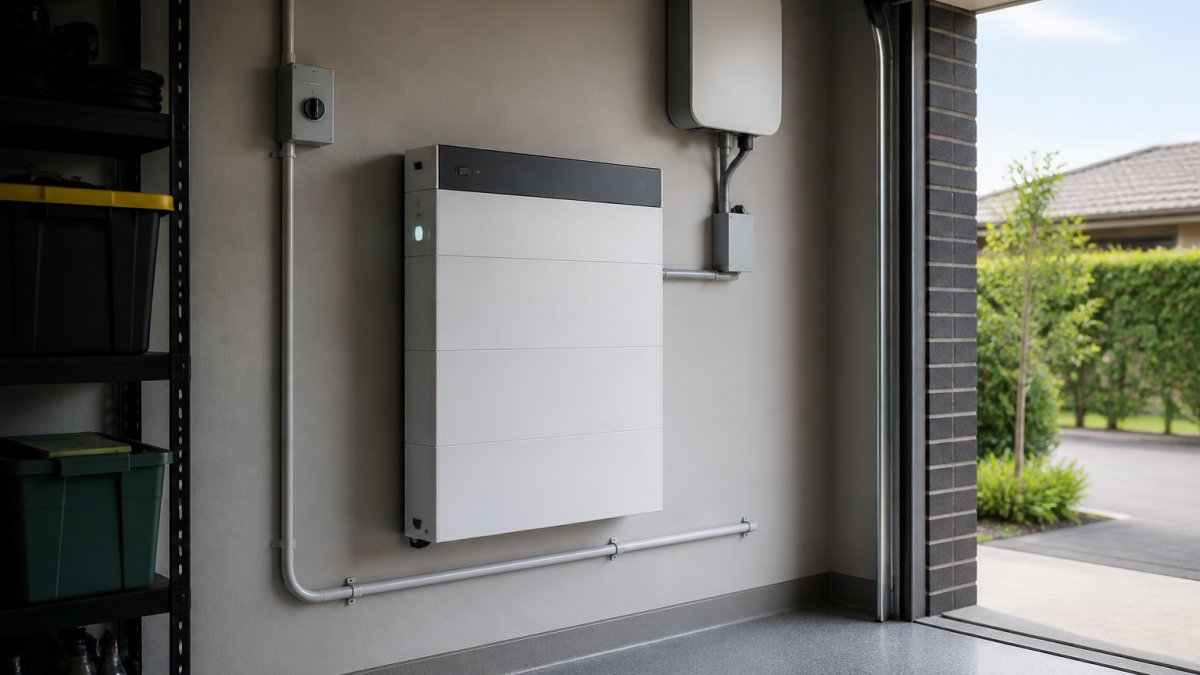
Your inverter then switches to backup mode. Power flows from the battery to the circuits you chose during installation. If the sun is shining, your panels keep charging the battery at the same time. According to the Clean Energy Council guide to battery storage, a properly installed system will isolate from the grid automatically and continue supplying the home.
The changeover is fast enough that most clocks and routers stay on. You may not notice anything until a neighbour mentions the outage.
How Long Does a Solar Battery Last During a Power Outage?
A solar battery lasts between 8 and 24 hours during a typical outage, depending on its capacity and how much power your home draws. A smaller battery running only essentials will stretch further than a large battery running the whole house.
Three things decide the number:
- Battery size. Measured in kilowatt-hours (kWh), the total energy it can store.
- What you run. Fridges and lights use little. Air conditioning and ovens use a lot.
- Sunlight. Panels recharge the battery during the day, extending backup well past its stored capacity.
A common mistake is buying a battery based on its headline capacity alone. Usable capacity is often lower than the advertised figure, and some systems hold back a reserve for blackout protection. Check the usable number before you commit.
Ask your installer what the battery’s continuous output rating is, not just its capacity. A large battery with a low output rating cannot run heavy appliances at once, no matter how much energy it stores.
What Can a Solar Battery Power During an Outage?
A solar battery can power your fridge, lights, internet, phone chargers, and a few small appliances without trouble. Whether it can run heating, cooling, or a hot water system depends on the battery’s output rating and your backup wiring.
During a blackout, most homes run in one of two modes:
| Backup Mode | What It Powers | Typical Duration |
|---|---|---|
| Essentials only | Fridge, lights, wifi, chargers | 12-24 hours |
| Whole home | Everything, including heavy appliances | 4-10 hours |
Whole-home backup needs a bigger battery and a higher output rating. It also costs more to install. For many households, essentials-only backup covers the outages that actually happen. Fridges stay cold, phones stay charged, and the family stays comfortable. Strategic planning ensures these systems remain effective even when a prolonged power outage stretches beyond the capacity of a standard residential setup.
If you want to run air conditioning through a summer blackout, tell your installer up front. It changes the system design.
Solar Battery Backup vs Generator: Which Suits Your Home?
A solar battery suits most homes that already have panels and want quiet, automatic backup with no fuel. A generator suits homes that need very long backup or heavy loads that a battery cannot carry.
The trade-offs are clear:
- Noise. Batteries run silently. Generators are loud, which matters at night.
- Fuel. Generators need petrol or diesel, stored safely and topped up. Batteries recharge from the sun.
- Maintenance. Generators need servicing and testing. Batteries need almost none.
- Startup. Batteries switch over automatically. Generators often need a manual start.
- Upfront cost. Generators usually cost less to buy, but they only help in an outage.
For day-to-day value, the battery wins. It lowers your power bills all year, not just during blackouts. The Australian Energy Regulator’s energy market information notes that grid reliability varies by region, which is why many households now treat backup as a core reason to buy storage.
Our view: if you already have solar, a battery is the better long-term choice. If you live somewhere with week-long outages and no panels, a generator may still make sense.
Solar Battery Backup Installation: What the Process Involves
Solar battery backup installation takes one to two days on site and involves a site assessment, switchboard work, mounting, wiring, and commissioning. Most of the effort happens before anyone drills a hole.
Here is the sequence we follow:
- Site assessment. We check your switchboard, roof, inverter, and existing solar setup.
- Backup circuit selection. You choose which circuits run during an outage.
- Compliance check. The design must meet AS/NZS 5139:2019 and AS/NZS 3000 standards.
- Mounting and wiring. The battery is fixed to a wall or floor, then connected.
- Commissioning. We test the changeover, set the backup modes, and hand over the app.
- Certificate of Electrical Safety. Issued once the work passes inspection.
A battery installed without proper switchboard protection can create a serious fire risk. This is why we only use Clean Energy Council approved batteries and accredited installers, and why every job ends with a Certificate of Electrical Safety.
Why a Solar Battery Backup Sometimes Fails When You Need It Most
Most backup failures trace back to design, not equipment. The battery is fine. The system around it was set up wrong.
The usual culprits:
- No backup circuit wired. The battery works, but nothing is connected to it.
- Battery drained before the outage. Some systems let you run the battery flat each evening.
- Output limit too low. The battery cannot start a large appliance.
- Firmware or app settings. Backup mode was never enabled.
- Undersized system. The battery was sized for bills, not for outages.
A common mistake is assuming every battery installation includes backup. It does not. Backup is a design choice, and you need to ask for it.
This is where GridFree Solar earns its keep. We walk you through what your system can and cannot run, set the reserve level so you always have power in the tank, and monitor the system after installation to confirm backup is working. With full rebate guidance included, you get a system built for the night the lights go out, not just for the sunny days.
A blackout is not the time to discover your battery was never wired for backup. GridFree Solar designs, installs, and monitors battery systems that switch over automatically when the grid fails, using Clean Energy Council approved batteries and accredited installers who work to AS/NZS 5139:2019 and AS/NZS 3000 standards. We handle your rebate paperwork, set your backup reserve, and stay with you after installation to keep the system performing. Connect with GridFree Solar to find out what your home can run when the power drops.
Frequently Asked Questions
Do solar batteries automatically switch on during an outage?
Yes, a properly installed solar battery backup switches over automatically, usually within seconds. The inverter detects the grid failure, disconnects from the network to protect linespeople, and starts drawing from the battery. You do not need to flip a switch or start anything manually. Some systems take a few seconds to restart, so sensitive electronics may briefly power down. If your battery does not switch over, the most common causes are a grid-following inverter that lacks backup capability, a battery that is already depleted, or a system that was never configured for backup mode in the first place.
Can solar panels recharge a battery during a power outage?
Yes, provided your system is designed for backup operation. Once the inverter has isolated your home from the grid, solar panels continue generating and can recharge the battery while also running your essential loads. This is what separates a solar battery backup from a generator: during a long daytime outage, the panels keep topping up the battery. Output depends on weather, panel capacity and how much load you are drawing. On a clear day, a well-sized array can keep a modest backup circuit running indefinitely.
How long does a solar battery last during a power outage?
Runtime depends on the battery’s usable capacity and what you are powering. A battery with 10 kWh of usable storage running a fridge, lights, internet and phone charging (roughly 1 to 2 kWh per day) can last several days. Add a heater, oven or air conditioner and the same battery may only last a few hours. Most homeowners reserve 20 to 40 per cent of capacity for backup, so check your inverter’s settings. If the sun comes out, solar recharging extends runtime well beyond the initial charge.
Can a home with solar and a battery operate independently from the grid?
For a period, yes. During an outage, a solar battery backup can run your essential circuits independently, and solar recharging can keep it going through daylight hours. Full independence over weeks is a different question: it depends on battery capacity, solar generation, weather and how much you are willing to cut back. Most homes are set up for partial backup, powering selected circuits rather than the whole house. If you want longer autonomy, ask your installer about a larger battery or a whole-home backup configuration.