
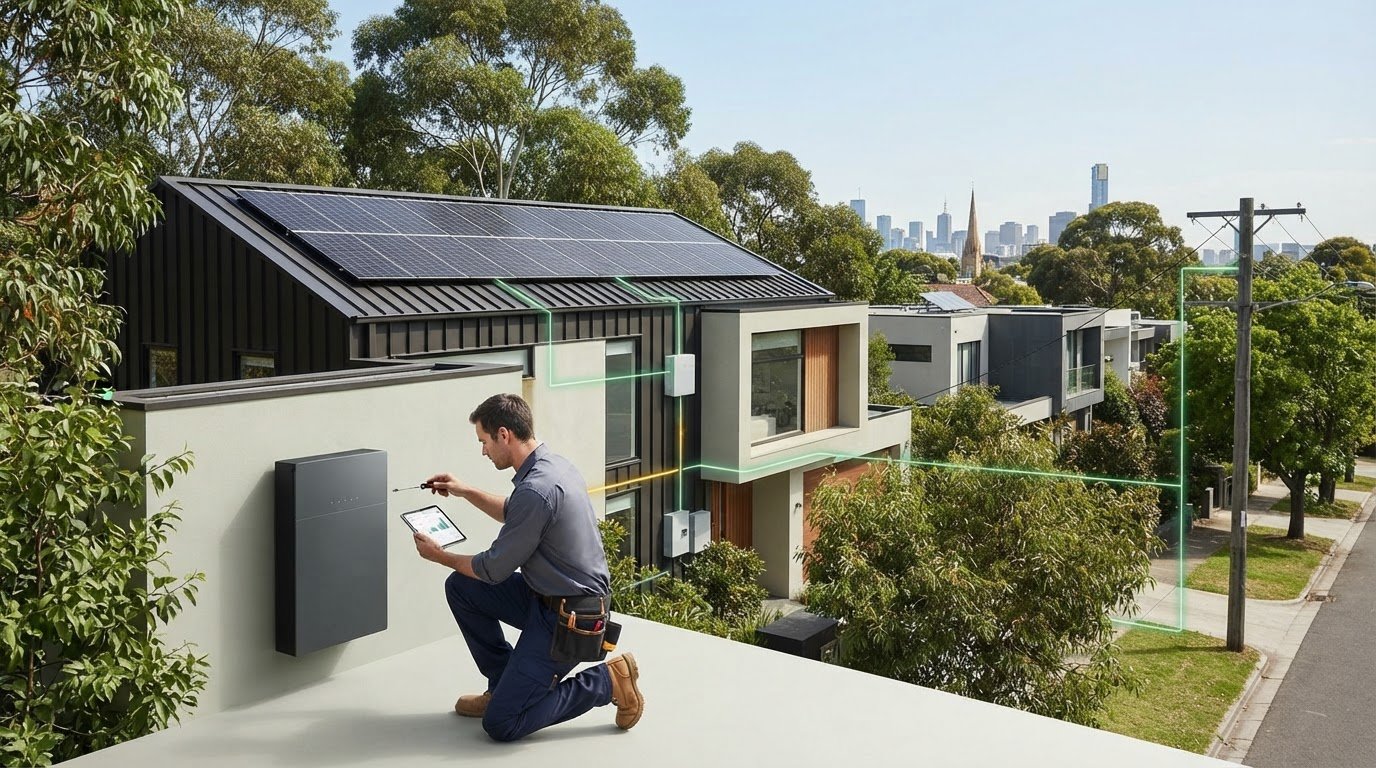
The largest battery isn’t automatically the best choice. The best grid-connect battery systems in Melbourne are sized to suit a property’s solar generation, electricity use and backup priorities. In an on-grid system, solar power serves the property first, surplus energy charges the battery, and any extra may be exported to the grid. If stored energy runs low, the property can draw electricity from the network.
Choosing a battery means balancing storage capacity, blackout backup and the risk of paying for capacity you rarely use. Start with how and when your home or business consumes electricity, then consider the limits of its solar system and grid connection.
This guide explains how grid-connect and off-grid systems differ, what to compare when choosing a battery, and how backup needs affect system design. It also covers considerations for homes and small commercial properties in Melbourne to help you make an informed decision.
Key Takeaways
- Compare your electricity use with solar exports, especially in winter, to judge what battery capacity your property can make practical use of.
- Look beyond storage size: usable capacity, power output, inverter compatibility and relevant approval requirements all shape a suitable system.
- Plan blackout backup around the appliances you need to keep running, as grid-connected systems may require specific backup configuration.
- For homes and small businesses, account for peak loads and grid-connection limits when designing a battery system; an upgrade may help existing solar work with changing energy needs.
Off-grid or grid-connect batteries?
A grid-connect system stays connected to the electricity network; an off-grid system operates independently. For Melbourne properties with solar panels, battery size depends on energy use and how much solar generation remains after daytime demand.
Battery sizing from household use and solar exports
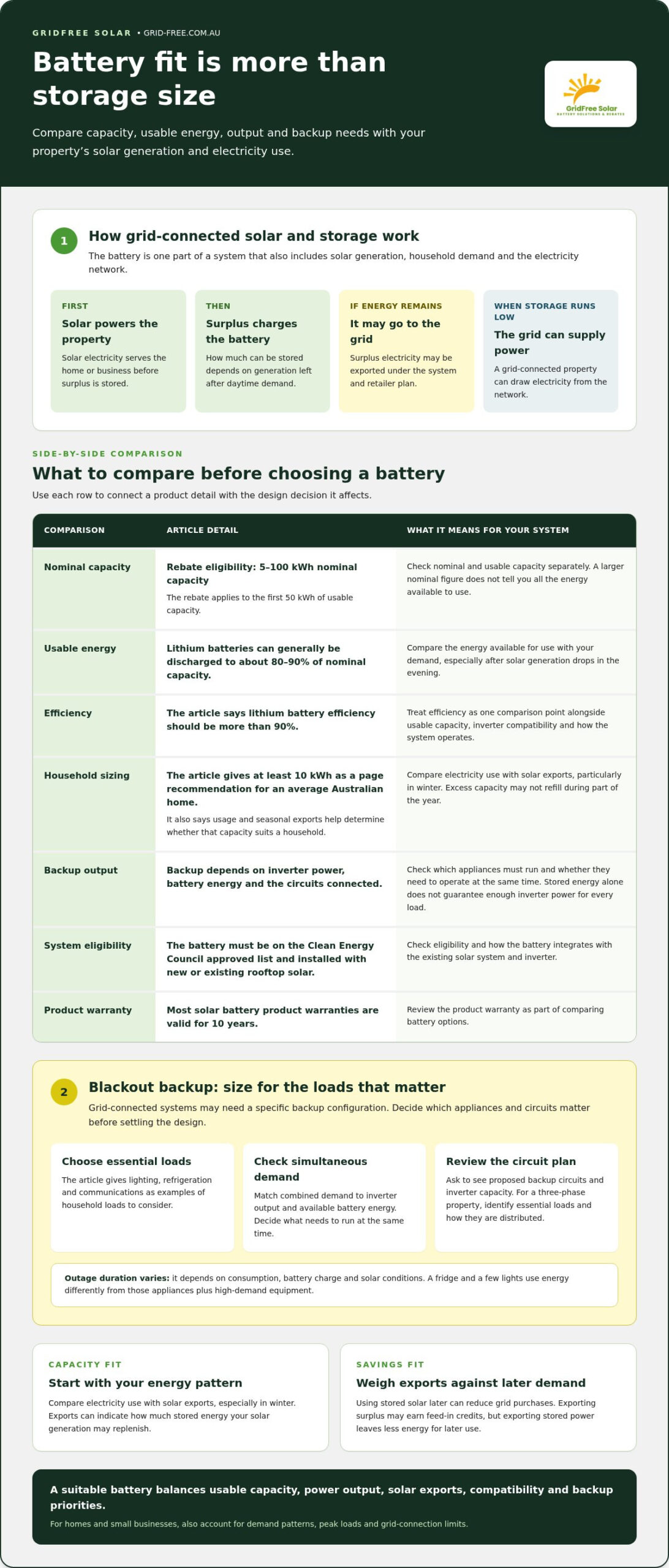
Start with your electricity use, then compare it with solar exports, especially during winter. Exported electricity can indicate how much storage your solar generation may recharge; excess battery capacity may not refill during part of the year. A page recommendation for an average Australian home is at least 10 kWh, but your usage and seasonal exports help determine whether that capacity suits your household.
Grid-connected hybrid system options
A grid-connected hybrid system combines solar panels, battery storage and a grid connection. Solar electricity powers the property first, surplus charges the battery, and any remaining energy may be exported. If stored energy runs low, the system can draw electricity from the grid. Check how the battery integrates with your existing solar setup and whether you want to retain a grid connection or operate independently.
Installer training is separate from system design. NECA’s grid-connected battery storage course provides six days of training towards applying for Solar Accreditation Australia accreditation. Enrolment requires an A Grade electrician licence, and applicants must hold a current, unrestricted electrical licence in Australia. Graduates may apply for Grid-Connected Battery Storage Design and Install Accreditation through Solar Accreditation Australia.
Residential systems are sized around household demand and available solar exports. Commercial storage design must also account for business loads and solar generation patterns. These differences shape the capacity and integration choices for each property.
When choosing a Melbourne battery installer, check their Solar Accreditation Australia battery-storage accreditation and review the battery product warranty. Most solar battery product warranties are valid for 10 years.
Which Solar Battery Is Best?
The right choice balances usable capacity, power, compatibility and energy-use patterns. Compare a battery with your property’s demand, not its storage capacity alone.
Battery system sizing and compliance
Separate nominal capacity from usable capacity before comparing products. Federal battery rebate eligibility requires nominal capacity of 5-100 kWh, with the rebate applying to the first 50kWh of usable capacity. Installation must accompany new or existing rooftop solar, and the battery must appear on the Clean Energy Council approved list. These checks connect capacity decisions with system design and rebate eligibility. A battery sized for evening cooking and heating needs differs from one intended to cover broader household demand.
Energy integration and battery operation
Lithium batteries can generally be discharged to about 80-90% of nominal capacity, and their efficiency should be more than 90%. This distinction helps compare stored energy with the electricity available for use. Check inverter compatibility, operating priorities and how solar generation matches daytime demand. A hybrid system coordinates solar, battery storage and grid electricity across different periods, supporting a combined energy setup rather than treating the battery as a standalone product.
Battery savings and energy trading
Estimate potential savings using your actual electricity use. Compare daytime solar exports with the energy your property needs after generation drops. Using stored solar later can reduce grid purchases, while surplus exports may earn feed-in credits under your retailer’s plan. Battery energy trading also depends on tariff structures and system controls. Exporting stored power leaves less energy for later, so weigh the export value against evening demand.
For an existing solar system, check how storage can integrate with its inverter and generation profile. A solar and battery installation can be designed around those requirements.
Grid-connected battery systems and blackout backup
A grid-connected battery can reduce reliance on the network, but blackout backup depends on the system design. Some on-grid systems can supply selected appliances during an outage. Storage capacity matters, as do inverter power and the circuits connected for backup. Set your priorities before installation.
List essential household loads, such as lighting, refrigeration and communications. Decide which circuits need backup, then match their combined demand to the inverter’s output and available battery energy. A battery may store enough energy for several appliances but lack the power to run them all at once. Prioritise what needs to operate simultaneously during a blackout.
During a network outage, a backup-enabled system can use stored battery energy and available solar generation. How long it supplies selected loads depends on consumption, battery charge and solar conditions. A fridge and a few lights, for example, use energy differently from those appliances plus high-demand equipment. Set backup priorities around your household’s needs rather than expecting every circuit to operate as usual.
Ask to see the proposed backup circuits and inverter capacity in the system design. For a three-phase property, identify essential loads and how they’re distributed. In some cases, a grid-support system can allow a single-phase supply to support three-phase loads. Treat this as a design consideration, not a standard feature of every battery system.
For an existing system, note the inverter rating and solar generation profile. An existing solar system needs an inverter capacity of at least 5 kW to meet the Victorian battery loan condition, unless a system is installed alongside the battery. Separately, compare expected grid imports, exported electricity credits and backup priorities against your electricity bill. Assessing those factors together helps distinguish daily savings from outage resilience, two different jobs for battery storage.
Battery system design for domestic and small commercial buildings
Good design starts with a property’s actual loads, not a battery catalogue. Track electricity use throughout the day and note when demand peaks. A home may use more power after sunset, while a small business may draw heavily during operating hours. Match solar generation, battery storage and grid supply to that pattern before installation.
For a home solar system, map the existing panels, inverter capacity and household use. Separate everyday demand from appliances needed during a blackout, then estimate the stored energy each priority requires. For a small commercial building, include operating equipment and its hours of use. A workshop with daytime machinery, for example, has a different consumption profile from an office that uses most of its power for lighting and computers.
Grid connection limits matter too. A grid-support solar and battery system can help supply loads that exceed the capacity of a property’s existing connection. The connection, inverter output and combined building loads therefore play a central role in design. Identify which loads run together at peak times, then assess how solar panels and stored energy can support them.
Use a practical design sequence: document consumption, map solar generation, identify essential loads, then match storage and inverter operation to those needs. For commercial properties, include the normal operating schedule and any periods of high demand. For homes, distinguish routine evening use from blackout priorities. These steps reveal whether the system should focus on self-consumption, backup, or supporting heavier loads.
Build the system around how the property operates, rather than choosing capacity in isolation. Plan a solar and battery system around your home or small business’s energy use and connection needs.
GridFree Solar: Battery Upgrade & Replacement
GridFree Solar provides Battery Upgrade & Replacement for property owners adding storage to an existing solar system or replacing a battery. This can suit changing energy needs or plans to use solar generation for evening consumption and backup.
For a new project, GridFree Solar also provides Residential Solar Panel Installation, Commercial Solar Solutions, and solar and battery installation. The right option depends on whether you’re upgrading an existing system or planning one for a home or business. Consider electricity use, solar generation and priority loads together when planning the project.
To discuss a battery upgrade, replacement or new solar and battery installation, contact GridFree Solar or visit grid-free.com.au.
Turn your battery plan into a practical next step
The best grid-connect battery systems in Melbourne are chosen to match a property’s energy use, not a headline capacity. Before moving ahead, gather recent electricity bills, solar generation information and a clear list of the loads you want to support. For a business, include operating hours and equipment that runs simultaneously. These details provide a useful starting point for system design.
GridFree Solar provides Battery Upgrade & Replacement, Residential Solar Panel Installation and Commercial Solar Solutions. Whether you’re adapting an existing system or planning solar for a property, bring your priorities to the discussion: daily energy use, future needs and backup expectations. This helps focus the conversation on a system that suits its purpose.
Start a conversation with GridFree Solar about your battery and solar system. A clear plan is a confident step towards making your property’s energy work harder.
Frequently Asked Questions
What Affects The Cost Of A Home Battery?
A home battery’s installed cost depends on its capacity, inverter compatibility, whether solar is already installed and the electrical work needed for integration. Backup circuits or switchboard changes can also shape the system design. The price depends on these project factors and is provided after a quote request. Compare the complete installation scope, not just battery capacity, when assessing options.
Am I Eligible For Battery Rebates?
For the federal battery rebate, the battery must have a nominal capacity of 5-100 kWh and be installed alongside new or existing rooftop solar. It must also appear on the Clean Energy Council approved list. The rebate applies to the first 50kWh of usable capacity, and a household can claim it once. Check how your proposed system meets these conditions before planning installation.
Are home batteries a worthwhile investment?
A home battery can be a worthwhile investment when the value of using stored solar, reducing grid purchases and meeting backup needs justifies its upfront cost. Compare your electricity bills with your solar exports and retailer tariff. For example, a household that uses more electricity after sunset can assess how much daytime solar could be stored for later use instead of exported for a credit.
Does Where I Live Matter For A Home Battery?
Yes. In Melbourne, roof exposure to sunlight and the property’s grid connection affect how a battery integrates with solar generation and household demand. A shaded roof, limited panel space or a three-phase connection can change the design. Your retailer’s tariff also affects the value of storing energy instead of exporting it. Consider these local property and energy factors together.
State/Territory Rebates & Loans?
Victoria’s Solar Homes Program is no longer accepting applications for interest-free loans to install solar batteries. The national Cheaper Home Batteries Program remains a separate federal incentive, with eligibility tied to the battery and solar system requirements. Its rebate is set to decrease every six months and end in 2030. For Melbourne households, distinguish current federal support from the closed Victorian battery loan.
What are the best grid-connected home battery systems available in Melbourne, Australia?
The best grid-connect battery systems in Melbourne match usable storage and inverter output to your home’s consumption and priorities. Compare how each option integrates with existing solar equipment, supports essential circuits and works with the grid connection. A battery suited to evening use won’t automatically suit a household prioritising blackout backup. Rank your needs first, then compare systems against the same criteria.