
Table of Contents
- What Is CEC Accreditation and Why It Matters for Solar Installation
- How to Check Solar Installer Accreditation: Verification Steps
- Solar Panel Installation Safety Standards and Compliance
- Solar Victoria Rebate Eligibility: The Accreditation Requirement
- Key Benefits of Choosing a CEC Accredited Installer
- Risks of Non-Accredited Solar Installers: What You Need to Know
- Post-Installation Support and Long-Term Monitoring
- Conclusion
- Frequently Asked Questions
Last Updated: August 19, 2026
What Is CEC Accreditation and Why It Matters for Solar Installation
A CEC accredited solar installer is a professional who has completed formal training and assessment through the Clean Energy Council and meets strict industry standards for solar panel and battery storage installation. This accreditation proves the installer understands electrical safety, system design, and compliance requirements that protect both your home and your investment.
Non-accredited installers may cut corners on safety, use substandard components, or fail to comply with Australian electrical standards. When you choose a CEC accredited installer, you’re choosing someone who has demonstrated competency in the technical and safety aspects of solar installation. This becomes critical when considering government rebates, warranty coverage, and long-term system performance.
The Clean Energy Council sets the benchmark for renewable energy professionals across Australia. Accreditation requires ongoing professional development and adherence to a code of conduct. Installers must understand AS/NZS 3000 (electrical safety standards) and AS/NZS 5139:2019 (battery storage systems), among other regulatory requirements. Without this accreditation, your system may not qualify for government incentives or provide the safety assurance you need.
GridFree Solar operates as a CEC accredited installer, meaning every installation meets these rigorous standards from day one.
The difference between an accredited and non-accredited installer often appears only after installation, when warranty claims, system failures, or rebate disputes arise. Verify accreditation before signing any contract.
How to Check Solar Installer Accreditation: Verification Steps
Verifying a solar installer’s credentials takes just a few minutes and could save you thousands in costly mistakes or ineligible rebates.
Step 1: Visit the Clean Energy Council Website
Go to the CEC’s installer directory (searchable by postcode and installer name). If an installer doesn’t appear here, they’re not accredited. Write down the accreditation number and check the date, recent accreditations are good; expired or lapsed ones are red flags.
Step 2: Confirm the Scope of Accreditation
Not all accredited installers are qualified for all work. Some are accredited for solar photovoltaic (PV) systems only, while others hold accreditation for battery storage, grid connection, or all three. Match the installer’s scope to your project needs.
Step 3: Check for Electrical Safety Compliance
Ask the installer to provide proof of compliance with AS/NZS 3000 and AS/NZS 5139:2019. Request a copy of their Certificate of Electrical Safety (CES) or evidence of compliance testing. If they hesitate or claim it’s “not necessary,” walk away.
Step 4: Verify Insurance and Licencing
A CEC accredited installer should carry professional indemnity insurance and public liability insurance. Ask for proof of current coverage. In Victoria, electrical work requires a licensed electrician on site. Confirm the installer either holds an electrical licence or works with one.
Step 5: Ask for References and Recent Installations
Request contact details for at least three recent installations (within the last 12 months) in your area. Call these customers and ask about their experience, system performance, and how the installer handled any post-installation issues.
An accredited installer’s credentials are verifiable, not just claimed. If you can’t confirm accreditation within five minutes, the installer isn’t legitimate.
Solar Panel Installation Safety Standards and Compliance
Professional solar installation meets strict safety standards that prevent electrical hazards, fire risks, and system failures.
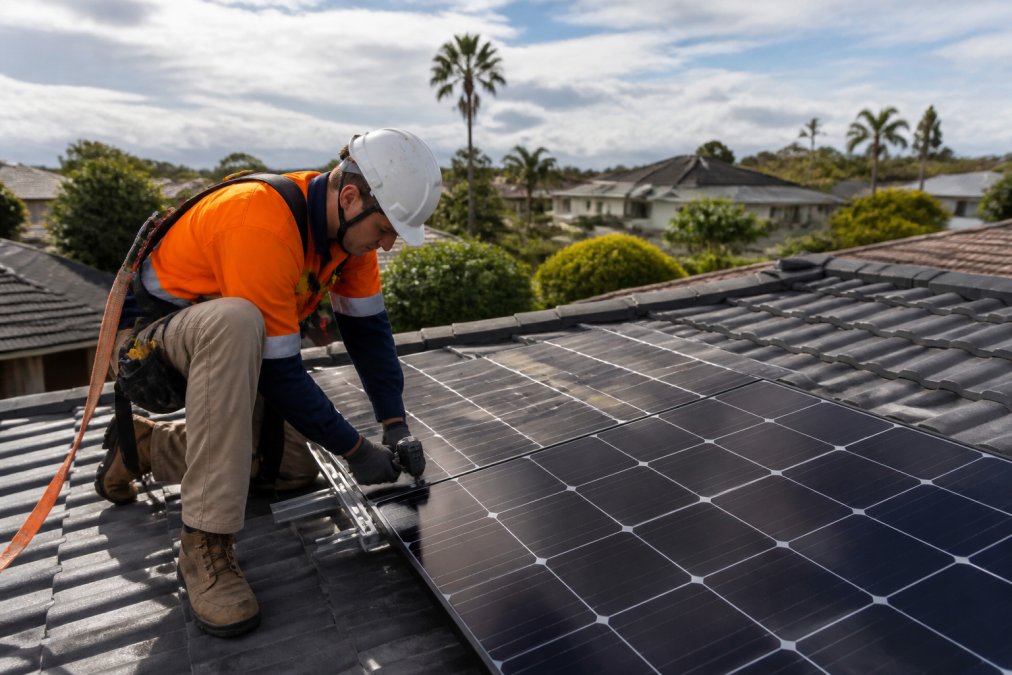
The two critical standards governing solar installation in Australia are AS/NZS 3000 (electrical safety standard) and AS/NZS 5139:2019 (battery energy storage systems). These standards cover cable sizing, grounding, overcurrent protection, and system earthing. A CEC accredited installer applies these standards to every installation.
Non-accredited installers often overlook critical safety details. Undersized cables overheat. Improper grounding creates shock hazards. Missing surge protection damages equipment. These are fire hazards and electrocution risks. Accredited installers perform safety inspections before, during, and after installation, testing earthing resistance, verifying breaker operation, and confirming all components meet safety ratings.
Battery storage adds another layer of safety complexity. Lithium batteries require proper ventilation, temperature monitoring, and fire suppression integration. AS/NZS 5139:2019 specifies how batteries must be installed, monitored, and maintained. An accredited installer understands the thermal management required to prevent battery degradation and fire risk.
GridFree Solar’s installations comply with both electrical safety standards and battery storage regulations. Every system receives a Certificate of Electrical Safety upon completion, confirming compliance with all safety requirements.
A system installed without proper safety compliance may not be insured, may void equipment warranties, and could expose you to liability if someone is injured. Non-accredited installers often skip final safety testing, a step that costs a few hundred dollars but prevents thousands in potential damage.
Solar Victoria Rebate Eligibility: The Accreditation Requirement
The Victorian government’s solar rebate programs, including the Small-scale Renewable Energy Scheme and other state-based incentives, require CEC accreditation. If your installer isn’t accredited, you won’t qualify for rebates and lose a significant portion of your financial incentive.
The Small-scale Renewable Energy Scheme (SRES) allows you to create Small-scale Technology Certificates (STCs) when you install a solar system. These certificates have monetary value and reduce your upfront cost. However, to create STCs, your installer must be on the CEC register. A non-accredited installer cannot create these certificates, which means you lose the rebate entirely.
Victoria also offers additional incentives through the Cheaper Home Batteries Program and other state-based schemes. These programs also require CEC accreditation. When comparing quotes, always ask whether the installer will help you claim available rebates and whether they’re accredited to do so.
GridFree Solar handles rebate eligibility as part of our standard process. We verify your eligibility upfront, guide you through the paperwork, and ensure your system qualifies for every available incentive.
Key Benefits of Choosing a CEC Accredited Installer
The decision to hire a CEC accredited installer delivers benefits that extend far beyond the installation day.

Safety and Compliance from Day One
An accredited installer designs your system to meet all safety standards before installation begins. They specify correct cable sizes, breaker ratings, and grounding methods. They verify that your electrical panel can handle the new system. This upfront attention prevents safety issues that non-accredited installers discover or ignore after installation.
Access to Government Rebates and Incentives
Accreditation unlocks rebates worth thousands of dollars. The Small-scale Renewable Energy Scheme, state-based battery programs, and other incentives all require an accredited installer. These rebates reduce your upfront cost significantly and improve your return on investment.
Warranty Protection
Equipment manufacturers require CEC accredited installation to honour warranty claims. If something fails within the warranty period, a non-accredited installation voids the claim. Your panels, inverter, and battery may be covered for 10-25 years, but only if installation was accredited.
System Performance and Monitoring
Accredited installers design systems optimized for your specific roof orientation, shading patterns, and energy consumption. They integrate monitoring systems that track performance in real time. If your system underperforms, the monitoring data helps identify the issue quickly.
Professional Support After Installation
An accredited installer has ongoing professional obligations, including continuing education and code of conduct compliance. They’re incentivised to maintain their reputation and accreditation. If something goes wrong, you have recourse through the CEC.
Grid Connection and Compliance
If your system exports power to the grid (enabling export payments), your installer must be accredited to register your system with the network operator. Non-accredited installers cannot facilitate grid export, which means you lose revenue from exporting excess solar energy.
The financial difference between an accredited and non-accredited installer often appears as lost rebates, warranty disputes, and underperforming systems. Accreditation protects you from far greater losses.
Risks of Non-Accredited Solar Installers: What You Need to Know
Choosing a non-accredited installer might seem like a cost saving upfront, but the risks far outweigh any short-term savings.
Lost Rebates and Incentives
A non-accredited installer disqualifies you from government rebates worth thousands. On a typical residential system, this could mean $2,000-$5,000 in lost rebates.
Voided Warranties
Equipment manufacturers require accredited installation to honour warranties. If your inverter fails in year three or your battery fails in year five, a non-accredited installation means you pay for replacement out of pocket. Over a 25-year system lifespan, warranty voidance can cost tens of thousands of dollars.
Safety and Fire Hazards
Non-accredited installers often cut corners on electrical safety. Undersized cables overheat. Improper grounding creates shock risks. Missing surge protection damages equipment. Inadequate battery ventilation increases fire risk. Insurance companies have denied claims for systems installed by non-accredited installers.
System Underperformance
Non-accredited installers may not optimize your system for your specific roof, shading patterns, and energy consumption. Your system produces less energy than it could, and you never recoup your investment.
No Grid Export Capability
If your system can’t export power to the grid, you miss out on export payments. A non-accredited installer cannot register your system for grid export, which means you lose revenue from excess solar energy.
Liability and Insurance Issues
If someone is injured due to an electrical fault in a non-accredited installation, you may be liable. Your home insurance may not cover damage caused by an unsafe system.
Difficulty Selling Your Home
When you sell, buyers’ conveyancers and lenders will ask about the installer’s accreditation. A non-accredited installation raises red flags and may require expensive remediation before the sale can proceed.
A non-accredited installer might quote $500-$1,000 less than an accredited one, but you’re trading a small upfront saving for massive long-term risk.
Post-Installation Support and Long-Term Monitoring
The quality of your solar investment depends not just on the installation itself but on what happens afterward.
A CEC accredited installer provides ongoing support that non-accredited installers typically don’t, including system monitoring, performance verification, and troubleshooting.
Real-Time Performance Monitoring
GridFree Solar integrates monitoring systems that track your system’s output, consumption, and battery charge status in real time. If your system underperforms, the monitoring data alerts you immediately so we can investigate.
Scheduled Maintenance and Inspections
Accredited installers conduct periodic inspections to ensure everything is operating safely. This includes checking electrical connections, verifying breaker function, and confirming battery systems operate within safe temperature ranges.
Battery Management and Optimization
Ongoing monitoring is essential for battery storage systems. Accredited installers monitor battery health metrics and adjust charging profiles to optimize longevity, especially important for systems offering export incentives.
Grid Connection Support
If your system exports to the grid, your installer should support the ongoing relationship with your network operator. An accredited installer handles this; a non-accredited one leaves you to figure it out yourself.
Warranty Claims and Dispute Resolution
If equipment fails, an accredited installer supports your warranty claim. They have relationships with manufacturers and understand the warranty process. The CEC’s code of conduct provides a mechanism for dispute resolution.
Rebate and Incentive Management
An accredited installer stays informed about changing rebate programs and helps you access new opportunities. GridFree Solar proactively notifies customers of new incentives they may qualify for.
Conclusion
The choice between a CEC accredited solar installer and a non-accredited one shapes your entire solar experience. Accreditation means safety, rebate eligibility, warranty protection, and long-term support.
GridFree Solar is a CEC accredited installer offering expert solar panel and battery storage installation with comprehensive rebate guidance, compliance with AS/NZS 3000 and AS/NZS 5139:2019 standards, and post-installation monitoring to ensure your system performs as designed.
Connect Now with GridFree Solar and discover how accredited installation, smart monitoring, and expert rebate support can reduce your electricity bills while delivering energy independence.
Frequently Asked Questions
What is a CEC accredited installer and why does it matter?
A CEC accredited installer is a solar professional certified by the Clean Energy Council to design and install rooftop solar systems and battery storage that meet industry best practice standards. CEC accreditation matters because it guarantees your installer has undergone technical training, maintains compliance with safety standards like AS/NZS 3000 and AS/NZS 5139:2019, and qualifies you for government rebates and incentives. Without CEC accreditation, you cannot access the Small-scale Renewable Energy Scheme or most state-based solar rebates.
How do I verify if my solar installer is CEC accredited?
Visit the Clean Energy Council’s installer directory on their official website and search by name or postcode. A legitimate CEC accredited installer will have an active certification listed, showing their accreditation status and any conditions. You can also ask the installer directly for their CEC accreditation number and verification details. Never proceed with an installer who cannot provide proof of current accreditation or whose name does not appear in the official register.
Am I eligible for solar rebates in Victoria if my installer isn’t CEC accredited?
No. CEC accreditation is a mandatory requirement for accessing government solar rebates and incentives, including the Small-scale Renewable Energy Scheme and the Cheaper Home Batteries Program. If your installer is not accredited, you will not be eligible for these financial benefits, which can significantly reduce your upfront costs. Choosing an accredited installer ensures you meet all regulatory requirements and maximise your available financial support.
What are the risks of using a non-accredited solar installer?
Non-accredited installers may not comply with electrical safety standards, creating fire hazards and equipment failure risks. Your system may not perform as expected, and you lose access to government rebates and warranty protections. Additionally, a non-compliant installation can create problems when selling your home or claiming on insurance. Professional accreditation exists to protect your safety, investment, and long-term energy savings.
This article was written using GrandRanker