
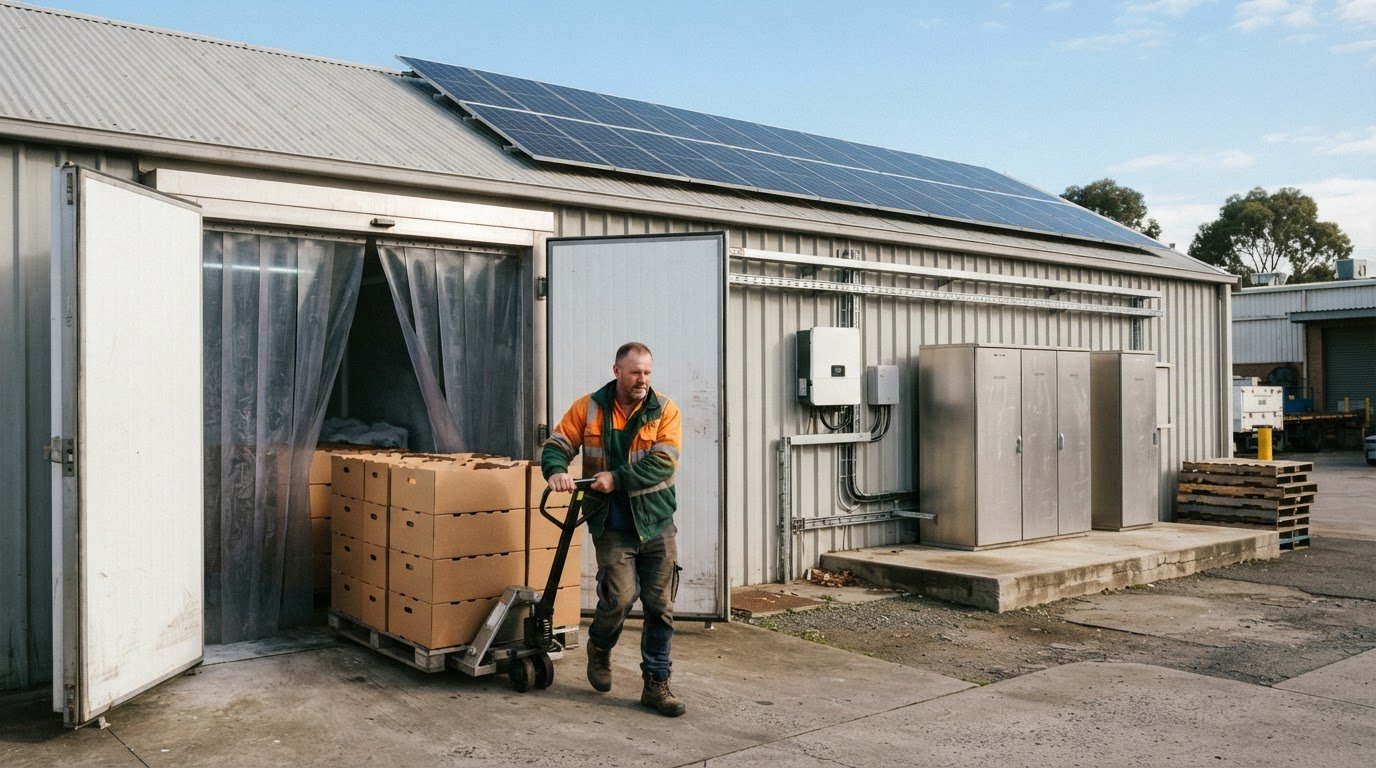
Business solar is a resilience decision as much as an energy one. A practical case for convincing your boss to invest in solar starts with the electricity your business can use while panels are generating, then weighs storage, eligible incentives and longer-term benefits against the project’s fit for the site. According to the Clean Energy Regulator, commercial solar systems up to 1MW installed from 1 October 2026 can earn STCs.
A strong case for convincing my boss to invest in solar needs more than a sustainability argument: decision-makers need to see how solar could support operating costs, energy resilience and emissions goals. This article explains how daytime electricity use shapes the business case, when battery storage may help, and how eligible incentives and property appeal can strengthen a proposal. It also covers practical factors that affect system suitability, so you can make a clear, balanced recommendation rather than rely on broad promises.
Key Takeaways
- Eligible commercial solar systems up to 1MW installed from 1 October 2026 can earn STCs, according to the Clean Energy Regulator.
- Build your case around how well solar generation matches your business’s electricity use, not just the value of exporting excess power.
- Battery storage may help shift solar energy to periods when panels generate less, and can support resilience during outages.
- Connect solar investment to your emissions goals and the appeal of your property to tenants, alongside the financial case.
Government incentives, rebates and feed-in tariffs
Incentives may reduce upfront costs, but eligibility and system configuration matter. Build your proposal around eligible rebates, expected bill savings and grid-connection requirements. When convincing my boss to invest in solar, distinguish projected benefits from incentives that depend on eligibility.
Federal and state incentives
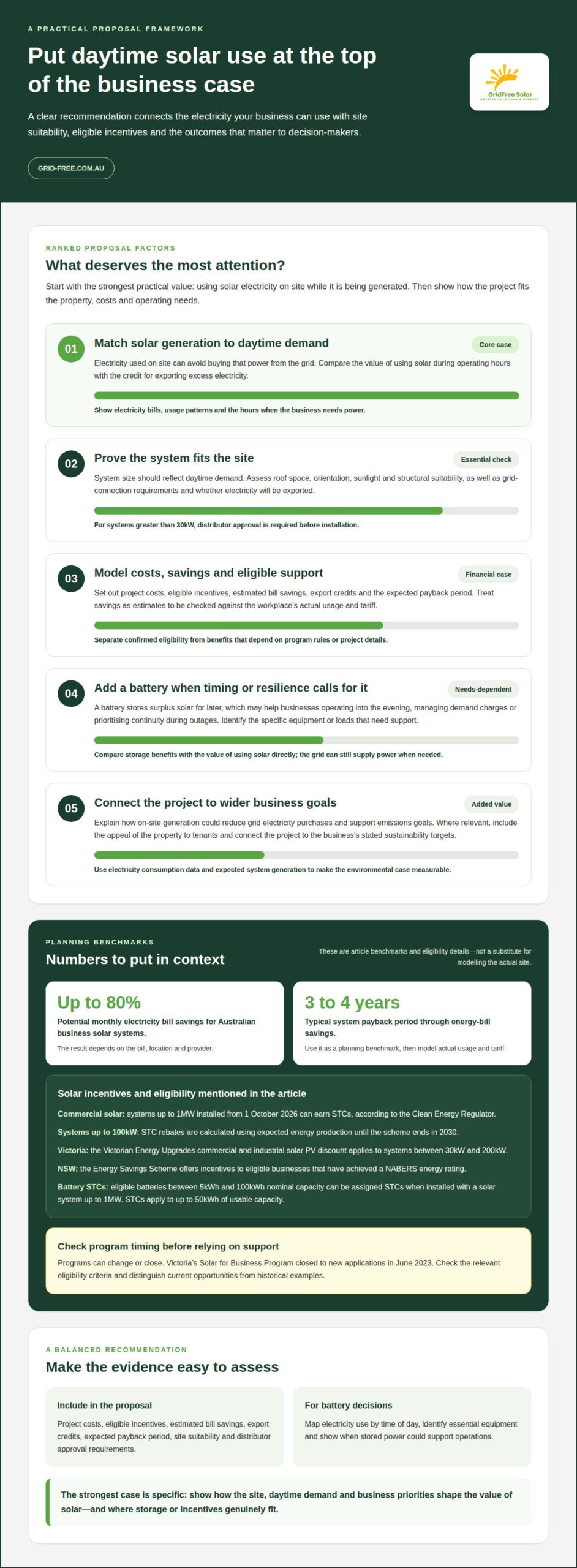
Federal and state incentives can lower the effective cost of commercial solar and influence system design. According to the Clean Energy Regulator, commercial solar systems up to 1MW installed from 1 October 2026 can earn STCs. Solar systems up to 100kW are governed by STC rebates, calculated using expected energy production until the scheme ends in 2030, according to the Clean Energy Regulator. State programs also differ: in Victoria, the Victorian Energy Upgrades commercial and industrial solar PV discount applies to systems between 30kW and 200kW. For anyone convincing their boss to invest in solar, relevant eligibility criteria belong in the proposal.
Rebates and grants
Rebates and grants reduce eligible project costs, while tax treatment may affect the investment’s financial case. In NSW, the Energy Savings Scheme offers incentives to eligible businesses that have achieved a NABERS energy rating. Programs can close or change, so distinguish current eligibility from historical examples; Victoria’s Solar for Business Program closed to new applications in June 2023. Seek professional tax advice before relying on tax treatment.
Feed-in tariffs credit exported solar power, but using generated electricity on site is generally the main value for small and medium businesses. Compare the export credit with the value of using that electricity during operating hours.
Australian business solar systems can save up to 80% on monthly electricity bills, depending on the bill, location and provider. A typical system pays for itself in 3 to 4 years through energy-bill savings. Use these as planning benchmarks, then model the workplace’s actual usage and tariff.
For your proposal, show project costs, eligible incentives, estimated bill savings, export credits and the expected payback period. Review electricity bills and usage patterns alongside roof space, orientation, sunlight and structural suitability. Size the system to match daytime demand.
Grid connection requires approval from the electricity distributor. For a system greater than 30kW, official distributor approval is required before installation. The process depends partly on system size and whether electricity will be exported, so include connection approval in the project timeline.
Energy independence and battery storage
Solar panels generate electricity during daylight, while a battery stores surplus solar energy for later use. Grid electricity remains available when generation and stored power do not meet demand. A power purchase agreement (PPA) is a separate arrangement for buying electricity under agreed contract terms. Compare each option against the business’s usage, operating hours and resilience priorities.
Solar can reduce reliance on the grid even when a business consumes more electricity than its system generates. The practical benefit comes from using rooftop power on site instead of buying that electricity from the grid. A battery can store surplus generation for times when panels produce less or electricity costs more. For businesses operating into the evening, this can make better use of daytime solar energy.
Storage can also help a business manage demand. If its electricity plan includes demand charges, a battery may reduce peak demand by supplying stored energy during high-use periods. Some battery systems can power all or part of business premises during an outage. Storage may therefore matter where continuity is a priority, but the proposal should identify the specific loads the business needs to support.
In Australia, eligible batteries between 5kWh and 100kWh nominal capacity can be assigned STCs when installed with a solar system up to 1MW, for an upfront installer discount. STCs apply to up to 50kWh of usable capacity. Include the eligible capacity and discount in the financial model, then compare storage benefits with the value of using solar directly.
For a clear comparison, explain what each option does: solar generates renewable electricity, batteries shift stored generation to another time, the grid supplies electricity when needed, and a PPA sets out contracted electricity purchases. Solar and storage can work together, with the grid remaining part of the supply.
Map the business’s electricity use by time of day, identify essential equipment, and assess where stored power could support operations. This turns energy independence into a specific resilience case rather than a broad promise.
Explore solar and battery planning as a next step for matching storage with a business solar system.
Corporate responsibility and emissions
Solar can support a company’s emissions goals by generating electricity on site and reducing grid electricity purchases. Make the environmental case measurable: compare current electricity use with the system’s expected generation. Then explain how using that generation could change purchased electricity and operational carbon emissions. This gives your boss a practical basis for weighing corporate responsibility alongside the financial case.
For property-focused goals, the Commonwealth Bank Property Sustainability Upgrade Loan links upgrades to specific outcomes. Businesses using the loan must make upgrades that achieve a NABERS rating or reduce the property’s carbon emissions. NABERS performance or emissions reduction can therefore provide relevant evidence in a funding discussion. If the business has a sustainability plan, connect the proposed installation to its stated targets rather than presenting solar as a separate initiative.
Build a clear before-and-after record. Start with electricity bills and consumption data, then document the system’s expected generation and the share the business could use. After installation, compare monthly electricity purchases with the same baseline. Keep assumptions visible, including operating hours and expected on-site use, so decision-makers can see how the emissions estimate relates to actual operations.
Separate environmental outcomes from financial inputs. Show the upfront project cost, any eligible government incentive, expected changes to electricity bills and carbon impact as distinct measures. Incentive eligibility affects the financial case, but does not itself demonstrate emissions reductions. For example, a warehouse could explain how rooftop generation supports its sustainability commitments while reporting energy use and costs separately. This makes the proposal more credible without overstating the result.
Use evidence the business can maintain after installation. Assign responsibility for recording monthly electricity data and comparing it with the pre-installation baseline. If the organisation reports against NABERS or internal carbon targets, align the proposal’s measures with that existing framework. Consistent records help management assess both the renewable electricity generated and its contribution to corporate responsibility over time.
Property value and rental appeal
Solar panels can give a property a practical point of difference: on-site generation may help tenants manage energy bills. For a landlord considering solar, the case can include tenant appeal alongside operating savings. Keep these benefits distinct. Lower electricity use may improve a tenant’s experience, while the owner’s return depends on ownership arrangements, energy use and who pays the bills.
Realestate.com.au reported that three-quarters of renters surveyed said they would pay additional rent to live in a property with solar energy. This supports an argument about rental appeal, but does not quantify commercial rent premiums or property sale values. Use the finding carefully: it indicates renter interest, not a guaranteed increase in rent or resale value.
For a workplace proposal, identify who receives the benefit. If the tenant pays the electricity bill, solar savings may improve the tenancy’s appeal while the property owner funds the panels. If the owner pays for electricity, reduced purchases may contribute directly to the owner’s operating case. Discussing the lease can clarify how installation costs, access and benefits are handled before proposing the investment.
Make the property case specific. Explain how rooftop space will be used, how solar generation relates to the building’s energy needs, and whether the system supports the owner’s plans for the site. A property manager could present tenant appeal, potential energy savings and eligible incentives as separate considerations. Do not treat incentives as rental income or claim an increase in property value without supporting valuation evidence.
To assess potential returns, set out who pays for installation, who uses the solar electricity and who benefits from lower energy bills. Include the expected operating pattern and the role of eligible incentives, then compare those benefits with the owner’s investment horizon. This gives your boss a clearer view of how solar could support tenant retention and the property’s long-term appeal.
For a site-specific property proposal, discuss commercial solar options that align with the building’s use and ownership arrangements.
GridFree Solar
GridFree Solar helps businesses develop solar proposals suited to their site and energy needs. Its commercial solar solutions and solar and battery installation bring generation, storage and electricity use into one project discussion. For businesses with an existing system, battery upgrades and replacements can also address changing storage needs.
GridFree Solar also helps customers navigate and claim eligible solar and battery rebates, including full paperwork handling. Bring your business’s priorities, such as reducing grid reliance, supporting emissions goals or improving property appeal, to shape a conversation about a suitable approach.
Contact GridFree Solar to discuss your business’s solar investment plans.
Turn the solar case into a clear next step
A strong proposal does not need to settle every project detail at once. Its purpose is to help decision-makers agree on priorities, the evidence they need and who should shape the next stage. If you are convincing your boss to invest in solar, make the request specific: seek agreement to develop a project scope rather than an immediate commitment to install.
Bring the right people into the conversation. Finance can assess investment criteria, facilities staff can explain site operations, and property decision-makers can clarify ownership considerations. Agreeing on priorities early helps turn broad interest in solar into a decision the business can progress with confidence.
GridFree Solar can help translate your business’s priorities into a solar project discussion, including commercial solar solutions and battery upgrades or replacements where relevant. Contact GridFree Solar to discuss the next step for your business. A focused proposal is a practical way to get the conversation moving.
Frequently Asked Questions
Why invest in solar energy for business?
Business solar can reduce reliance on the grid and give a company greater control over how it sources electricity. The strongest case connects the investment to operational priorities, such as predictable energy use, resilience planning or emissions objectives. For example, a business with regular daytime operations can assess how on-site generation fits its working pattern. In Melbourne, the proposal should reflect the premises, electricity arrangements and the organisation’s goals.
How much will it cost to get solar power for my business?
The cost depends on the project’s system size, site conditions, equipment and whether battery storage is included. Roof structure, available space, electricity use and connection requirements can also shape the design. The price depends on the case and is provided after a quote request, with costs reflecting those project factors. For a useful budget discussion, separate the proposed system scope from any eligible incentives rather than treating rebates as guaranteed upfront funding.
What else do I need to know?
For Melbourne projects, include the New Photo Compliance Requirements: from 1 March 2026, installers must take geotagged, timestamped photos of key labels and signage. Written documentation to the consumer is required under Renewable Energy Regulations and Australian Consumer Law. Standards are CEC Approved Battery, CEC Accredited Installer, AS/NZS 5139:2019, AS/NZS 3000, Certificate of Electrical Safety (CES), Grid Connection Approval, UN 38.3 – Lithium Battery Transport Safety, IEC 62040-1 – Electrical Safety for UPS Systems, CEEW or equivalent certification confirming compliance with electrical safety regulations, Victorian Electrical Safety Laws and Work Health & Safety (WHS) requirements.
What are the upfront costs of commercial solar in Australia?
Upfront costs may include solar panels, an inverter, installation work, electrical upgrades, grid connection and battery storage. The scope depends on the premises: a site requiring structural work or a more complex connection may need a different design. For an Australian business, assess these items separately from ongoing electricity savings. This breakdown helps managers understand what the initial investment covers and which project decisions affect it.
What are the risks, maintenance costs and warranties for commercial solar systems?
Key risks include choosing a system that does not suit the site or energy use, and underestimating how the business will use generated power. Maintenance needs and costs depend on the system and site, so include them in long-term planning. Warranty terms vary by component and contract. Review the written coverage, including what it covers, exclusions, claim steps, and the distinction between equipment and installation workmanship.