
A solar quote can look excellent on paper, then disappoint if the roof spends key daylight hours under shade. To assess roof shading properly, you need more than a quick look from the driveway. The goal is to understand what blocks sunlight, when it happens and whether it affects the panels that will produce most of your power.
For Australian homes and small businesses, shading can come from neighbouring roofs, mature trees, chimneys, satellite dishes, roof vents and even future construction. A clear assessment before installation protects expected savings, helps select the right equipment and avoids paying for panels that cannot perform as intended.
Why roof shading has such a big effect on solar output
Solar panels generate electricity when sunlight reaches their cells. When part of a panel is shaded, its output drops. Depending on how the panels are wired and the equipment selected, that reduction can affect more than the one shaded panel.
The impact is not always dramatic. A small patch of shade late in the afternoon may have limited financial effect, particularly if your household uses most of its energy earlier in the day. But regular shade between roughly 9 am and 3 pm can reduce the production that matters most. This is typically when a north, north-east or north-west facing array can make a meaningful contribution to daytime appliances, battery charging and exported energy.
Shading also changes the value of battery storage. A battery cannot store solar energy that was not generated. If shade reduces your midday surplus, there may be less energy available to charge the battery for evening use. That does not mean a battery is unsuitable, but it does mean the system size, panel layout and expected savings need to be designed around real production rather than ideal conditions.
How to assess roof shading accurately
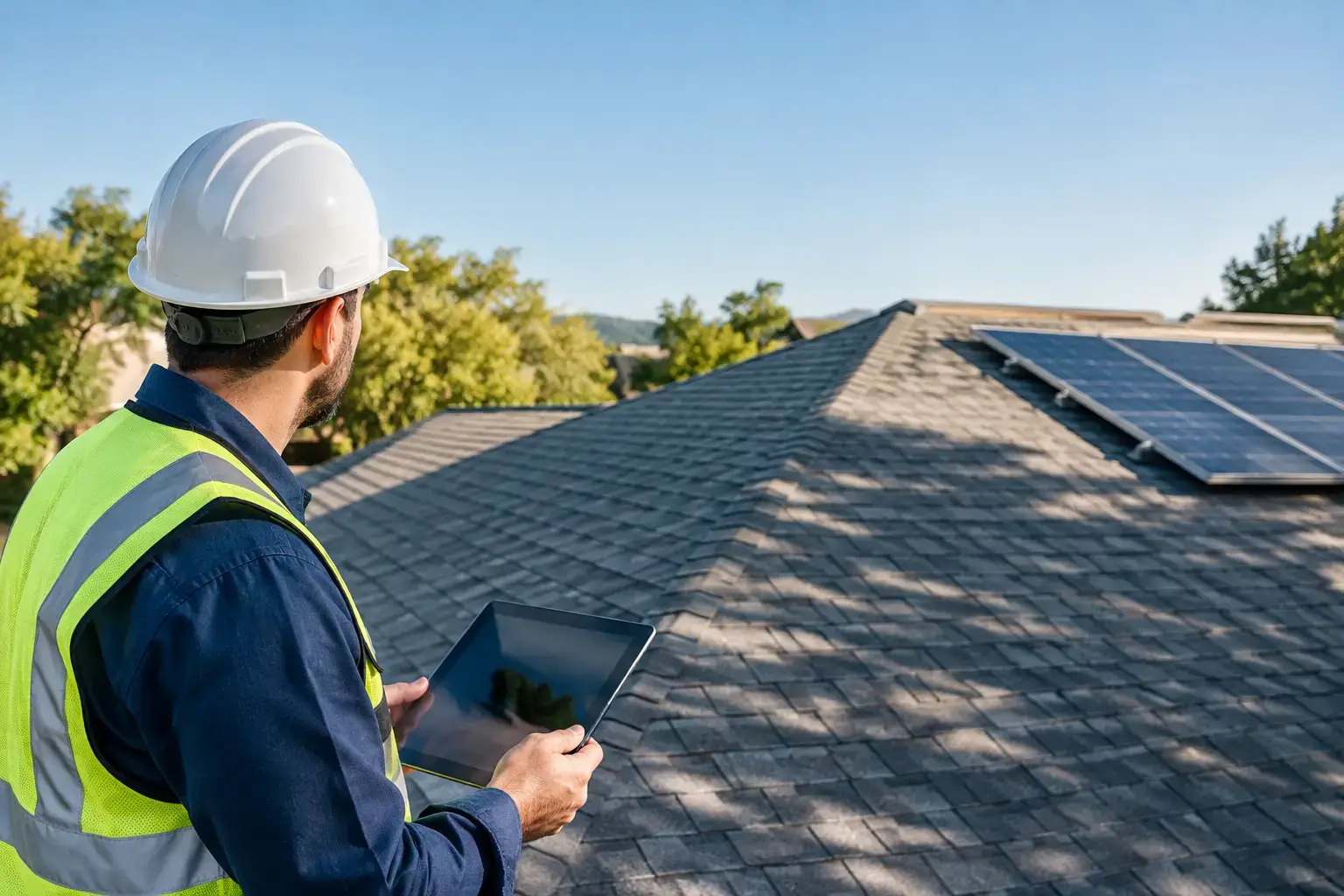
A useful assessment combines an on-site inspection with solar design software. Satellite imagery is helpful for an early estimate, but it cannot always show a tree canopy, a steep roof obstruction or a recently built extension. A professional site visit confirms the details that affect the final design.
Start with the path of the sun
The sun does not follow the same path all year. In Australia, it sits lower in the northern sky during winter and higher during summer. A tree that barely affects a roof in January can cast a long shadow across it in June, when solar production is already lower.
Look at the roof across the day, not only at the time of inspection. A shade assessment should identify when shadows reach each roof face and how long they remain. Morning shade may matter more for a home with early energy use, while afternoon shade can be more significant for a business that runs equipment later in the day.
Roof orientation matters too. North-facing roofs usually offer strong annual output, but east and west-facing panels can still be highly valuable. East-facing panels support morning consumption, while west-facing panels can produce later in the afternoon, often matching household demand as people return home. The best roof section is the one that combines good sun access with a production profile that suits the property.
Identify every fixed obstruction
Walk around the property and inspect the roof from multiple angles. Common sources of shade include chimneys, plumbing vents, air-conditioning units, aerials, skylights, solar hot water equipment and neighbouring buildings. Some of these obstacles can be worked around by adjusting panel placement. Others create enough shade that a different roof face is the better choice.
Trees deserve extra attention. Consider their height, distance from the roof, canopy width and growth over the next decade. A young tree may be well clear today but become a regular source of shade later. Pruning can sometimes improve access to sunlight, but any work should be considered carefully and carried out in line with local council requirements and the health of the tree.
It is also worth checking for planned changes. A proposed second storey next door, a pergola, a carport or new landscaping can alter solar access. If plans are known, include them in the design conversation before panels are installed.
Measure shade rather than guess
Experienced solar designers use site measurements, roof imagery and modelling tools to estimate annual solar access. These tools map obstructions against the sun’s changing position and help predict how much energy an array is likely to generate over a year.
This approach is more reliable than statements such as “the roof gets plenty of sun”. Most roofs receive sun at some point. The key question is whether the proposed panel area receives enough direct sunlight during productive hours to justify the investment.
A good assessment should also account for roof pitch, orientation and usable area. Panels need safe clearances around roof edges and access points, and installers must work around obstructions without compromising compliance or service access. The largest possible array is not automatically the best design if parts of it are regularly shaded.
Choosing equipment for a partially shaded roof
A shaded roof does not always rule out solar. It may simply call for a more considered system design. Standard string inverter systems are often an efficient choice for clear, consistent roof areas. However, where shade falls across some panels at different times, panel-level technology may help reduce the effect on the rest of the array.
Power optimisers and microinverters allow panels to operate with greater independence than a conventional string arrangement. They can be useful where chimneys, trees or roof shapes create variable shading. They also provide more detailed panel-level monitoring in many setups.
There is a trade-off. This equipment can add upfront cost and additional components to the system. It should be selected because the predicted production gain supports the investment, not simply because a roof has one small obstruction. In some cases, moving several panels to a clearer roof face delivers better value than adding more technology.
Modern panels also include bypass diodes, which can reduce losses when part of a panel is shaded. They are helpful, but they do not make persistent shade irrelevant. Clear panel placement remains the starting point for dependable output.
Design around how you use energy
Roof shading is only one part of a worthwhile solar and battery design. The right system should match production to your actual electricity use. A household that uses power heavily in the morning may benefit from a clear east-facing section. A family with high late-afternoon consumption may gain more from west-facing panels and a battery that can carry solar energy into the evening.
For a small business, operating hours are especially important. If the business runs during daylight hours, a well-designed solar system can directly offset purchased grid electricity. If power use continues after closing, battery storage may reduce evening grid reliance, provided the solar array has enough clear-sky production to charge it consistently.
Your installer should discuss electricity bills, interval data where available, future appliance changes and battery goals. An electric vehicle, pool pump, ducted air conditioning or planned electrification can change the ideal system size. So can the desire for backup power during outages. Shading data gives the design a realistic foundation, but the final solution must also reflect the way the property operates.
Questions to ask before approving a solar quote
A quality quote should not treat every roof as identical. Ask whether the generation estimate includes shading losses and whether the installer has inspected the site or relied only on aerial imagery. Ask which roof faces will be used, why they were selected and whether any panels are expected to receive regular shade.
You should also ask how the system will perform in winter, what inverter configuration is proposed and whether optimisers or microinverters are recommended. If they are, request a plain-English explanation of the extra value they provide for your specific roof.
Finally, make sure the projected savings distinguish between solar generation, self-consumption, feed-in exports and battery use. A large generation number is useful, but the financial result depends on when that energy is produced and how much of it you can use or store.
Turn a shaded roof into a practical energy plan
The best solar outcome is not based on perfect assumptions. It is based on an honest view of your roof, your energy use and the equipment needed to make the system perform reliably over time. Some properties need a simple, clear-roof array. Others benefit from a tailored layout, panel-level electronics or a battery strategy designed around lower winter production.
GridFree Solar assesses the full property before recommending a system, including roof access, shading, usage patterns, battery opportunities and available rebates. That gives you a clearer view of likely performance before you commit.
A few minutes of sunlight lost each day may be manageable. Regular shade across the best part of the roof deserves a proper design response. Get that right before installation, and your solar system has a far better chance of delivering the savings and energy control you expect.