Last Updated: November 25, 2026
Quick Summary
There is no federal wind turbine tax credit for Australian homes; support comes through the Small-scale Renewable Energy Scheme’s tradeable certificates instead. A wind system can earn small-scale technology certificates, which are usually assigned to your installer as a discount off the upfront price. Any wind turbine tax treatment beyond that depends on how the property is used.
- STCs are created under the Renewable Energy (Electricity) Act 2000 and administered by the Clean Energy Regulator.
- Each certificate represents one megawatt hour of deemed renewable electricity production.
- Certificate numbers depend on rated capacity, postcode zone rating and the shortening deeming period.
- Most homeowners assign certificates to the installer and receive the value as an upfront discount.
- Systems above the small-scale capacity cap fall under the Large-scale Renewable Energy Target instead.
Table of Contents
- What residential wind turbine tax incentives are available to homeowners?
- How small wind turbine Australia installations qualify for incentives
- Wind turbine rebates Australia: what you can actually claim
- Small-scale technology certificates wind systems can generate
- Home wind turbine cost and how incentives reduce it
- How to apply for wind turbine incentives step by step
- Connect with GridFree Solar to plan your wind and solar setup
- Frequently Asked Questions
What residential wind turbine tax incentives are available to homeowners?
Residential wind turbine tax incentives are government programs that reduce what a homeowner pays to install a small wind system, and in Australia there is no federal tax credit for home wind turbines. Instead, support comes through the federal Small-scale Renewable Energy Scheme and a patchwork of state programs, most of which are built around solar rather than wind. That gap surprises most people who start researching this topic.
Here is the honest picture. Australia’s federal government rewards small-scale renewable electricity through tradeable certificates, not through a line on your tax return.
Many homeowners assume wind works like solar on the incentives front. It doesn’t, and knowing that early saves you from a bad purchase.
Below, we break down what a small wind turbine in Australia can actually claim, what it can’t, and where the real savings sit.
How small wind turbine Australia installations qualify for incentives
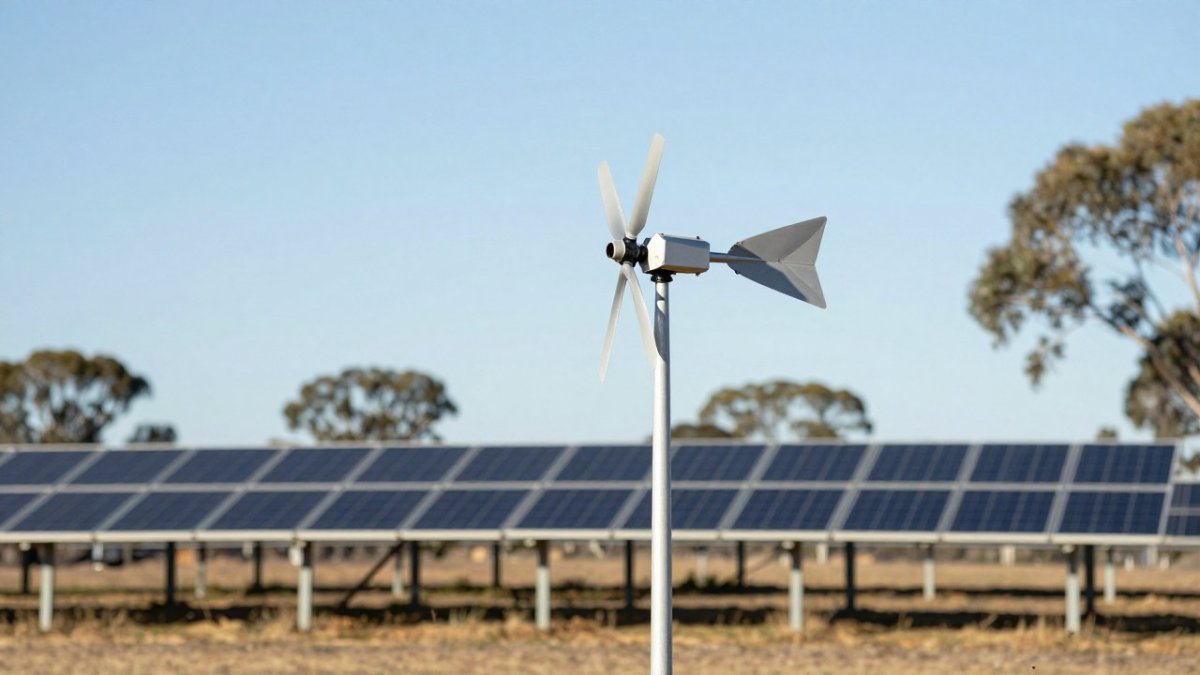
Qualifying for support comes down to certification, not tax status. A wind system must use components that meet the federal scheme’s eligibility rules to generate certificates.
The key criteria:
- The system must be a small-scale unit within the capacity cap the scheme sets
- Installation must be done by an accredited installer
- The equipment must be on the approved products list
- The property must be a residential or small business site
Zoning and planning approvals also decide whether a turbine can go up at all. Councils vary widely on height limits, setback distances and noise rules. Our guide to property zoning rules for home wind turbines walks through what to check before you commit.
Watch out: buying a turbine before confirming council approval is the most expensive mistake in this space. You can end up with equipment you legally cannot install.
Wind turbine rebates Australia: what you can actually claim
Direct wind turbine rebates in Australia are scarce, and that is the part most online guides gloss over. A handful of state and territory programs mention wind, but the big money is aimed at solar and batteries.
What exists, broadly:
- Federal support through small-scale technology certificates
- State programs that sometimes include wind alongside solar
- Utility and retailer offers, usually solar-specific
The practical reality is that a homeowner installing wind will lean on the federal certificate scheme far more than any wind-specific rebate. If you want the full landscape of what is on offer, our comparison of the best solar rebate programs for Australian homes covers federal and state schemes side by side.
Small-scale technology certificates wind systems can generate
Small-scale technology certificates, or STCs, are the main federal incentive a wind system can earn. They are created under the Renewable Energy (Electricity) Act 2000 and administered by the Clean Energy Regulator. Each certificate represents one megawatt hour of renewable electricity the system is deemed to produce (Small-scale technology certificates).
The number of certificates depends on:
- The system’s rated capacity in kilowatts
- The zone rating for your postcode (zones 1 to 4, with higher ratings in sunnier and windier regions)
- The year the system is installed, because the deeming period shortens each year until the scheme ends
- Whether the system meets the small-scale eligibility rules, including the capacity cap and approved component requirements
The exact number of certificates depends on the system’s rating and location, so the figure your installer quotes should be checked against the Clean Energy Regulator’s current STC calculator.
You do not usually claim STCs yourself. The two common paths are:
- Assignment: you sign a written assignment form and your installer or a registered agent creates the certificates in their name and passes the value to you as a discount off the upfront price. This is the simplest route and the one most homeowners take.
- Self-claim: you register as the owner and create the certificates yourself through the Clean Energy Regulator’s REC Registry, then sell them. This can capture a slightly higher value but requires you to manage the paperwork and the GST treatment.
Watch out: an assignment form is a legal transfer of the certificates, so read it before signing.
Residential versus business use matters here. A turbine on a home is a small-scale system and uses the STC pathway. A larger turbine on a farm or commercial site may be a power station above the small-scale capacity cap, in which case it falls under the Large-scale Renewable Energy Target and the large-scale certificate market instead. Leasing the turbine to a third party, or using it primarily for a business, can also change who is entitled to create the certificates. If your system sits near the capacity cap, confirm the classification before you sign anything.
Check the Clean Energy Regulator’s website for the current scheme end date and any legislative amendments before relying on a certificate estimate.
Here are the key facts about the certificates a home wind system can earn.
| Item | Value | Note |
|---|---|---|
| Scheme name | Small-scale technology certificates (STCs) | Main federal incentive a wind system can earn |
| Created under | Renewable Energy (Electricity) Act 2000 | Administered by the Clean Energy Regulator |
| One certificate represents | One megawatt hour | Of deemed renewable electricity production |
| Zone rating | Zones 1 to 4 | Higher ratings in sunnier and windier regions |
| Deeming period | Shortens each year | Until the scheme ends |
| Common claim path | Assignment | Installer or agent creates certificates; value passed as discount |
| Alternative claim path | Self-claim | Owner registers and creates certificates via REC Registry |
| Above capacity cap | Large-scale Renewable Energy Target | Falls under large-scale certificate market instead |
Home wind turbine cost and how incentives reduce it
Home wind turbine cost varies enormously by site. Turbine size, tower height, wind resource, grid connection and council requirements all move the number.
What we can say is how incentives shift the equation:
- STCs trim the upfront price through an installer discount
- A strong wind resource improves lifetime output and payback
- Grid connection costs can quietly eat the savings
If lowering upfront cost is your focus, our guide to ways to reduce solar installation costs covers strategies that apply across renewable installs.
How to apply for wind turbine incentives step by step
Here is the process to expect, with the documentation and decision points to keep in mind.
- Confirm your site suits wind, not just solar. A turbine needs a clear wind resource, a tower height that clears nearby obstructions, and a setback that satisfies council rules. Ask for an estimated annual output in kilowatt hours, not just a capacity figure.
- Check council zoning and approval requirements. Height limits, setback distances, noise limits and heritage or bushfire overlays all vary by council. Keep the written planning outcome with your project file.
- Get quotes from accredited installers. Confirm the installer is accredited and that the turbine model is on the approved products list.
- Confirm the equipment and capacity classification. Check the rated capacity against the small-scale cap. If the system is above the cap or is primarily for business use, it is a different scheme and a different set of certificates.
- Sign the STC assignment form. The form should show the number of certificates, the deemed value and the discount applied to your quote. Keep a copy.
- Complete installation and collect the compliance paperwork. This includes the installer’s compliance certificate, the electrical certificate of compliance for the connection, and the product documentation.
- Keep your records. Retain quotes, invoices, assignment forms, compliance certificates and planning approvals for your records. The Clean Energy Regulator can audit installations.
On the tax side specifically, there is no line on the individual tax return for a home wind turbine. The certificate discount reduces your capital cost rather than your taxable income. If the turbine is used in a business, such as a farm or a rental property, the treatment changes: the depreciating asset rules and the small business concessions may apply, and the certificate discount generally reduces the cost base you depreciate. That is a genuine reason to consult a registered tax agent before you install, because the answer depends on how the property is used and who owns the asset.
For state, utility and local incentives, check your state or territory energy department’s current rebate page, your distribution network’s connection offer, and your retailer. Victorian homeowners can follow our step-by-step guide to claiming solar rebates in Victoria. Confirm whether any grant you receive is taxable or affects the cost base before you count it in your payback maths.
Connect with GridFree Solar to plan your wind and solar setup
The honest challenge with residential wind turbine tax incentives is that they are thinner than most homeowners expect. Wind can work well on the right property, but the incentives reward solar and battery storage far more generously.
That is where we come in. GridFree Solar provides solar panel and battery storage installation, with Clean Energy Council approved batteries and CEC accredited installers. We offer rebate guidance and build to AS/NZS 5139:2019 and AS/NZS 3000 standards.
Our battery systems can earn 15¢/kWh by exporting power to the grid from 6-8pm, and can charge from the grid free from 11am-2pm.
Get started with GridFree Solar and build an energy plan that actually pays you back.
Frequently Asked Questions
Are residential wind turbines eligible for tax incentives in Australia?
Yes, but the incentives work differently from solar. Small wind systems can generate Small-scale Technology Certificates under the Small-scale Renewable Energy Scheme, which act as a point-of-sale discount. There is no federal tax credit for residential wind like some overseas schemes. Homeowners may also be able to claim tax deductions if the turbine is used for business purposes. Check with the Clean Energy Regulator and a tax adviser for your situation.
Do small wind turbines qualify for Small-scale Technology Certificates?
Small wind turbines can qualify for Small-scale Technology Certificates if they meet eligibility rules, including capacity limits and installation by an accredited installer. The number of certificates depends on the system’s rated output in kilowatts and the zone rating for your location. Certificates are usually assigned to the installer in exchange for a discount on the upfront cost. Confirm eligibility with the Clean Energy Regulator before committing.
What approvals are needed to install a wind turbine at home?
You will typically need council approval and may need to meet local planning rules on height, noise and setbacks. Grid connection also requires approval from your distribution network. Installers should be accredited and comply with relevant Australian standards. Check with your local council and network provider early, as approval timelines can affect your project schedule and overall home wind turbine cost.
Can a home wind turbine work with solar panels and battery storage?
Yes, a wind turbine can complement solar and battery storage, especially in areas with good wind resource and less sun. A hybrid setup can smooth out generation across day and night. The system needs proper sizing and a compatible inverter. Talk to an accredited installer about how wind and solar combine for your site, and confirm what incentives each component can claim.
