

Last Updated: November 21, 2026
Quick Summary
Solar battery installation costs after incentives describe the net amount left once government support is subtracted from the full installed price, and that number depends on your battery size, your eligibility, and how carefully your quote was itemised. Rebates reduce only a portion of the invoice, so ask each installer to state the rebate-adjusted total rather than the sticker price.
- Every installed battery price is built from four parts: the battery unit, the inverter or hybrid hardware, labour and electrical work, and compliance paperwork.
- Support is usually capped by capacity, so beyond the cap each additional kilowatt-hour is paid in full.
- Switchboard upgrades are the single most common source of a post-signing variation.
- Divide the rebate-adjusted price by your estimated annual savings for a rough break-even figure in years.
- Ask for estimated lines such as switchboard and cable to be shown as capped allowances before you sign.
Table of Contents
- What Solar Battery Installation Costs After Incentives Really Cover
- Solar Battery Installation Cost Breakdown: Where the Money Goes
- Solar Battery Rebate Eligibility: Who Qualifies and What It Covers
- The Solar Battery Payback Period: Working Out Your Break-Even Point
- Solar Battery Installation Quote Comparison: What to Check Line by Line
- Hidden Costs That Change Your Final Figure
- Get a Rebate-Adjusted Quote From GridFree Solar
- Frequently Asked Questions
What Solar Battery Installation Costs After Incentives Really Cover
The gap between a quoted price and the figure you actually pay is where most homeowners get lost.
Rebates rarely cover the whole invoice. They reduce a portion of it, and the portion varies by scheme, by battery capacity, and by who installs the system. That is the first thing to understand before comparing any two quotes.
Below, we break down the cost structure, the eligibility rules, the payback maths, and the line items that quietly change your final figure.
Solar Battery Installation Cost Breakdown: Where the Money Goes
Every installed battery price is built from four parts: the battery unit itself, the inverter or hybrid hardware that manages it, labour and electrical work, and compliance paperwork. Hardware usually takes the largest share, but labour and compliance are where quotes diverge most, and where the net figure after incentives is won or lost.
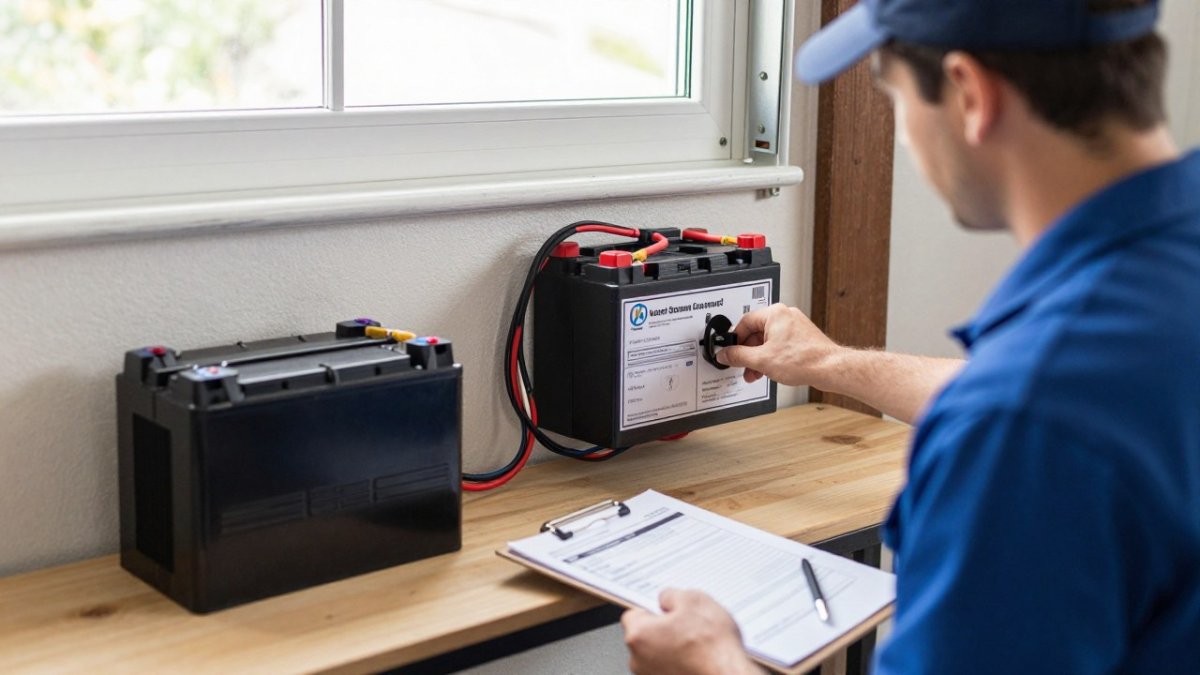
Hardware, labour and the extras that catch people out
The battery and inverter are the visible cost. What sits underneath matters just as much:
- Battery capacity: usable kilowatt-hours drive the price more than any other factor. A larger nameplate capacity does not always mean more usable energy, because depth of discharge and round-trip efficiency vary between models. Ask for the usable figure, not the headline figure.
- Inverter compatibility: an existing solar inverter may need replacing with a hybrid unit. If the existing inverter is single-phase and the battery is designed for a hybrid system, the upgrade can add a meaningful line to the quote. Confirm whether the quote reuses, replaces or adds a second inverter.
- Switchboard upgrades: older boards often need work before a battery can be connected, a dedicated circuit, a larger main switch, or remediation of an asbestos-backed board. This is the single most common source of a post-signing variation.
- Mounting and enclosure: wall brackets, fire-rated backing, and clearance distances. Installation standards such as AS/NZS 5139:2019 affect where a battery can be sited, which can change the mounting location.
- Compliance and certification: installation to AS/NZS 5139:2019 and AS/NZS 3000, plus a Certificate of Electrical Safety. This is not optional paperwork; it is what makes the system legal to connect and insurable.
A common mistake is comparing headline battery prices without checking whether the quote includes switchboard work and certification. Those extras can shift the total meaningfully. If you want to see how these lines should be laid out, read our guide on how to read a solar battery quote.
How the four parts interact with your rebate
The rebate does not attach to the whole invoice. Most schemes calculate support against eligible battery capacity and eligible installation work, so the parts of the quote that attract support are narrower than the total.
Watch out: a quote that bundles compliance and certification into a single “installation” line makes it impossible to check whether the rebate was calculated on the right base. Ask for the eligible hardware and eligible labour to be itemised separately.
What actually moves the net figure
Three levers change the after-incentive price more than anything else:
- Usable capacity versus rebate caps. Support is usually capped by capacity, so beyond the cap each additional kilowatt-hour is paid in full. The marginal cost of the last unit of capacity is therefore higher than the average cost.
- Whether the inverter is reused. Reusing a compatible hybrid inverter removes a hardware line; replacing it adds one and can change which batteries are eligible.
- Site work. Switchboard, cable run length, and mounting location are site-specific and are the lines most likely to be estimated rather than fixed.
A useful discipline is to ask each installer to separate the quote into fixed lines (hardware, certification) and estimated lines (switchboard, cable, remediation). The estimated lines are where the net figure drifts after signing, and where you should ask for a capped allowance rather than an open-ended rate.
Solar Battery Rebate Eligibility: Who Qualifies and What It Covers
Eligibility comes down to three things: the battery must be approved for the scheme, it must be installed by an accredited installer, and the property must meet the scheme’s conditions. Rebates reduce the upfront cost rather than paying you cash, and they apply only to eligible hardware and installation work.
Rebates can come from more than one scheme, and each has its own rules. The Clean Energy Regulator’s guidance on small-scale renewables sets out how certificates are calculated and who can claim them.
Watch out: assuming a rebate applies to your full invoice. Support may be limited by battery capacity, so a larger battery does not necessarily attract proportionally larger support. For a full eligibility check across both federal and state programs, use our home battery scheme eligibility guide.
The Solar Battery Payback Period: Working Out Your Break-Even Point
Payback period is the time it takes for your bill savings and export income to equal your net installation cost. Divide the rebate-adjusted price by your estimated annual savings, and you have a rough break-even figure in years.
The estimate depends on three inputs: how much of your solar generation you currently export instead of self-consuming, your retail electricity rate, and any feed-in tariff you earn. A battery raises savings mainly by shifting daytime solar into the evening peak, when grid power costs most.
Energy Made Easy’s comparison service is a practical starting point for checking your current tariff against available offers. Rather than guess, run your own numbers through our solar battery payback calculator so the result reflects your household, not an average.
Solar Battery Installation Quote Comparison: What to Check Line by Line
Two quotes for the same battery can differ substantially, and the difference is rarely the battery. It sits in the labour, the switchboard allowance, the certification, and what happens after installation.
| What to check | Why it matters | Red flag |
|---|---|---|
| Battery make and model | Determines rebate eligibility | Vague “Tier 1 battery” wording |
| Inverter included or reused | Hybrid upgrade changes cost | No mention of compatibility |
| Switchboard allowance | Common hidden extra | “Additional work quoted separately” |
| Certification and CES | Required for compliance | Not listed at all |
| Monitoring and support | Affects long-term value | Ends at handover |
| Rebate handling | Changes your net figure | “Rebate not included” |
Ask each installer to state the rebate-adjusted total, not the sticker price. Our quote comparison guide sets out a structured way to line up offers side by side.
Hidden Costs That Change Your Final Figure
The extras that move your final figure usually appear after signing, not before. Switchboard upgrades, additional cable runs, roof or wall remediation, and removal of an old inverter are the usual suspects. So is metering work, which some quotes bundle and others leave out.
What most cost guides miss is that these extras do not just add dollars, they can change your rebate outcome. A switchboard upgrade that pushes the job outside the scheme’s eligible installation work, or a battery relocated to a position that fails clearance rules, can reduce or void support that the original quote assumed.
What triggers each extra
- Switchboard upgrade: triggered when the existing board has no spare capacity, is an older fuse board, or cannot safely carry the battery circuit. Ask the installer to inspect the board before quoting, not on the day.
- Additional cable runs: triggered by distance between the battery, the inverter and the switchboard. Long runs add cable, conduit and labour, and can affect voltage drop compliance.
- Roof or wall remediation: triggered when the mounting surface is degraded, has asbestos, or cannot take the bracket load. This is common on older homes and is rarely visible from a driveway quote.
- Old inverter removal: triggered when the existing unit is replaced rather than reused. Removal and disposal is a separate labour line that some quotes omit.
- Metering work: triggered when the network requires a new or upgraded meter to accommodate the battery. Some quotes bundle it; others leave it to the customer to arrange.
How to protect the net figure before you sign
A practical sequence is to get the site inspection done before the quote is finalised, ask for estimated lines to be shown as capped allowances, and confirm in writing which rebates are locked in and which are estimates. Rebate values and program rules change, and a quote held for months may not reflect the scheme conditions at installation.
Watch out: a quote that says “additional work quoted separately” without a cap transfers all site risk to you. Ask for a maximum allowance on switchboard and cable lines, and confirm what happens to the rebate if the final installed capacity or configuration differs from the quoted one.
Document the baseline
Before work begins, photograph the switchboard, the proposed battery location and the existing inverter, and keep the itemised quote with the eligible hardware and labour separated. If a variation is raised mid-install, you can then check whether it was foreseeable at quote stage and whether it affects rebate eligibility. Our quote comparison guide sets out a structured way to line up offers side by side, and our Victorian solar battery cost guide shows how these lines typically appear in a full pricing and rebate breakdown.
Get a Rebate-Adjusted Quote From GridFree Solar
Comparing net costs is hard when every quote is structured differently. GridFree Solar installs Clean Energy Council approved batteries using CEC accredited installers.
Our systems can take advantage of free grid charging from 11am to 2pm and export power back to the grid at 15¢ per kilowatt-hour from 6pm to 8pm.
Get started with GridFree Solar and see your rebate-adjusted figure before you commit.
Most homeowners only discover what a quote really includes after they have signed. Ask for the net figure, the compliance list, and the rebate assumptions in writing, then compare on that basis.
Frequently Asked Questions
How much does solar battery installation cost after incentives?
There is no single figure. The final amount depends on battery capacity, whether your home qualifies for the Cheaper Home Batteries Program, your installer’s labour rates and any switchboard or mounting work needed. Two homes on the same street can land on different totals because eligibility and site conditions differ. Ask for a quote that separates the pre-incentive price from the rebate deduction so you can see exactly what you are paying.
Who is eligible for a solar battery rebate?
Eligibility for the Cheaper Home Batteries Program depends on the program rules at the time of installation. Because the rules and any state-level top-ups change, check current eligibility before signing. GridFree Solar can walk you through the criteria and confirm what your property qualifies for before you commit to a system.
What pushes a solar battery installation quote higher?
Switchboard upgrades, longer cable runs, difficult roof or wall access, and removing an old inverter all add labour and parts. A larger battery capacity raises the hardware line. If your quote looks low, check whether it includes the Certificate of Electrical Safety, commissioning and monitoring setup. Those items are sometimes left out of cheap quotes and added later.
How long does a solar battery take to pay for itself?
Payback depends on your electricity tariff, how much solar you self-consume, export rates and the installed price after incentives. A battery that shifts most of your evening usage off the grid recovers its cost faster than one charged mainly for export. Ask your installer for a modelled payback based on your actual usage data, not a generic estimate, and treat any figure without that modelling as a rough guide only.
