A solar system is designed to work quietly in the background, turning sunlight into lower power bills day after day. But dust, leaves, bird droppings and coastal salt can gradually block light from reaching the cells. This solar panel cleaning guide explains when cleaning makes sense, how to do it safely, and when a professional inspection is the better investment.
For most Australian households, the goal is not to clean panels as often as possible. It is to protect generation without risking the panels, roof or warranty. A well-installed system with smart monitoring gives you the data to make that call with confidence.
Do solar panels need regular cleaning?
Usually, solar panels need less hands-on maintenance than people expect. Rain will remove a light layer of loose dust in many locations, especially where panels have a suitable tilt. However, rain is not a complete cleaning solution. Sticky bird droppings, pollen, traffic grime, salty spray and fine dust can remain on the glass and cause uneven soiling.
How often you should clean depends on your property. A home near the coast, a busy road, a construction site or open paddocks may need more attention than a suburban home with regular rainfall. Panels beneath trees can also collect leaves, sap and bird mess faster.
As a practical starting point, inspect your panels visually from the ground every few months and consider cleaning only when there is obvious build-up or your monitoring shows a sustained, unexplained drop in production. For many homes, once a year is sufficient. In dust-prone, coastal or high-bird areas, cleaning every six months may be worthwhile.
The key word is sustained. Solar output naturally changes with season, cloud cover, temperature and household shading. One low-production day is not evidence that panels need cleaning. Comparing similar sunny days across several weeks gives a clearer picture.
Check performance before you clean
Before reaching for a hose, check the basics. Your solar monitoring app can show daily and monthly generation, while your inverter may display fault messages or alerts. If production has fallen sharply, cleaning may help, but it may not be the real cause.
Shade from new tree growth, inverter faults, damaged wiring, bird nesting, a tripped switch or a grid issue can all affect output. A panel cleaning session will not resolve these problems. It can also delay the right diagnosis if you assume dirt is the answer.
Look for a gradual reduction in output during otherwise similar weather conditions, particularly if you can see grime from the ground. If output is unexpectedly low and the panels look clean, arrange a system check rather than attempting a fix yourself. For systems paired with a battery, accurate monitoring is especially useful because it helps separate lower solar generation from changes in battery charging or household energy use.
Solar panel cleaning guide: the safe method
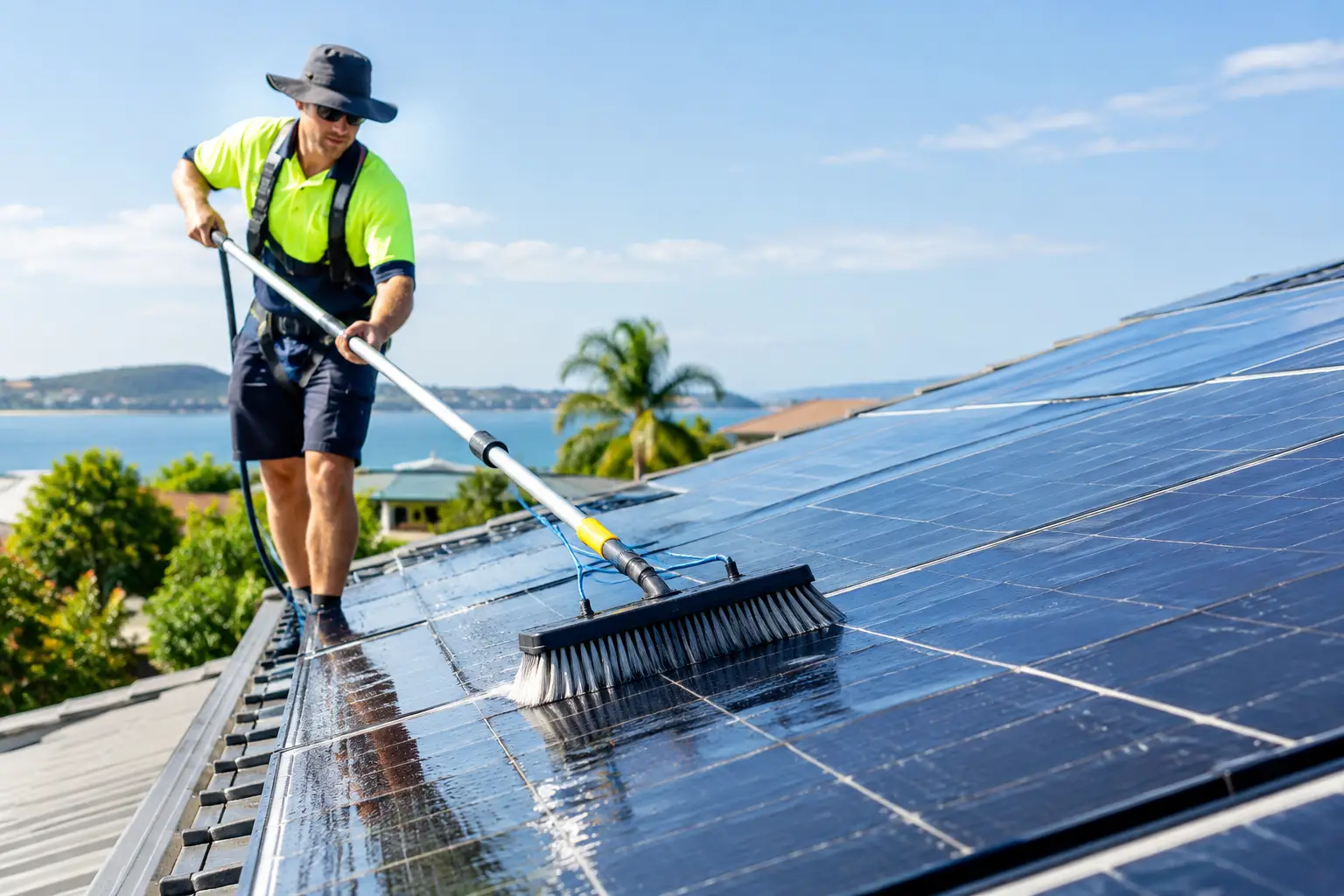
Cleaning sounds simple, but rooftop work carries real risks. The safest option is always to keep your feet on the ground. Do not climb onto a roof without appropriate training, access equipment and fall protection. In Australia, a wet roof, steep pitch or fragile tiles can turn a minor maintenance job into a serious injury.
If panels can be safely accessed from the ground with suitable equipment, choose a cool morning or late afternoon. Panels can become extremely hot in direct sun, and cold water on hot glass can create unnecessary thermal stress. Switch off the system only if your installer’s operating instructions specifically require it. Do not open electrical enclosures, disconnect cables or interfere with the inverter.
Use clean water and a soft, non-abrasive brush or sponge designed for solar glass. Rinse loose grit first, then gently remove remaining residue. If your local water is hard, a final rinse with demineralised water can reduce mineral spotting. Let the panels air dry.
Avoid high-pressure cleaners. Their force can damage seals, frames and roof materials, and water should never be directed into electrical components. Also avoid abrasive pads, scouring products, harsh chemicals and strong detergents. These can scratch the protective glass coating or leave a film that attracts more dirt.
Do not stand, lean or place tools on the panels. Solar modules are durable, but they are not designed to take concentrated weight. Avoid trying to scrape off stubborn bird droppings with metal tools. Soaking the affected area with water and using a soft brush is the safer approach.
When professional cleaning is the smarter choice
Professional cleaning is worthwhile when access is difficult, the roof is steep, panels are heavily soiled, or there are signs the issue may be more than surface dirt. It is also a sensible choice for small commercial systems, where even a modest production loss can affect operating costs over time.
A qualified provider can use appropriate access methods, clean the panels without compromising the system, and identify visible maintenance concerns while they are there. Ask whether the service includes a basic inspection of panel condition, mounting hardware, cable protection and signs of pests or nesting. Cleaning should be part of protecting the entire asset, not simply making the glass look better.
Be cautious of anyone promising dramatic production gains from every clean. The benefit depends on how dirty the panels were, local weather, roof angle and the amount of sunlight available. On a reasonably clean system, the improvement may be small. On panels coated with dust, salt or bird droppings, the improvement can be meaningful.
Common issues that cleaning will not fix
Solar panels are only one part of your energy system. If cleaning does not restore expected production, the cause may sit elsewhere. Common examples include inverter faults, shading changes, damaged modules, loose connectors, degraded components or monitoring communication errors.
Birds deserve particular attention. Nesting beneath panels can create noise, mess and cable risks, while leaves trapped under or around the array may restrict drainage. Never try to remove nests or disturb wildlife yourself. A professional can advise on compliant removal and, where appropriate, panel protection measures.
For homes with battery storage, reviewing energy flows can reveal another common misunderstanding. Your solar generation may be healthy, but a larger household load, changed battery schedule or increased daytime consumption can make the system feel less productive. Monitoring data provides a far more reliable answer than guessing from a power bill.
Protect output with simple preventative care
The best maintenance plan is preventative, not reactive. Keep nearby trees trimmed by a qualified professional so new shade does not creep across the array. Clear leaves from gutters and roof valleys where it is safe to do so, and watch for bird activity around the panel edges.
After major weather events, such as hail, severe wind or heavy dust storms, inspect the system from the ground. Look for broken glass, shifted panels, loose debris or warning lights on the inverter. If anything appears damaged, keep clear and arrange an inspection. Do not touch exposed wiring or attempt temporary repairs.
It also pays to retain installation paperwork, warranty details and a record of service visits. This makes it easier to track performance over time and provides useful information if you need to make a warranty enquiry. A quality solar and battery system should deliver dependable returns for years, but like any major home asset, it benefits from sensible care.
Make cleaning part of a broader system check
Panel cleanliness matters because sunlight is your system’s fuel. But the larger opportunity is making sure every part of your energy setup is working together – panels generating well, batteries charging at the right times, monitoring reporting accurately and your household using more of its own solar power.
GridFree Solar customers can use performance monitoring and professional support to make maintenance decisions based on real system behaviour, not guesswork. If your generation has changed or your panels are difficult to access, an informed inspection is often safer and more valuable than a weekend roof-cleaning job.
A clean panel surface can help protect solar output, but the smartest approach is simple: monitor first, clean carefully when conditions justify it, and call in qualified help whenever safety or system performance is uncertain.