
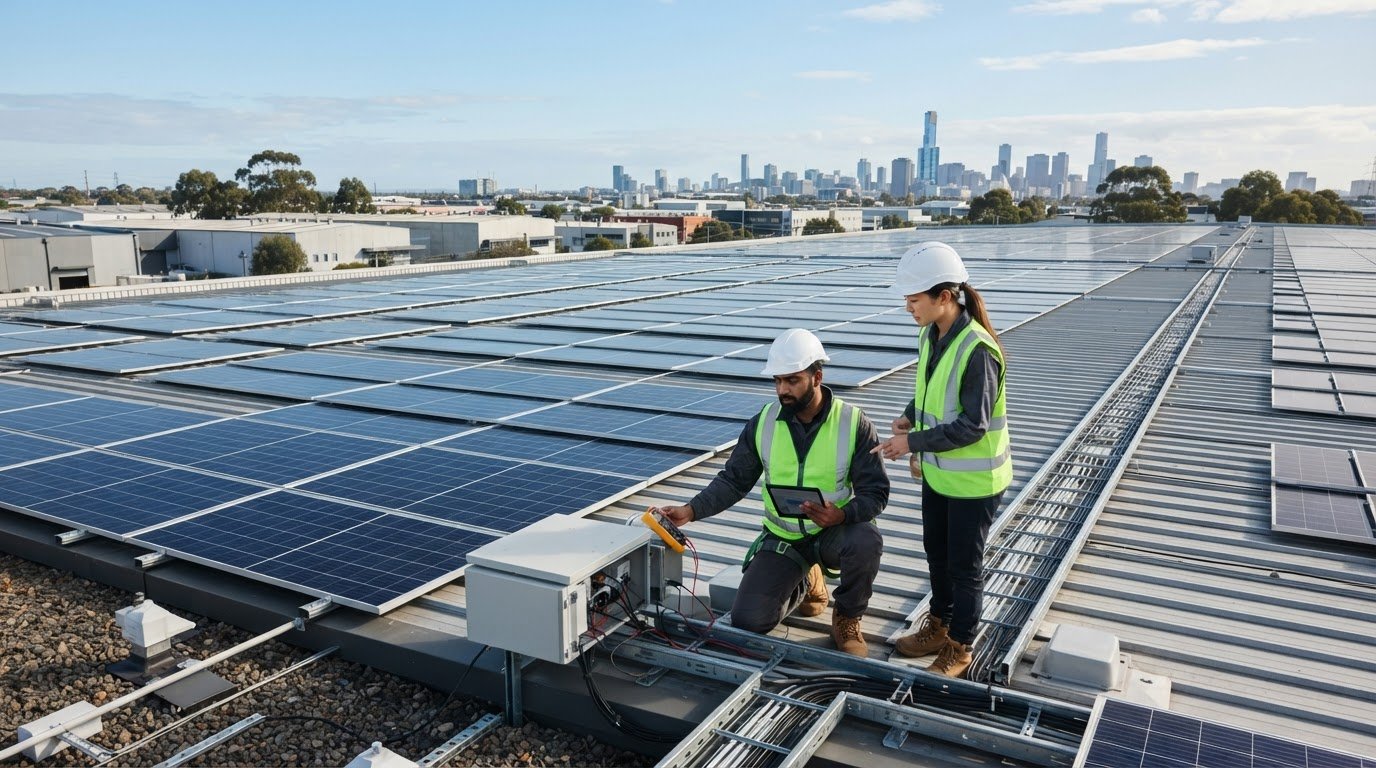
What if the biggest barrier to commercial solar isn’t the panels, but a roof, electrical constraint or operating schedule you haven’t accounted for? A commercial solar site assessment Melbourne businesses can use as a project starting point turns those unknowns into evidence for a practical plan.
Before comparing proposals, it helps to understand whether your site can support a system that suits your business. Usable roof space and condition, electrical infrastructure, electricity use and operating hours all affect what may be viable. Overlook one, and a system that looks suitable on paper may not fit how your business runs.
This guide explains what an assessment should cover, what information to prepare and how to use the findings to build a clear project brief. You’ll see how energy bills and operating schedules can inform system design, when battery storage may be worth considering and which details can help you compare proposals fairly. The aim is to understand your site’s opportunities and constraints before choosing a system.
Key Takeaways
- A commercial solar site assessment Melbourne businesses can use should connect site conditions and energy use to a practical project plan, not rely on roof area alone.
- Review energy patterns, usable roof space, electrical infrastructure and future business needs to understand the opportunities and constraints at your property.
- Use the project address to identify the relevant electricity distribution network and inform connection considerations.
- Prepare electricity bills, interval data, operating hours, equipment plans, roof access details and decision-maker priorities to support an informed assessment.
- Compare proposals by their evidence, assumptions and system rationale, then use the findings to shape a tailored solar design. Consider battery storage where it suits your business.
Why a commercial solar site assessment matters for Melbourne businesses
A roof can look spacious from the ground but offer less usable area than expected. Obstructions, roof condition, electrical infrastructure and the timing of a business’s energy use all influence whether solar is a practical fit. System capacity shouldn’t be selected from roof area alone.
A commercial solar site assessment is a structured review of a property’s physical conditions, a business’s energy use and the constraints that could shape a solar project. It identifies feasibility considerations, not the final system design or installation plan. An early assessment gives decision-makers evidence to set priorities and identify what needs further investigation before they progress to a detailed proposal.
What a Melbourne commercial solar assessment is designed to establish
A commercial solar site assessment Melbourne businesses commission should clarify whether the property and its energy demand provide a sound basis for a tailored proposal. It brings site observations together with business context, rather than treating panel count as the starting point. The photovoltaic technology used in many solar systems is outlined in this Solar Power Overview, but its suitability for a particular business depends on the site and how energy is used.
Assessment findings help shape the next questions: what capacity may suit the business, whether battery storage merits consideration, and whether a project could be planned in stages. They can also highlight constraints that affect feasibility, such as limited suitable roof space or electrical infrastructure that needs closer review. These are early findings, not a substitute for detailed design, approvals or installation planning.
This distinction helps businesses compare proposals on a useful basis. Before focusing on headline system size, decision-makers can agree on what matters most: using more solar energy on site, allowing for planned business growth, or resolving technical questions. GridFree Solar uses site and energy-use findings to inform commercial solar system design, with battery storage considered where it suits the business requirements.
Why business operations matter as much as the roof
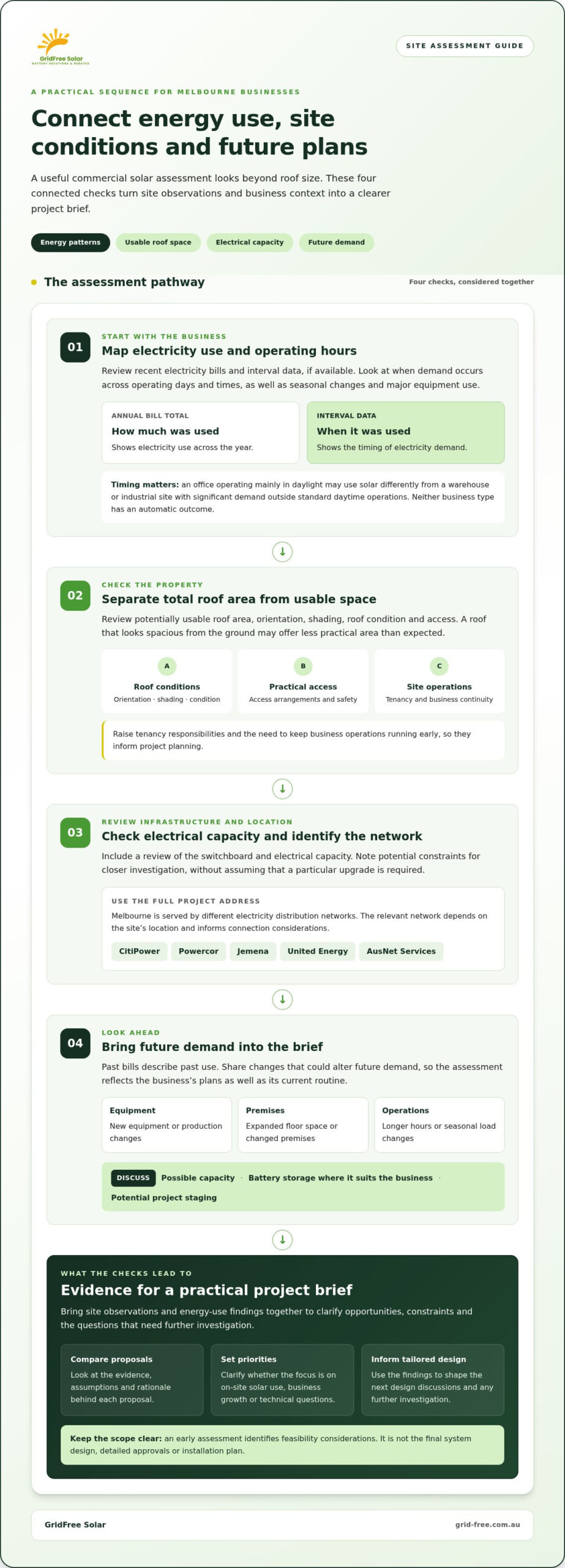
Solar generation and energy demand need to be considered together. An office operating mainly during daylight hours may use solar differently from a warehouse or industrial site with significant electricity demand outside standard daytime operations. Neither business type has an automatic outcome. Actual consumption patterns and site conditions matter.
Operating hours are only part of the picture. Seasonal changes can shift heating, cooling or production loads, while new equipment, expanded floor space or longer hours may alter future demand. If these changes are left out of the project assumptions, a proposal may reflect today’s routine but not the business’s plans.
Bring those plans into the assessment early. Share how the site runs across the week, when major equipment operates and what changes are being considered. This supports a more grounded discussion about capacity, battery storage and possible staging, based on how the business uses energy rather than an estimate drawn from roof area alone.
What a commercial solar site assessment in Melbourne should examine
A useful assessment connects four things: how the business uses electricity, what the property can accommodate, the site’s electrical infrastructure and plans that may change future demand. Each informs the others. A large roof alone doesn’t establish the right system size if the business uses most of its electricity outside solar generation hours or site constraints limit the usable area.
Interval data can show when electricity is used, while an annual bill total only shows how much was used across the year. That timing detail helps relate a business’s demand profile to likely solar generation periods, without relying on broad assumptions.
Energy use, operating hours and demand patterns
Gather recent electricity bills and interval data, if available. Review demand across operating days and times, then note seasonal changes, major equipment and planned expansion. A business adding production equipment, extending hours or changing premises may have a different future load from the one shown in past bills. These details help shape a proposal around actual operations.
Roof, electrical infrastructure and Melbourne site constraints
At an early stage, review the potentially usable roof area, orientation, shading, roof condition and access. These observations help distinguish total roof space from areas that may be practical to consider. The assessment should also cover the switchboard and electrical capacity, without assuming that a particular upgrade is required.
Record practical site conditions too. Roof access arrangements, tenancy responsibilities, safety requirements and the need to keep business operations running can all affect project planning. Raise these early so they inform the next steps instead of surfacing unexpectedly during detailed design or installation planning.
Network and Victorian programme considerations
Include the full project address. Melbourne is served by different electricity distribution networks, including CitiPower, Powercor, Jemena, United Energy and AusNet Services. The relevant network depends on the site’s location, so connection considerations can differ across the city. Requirements and approvals depend on the project and property details.
Keep incentives as a separate due-diligence item. A site assessment can provide information relevant to project planning, but it doesn’t establish eligibility for a rebate or certificate scheme. Victorian Energy Upgrades requirements and applicable certificate rules can change. Review current official guidance for the specific project before including an incentive in the financial case.
To keep the assessment evidence-led, organise the findings under these headings:
- Energy profile: Bills, interval data, operating hours and seasonal patterns.
- Roof and site: Potentially usable areas, shading, condition, access and tenancy context.
- Electrical infrastructure: Switchboard observations and matters needing further technical review.
- Business plans: Equipment changes, expansion, operating shifts and project priorities.
- Network and incentives: Address-specific connection considerations and a separate, current eligibility check.
This structure gives decision-makers a clear basis for discussing capacity, battery storage and next steps. GridFree Solar uses site and energy findings to shape commercial solar solutions for the business and property.
How to compare commercial solar assessment findings and proposals
Once you have assessment findings and proposals, compare the reasoning behind each recommendation, not just the headline system size or panel count. A larger system isn’t automatically a better fit. Its value depends on how the proposed capacity relates to the business’s demand, site conditions and priorities.
For a commercial solar site assessment Melbourne businesses can use to make a sound decision, each proposal should link its recommendations to evidence. Look for clear assumptions, documented constraints and reasoning that reflects your actual operations.
A practical framework for reviewing assessment findings
Separate what’s been observed from what’s assumed and what still needs investigation. This makes differences between proposals easier to understand and gives the business a clear record of outstanding questions.
- Energy evidence: Is the recommendation linked to electricity bills, interval data or stated operating patterns?
- Site evidence: Does it explain how usable roof area and identified constraints inform the proposed layout?
- Electrical findings: Are switchboard and infrastructure observations clearly distinguished from items requiring further technical review?
- Business fit: Does the proposed capacity reflect operating hours, future needs and the priorities agreed by decision-makers?
- Open items: Are assumptions and unresolved matters visible, rather than presented as settled findings?
This approach helps you compare like with like. A proposal should explain why its suggested system suits the site and load profile, rather than give a panel count without showing how it was reached. For more context on planning and project stages, see the commercial solar installation guide for Melbourne businesses.
When battery storage belongs in the assessment
Battery storage is a project-dependent option, not an automatic add-on. Consider whether the business uses significant energy outside likely solar generation periods, has specific resilience priorities, or wants the solar design to account for storing energy for later use. The assessment should relate any battery option to the load pattern and project objectives, rather than treating storage as suitable for every site.
Consider how the proposed solar and battery elements work together and which business requirements the storage option is intended to address. A broader overview of Melbourne energy storage solutions can help frame that discussion.
How to judge value without relying on a headline figure
Projected benefits are estimates built on assumptions. Review how the proposal treats generation, on-site use and any exported electricity, and whether those assumptions match the business’s operating profile. If two proposals reach different conclusions, compare their inputs and scope before comparing the outputs.
A clear proposal documents what’s included, which site constraints have been identified and what remains unresolved. That clarity supports a more meaningful financial comparison without relying on a generic payback promise. It also gives decision-makers a practical basis for choosing a project direction and progressing to detailed design.
How Melbourne businesses can prepare for a commercial solar site assessment
A well-prepared assessment starts with reliable information and the right people in the discussion. For a commercial solar site assessment Melbourne businesses can act on, organise documents before the review and explain how the site operates. Preparation sharpens the conversation, but doesn’t replace technical assessment, detailed design or required approvals.
Information to gather before the assessment
Bring together business records and property information that explain current electricity use and likely changes. If records cover different seasons or operating patterns, include them so the discussion isn’t based on a snapshot alone.
- Energy records: Recent electricity bills, available interval data and relevant account or meter details.
- Operating context: Usual hours, major energy loads, seasonal changes and planned equipment changes or business growth.
- Property details: Available roof plans, site access notes and information about tenancy or ownership arrangements.
- Decision priorities: What matters most, such as daytime energy use, future expansion or considering battery storage.
Share the information in a form the relevant people can access during the review. If some details aren’t available, note that clearly rather than filling gaps with estimates. A transparent starting point makes it easier to distinguish documented facts from assumptions.
Discuss a commercial solar project with GridFree Solar to put your site and business requirements into context.
What to clarify during the site review
Use the review to understand what has been observed and what remains preliminary. Record comments on potentially usable roof space, shading, access and electrical infrastructure. Clarify which points need further investigation and how the observations relate to your operating patterns and priorities.
Include practical site arrangements in the discussion. Roof access, tenancy responsibilities and the need to limit disruption to business operations can affect project planning. Explain whether your priorities centre on matching solar generation with daytime consumption, allowing for expansion or exploring storage. These are design inputs, not automatic conclusions about system size or battery suitability.
From assessment findings to a decision
After the review, turn the findings into a short written brief. Capture business objectives, site constraints, known energy information, assumptions and the criteria you’ll use to assess proposals. This gives decision-makers a shared reference point and helps keep later recommendations connected to the original project goals.
Then map the next steps. Separate detailed design from network connection considerations, approvals and incentive eligibility checks. Each depends on project details, so don’t treat an early site review as confirmation that a system is approved or eligible for an incentive. Review current requirements as the project develops.
Finally, assign responsibility for internal approvals and agree when decisions will be made. A business can set its own review milestones without assuming a standard installation schedule. With a clear brief, the assessment becomes a practical handover from initial site findings to informed project planning.
Turn your Melbourne site assessment into a tailored GridFree Solar project
A site assessment becomes valuable when its findings guide the project that follows. Verified energy patterns, property conditions and business priorities can inform a design suited to the site, rather than a standard configuration selected without operational context. A commercial solar site assessment Melbourne businesses can use should give stakeholders a clearer basis for the next decision, while recognising that the final design depends on the project’s requirements.
From property evidence to a project-specific design
GridFree Solar designs and installs commercial solar solutions for businesses, including systems for commercial and industrial energy demands. Assessment findings can connect actual electricity use with potentially usable roof areas and site constraints. Where the business’s load patterns and priorities support it, solar and battery options can be considered together as part of the design. They aren’t an automatic fit for every property. The configuration should reflect the evidence and the business’s objectives.
What a clear project pathway should address
As design develops, the project pathway should explain how the recommendation responds to the site, which assumptions inform it and what still needs resolution. Network considerations, connection processes, approvals and incentive guidance are project-specific steps, not outcomes established by an initial assessment alone. Verify current programme criteria and approval requirements for the specific project before relying on them.
For business stakeholders, a documented rationale makes it easier to understand why a system has been proposed and which decisions remain. A clear project brief can bring together:
- Business objectives: The priorities the system is intended to support, such as using solar energy on site or allowing for planned changes in demand.
- Site evidence: Relevant energy information, property conditions and constraints that shape design decisions.
- Design assumptions: The inputs behind the proposed capacity and any consideration of battery storage.
- Next steps: Further design work, address-specific network considerations, approvals and current incentive checks.
This record helps keep discussions consistent as a project moves from assessment into design development. It also shows which decisions rest on verified information and where further investigation or a current eligibility check is needed. GridFree Solar guides businesses through relevant solar and battery rebate pathways, with eligibility dependent on scheme rules and project details.
With the evidence organised, the next step is to turn site findings into a tailored commercial solar plan. Start planning your commercial solar project with GridFree Solar.
Set your commercial solar project in motion
Turn assessment findings into a decision your business can act on. Nominate a project lead, agree which priorities matter most and identify what needs resolution before approving a design. That gives stakeholders a shared direction, even when technical or incentive details still need project-specific review.
A commercial solar site assessment Melbourne businesses can use is the foundation for a considered investment, not a commitment to one system configuration. GridFree Solar carries projects forward with commercial solar design and installation, integrated solar and battery options where appropriate, and guidance through relevant rebate processes. Eligibility depends on the applicable scheme and project details.
Ready to shape a practical next step? Start planning your commercial solar project with GridFree Solar. With a clear brief and agreed priorities, you can move ahead with confidence.
Frequently Asked Questions
What does a commercial solar site assessment in Melbourne include?
A commercial solar site assessment in Melbourne typically considers the business’s electricity use, the property’s potential for solar, electrical infrastructure and practical project constraints. Its value is in showing how these factors interact, rather than producing a panel count in isolation. The findings may also flag where further investigation is needed. Use the report to identify what’s established, what’s assumed and which decisions should wait for additional technical work.
How long does a commercial solar site assessment take?
There’s no single duration for every commercial property. The time required can depend on the site’s size and layout, access arrangements, electrical infrastructure and how much information is available beforehand. A straightforward premises and a multi-building industrial site involve different considerations. Allow time to discuss operational requirements and record observations, then establish how unresolved items fit into the project process.
Can a commercial solar site assessment identify whether my roof is suitable?
It can identify roof features relevant to a solar proposal, such as potentially usable areas, shading, access and visible condition. However, an initial assessment shouldn’t be treated as structural certification or a substitute for any further technical investigation the project requires. If plans, access or visible conditions raise questions about the roof, record them as unresolved design inputs rather than assuming the roof is ready for installation.
Do Melbourne businesses need distributor approval for commercial solar?
Connection requirements depend on the property address and proposed system, so there isn’t one answer for every Melbourne business. The relevant electricity distribution network is identified by site location, and project details inform the connection process and applicable approvals. Treat this as a project step, not something confirmed by a general site review. The proposed design should account for network considerations before the business relies on a final connection plan.
Can a commercial solar site assessment confirm Victorian rebate eligibility?
No. An assessment can gather information relevant to an incentive application, but it doesn’t confirm that a business or system qualifies. Eligibility depends on the programme’s current criteria and project details. Keep any rebate or certificate value separate from early feasibility assumptions until the applicable rules and requirements have been reviewed. GridFree Solar helps customers navigate solar and battery rebate processes, but eligibility isn’t automatic.
Should a commercial solar site assessment consider battery storage?
Yes, it can consider whether storage may suit the business, but a battery isn’t necessary for every solar project. The discussion should relate to when the site uses electricity, what the business wants storage to achieve and how it fits with the proposed solar design. For example, a business with important loads outside its solar generation period may want that use pattern considered, without assuming a battery is the right solution.
What should I have ready before a commercial solar site assessment?
Have recent electricity bills and any available interval data ready, along with operating hours, major equipment details and known plans for business changes. Useful property information may include roof plans, site access instructions and tenancy or ownership details. Also identify who will make project decisions and what they need to prioritise. If records are incomplete, note the gaps so preliminary assumptions aren’t mistaken for confirmed information.
Does a commercial solar site assessment commit my business to installation?
No. An assessment is an information-gathering and planning step; it doesn’t itself commit your business to installing a system. Use the findings to decide whether to develop a detailed proposal, seek further investigation, revisit project priorities or pause. Before proceeding, make sure the relevant stakeholders understand the proposed scope and any commercial terms they’re being asked to accept. A decision to install comes later, through the project’s separate approval process.