
Table of Contents
- Quick Comparison: 5 Best Solar Battery Brands for Australian Homes
- 1. GridFree Solar: Full-Service Installation with CEC-Approved Batteries
- 2. Tesla Powerwall 3: Premium DC-Coupled All-in-One
- 3. Enphase IQ Battery 5P: Safest Modular LFP System
- 4. Sungrow SBH Series: Best Value High-Efficiency Storage
- 5. sonnenBatterie: Premium VPP-Ready Energy Independence
- How to Choose a Home Solar Battery
- Solar Battery Cost in Australia and Rebate Schemes
- Frequently Asked Questions
Last Updated: September 15, 2026
Quick Comparison: 5 Best Solar Battery Brands for Australian Homes
Choosing among the solar battery brands available today comes down to usable capacity, inverter compatibility, and payback speed. This guide from GridFree Solar compares five options.
A home battery stores surplus solar generation during the day and releases it after sunset, when grid electricity costs the most. According to the Clean Energy Council’s battery storage guidance, storage works best when sized to actual evening consumption rather than the largest capacity you can afford.
| Brand | Configuration | Chemistry | Best For | Warranty Focus |
|---|---|---|---|---|
| GridFree Solar | Full-service, CEC-approved | Lithium (CEC-approved) | End-to-end installation and rebates | Compliance and safety certified |
| Tesla Powerwall 3 | DC-coupled all-in-one | Lithium | Whole-home backup | Long-term ecosystem support |
| Enphase IQ Battery 5P | AC-coupled modular | LFP | Safety-first households | Industry-leading terms |
| Sungrow SBH Series | Modular high-efficiency | LFP | Value-focused buyers | Strong local support |
| sonnenBatterie | VPP-ready premium | LFP | Energy independence | Advanced energy trading |
1. GridFree Solar: Full-Service Installation with CEC-Approved Batteries
GridFree Solar is a strong pick for households that want the battery chosen, installed, and maintained by one accountable team. Every system uses a Clean Energy Council approved battery installed by a CEC accredited installer, compliant with AS/NZS 5139:2019 and AS/NZS 3000 (store.standards.org.au).
That matters because battery safety is the number one worry homeowners raise. A compliant installation backed by a Certificate of Electrical Safety removes the fire-risk anxiety that follows dodgy operators. The hardware also carries UN38.3 transport certification and IEC 62040-1 electrical safety compliance.
The running economics include free grid charging between 11am and 2pm, a $1 daily bonus for avoiding peak-hour grid use, and 15¢/kWh exports between 6pm and 8pm.
GridFree Solar also handles rebate guidance directly, including the federal Cheaper Home Batteries Program and state schemes, plus upgrade and replacement services later.
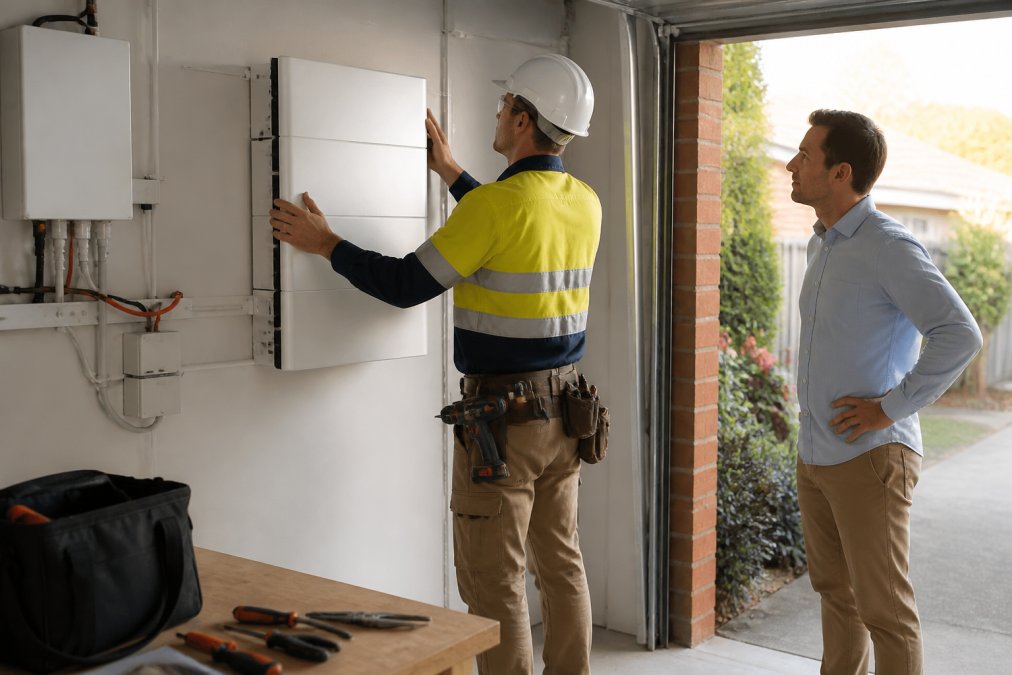
Pros: CEC approved battery and accredited installer, rebate guidance included, compliance with AS/NZS 5139:2019 and AS/NZS 3000, upgrade and replacement services.
Cons: Pricing depends on system size and site conditions, so a quote is required.
The cheapest quote rarely reflects the cheapest system. Compliance documentation, accredited installation, and ongoing support are what protect both your safety and your warranty.
2. Tesla Powerwall 3: Premium DC-Coupled All-in-One
Tesla’s Powerwall 3 is the benchmark for homeowners who want a single integrated unit and whole-home backup. Its integrated solar inverter simplifies installation, and the DC-coupled design improves round-trip efficiency by avoiding a double conversion.
The mobile app is the most polished monitoring interface on the market, and Tesla’s long-term support reputation is strong. Where it falls short is price: this is a premium unit, and the ecosystem locks you into Tesla’s inverter and software.
Pros: Integrated inverter, high power output for backup, excellent app.
Cons: Higher price point, limited third-party flexibility.
3. Enphase IQ Battery 5P: Safest Modular LFP System
Households prioritising safety and scalability should look at the Enphase IQ Battery 5P. Its lithium iron phosphate chemistry reduces thermal runaway risk versus older chemistries, and the modular design lets you add capacity as needs grow.
Response time during grid failure is fast, and warranty terms are among the most generous available. The catch is ecosystem lock-in: the 5P performs best with Enphase microinverters.
Pros: LFP safety, modular expansion, industry-leading warranty.
Cons: Requires the Enphase microinverter ecosystem.
4. Sungrow SBH Series: Best Value High-Efficiency Storage
Sungrow’s SBH Series delivers the best value in this comparison. The stackable modular design allows flexible capacity, round-trip efficiency is high, and the hardware handles varied climates without drama.
If your priority is reliable hardware at a sensible price, this is the pick. The trade-off is software: the monitoring interface is functional but less intuitive than the premium options.
Pros: Strong bang for buck, modular design, solid local support network.
Cons: Less polished user interface.
5. sonnenBatterie: Premium VPP-Ready Energy Independence
sonnenBatterie targets households chasing maximum energy independence. Build quality is exceptional, and the integrated smart energy management software enables virtual power plant participation, letting your battery earn revenue by supporting grid stability.
For readers weighing VPP participation, this is the most capable option here. The premium price is the honest limitation.
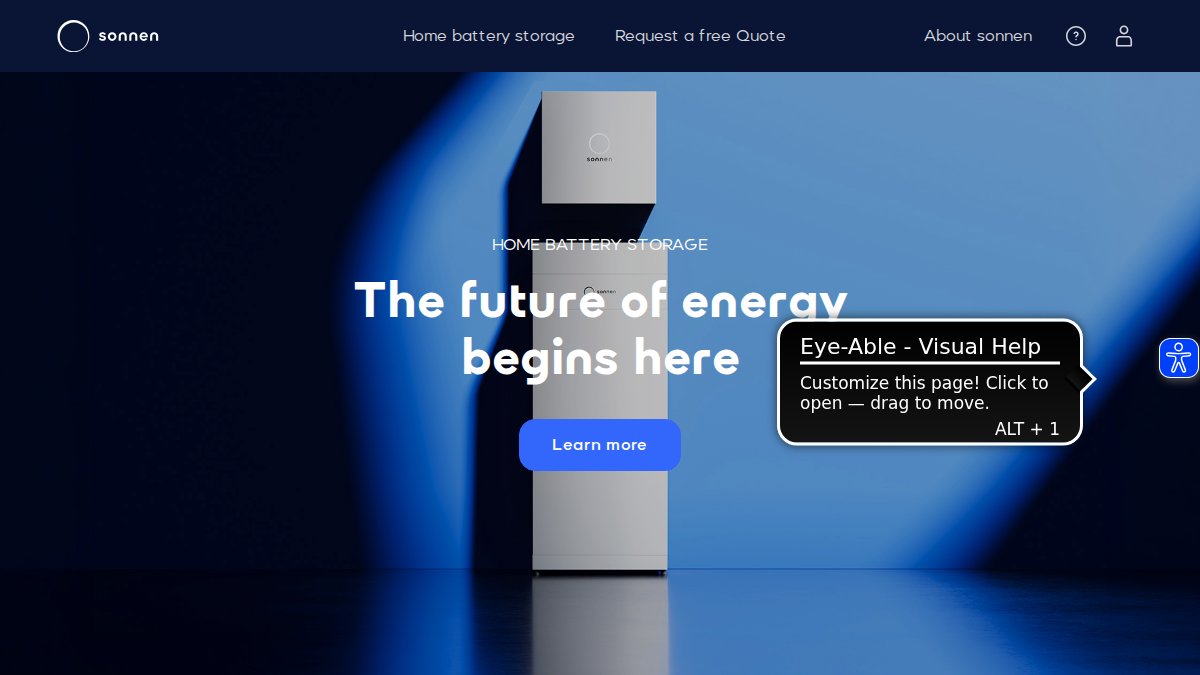
Pros: Outstanding build quality, advanced energy trading software, VPP ready.
Cons: Premium price point.
Joining a virtual power plant means handing control of your battery’s charge and discharge to an operator. Read the terms carefully: some agreements limit how much backup reserve you can keep for blackout protection.
How to Choose a Home Solar Battery
Choosing a home solar battery means matching usable capacity to your evening consumption, then confirming the unit works with your existing inverter. Get those two right and most other choices fall into place.
Match Battery Capacity to Your Evening Usage
Start with your evening load, not the battery’s headline figure. A kilowatt-hour rating tells you total storage, but depth of discharge determines how much is usable, and round-trip efficiency determines how much survives the cycle.
A simple method: pull a recent electricity bill, find your average daily consumption, and estimate what share falls between sunset and your cheapest off-peak window. That evening slice is the energy your battery needs to cover. Size for that slice plus a modest reserve for cloudy days, oversizing wastes capital, undersizing leaves you buying peak-demand electricity anyway.
Worked example: if your evening slice is around 8 kWh and you want a small backup reserve, roughly 10 kWh of usable capacity is a sensible starting point. A 13 kWh nameplate unit with 90% depth of discharge gives about 11.7 kWh usable, comfortably above the evening slice, with headroom for degradation.
Check Inverter Compatibility and Coupling
AC-coupled batteries work alongside your existing solar inverter, making them the natural choice when retrofitting storage onto an established photovoltaic system.
Retrofitting vs New System Integration
Weigh VPP Participation Before You Commit
Before joining, ask the operator:
Joining a virtual power plant means handing control of your battery’s charge and discharge to an operator. Read the terms carefully: some agreements limit how much backup reserve you can keep for blackout protection, and heavy cycling can push you past the warranty’s assumed cycle life.
Ask your installer for the battery’s cycle life at a stated depth of discharge, not just the warranty years. A warranty that runs ten years but assumes shallow cycling may not cover how you actually use the system, especially if you join a VPP.
Solar Battery Cost in Australia and Rebate Schemes
| Capacity tier | Typical household fit | What drives the price |
|---|---|---|
| Small (around 5-7 kWh usable) | Apartments, small households, essential-circuits backup | Fewer cells, simpler inverter pairing |
| Mid (around 10-13 kWh usable) | The most common whole-home evening-shift size | Larger cell stack, possible switchboard work |
| Large (around 15-20+ kWh usable) | High evening loads, EV owners, near-off-grid ambition | Multiple modules, higher inverter rating, more labour |
Federal and State Battery Rebate Schemes
Three practical points matter here:
Rebate eligibility depends on the specific product and the installer’s accreditation. A cheaper unapproved battery can cost you the entire discount, and a non-accredited installer can void it even on approved hardware.
Climate and Location Affect Real-World Cost
Ask for the battery’s usable capacity at your expected end-of-warranty degradation level, not just at day one. A unit that starts at 13 kWh but is warranted to 60% after ten years gives you far less usable energy in year nine than the headline figure suggests.
Frequently Asked Questions
Which solar battery brand is most reliable in Australia?
Reliability comes down to chemistry and warranty support. Lithium iron phosphate (LFP) batteries, used by Enphase, Sungrow and BYD, resist thermal runaway better than older nickel-based cells and typically offer 6,000 to 10,000 cycles. Check that the brand has an Australian service network and that the battery holds Clean Energy Council approval. A long warranty period matters more than a famous logo.
How much does a home solar battery cost to install?
Solar battery cost in Australia varies with capacity, inverter compatibility and whether you are retrofitting or building a new system. Pricing depends on quantity, dates, and delivery. Connect Now for current prices or a quote rather than relying on generic figures.
Are solar batteries worth the investment for Australian homes?
It depends on your usage pattern and tariff. If you use most power in the evening and face high peak demand charges, a battery that stores daytime solar for evening use shortens the payback period. Feed-in tariffs have fallen, so self-consumption saves more than exporting. Adding a virtual power plant (VPP) or rebate scheme can improve the return further.
What is the typical lifespan of a residential solar battery?
Most lithium home batteries last 10 to 15 years, defined by cycle life rather than calendar age. An LFP battery rated at 6,000 cycles at 80% depth of discharge will outlast a cheaper unit rated at 3,000 cycles. Warranties usually guarantee a minimum retained capacity, often 60% to 70%, so read the fine print on throughput limits as well as years.
Do I need a solar battery if I have solar panels?
Not necessarily, but a battery changes how much of your solar you actually use. Without storage, surplus power flows to the grid for a feed-in tariff that is usually lower than your retail rate. A battery lets you store that surplus for evening use, adding backup power during blackouts and reducing reliance on the grid during peak demand windows.
Battery storage only pays off when the system is sized correctly, installed compliantly, and supported after commissioning. GridFree Solar handles all three: CEC approved batteries fitted by accredited installers, full compliance with AS/NZS 5139:2019, and ongoing monitoring support to keep performance honest. Get started with GridFree Solar and turn your evening power bill into a line item you control.