

Table of Contents
- Why AS/NZS 5139 Compliance Matters for Your Home
- Residential Battery Fire Safety Requirements Explained
- Where to Install Your Battery: Indoor vs Outdoor Rules
- The Role of the Clean Energy Council Battery Installer Accreditation
- What a Compliance Audit Involves
- Insurance, Monitoring, and End-of-Life Safety
- Your Pre-Installation Checklist
- Conclusion: Prioritise Certified, Compliant Installation
- Frequently Asked Questions
Last Updated: September 4, 2026
Why AS/NZS 5139 Compliance Matters for Your Home
Battery storage safety is governed in Australia by AS/NZS 5139:2019, the standard that sets out how residential energy storage systems must be installed, located, and protected. This standard exists because a lithium-ion battery stores significant energy in a compact space, and a fault can escalate quickly if the system is poorly designed or fitted. For Australian homeowners, compliance is not optional paperwork; it is the primary defence against fire risk and electrical hazards.
At GridFree Solar, we treat AS/NZS 5139 compliance as the foundation of every installation we complete. The standard addresses the entire installation process, from electrical connections to ventilation requirements and clearance zones. It also requires a battery management system (BMS) that monitors cell temperatures and can isolate the unit during a fault. Without this layer of protection, a single defective cell could lead to thermal runaway, a chain reaction that generates intense heat and flammable gas.
The consequences of skipping compliance are severe. A non-compliant installation can void your home insurance, fail a property sale inspection, and expose you to liability if something goes wrong. Many homeowners only discover their system is non-compliant when an insurer asks for documentation after an incident. By then, the remedy involves a costly retrofit or full replacement.
The Standards Australia overview of AS/NZS 5139 explains that the standard applies to battery energy storage systems (BESS) connected to the grid or operating off-grid. If you are adding storage to an existing rooftop solar array, the entire installation must meet these requirements, not just the battery unit itself. This is where working with an accredited installer makes the difference between a safe system and a gamble.
Residential Battery Fire Safety Requirements Explained
Residential battery fire safety requirements centre on preventing thermal runaway, containing a fire if one starts, and giving occupants time to evacuate. The most critical element is the battery management system, which continuously monitors voltage, current, and cell temperature. When the BMS detects an abnormality, it should disconnect the battery from the home and the grid automatically.
Beyond the BMS, the physical installation must follow strict rules. The battery must be mounted on non-combustible surfaces, with clearances that prevent fire from spreading to walls, ceilings, or neighbouring structures. Ventilation requirements ensure that any gas released during a fault can dissipate rather than accumulate. Fire suppression is typically handled by the battery enclosure itself, which is designed to contain a thermal event long enough for the system to shut down safely.
A common mistake is assuming that any lithium-ion battery is inherently safe because it is new. In practice, manufacturing defects, physical damage during transport, or incorrect charging profiles can all trigger a fault. The UN38.3 certification, which covers lithium battery transport safety, verifies that a battery has passed basic abuse tests, but it does not guarantee safe installation. That is why the installation standards are separate from the battery’s own certifications.
Never install a battery yourself or use an uncertified electrician. A battery connected without proper fault detection and emergency isolation can remain energised during a fire, creating a serious hazard for firefighters and anyone nearby.
Where to Install Your Battery: Indoor vs Outdoor Rules
The choice between indoor and outdoor installation depends on the battery’s IP rating, your home’s layout, and the clearance distances required by AS/NZS 5139. Outdoor installation is generally preferred because it separates the battery from living spaces and provides natural ventilation. Indoor installation is permitted only when the battery meets specific ingress protection requirements and the room offers adequate fire separation.
For outdoor units, the battery must be rated at least IP23 for protection against water spray, and the enclosure must prevent access to live parts, which is what the IP2X rating covers. The unit should be mounted on a non-combustible wall or stand, away from windows, doors, and air conditioning intakes. Clearance zones around the battery must remain free of stored items, vegetation, and anything else that could fuel a fire.
Indoor installations demand more scrutiny. The battery should be in a room with no ignition sources, such as a garage or utility room, and the surrounding surfaces must be non-combustible. AS/NZS 5139 requires specific separation distances from doorways and exits, ensuring that a thermal event does not block your escape route. Ventilation requirements are stricter indoors because there is no natural airflow to disperse gases.
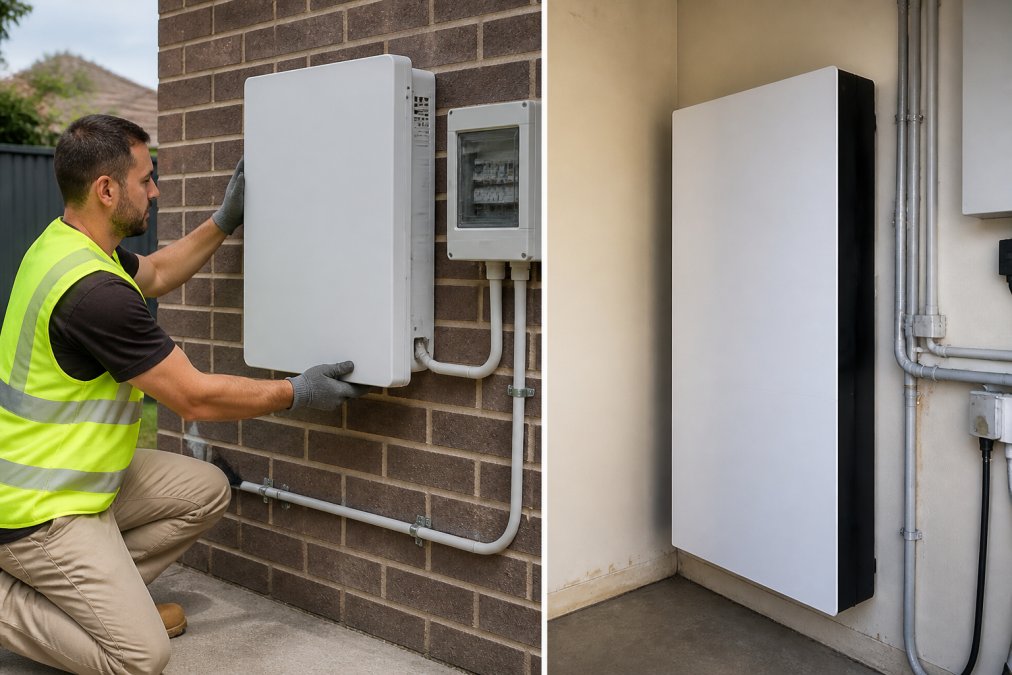
The regulatory authority in your state may also have its own requirements on top of the national standard. Before committing to a location, check whether your local council or energy distributor imposes additional setback rules. An experienced installer will handle these checks as part of the design process, but you should ask about them during the quote stage.
The Role of the Clean Energy Council Battery Installer Accreditation
Clean Energy Council battery installer accreditation is the credential that separates qualified professionals from general electricians who may lack specific battery training. The CEC accreditation program requires installers to complete dedicated training on AS/NZS 5139, battery chemistry, and safe handling procedures. It is not a tick-and-flick exercise; it is a verification that the installer understands the specific risks of energy storage systems.
Choosing a CEC-accredited installer protects you in several ways. First, it ensures your installer is up to date with the current installation standards and knows how to apply them correctly. Second, many battery manufacturers only honour their warranty if the system is installed by an accredited professional. Third, your eligibility for certain rebates and schemes, such as the Small-scale Renewable Energy Scheme, depends on using an approved installer.
GridFree Solar employs CEC-accredited installers who work to AS/NZS 5139:2019 and AS/NZS 3000, the wiring rules that govern all electrical installations in Australia. Every job is completed with a Certificate of Electrical Safety, which provides documented proof that the work meets legal requirements. If you are comparing quotes, ask each installer for their CEC accreditation number and verify it on the Clean Energy Council accredited installer register.
The accreditation also covers ongoing competence. Installers must renew their accreditation periodically and complete continuing professional development to stay current with changes to standards and battery technology. This matters because the industry is evolving quickly, and an installer who trained five years ago may not know the latest requirements for newer battery chemistries or enclosure designs.
What a Compliance Audit Involves
A compliance audit is a systematic review of your battery installation against AS/NZS 5139 and the relevant electrical standards. The audit examines documentation first, including the Certificate of Electrical Safety, the battery’s certifications, and the installer’s CEC accreditation. It then moves to a physical inspection of the installation itself.
During the physical inspection, the auditor checks the battery’s location against the approved design, verifies that clearance zones are respected, and confirms that the mounting surface is non-combustible. They will test the emergency isolation switch, review the BMS settings, and check that all electrical connections are correctly torqued and protected. The audit also covers ventilation paths and confirms that nothing has been stored against or on top of the battery since installation.
A battery audit typically takes one to two hours, depending on the system’s complexity. The outcome is a written report that either confirms compliance or lists the corrective actions required. If your installation predates the 2019 standard, the audit may identify gaps that need remediation, such as missing signage or inadequate clearances.
The audit process is not just for new installations. Post-installation safety monitoring should include a periodic audit every few years, particularly as the battery ages and its internal components degrade. A battery approaching the end of its design life may behave differently, and an audit can catch early warning signs before they become a safety issue. For peace of mind, schedule an audit after any significant electrical work in your home, as this can inadvertently affect the battery’s earthing or isolation.
Insurance, Monitoring, and End-of-Life Safety
Insurance implications of non-compliant installs are significant and often overlooked. Most Australian home insurance policies exclude damage caused by faulty or non-compliant electrical work. If a battery fire damages your home and the installation does not meet AS/NZS 5139, your insurer can refuse the claim, leaving you to cover the rebuilding costs. Conversely, a compliant installation with proper documentation strengthens your position if you ever need to claim.
Post-installation safety monitoring goes beyond the battery’s own management system. Smart monitoring platforms can track the battery’s performance, temperature trends, and charge cycles over time. These systems alert you to anomalies, such as a cell that is consistently warmer than its neighbours, before they develop into a fault. Some monitoring platforms also provide data that insurers and auditors can review, demonstrating that the system has been operating within its design parameters.
At the end of the battery’s life, typically after 8,000 cycles or roughly ten years of daily use, decommissioning requires careful handling. A lithium-ion battery is classified as hazardous materials under Australian transport regulations, so it cannot go in your regular waste bin. The battery must be removed by a qualified technician, discharged safely, and transported to an approved recycling facility. Your installer should provide guidance on this process and may offer a replacement service that includes responsible disposal of the old unit.
Ask your installer for a written end-of-life plan before you sign. Knowing how the battery will be removed, transported, and recycled prevents you from being stuck with a hazardous unit that no one will collect.
Your Pre-Installation Checklist
| Checklist Item | Why It Matters | Who Confirms It |
|---|---|---|
| CEC-accredited installer | Verifies training on AS/NZS 5139 | Check the CEC register |
| Battery has UN38.3 and IEC certifications | Confirms transport and electrical safety | Manufacturer datasheet |
| Site assessment completed | Determines indoor vs outdoor suitability | Installer’s site visit |
| Clearance zones identified | Ensures fire spread is contained | Installer’s design plan |
| Emergency isolation switch location | Allows quick disconnect during a fault | Installer and auditor |
| Certificate of Electrical Safety issued | Provides legal proof of compliant work | Installer after completion |
| Insurance policy reviewed | Confirms coverage for battery systems | Homeowner with insurer |
Work through this checklist with your installer before any work begins. The first item is the most important: a CEC-accredited installer will handle the rest correctly because they are trained to. If an installer cannot provide their accreditation number or seems vague about AS/NZS 5139 requirements, treat that as a red flag. The Australian Government guidance on battery storage safety provides additional resources for homeowners researching safe installation practices.
Also confirm how the installer handles the rebate paperwork. Schemes like the Cheaper Home Batteries Program require specific documentation, and an experienced installer will manage this as part of the service. You should receive copies of all certificates and compliance documents for your records, as you will need them for insurance claims and future property sales.
Conclusion: Prioritise Certified, Compliant Installation
Battery storage safety is not a single feature or a checkbox; it is a system of standards, certifications, and ongoing vigilance that protects your home and family. The difference between a safe installation and a hazardous one often comes down to the installer’s training and commitment to AS/NZS 5139 compliance. Cutting corners to save a few hundred dollars on installation can cost you tens of thousands in property damage or, worse, put lives at risk.
GridFree Solar builds every installation around compliance with AS/NZS 5139:2019 and AS/NZS 3000, using CEC-approved batteries and CEC-accredited installers. Our team handles the full process, from site assessment and rebate guidance to installation and ongoing monitoring support, so you receive a system that is both safe and optimised for your energy needs. We also provide a Certificate of Electrical Safety with every job, giving you documented proof of compliant work.
Get started with GridFree Solar and secure a battery system that meets the highest safety standards while delivering reliable, long-term energy savings.
Frequently Asked Questions
What is the AS/NZS 5139 standard for battery systems?
AS/NZS 5139:2019 is the joint Australian and New Zealand standard covering the safe installation of battery energy storage systems (BESS). It addresses electrical safety, battery location, ventilation requirements, clearance zones, and fire risk mitigation for lithium-ion and other battery chemistries. Compliance with this standard is essential for grid-connected and off-grid residential installations, and it works alongside AS/NZS 3000 wiring rules to ensure your system is safe.
What are the regulations for installing solar batteries in Australia?
Solar battery installations must comply with AS/NZS 5139:2019 for battery safety and AS/NZS 3000 for electrical wiring. Installers must be accredited by the Clean Energy Council to access government rebates. Local council planning rules may also apply depending on your property. A licensed electrician must complete the work and provide a Certificate of Electrical Safety. Your battery must also meet UN38.3 transport safety standards.
What are the fire safety requirements for residential battery storage?
Residential battery fire safety requirements under AS/NZS 5139 focus on preventing thermal runaway. The battery must be installed on non-combustible surfaces with specific clearance zones from doors, windows, and property boundaries. The system needs a battery management system (BMS) for fault detection, and you should have an emergency isolation procedure. Ventilation is required for some chemistries. Your installer must follow these rules to minimise fire risk.
Who is responsible for ensuring battery installation compliance?
The installation company holds primary responsibility for compliance. They must use CEC-accredited installers, follow AS/NZS 5139 and AS/NZS 3000, and obtain the required permits. As the homeowner, you are responsible for choosing a compliant installer and keeping records. Your energy retailer or network distributor may also inspect the system before connection. An independent battery audit can verify compliance after installation.
What should I look for in a certified battery installer?
Check that the company employs Clean Energy Council accredited installers and states compliance with AS/NZS 5139:2019 and AS/NZS 3000. Ask whether they provide a Certificate of Electrical Safety and documentation for warranty. Confirm they use CEC-approved batteries and offer post-installation monitoring. A certified installer should also explain clearance distances and emergency procedures clearly. Ask about their audit process before you sign.
What happens if my solar battery installation is not compliant?
A non-compliant installation can void your home insurance, making you liable for fire damage. Your energy distributor may refuse to connect the system to the grid, and you could miss out on government rebates. You may also face fines from your local regulatory authority. If you have concerns, commission an independent battery audit. Fixing non-compliance after installation is often more expensive than doing it correctly the first time.
This article was written using GrandRanker