
Table of Contents
- Solar Battery Systems for Victorian Homes
- Top Solar Battery Options Compared
- 1. GridFree Solar, Best Overall for Victorian Homeowners
- 2. Tesla Powerwall 2, Best for High-Capacity Self-Consumption
- 3. Sungrow SBR High-Voltage Battery, Best for Flexibility and Scalability
- 4. Alpha-ESS SMILE5, Best for Night-Heavy Usage and EV Charging
- 5. BYD Battery-Box Premium HVM, Best for Retrofit Flexibility
- 6. Fronius Reserva Solar Battery, Best for Complete System Integration
- 7. RedEarth DropBear, Best for Australian-Made Systems
- Solar Battery Rebate Eligibility and Government Support
- Solar Battery Cost vs Savings Analysis
- 10kWh Battery Performance and Capacity
- Key Factors for Choosing the Right Solar Battery
- Installation Safety and Compliance Standards
- Conclusion
- Frequently Asked Questions
Last Updated: August 21, 2026
Solar Battery Systems for Victorian Homes
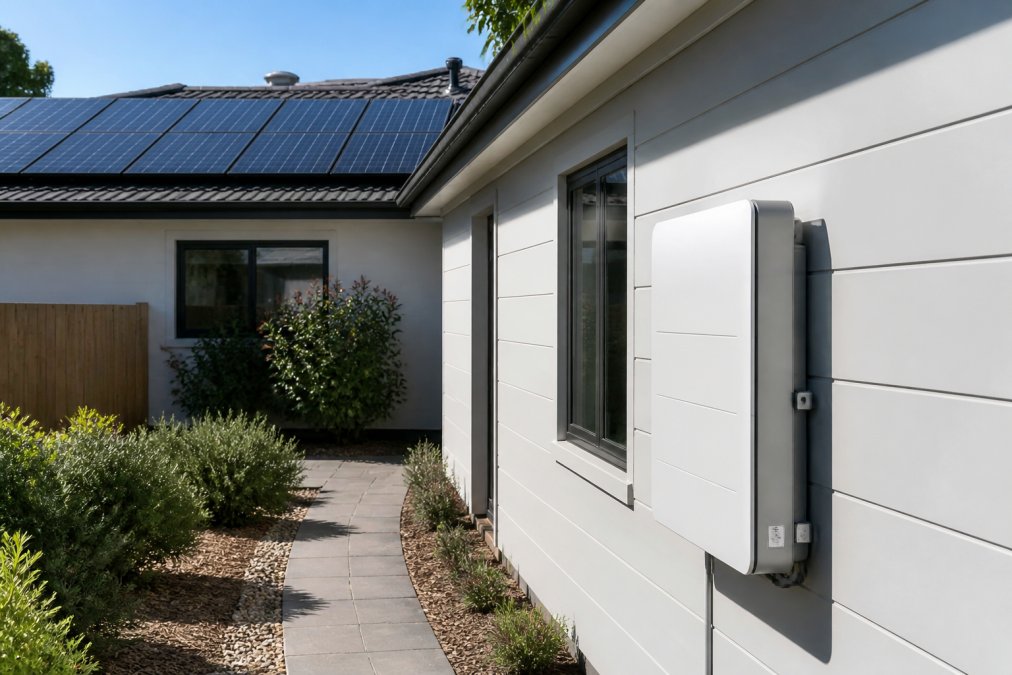
Choosing the best solar battery for Victorian homes requires understanding how energy storage fits into your specific circumstances. The right battery system transforms how you use solar energy, shifting you from grid-dependent consumption to self-reliant power management. A solar battery stores excess energy your panels generate during the day, releasing it during evening peak hours or grid outages, reclaiming control over when you consume electricity and whether you’re vulnerable to blackouts.
For Victorian homeowners facing rising grid costs and increasing load-shedding events, battery storage has moved from optional luxury to practical necessity. The decision between systems depends on household size, roof orientation, consumption patterns, and rebate eligibility. A 10kWh battery works brilliantly for some homes and sits idle for others. Understanding the trade-offs between chemistry types, coupling methods, and inverter compatibility separates smart purchases from expensive mistakes.
Most installers present battery options in isolation. The real decision involves matching battery capacity to your actual usage patterns, not just picking the biggest system your budget allows. A smaller, well-sized battery often delivers better returns than oversizing.
Top Solar Battery Options Compared
Finding the best solar battery for Victorian homes means evaluating systems across performance, safety, compatibility, and cost-effectiveness. The products below represent the leading options available in the Australian market.
1. GridFree Solar, Best Overall for Victorian Homeowners
GridFree Solar stands out as the top choice for most Victorian households because it combines CEC-approved battery systems with expert installation, comprehensive rebate guidance, and ongoing performance monitoring. Every installation meets AS/NZS 5139:2019 and AS/NZS 3000 standards, with a Certificate of Electrical Safety issued on completion (standards.org.au).
GridFree Solar’s advantage centres on three factors: compliance certainty, rebate maximisation, and real-world performance optimisation. CEC accreditation means your system qualifies for available rebates under the Cheaper Home Batteries Program and Small-scale Renewable Energy Scheme. Beyond installation, GridFree Solar provides active energy management through free grid charging (11am-2pm), a $1 daily bonus for avoiding peak-hour grid use, and 15¢ per kilowatt-hour export rates (6-8pm). GridFree Solar’s monitoring helps you capture these opportunities.
Victorian homeowners seeking a complete solution from system design through installation to ongoing optimisation, particularly those wanting professional guidance on rebate eligibility and performance monitoring.
2. Tesla Powerwall 2, Best for High-Capacity Self-Consumption
The Tesla Powerwall 2 delivers 13.5 kilowatt-hours of usable capacity with 5 kilowatts continuous power output (tesla.com). The integrated AC-coupled inverter simplifies retrofitting to existing solar systems, and 90-92% round-trip efficiency minimises energy loss. You can stack up to ten units for 135 kilowatt-hours total storage, supporting genuine off-grid scenarios or extended outage protection.
However, Tesla ceased Powerwall 2 production in late 2024, replaced by Powerwall 3. Existing stock remains available through authorised installers, but future support and spare parts availability carry uncertainty.
Powerwall 2 production has ended. If you’re considering this model, verify parts availability and long-term support with your installer before committing.
3. Sungrow SBR High-Voltage Battery, Best for Flexibility and Scalability
The Sungrow SBR series uses modular design with 3.2 kilowatt-hour blocks, allowing you to start with 6.4 kilowatt-hours and expand to 25.6 kilowatt-hours in a single unit. Lithium iron phosphate (LFP) chemistry delivers superior safety with lower thermal runaway risk and longer cycle life. Round-trip efficiency exceeds 95%, among the highest available (sungrowpower.com).
The primary limitation is inverter lock-in. Sungrow batteries integrate seamlessly with Sungrow SH-RT hybrid inverters but require additional compatibility considerations with other brands.
4. Alpha-ESS SMILE5, Best for Night-Heavy Usage and EV Charging
The Alpha-ESS SMILE5 offers modular capacity from 2.9 to 80 kilowatt-hours with an integrated 5 kilowatt single-phase hybrid inverter. Fast uninterruptible power supply response switches to backup power in under 20 milliseconds during outages. This system excels for households with significant evening consumption. CEC approval makes it eligible for the Cheaper Home Batteries Program rebate.
5. BYD Battery-Box Premium HVM, Best for Retrofit Flexibility
The BYD Battery-Box Premium HVM scales from 8.3 to 22.1 kilowatt-hours per unit, stackable to 66.2 kilowatt-hours. Cobalt-free LFP chemistry and compatibility with many third-party inverters, including Fronius Gen24 Plus, make this an excellent choice for retrofitting existing solar systems without inverter replacement.
6. Fronius Reserva Solar Battery, Best for Complete System Integration
The Fronius Reserva scales from 6.3 to 15.8 kilowatt-hours per unit, expandable to 63 kilowatt-hours. For homeowners with Fronius hybrid inverters, this represents the most seamless integration available. DC-coupling minimises energy loss, and IP65 weatherproofing handles extreme Australian climate conditions.
7. RedEarth DropBear, Best for Australian-Made Systems
RedEarth DropBear is factory-tested in Brisbane using Selectronic SP Pro battery inverters and RedEarth’s TROPPO 4841 lithium batteries. Battery capacity ranges from 13.2 to 44 kilowatt-hours. This system shines for country homes and off-grid applications where Australian-made components and local support matter. The 10-year repair and replacement warranty with included monitoring provides peace of mind.
| Battery System | Chemistry | Key Capacity | Coupling Type | Best For |
|---|---|---|---|---|
| GridFree Solar | LFP | Flexible | Hybrid | Complete Victorian solution with rebate support |
| Tesla Powerwall 2 | NCA | 13.5 kWh | AC | High-capacity backup and scalability |
| Sungrow SBR | LFP | 6.4-25.6 kWh | DC | Modular expansion with Sungrow inverters |
| Alpha-ESS SMILE5 | LFP | 2.9-80 kWh | Hybrid | Night-heavy usage and EV charging |
| BYD Battery-Box | LFP | 8.3-22.1 kWh | DC | Retrofit flexibility with inverter choice |
| Fronius Reserva | LFP | 6.3-15.8 kWh | DC | Complete Fronius ecosystem integration |
| RedEarth DropBear | LFP | 13.2-44 kWh | AC | Australian-made and off-grid capability |
Solar Battery Rebate Eligibility and Government Support
Government rebates significantly reduce upfront battery costs. The Cheaper Home Batteries Program provides rebates for systems meeting Clean Energy Council approval standards and installation by CEC-accredited installers. The Small-scale Renewable Energy Scheme generates renewable energy certificates based on system capacity, creating ongoing value through certificate trading.
To qualify, your battery must be CEC-approved, your installer must hold CEC accreditation, and your system must comply with AS/NZS 5139:2019 safety standards. GridFree Solar’s CEC accreditation and approved battery partnerships ensure your installation meets these requirements, simplifying rebate applications and maximising available support.
Many Victorian households also qualify for additional state-based support through the Victorian Government’s solar rebate programs, though specific eligibility varies.
Rebate programs change annually, and eligibility criteria shift based on state budget allocations. Engage an accredited installer early in your planning to confirm current rebate status rather than assuming eligibility based on previous years’ programs.
Solar Battery Cost vs Savings Analysis
Pricing for a solar battery system depends on various factors. Savings depend on your current grid consumption patterns, peak-hour usage, and export tariff rates. A household consuming 20 kilowatt-hours daily with half that consumption during peak hours can see significant annual savings through reduced peak-hour grid purchases, with export earnings adding to the financial benefits at current feed-in tariff rates.
Payback periods vary depending on system size and available rebates. Beyond payback, the system continues generating savings for 15-20 years, the typical warranty period for modern batteries. Battery storage protects you against rising grid prices, locking in energy independence for decades.
10kWh Battery Performance and Capacity
A 10 kilowatt-hour battery represents a common choice for many Victorian homes, often large enough to cover evening consumption without grid support, yet small enough to charge fully from typical rooftop solar systems. Ten kilowatt-hours stores enough energy to run a typical home for 4-6 hours at average consumption rates, covering the period from sunset through 10-11pm when most households draw peak power.
A 10 kilowatt-hour system charges fully from 5-6 kilowatts of solar panels in 2-3 hours during peak sun (10am-1pm). If your roof receives 4 kilowatts of panels, charge time extends to 2.5-3.5 hours. Most modern lithium batteries use 90% depth of discharge, meaning a 10 kilowatt-hour battery delivers approximately 9 kilowatt-hours of usable energy. Round-trip efficiency ranges from 85% to 95% depending on system design, representing normal energy loss during charging and discharging.
Key Factors for Choosing the Right Solar Battery
Selecting the best solar battery for your situation requires evaluating multiple dimensions beyond price.
Battery Chemistry and Safety
Lithium iron phosphate (LFP) chemistry dominates the modern market because it delivers superior safety compared to nickel-manganese-cobalt (NMC) alternatives. LFP batteries resist thermal runaway and tolerate deeper discharge cycles without degradation. NMC batteries offer higher energy density but carry greater fire risk, particularly if damaged or exposed to temperature extremes. All systems covered in this guide use LFP chemistry, reflecting the industry shift toward safety-first design.
System Coupling and Inverter Compatibility
Solar batteries couple to inverters in two ways: AC-coupling and DC-coupling. AC-coupled systems (Tesla Powerwall 2, Alpha-ESS SMILE5, RedEarth DropBear) include integrated inverters that convert battery power to household AC current independently, allowing retrofitting to almost any existing solar system without inverter replacement.
DC-coupled systems (Sungrow SBR, BYD Battery-Box, Fronius Reserva) connect directly to hybrid inverters, eliminating a conversion step and improving efficiency by 2-4 percentage points. For new installations, DC-coupling makes sense because you’re choosing both inverter and battery together. For retrofits to existing systems, AC-coupling often avoids expensive inverter replacement.
Warranty and Cycle Life
Battery warranties typically cover 10 years or 6,000-8,000 charge cycles, whichever comes first, guaranteeing 70-80% capacity retention after the warranty period. A 10 kilowatt-hour battery cycled once daily completes 3,650 cycles in 10 years. A battery rated for 8,000 cycles continues functioning beyond warranty, though at reduced capacity. LFP chemistry supports higher cycle counts (typically 8,000-10,000) compared to NMC alternatives, justifying the chemistry choice for long-term value.
Installation Safety and Compliance Standards
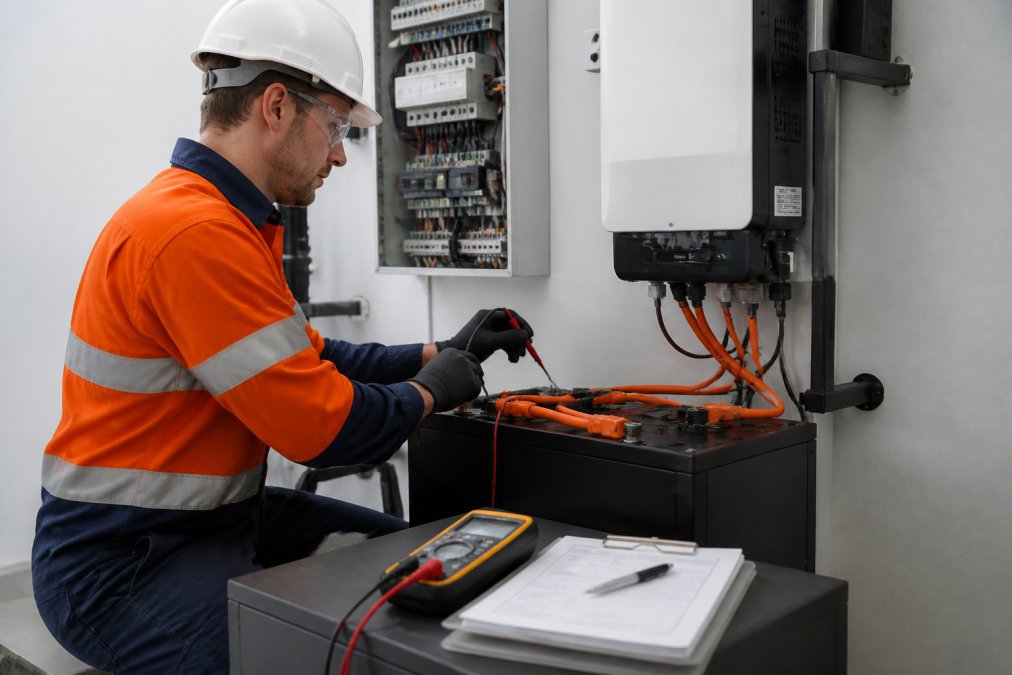
Safe battery installation requires compliance with multiple Australian standards. AS/NZS 5139:2019 governs battery energy storage systems, establishing safety requirements for electrical design, thermal management, and emergency shutdown. AS/NZS 3000 covers general electrical installation safety. Non-compliant installations void manufacturer warranties, create insurance complications, and expose you to liability if failure causes property damage.
CEC-accredited installers like GridFree Solar maintain compliance as standard practice, issuing a Certificate of Electrical Safety on completion. This certificate proves your system meets Australian safety standards and qualifies for rebates. GridFree Solar’s compliance commitment extends beyond basic standards, including thermal management design to prevent overheating in Australian summer conditions, proper ventilation to manage battery cooling, and integration with your home’s electrical system to prevent overload or fault conditions.
Budget installers sometimes skip compliance steps to reduce costs. The savings disappear immediately if your warranty is voided, your rebate application is rejected, or your insurer denies a claim. Compliance isn’t optional, it’s the foundation of a safe, valuable system.
Conclusion
The best solar battery for Victorian homes depends on your specific consumption patterns, existing solar system design, and budget constraints. GridFree Solar emerges as the top overall choice because it combines CEC-approved batteries, expert installation, comprehensive rebate guidance, and ongoing performance monitoring. The system qualifies for government rebates under the Cheaper Home Batteries Program, includes compliance with AS/NZS 5139:2019 and AS/NZS 3000 standards, and delivers the 15¢ per kilowatt-hour export earnings and $1 daily peak-avoidance bonus that transform storage into genuine financial benefit.
The upfront investment in battery storage intimidates many homeowners, but the long-term value, combining lower grid costs, export earnings, blackout protection, and energy independence, justifies the commitment. The key is ensuring your system is properly sized, safely installed, and actively optimised for your household’s specific patterns. GridFree Solar handles this complexity end-to-end, removing the guesswork from one of the largest energy decisions you’ll make. Connect Now to discuss your system requirements and confirm rebate eligibility for your Victorian home.
Frequently Asked Questions
Is there a solar battery rebate available for Victorian homeowners?
Yes. The Cheaper Home Batteries Program provides rebates for eligible battery systems installed by Clean Energy Council (CEC) accredited installers. The Small-scale Renewable Energy Scheme also supports solar battery installations through renewable energy certificates. Eligibility depends on system capacity, battery type, and installer accreditation. GridFree Solar, as a CEC-accredited installer, can guide you through rebate eligibility and help maximise your financial support.
How long will a 10kWh battery last during a power outage?
A 10kWh battery can power essential household appliances for 8-12 hours depending on consumption patterns. If you run a refrigerator, lights, and chargers continuously, expect 6-8 hours. Peak loads (heating, cooling, or multiple appliances) reduce duration significantly. Round-trip efficiency and depth of discharge affect usable capacity. Lithium iron phosphate (LFP) batteries like those in the Alpha-ESS SMILE5 and Sungrow SBR deliver consistent performance throughout discharge cycles.
What is the difference between AC-coupled and DC-coupled solar batteries?
DC-coupled batteries (like Sungrow SBR and BYD Battery-Box) connect directly to the solar inverter, delivering higher round-trip efficiency (95%+) and faster response times. AC-coupled systems (Tesla Powerwall 2) connect to the grid side, offering easier retrofitting to existing systems but with slightly lower efficiency (90-92%). Your choice depends on whether you’re installing a new system or retrofitting an existing one. GridFree Solar can assess your setup and recommend the best coupling method.
How does solar battery cost compare to long-term energy savings in Victoria?
Solar battery payback periods vary through reduced grid consumption, peak shaving, and feed-in tariff earnings (15¢/kWh export during 6-8pm peak). Time-of-use rates and the Cheaper Home Batteries Program rebate accelerate savings. GridFree Solar provides personalised savings analysis based on your consumption patterns, roof orientation, and local tariffs to help you understand your real return on investment.
This article was written using GrandRanker