Table of Contents
- Why solar energy system maintenance is essential
- Signs your solar system needs repair or servicing
- How often to service solar panels and what’s involved
- Solar panel maintenance checklist for homeowners
- Solar panel cleaning cost and frequency
- DIY vs professional maintenance: what you can and cannot do
- System monitoring and fault detection
- Frequently Asked Questions
Last Updated: August 14, 2026
Why solar energy system maintenance is essential
A photovoltaic system represents one of the largest investments a homeowner can make. Like any significant asset, it demands regular attention to protect that investment and ensure it delivers the returns you’re counting on.
Solar panels don’t maintain themselves. Dust, debris, bird droppings, and weather exposure gradually degrade panel efficiency. Electrical connections loosen over time. Inverters age. Without preventative maintenance, your system’s output declines silently, and you’ll notice lower energy yields without understanding why.
GridFree Solar’s approach to solar energy system maintenance recognises this reality. A well-maintained system operates at peak capacity, maximises your energy independence, and protects your home from electrical hazards. Neglecting maintenance costs far more in lost energy production and emergency repairs than any preventative programme would cost.
Beyond performance, there’s a safety dimension. Faulty cabling, corroded connections, and electrical isolator failures can create fire hazards. Regular inspections catch these issues before they escalate. Compliance with Australian standards like AS/NZS 3000 and AS/NZS 5139:2019 is essential for your home’s safety and your system’s longevity.
A solar energy system maintenance programme protects both your investment and your home. Neglecting maintenance costs more in lost production and emergency repairs than prevention ever would.
Signs your solar system needs repair or servicing
Your system will tell you when something’s wrong if you know what to listen for. The most obvious signal is a drop in energy output. If your monitoring system shows lower production on sunny days than it did months ago, something has changed.
Visual inspection reveals other warning signs. Look at your panels from ground level for visible cracks, discolouration, or water stains inside the glass. Mounting hardware that’s visibly corroded or loose indicates weathering stress. Bird nesting under panels, evidenced by debris accumulation, damages cabling and creates fire risk.
Your inverter speaks through error codes. A display showing fault codes rather than normal operation status means the system has detected an internal problem. Any persistent error warrants professional diagnosis. Similarly, if your inverter is completely silent or making unusual humming sounds, internal components may be failing.
A licensed electrician performing thermal imaging inspection can identify hot spots on panels, areas where microcracks or internal faults create resistance and heat. These aren’t visible to the naked eye but represent real degradation.
If your system shows declining output, visible damage, or inverter error codes, contact a qualified technician immediately. Delaying diagnosis increases the risk of electrical faults and fire hazards.
Monitoring data provides early warning. Real-time system monitoring platforms flag anomalies automatically. If your monitoring system sends alerts about voltage irregularities, string performance mismatches, or inverter faults, act on them promptly.
How often to service solar panels and what’s involved
Most Australian homeowners should plan for at least one comprehensive inspection annually, with additional seasonal checks in high-risk periods.
Annual inspections and testing
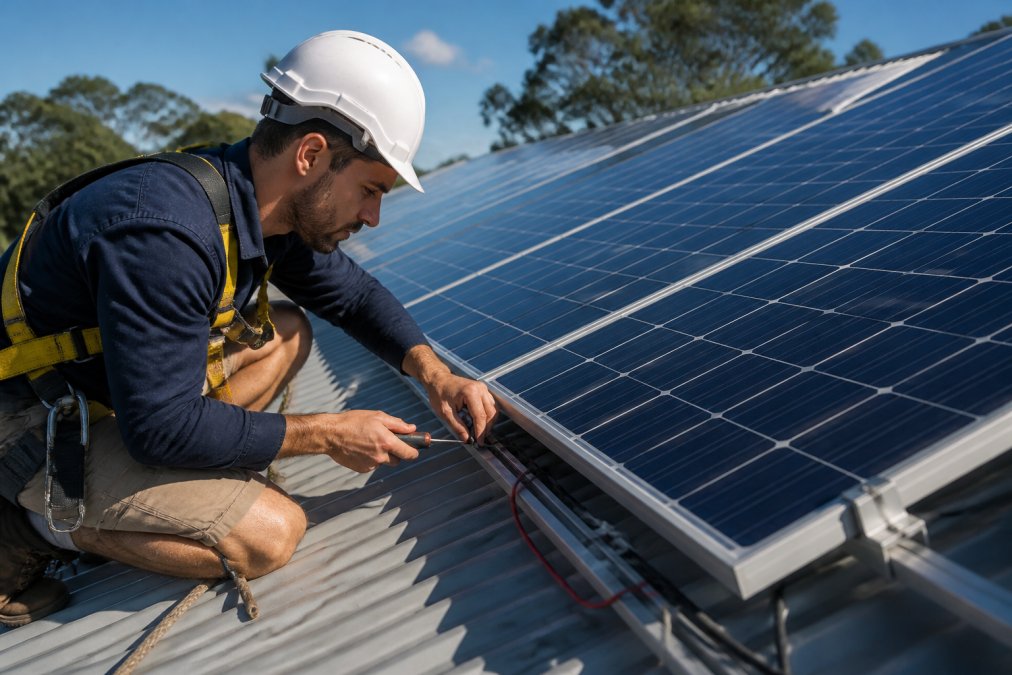
An annual inspection is the foundation of preventative maintenance. A qualified technician will inspect the photovoltaic array for physical damage, test electrical connections for corrosion, verify that the solar inverter is operating within specifications, and check mounting hardware for security.
The inspection includes AC/DC testing to ensure voltage and current flow match design specifications. Thermal imaging identifies hot spots on panels that indicate internal faults. Cabling insulation resistance testing verifies that electrical pathways are safe. The technician will also verify that your electrical isolator is functioning properly and that all safety switches are accessible and operational.
Many systems benefit from firmware updates to the inverter. Manufacturers release updates that improve efficiency, fix bugs, and enhance monitoring capabilities. A technician can review your inverter’s settings to ensure they’re optimised for your specific installation and local grid conditions.
Schedule your annual inspection during autumn or early winter when weather is stable and your system’s performance baseline is clearest. This timing also allows you to address issues before the high-demand summer period.
Seasonal checks and debris removal
Beyond the annual inspection, seasonal maintenance addresses environment-specific challenges. In spring, when pollen and dust accumulation peaks, professional cleaning removes debris that reduces panel efficiency. In high-dust areas, regular cleaning can recover 1-15% of lost output.
After storms, inspect your system for visible damage. Heavy wind can loosen mounting hardware. Hail can crack panels. Lightning strikes near your home can damage electrical components.
Bird proofing becomes important if nesting occurs under your panels. Professional bird-proofing mesh installation prevents fire hazards without restricting airflow or degrading panel performance.
In coastal areas, salt spray corrosion accelerates, so cleaning frequency may increase.
Solar panel maintenance checklist for homeowners
A structured approach keeps maintenance organised and ensures nothing is overlooked.
Monthly (visual inspection only):
- Check inverter display for error codes or unusual readings
- Look for visible debris, bird nesting, or physical damage on panels
- Review monitoring data for output trends
Quarterly (or seasonally):
- Clean panels if dust or pollen accumulation is visible
- Inspect cabling for exposed wires or damage
- Check mounting hardware for visible corrosion or looseness
- Verify that electrical isolators are accessible and functional
Annually (professional service):
- Comprehensive electrical testing (AC/DC voltage and current)
- Thermal imaging to detect hot spots and internal faults
- Inverter performance analysis and firmware updates
- Cabling insulation resistance testing
- Safety compliance verification against AS/NZS 3000 standards
- System performance benchmarking
| Task | Frequency | Complexity | Typical Duration |
|---|---|---|---|
| Visual inspection | Monthly | Low | 10 minutes |
| Panel cleaning | Quarterly-annually | Low | 1-2 hours |
| Electrical testing | Annually | High | 2-3 hours |
| Thermal imaging | Annually | High | 1-2 hours |
| Inverter diagnostics | Annually | High | 1 hour |
| Cabling inspection | Annually | Medium | 1 hour |
Most homeowners can handle visual inspections and basic cleaning. Electrical testing, thermal imaging, and inverter diagnostics require professional credentials and specialised equipment.
Solar panel cleaning cost and frequency
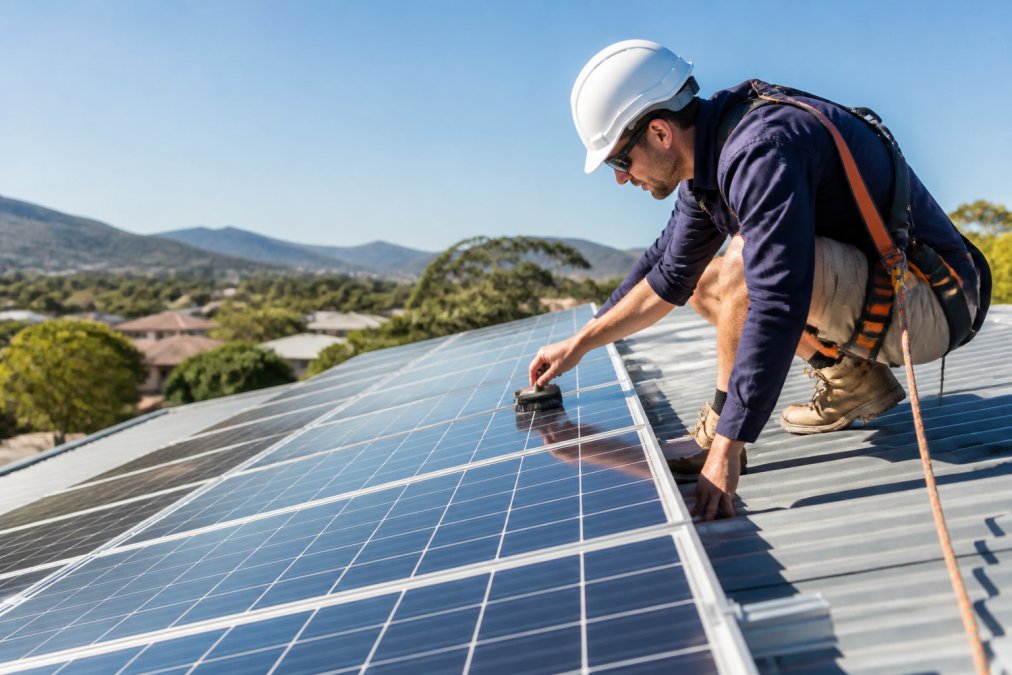
Panel cleaning is one of the most accessible maintenance tasks. Dust, pollen, bird droppings, and leaf debris accumulate gradually, reducing the light reaching photovoltaic cells. In dry climates or areas with significant dust, cleaning frequency increases. Coastal regions experience salt spray buildup. Tree-lined properties see more debris.
Professional cleaning services are available across Australia using deionised water and soft-brush techniques to avoid scratching the glass surface. Cleaning frequency depends on your environment. Homes in dusty areas or with heavy pollen exposure may benefit from cleaning every 3-6 months. Coastal properties facing salt spray should clean more frequently. Many homeowners find that annual professional cleaning combined with occasional visual inspection keeps systems operating efficiently.
The cost-benefit calculation is straightforward: a modest cleaning expense prevents months of degraded output. A system operating at 85% efficiency due to dirt accumulation loses real energy production.
Homeowners in dusty, coastal, or heavily-treed areas should prioritise professional cleaning. Those in cleaner environments may clean less frequently and save on service costs.
DIY vs professional maintenance: what you can and cannot do
Clear boundaries exist between tasks homeowners can safely manage and those requiring professional credentials.
What homeowners can do:
- Visual inspections for obvious damage, debris, or loose components
- Basic panel cleaning using soft brushes and deionised water (on single-storey systems where roof access is safe)
- Monitoring system performance through your monitoring app
- Documenting changes in output or error codes for your technician
What requires a licensed professional:
- Any electrical testing (voltage, current, insulation resistance)
- Inverter diagnostics, firmware updates, or configuration changes
- Thermal imaging inspection
- Cabling work or connection tightening
- Mounting hardware repairs or adjustments
- Any work involving the electrical isolator or safety switches
Working on live electrical systems without proper training creates electrocution and fire hazards. Unauthorised modifications to your inverter may void manufacturer warranties. Most homeowner insurance policies exclude damage from unauthorised repairs.
GridFree Solar’s CEC Accredited Installers bring professional credentials and proper equipment. They understand AS/NZS 3000 compliance requirements and can identify issues invisible to the untrained eye. A technician with thermal imaging can spot microcracks in panels before they become serious problems. The cost of professional maintenance is modest compared to the cost of system failure.
System monitoring and fault detection
Real-time system monitoring transforms maintenance from reactive to proactive. Modern monitoring systems track performance continuously, flagging anomalies automatically.
A monitoring platform provides real-time insights into your photovoltaic system’s output. It compares your actual production against expected performance based on weather conditions, time of day, and season. When actual output falls below expected levels, the system alerts you.
Monitoring systems identify specific fault patterns. A string inverter with one underperforming string shows up as a performance gap. A single panel with internal faults produces differently than its neighbours. Inverter voltage irregularities appear as anomalies in real-time data. These patterns guide technicians toward the root cause, speeding diagnosis and repair.

Many monitoring systems send alerts directly to your installer’s technicians. GridFree Solar’s approach integrates monitoring with maintenance support, meaning your system’s performance data flows to professionals who can interpret it and recommend action. This removes guesswork from maintenance decisions.
Monitoring data helps you understand your system’s behaviour. You’ll see how weather affects output, which times of day produce most energy, and how your consumption patterns interact with production. This knowledge supports smarter energy management and battery charging strategies.
Solar energy system maintenance isn’t optional, it’s the foundation of system reliability, safety, and long-term performance. Regular inspections, seasonal cleaning, and professional diagnostics protect your investment and ensure your system delivers the energy independence and savings you expect.
GridFree Solar’s comprehensive maintenance support, combined with CEC Accreditation and compliance with AS/NZS 5139:2019 standards, ensures your system receives expert care. From annual inspections to real-time monitoring and fault detection, professional maintenance catches problems early and keeps your system operating at peak efficiency. Clean Energy Council accreditation standards verify that accredited installers meet rigorous professional requirements. Connect with GridFree Solar today to establish a maintenance programme tailored to your system’s needs and your home’s specific conditions.
Frequently Asked Questions
How often should a solar energy system be serviced?
Most solar energy systems benefit from an annual professional inspection to check inverter performance, electrical connections, and panel condition. Some systems in dusty or coastal environments may need more frequent checks. If your system includes battery storage, additional quarterly checks are recommended. Your installer can advise on the optimal schedule for your specific setup and location.
What does a standard solar panel maintenance checklist include?
A comprehensive solar panel maintenance checklist covers inverter health checks, electrical isolator inspection, cabling and connection testing, thermal imaging to detect hot spots, mounting hardware assessment, and visual panel inspection for cracks or degradation. Professional services also test AC and DC voltage, check insulation resistance, and verify that your system meets AS/NZS 3000 electrical safety standards. This prevents performance degradation and identifies faults early.
Is it worth paying for solar panel cleaning, and what does it cost?
Yes, professional cleaning improves energy yield by removing dust, debris, and bird droppings that block sunlight. Cleaning costs vary depending on system size and roof accessibility; services typically start from around $89. The frequency depends on your environment, coastal or dusty areas may need cleaning every 3-6 months, while cleaner areas might need it annually. Regular cleaning protects your investment and maximises power output.
Can I perform solar maintenance myself or do I need a professional?
You can perform basic visual checks and keep the area around your panels clear of debris. However, electrical testing, inverter diagnostics, voltage testing, and thermal imaging require a licensed electrician accredited by the Clean Energy Council. DIY work on electrical components risks your safety and voids warranties. Professional maintenance ensures your system complies with AS/NZS 5139:2019 standards and identifies faults that affect system longevity and safety.
This article was written using GrandRanker