
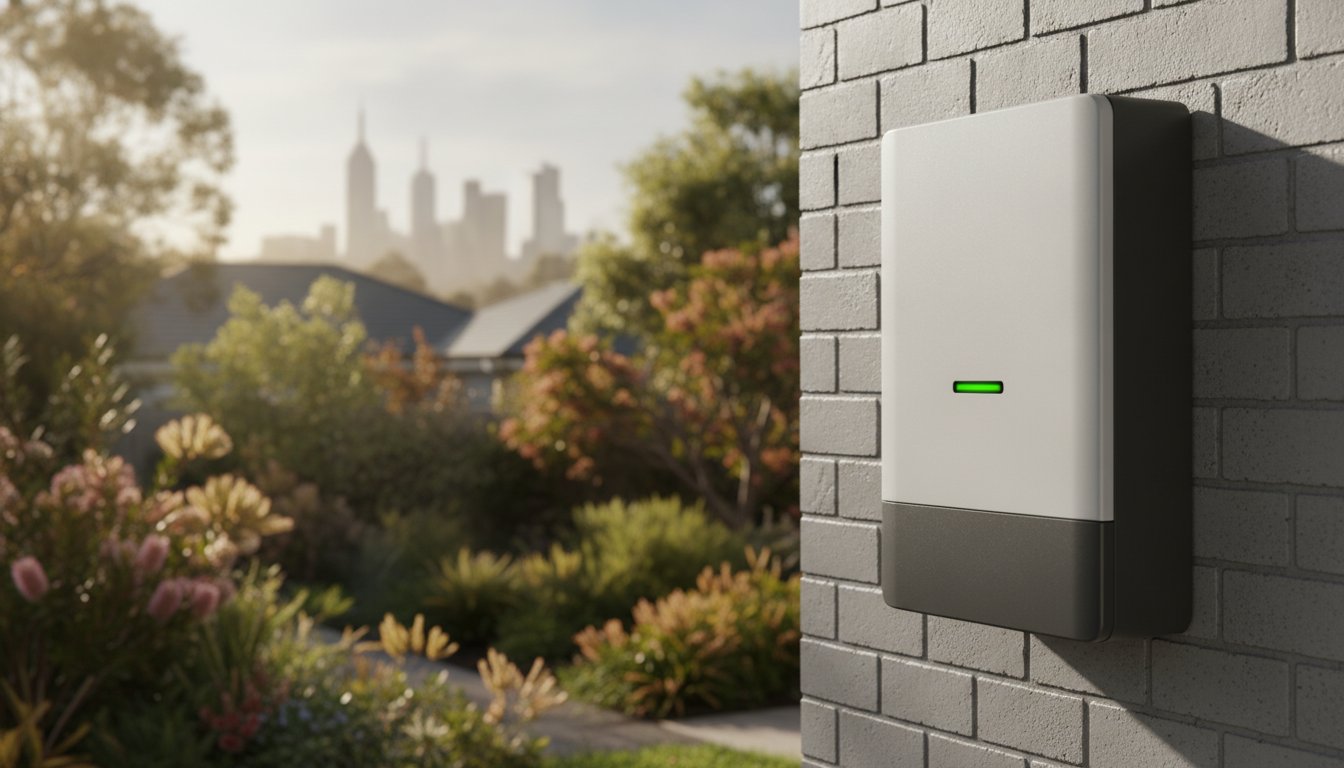
Most Melbourne homeowners treat their solar storage like a ticking clock, fearing the system will fail the moment the 10-year warranty expires. It is a costly misconception. The real answer to how long do solar batteries last is not found on a manufacturer’s sticker; it is found in the chemistry and how you manage your daily cycles. You deserve to know if your investment will actually survive long enough to deliver a full return on your capital.
We understand the anxiety. Between confusing technical jargon and Melbourne’s unpredictable weather, it is easy to feel uncertain about the future of your energy independence. This guide cuts through the noise. We provide the hard data on Australian battery lifespans and show you how modern LFP technology is pushing boundaries well beyond the standard decade. You will learn the specific factors that dictate storage health and how to extend your system’s life into the 2040s. We will break down the 2026 performance benchmarks, the impact of local temperatures, and the exact signs that indicate it is finally time for a professional replacement.
Key Takeaways
- Understand why a battery’s functional life is measured by its ability to hold a 70% charge, not just the expiration of its manufacturer warranty.
- See how Melbourne’s temperate climate provides the ideal environmental “Goldilocks zone” to protect your system’s internal chemistry from premature degradation.
- Compare the 2026 performance data of LFP versus NMC units to choose the chemistry that offers the highest cycle life and superior thermal safety.
- Learn how long do solar batteries last when you optimise your depth of discharge and leverage the latest Victorian rebates to boost your long-term ROI.
- Spot the critical red flags, from rapid discharge to economic obsolescence, that tell you it is time for a professional battery upgrade or replacement.
Understanding Solar Battery Lifespan: Years vs Cycles
The most common question Melbourne homeowners ask is how long do solar batteries last? To answer that, we have to look past the marketing brochures. In the professional solar industry, a battery is considered at its “end of life” not when it stops working entirely, but when its capacity drops below 70% of its original rating. Think of it as a fuel tank that gradually shrinks over time. The system will still power your home; it simply has a smaller reserve to draw from. By 2026, the industry standard for premium units has shifted toward 6,000 to 10,000 cycles, representing a massive leap in durability compared to systems installed just five years ago.
We distinguish between calendar life and cycle life to give you a true estimate of longevity. Calendar life is the natural aging process of the internal chemistry. Cycle life is the wear and tear from daily use. For a typical household cycling their system once per day, a 6,000-cycle rating suggests a potential lifespan of over 16 years. However, your actual results depend on how hard you push the system. A “dead” battery in 2026 is rarely a useless brick. It is usually a “zombie” unit that still functions at 60% or 50% capacity, which might still be enough for basic evening loads but fails to meet the high-demand needs of a modern all-electric home.
What is a Battery Cycle?
A cycle is one complete discharge and recharge. If you use 50% of your battery capacity today and recharge it, then do the same tomorrow, that counts as one single cycle. This cumulative tracking is vital. Modern management systems calculate these partial movements with extreme precision. Heavy energy users who discharge their systems twice a day during peak periods will hit their cycle limits faster than those with lighter loads. Because of this, cycle ratings are the most honest metric for predicting performance in high-usage households.
Calendar Life: Why Time Still Matters
Even if your battery sits idle, it will still age. Chemical degradation is an inevitable reality in all rechargeable battery technologies. The internal components slowly lose their ability to move ions efficiently regardless of how many times you charge them. In Melbourne’s temperate climate, we generally see a 12-year floor for reliability. With high-quality LFP chemistry and professional installation to manage thermal loads, an 18-year ceiling is now a realistic expectation for top-tier systems. You aren’t just buying a box of energy; you are investing in a chemical asset that requires the right environment to thrive.
The Big Three: Factors That Determine How Long Your Battery Lasts
While the cycle ratings we discussed earlier provide a laboratory benchmark, real-world longevity is dictated by three physical drivers: temperature, depth of discharge (DoD), and total energy throughput. Think of these as the “lifestyle factors” for your storage system. Even the most advanced 2026 units will degrade prematurely if they are subjected to extreme heat or poor charging habits. Fortunately, modern smart software now acts as a digital guardian, automatically managing these variables to ensure you get the maximum possible value from your investment.
Understanding how long do solar batteries last in a local context gives Melbourne homeowners a distinct advantage. According to a study by the National Renewable Energy Laboratory, consistent exposure to high temperatures accelerates the chemical reactions that lead to capacity loss. Unlike the punishing heat of the northern states, Melbourne’s temperate climate is a “Goldilocks zone” for energy storage. Our cooler average temperatures mean your battery spends more time in its optimal operating window, significantly slowing down the clock on chemical aging.
Thermal Management: The Melbourne Advantage
Batteries thrive when kept between 20°C and 25°C. Melbourne’s cool nights are a secret weapon; they allow the battery to shed the heat accumulated during a heavy day of solar charging. However, professional installation is critical. A unit bolted to a North-facing outdoor wall during a Victorian heatwave can reach internal temperatures that trigger “thermal throttling,” reducing efficiency and life. We always recommend internal garage placements or shaded Southern aspects to avoid these “hot spots” and protect the delicate internal cells.
Depth of Discharge (DoD) and Cycle Depth
Depth of Discharge refers to how much of the battery’s energy you use before it starts recharging. In the past, lead-acid batteries would fail if you drained them past 50%. Today’s Lithium Iron Phosphate (LFP) technology is a different beast entirely. Most 2026 models allow for a 100% DoD, meaning you can use every kilowatt-hour you’ve paid for without causing the immediate damage seen in older tech. To truly future-proof your home, ensuring a high-quality solar and battery installation is the best way to guarantee your system’s software is tuned for these Melbourne-specific conditions.
However, extreme states are still stressful. Leaving a battery at 100% charge for long periods during a holiday or allowing it to sit at 0% during a week of overcast weather can slightly increase degradation. Modern inverters now use “active management” to keep the battery in a healthy state of charge, balancing your need for savings with the long-term health of the chemistry.
Battery Chemistry Comparison: LFP vs NMC in 2026
In 2026, the chemistry under the hood is the single biggest factor in determining how long do solar batteries last. While the early 2020s saw a mix of competing technologies, the market has shifted decisively. Lithium Iron Phosphate (LFP) has emerged as the clear victor for residential storage. It is not just about raw power. It is about chemical stability and thermal resilience. LFP offers a significantly longer service life, making it the backbone of modern energy storage solutions Melbourne homeowners are now adopting to future-proof their properties.
The fundamental differences between LFP and NMC battery chemistries dictate how they handle the daily stress of charging and discharging. NMC batteries are energy-dense and compact, yet they generally suffer from faster chemical degradation. LFP chemistry is inherently more robust. It handles high-voltage states much better than its cobalt-based counterparts. This is why GridFree Solar prioritises LFP for every installation. You aren’t just buying a box of energy; you’re buying a 15-year asset that won’t degrade before you’ve even cleared the payback period.
Why LFP is the 2026 Industry Standard
LFP is the new benchmark for safety and longevity. These units typically deliver between 6,000 and 10,000 cycles. Compare that to NMC units, which often struggle to reach 3,000 cycles before their capacity drops below the critical 70% threshold. Safety is the other massive win. LFP is virtually non-combustible. It lacks the “thermal runaway” risks associated with NMC chemistries. It is also the responsible choice. LFP is cobalt-free, removing the environmental and humanitarian concerns tied to cobalt mining while being far easier to recycle at the end of its long life.
Legacy Systems: Lead-Acid and Early Lithium
If your current system is more than seven years old, it likely relies on Lead-Acid, AGM, or early NMC technology. These legacy systems are the primary reason for the lingering myth that solar storage only lasts five years. Lead-acid units are lucky to survive 1,500 cycles. If you notice rapid voltage drops or your power cuts out early in the evening, your old tech has reached its limit. In 2026, it is often more financially sound to replace solar battery Australia wide than to keep a failing legacy unit on life support. The efficiency gains of moving to LFP usually pay for the upgrade through drastically reduced grid reliance.
Maximising Your Battery ROI and Lifespan in Victoria
Achieving the best return on your investment requires a strategic balance between aggressive energy savings and protective management. You want your system to work hard to slash your bills, but you don’t want to burn through its cycle life prematurely. Understanding how long do solar batteries last in a high-demand environment depends on how you navigate this tension. By leveraging the Victorian battery rebate 2024 to 2026, you can significantly lower your upfront costs, which effectively shortens your payback period and makes long-term health management even more profitable.
Profitability in 2026 is often tied to Virtual Power Plants (VPPs). These programmes allow you to sell stored energy back to the grid during peak events for a premium. While critics argue that VPP participation increases degradation, modern smart software mitigates this risk. High-tech inverters now use AI-driven algorithms to ensure that the financial gain from a VPP event far outweighs the marginal cost of the extra battery wear. It is about working smarter, not harder. If you are ready to optimise your home’s energy profile, our team can help you with a professional solar rebate application and installation to ensure your system is VPP-ready from day one.
Smart Charging and VPP Participation
Modern energy management systems prevent “micro-cycling,” where a battery charges and discharges rapidly in small increments. This erratic movement is a silent killer of longevity. AI software now smooths out these transitions, prioritising long, steady cycles that preserve chemical health. When evaluating VPP offers, look for providers that allow you to set a “Reserve” level. This ensures you always keep a specific percentage of power for your own household needs, protecting you during blackouts while preventing the battery from sitting at a stressful 0% state for too long.
Maintenance and Monitoring
The idea that solar batteries are “set and forget” is a dangerous myth. While they don’t require physical oil changes, they do require digital upkeep. Firmware updates are the secret sauce for 15-year longevity. Manufacturers constantly release patches that refine how the cells balance their voltage and manage heat. Ignoring these updates is like leaving money on the table. You should also check your monitoring app monthly to track your “State of Health” (SoH). This metric tells you exactly how much of the original capacity remains. A steady, predictable decline is normal; sudden drops are a red flag that require immediate professional inspection to protect your warranty.
When to Replace Your Solar Battery: Signs of End-of-Life
Determining how long do solar batteries last eventually leads to a critical decision point: repair or replace. A battery reaching its functional limit does not just stop working. It becomes a financial liability. We call this “Economic End-of-Life”. This is the moment when the lost efficiency and reduced capacity of your old unit cost you more in grid fees than the monthly repayment on a modern, high-cycle LFP system. In Melbourne’s fast-moving energy market, holding onto a degraded asset is a strategy for diminishing returns. If your system is no longer clearing your evening peak loads, you are losing money every single night.
At GridFree Solar, we specialise in seamless solar battery replacement Melbourne homeowners can rely on to restore their energy independence. We don’t just swap boxes. We audit your entire system to ensure the new storage integrates perfectly with your existing architecture. In Victoria, old batteries never belong in the bin. Since the 2019 e-waste ban, we follow a strict recycling path. Your old unit is decommissioned and sent to specialised Victorian facilities where up to 95% of the materials, including lithium, cobalt, and copper, are recovered for future use.
Signs Your Battery is Failing
Watch for the red flags. The most obvious sign is a “capacity cliff,” where your battery percentage jumps from 40% to 0% in a matter of minutes. This indicates that internal cells are no longer balancing correctly. You might also notice frequent inverter communication errors or “fault” lights that require constant resetting. If your grid energy usage is climbing despite consistent sunny weather and your usual consumption habits, your battery’s internal resistance has likely increased. It is no longer storing energy efficiently; it is wasting it as heat.
Upgrading for the Future
Replacing an aging unit is the perfect time to optimise your entire setup. The 2026 LFP technology allows you to often double your storage capacity within the same physical footprint of an older lead-acid or NMC system. This is particularly effective when integrated with a modern solar panel installation Melbourne households use to maximise self-consumption. Newer batteries offer better communication with smart home devices and electric vehicle chargers, turning your home into a truly intelligent energy hub. Don’t wait for a total system blackout to take action. Get a professional assessment from GridFree Solar today to secure your energy future for the next 15 years.
Secure Your 15-Year Energy Asset
The data is clear. The question of how long do solar batteries last is no longer a gamble. By shifting to LFP chemistry and leveraging Melbourne’s temperate climate, a 15-year functional lifespan is now the realistic benchmark for your home. You understand the difference between simple calendar years and high-value cycle life. You know that proactive management and firmware updates are the keys to sustained ROI. Now is the time to move from uncertainty to action.
GridFree Solar is ready to future-proof your property. As certified LFP specialists and Victorian rebate experts, we focus on high-performance installations that meet the rigorous 2026 standards. We ensure your storage system is an asset, not a consumable. Maximise your energy independence with a 2026-spec battery upgrade from GridFree Solar.
Take control of your power today. Your journey toward a resilient, all-electric future starts with a single, intelligent investment in quality storage. We are here to guide you every step of the way.
Frequently Asked Questions
Does a solar battery really last 15 years in Melbourne?
Yes, a 15-year lifespan is the new benchmark for LFP systems installed in Melbourne. Our temperate climate prevents the extreme thermal stress found in the northern states, which naturally preserves the internal chemical health. While early lithium units often faded after a decade, the 6,000 to 10,000 cycle ratings of 2026 models mean your system will likely provide reliable storage well into the late 2030s.
Will using my battery for a VPP shorten its lifespan?
Participation in a Virtual Power Plant (VPP) adds additional cycles, but the impact on longevity is minimal when managed by AI-driven software. Modern inverters prevent the deep, stressful discharges that used to damage older battery types. The financial credits you earn from the grid usually far outweigh the negligible cost of the extra chemical wear. It is about balancing immediate profit with long-term health.
What is the difference between a 10-year warranty and a 15-year lifespan?
A warranty is a legal guarantee of performance, while lifespan is the actual duration the battery remains functional. Most manufacturers offer a 10-year warranty as a baseline for their investment. This doesn’t mean the unit fails on day one of year eleven. With LFP technology, how long do solar batteries last often extends to 15 or 18 years before the capacity drops below the critical 70% threshold.
Can I replace just one module if my battery bank is failing?
You can replace individual modules if you own a modern, modular storage system like those from BYD or Sungrow. This is a massive advantage of current LFP designs. If one cell bank underperforms, you don’t need to scrap the entire unit. However, it is vital to match the internal resistance of new modules with the existing ones to maintain system balance and charging efficiency.
Does heat or cold affect my solar battery more in Victoria?
Heat is the primary driver of chemical degradation, making professional installation in shaded or internal areas essential. While Melbourne’s winters aren’t cold enough to permanently damage the cells, extreme cold can temporarily slow down charging and discharging speeds. Our local climate is actually ideal because it lacks the consistent 40-degree days that accelerate capacity loss in Australia’s northern regions.
What happens to the battery after its 10,000 cycles are finished?
The battery does not stop working after 10,000 cycles; it simply holds less energy than it did when new. In the industry, we call this the “second life” phase. The unit may only provide 60% of its original capacity, which might still be enough for basic overnight loads even if it no longer supports a fully all-electric household during peak demand.
Is it worth replacing an old solar battery in 2026?
Upgrading is highly recommended if your current system is more than seven years old or relies on lead-acid chemistry. The 2026 LFP units are safer, more efficient, and offer significantly more storage in a smaller physical footprint. Moving to a modern system ensures you can capture more solar energy and participate in lucrative VPP programmes that older technology simply cannot handle.
How do I check the current health of my solar battery?
You can check your battery health through your manufacturer’s monitoring app by looking for the “State of Health” (SoH) metric. This percentage tells you how long do solar batteries last in your specific environment by comparing current capacity to the original rating. If you notice a sudden drop or your system fails to power your home through the evening peak, it is time for a professional assessment.