A true off-grid system is a major step beyond putting panels on the roof. It means your property produces, stores and manages its own electricity without relying on the mains supply. This off grid solar system guide explains what that takes, where the investment makes sense, and why getting the design right matters far more than simply choosing the biggest panel package.
For rural homes, new builds, sheds, farms and businesses in areas where grid connection is expensive or unreliable, off-grid power can offer genuine independence. For suburban properties already connected to the grid, a solar and battery system with backup capability is often the more practical path. The right answer depends on your usage, location, budget and the level of resilience you expect when the grid goes down.
What an off-grid solar system actually does
An off-grid solar system creates a self-contained power supply. Solar panels generate electricity during daylight hours, a battery stores surplus energy, and an inverter converts that stored energy into usable power for appliances, lighting and equipment. Unlike a standard grid-connected solar system, there is no electricity network available to make up a shortfall.
That distinction changes every design decision. A grid-connected household can use mains power after sunset or during a run of cloudy weather. An off-grid property needs enough generation and battery capacity to meet demand through those conditions, while still protecting battery health and allowing for future energy needs.
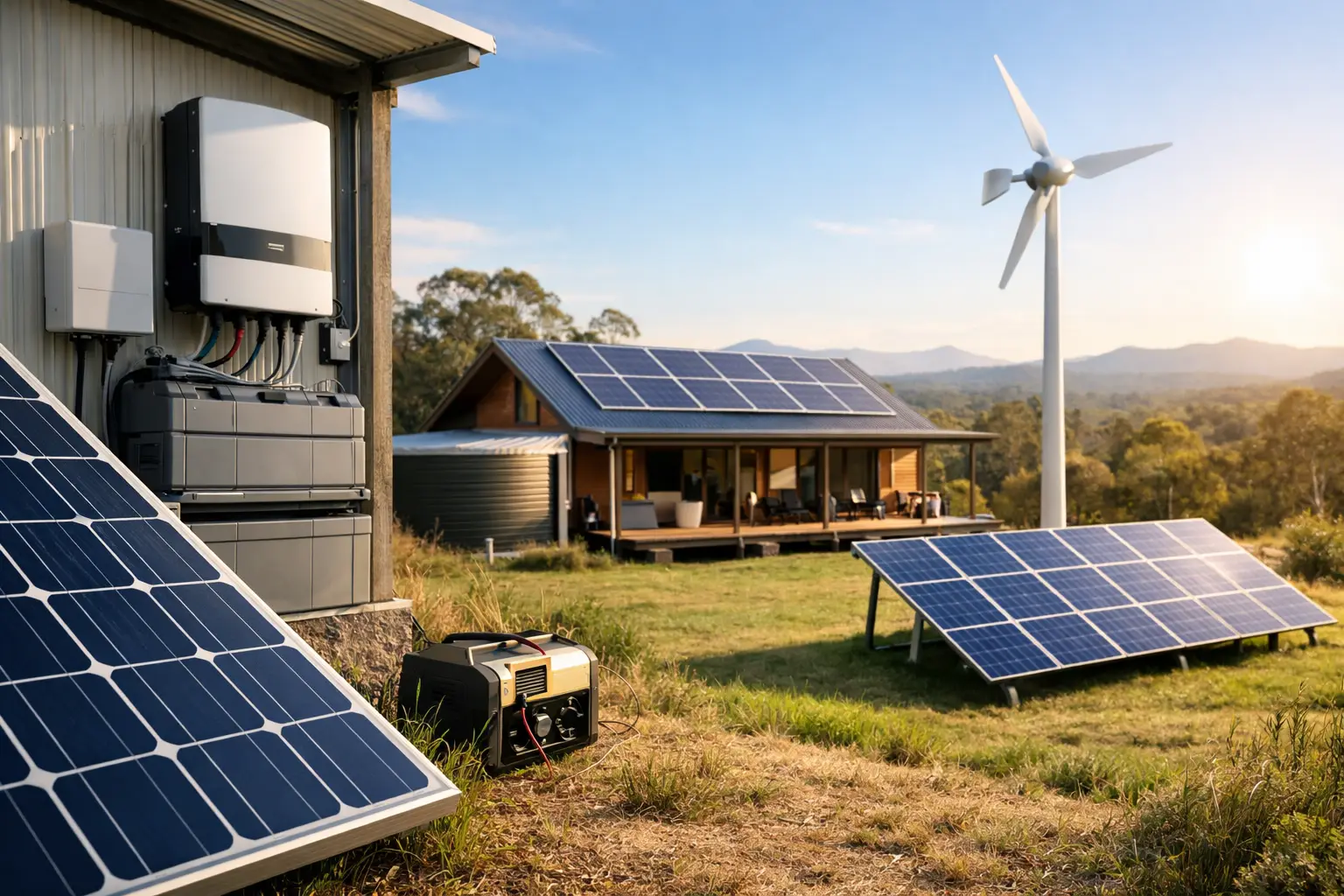
A properly designed system generally includes solar panels, a battery bank, an inverter-charger, system monitoring, isolation and safety equipment, and sometimes a backup generator. The generator is not a sign that the system has failed. In remote or high-demand applications, it can be a sensible contingency for extended poor weather, unusual energy use or maintenance periods.
Start with energy use, not solar panel size
The most common sizing mistake is starting with the roof and asking how many panels will fit. Off-grid design starts with your load profile: how much electricity you use, when you use it, and which appliances cannot be interrupted.
A household that runs lights, refrigeration, internet, a washing machine and modest air conditioning has very different requirements from a property with bore pumps, a workshop, electric hot water, pool equipment or multiple split systems. Small commercial sites may also have refrigeration, security, computers or machinery that needs dependable supply throughout the day.
Your electricity bills are a useful starting point if you are currently grid-connected, but they do not tell the full story. Usage should be reviewed across seasons. Winter heating, summer cooling, irrigation, holiday occupancy and future changes such as an electric vehicle can materially affect the required system size.
Separate essential loads from high-demand loads
A practical design identifies essential circuits first. Refrigeration, lighting, communications, selected power points, security systems and medical equipment may need to run through any outage. High-demand appliances such as ducted air conditioning, ovens, clothes dryers and electric resistance heating need careful planning because they can drain stored energy quickly.
This does not mean an off-grid home must compromise on comfort. It means the system must be designed around how you live. Load management, efficient appliances and smart scheduling can reduce the battery and solar capacity required, which may improve the overall return on investment.
For example, running a dishwasher or pumping water during sunny hours uses available solar production directly. Heating water during the middle of the day may also be more economical than drawing heavily on the battery overnight. Monitoring makes these decisions easier because it shows where energy is generated, stored and consumed.
Battery storage is the centre of energy independence
Panels make electricity, but batteries determine how much control you have over it after the sun goes down. Battery capacity is measured in kilowatt-hours, or kWh. The usable capacity matters most, as batteries are not normally operated from completely full to completely empty.
A larger battery can provide more overnight power and more protection during poor weather, but it also increases the upfront cost. Oversizing a battery can be just as unwise as undersizing it. If the solar array cannot regularly recharge it, much of that capacity may not deliver its full value.
Battery chemistry, warranty conditions, temperature tolerance, inverter compatibility and the ability to expand later should all be assessed before selecting equipment. A quality battery system should also provide clear monitoring, so you can see state of charge, solar generation, household consumption and any generator contribution in one place.
For grid-connected homes, battery storage can be configured to reduce evening grid purchases and provide backup power for selected circuits. This hybrid approach retains the grid as a safety net while giving you more independence and better use of the solar energy that might otherwise be exported at a low feed-in tariff.
Design for winter and difficult weather
Australian solar production varies widely by location, season and weather. Long summer days can make an undersized system look excellent for months. The real test often comes in winter, when shorter days, cloud cover and higher heating demand can coincide.
An experienced installer calculates expected solar generation for the site rather than relying on a simple national average. Roof direction, shading from trees or nearby buildings, panel tilt, local climate and available installation area all affect output. A north-facing roof is often favourable, but east and west arrays can still be valuable when they better match morning and afternoon demand.
Off-grid systems are usually designed with an allowance for low-generation periods. The right allowance depends on how critical continuous supply is. A weekend cabin can tolerate different limits from a permanent residence, a medical site or a business with stock that must remain refrigerated.
Backup power needs clear expectations
Backup is often misunderstood. Some battery systems can keep a whole property running, while others back up only nominated essential circuits. The available power output, measured in kilowatts, is separate from battery capacity. A battery may hold plenty of energy but still have a limit on how many high-load appliances it can run at once.
Before installation, decide what should continue operating during an outage and what can wait. This prevents surprises when the power fails and helps avoid paying for capability you will never use. It also ensures switchboard work, changeover equipment and backup circuits are correctly planned from the beginning.
Compliance, approvals and installation quality matter
Solar and battery work should never be treated as a simple equipment purchase. It involves electrical safety, product compatibility, switchboard capacity, emergency access, battery placement, network requirements where applicable, and relevant Australian standards.
Battery location needs particular attention. Space, ventilation, clearances, exposure to heat and access for service all influence what can be installed safely. A site inspection is the best way to identify constraints early, especially in older homes, properties with limited wall space or commercial sites with complex electrical infrastructure.
If the property will remain grid-connected, network approvals and metering requirements may apply. Government incentives and rebates may also be available, but eligibility, documentation and timing can vary. Professional support with the paperwork reduces the risk of missed requirements and helps ensure the system is commissioned correctly.
A quality installation should include a clear system design, certified electrical work, commissioning, monitoring setup, warranty information and an explanation of how to operate the system. Ongoing support matters too. Solar and batteries are long-term assets, and performance monitoring can identify unusual consumption or equipment issues before they become expensive problems.
How to decide whether off-grid is right for you
A true off-grid system is often most compelling where the cost of connecting to the electricity network is high, impractical or uncertain. It can also suit owners who place a high value on self-sufficiency and are prepared to manage their energy use around available generation.
For many suburban households, a hybrid solar and battery system delivers a stronger balance of savings, backup and flexibility. You can use more of your own solar energy, reduce peak-period grid use and keep essential appliances operating during outages, without funding enough battery capacity to cover every possible weather event.
The best first step is a detailed energy assessment. It should consider current bills, appliance loads, seasonal patterns, the condition of your switchboard, roof or ground-mount options, future plans and the resilience you want from the system. GridFree Solar can help turn those details into a practical solar and battery design, including installation, monitoring and rebate support.
Energy independence is not about owning the most equipment. It is about having a system that performs reliably on the days you need it most, gives you clear control over your power use, and remains suited to the way your property will operate years from now.