
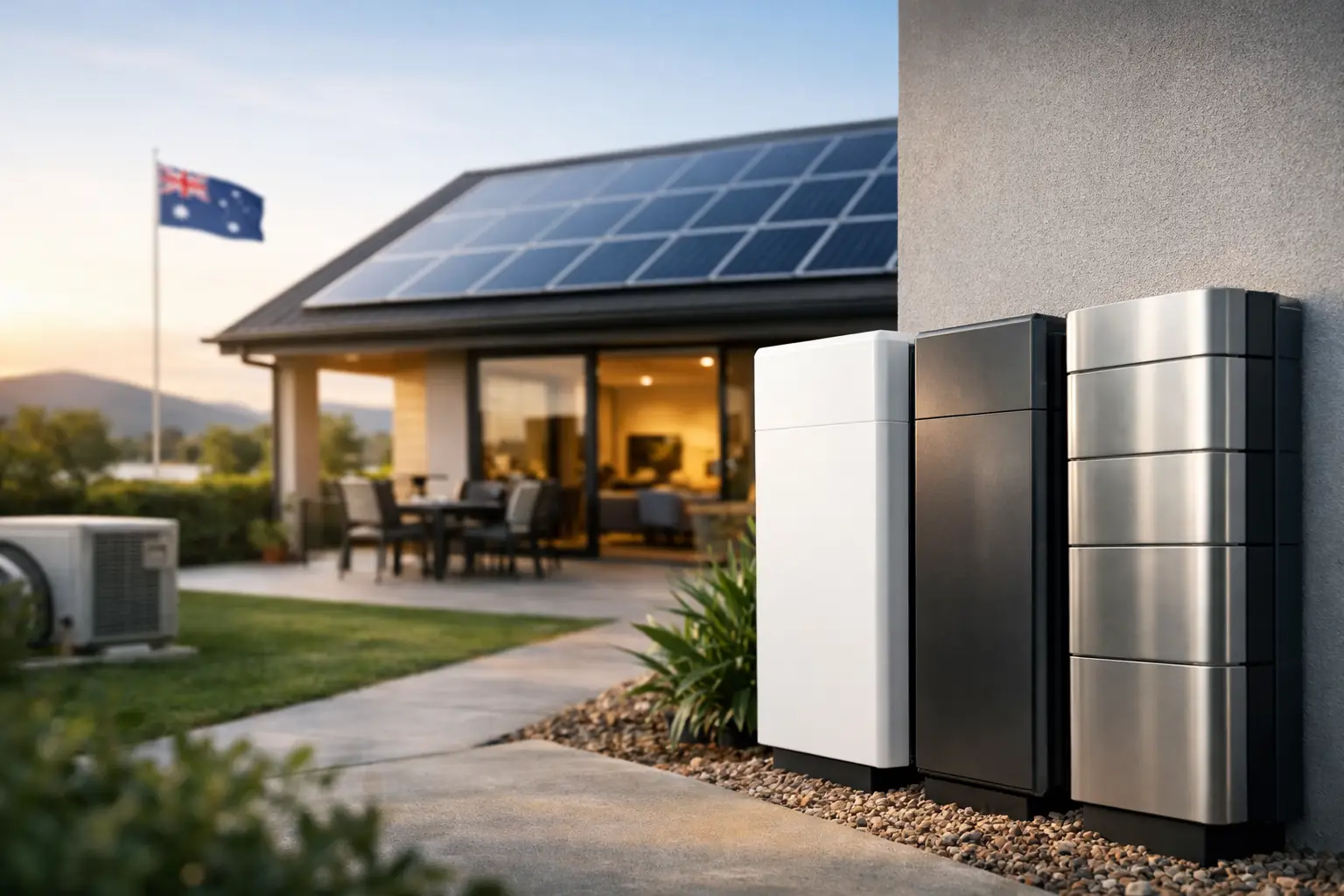
A home battery is no longer just a way to keep the lights on during a blackout. For many Australian households, it is the missing piece between producing solar power at midday and using that energy when electricity prices are highest. Comparing the best home battery brands is worthwhile, but the right choice comes down to more than a familiar name or the biggest advertised capacity.
Your battery needs to suit your solar system, evening energy use, backup expectations, switchboard setup and future plans. A well-designed system can reduce grid imports, give you greater control over your energy and make better use of the solar power that would otherwise be exported for a modest feed-in tariff.
What separates the best home battery brands?
A battery brand should be judged on the complete system, not just the battery modules. Useful capacity, warranty terms, backup capability, inverter compatibility, monitoring and local support all affect the value you receive over the life of the system.
Capacity is measured in kilowatt-hours (kWh). It tells you how much energy the battery can store. Power output, measured in kilowatts (kW), tells you how many appliances it can run at once. A battery with plenty of storage but limited output may cover overnight base loads well, yet struggle if the air conditioner, oven and other high-demand appliances are operating together.
Also look closely at what “backup” means. Some systems can back up selected essential circuits during an outage, while others can support more of the home when paired with the right gateway, switchboard work and system design. Full-home backup can be valuable, but it is not automatically necessary or cost-effective for every property.
Best home battery brands for Australian households
The brands below are widely considered by Australian solar buyers. Each has strengths, and none is the automatic winner for every home.
Tesla Powerwall
Tesla remains one of the most recognised names in home storage. The Powerwall range is often chosen by households wanting a clean all-in-one experience, strong monitoring and a well-established ecosystem for solar self-consumption, backup and Virtual Power Plant participation where available.
The newer Powerwall 3 combines battery storage and solar inverter functionality, which can simplify a new solar-and-battery installation. It can be a compelling option for homes installing solar from scratch or undertaking a major upgrade. However, homeowners with an existing solar inverter should confirm compatibility and whether retaining that equipment makes financial sense.
Tesla suits buyers who value a refined app experience and a consolidated system. The trade-off is that its design may offer less modular flexibility than some battery platforms, particularly for households planning a staged expansion over time.
BYD Battery-Box
BYD Battery-Box batteries are a popular choice for homeowners who want flexibility. The modular design allows many systems to be sized around the household’s actual energy use and expanded later, subject to the compatible inverter and site design.
BYD is commonly paired with selected hybrid inverters, making it a practical option for new builds, larger solar systems and households that want more control over system configuration. Its battery technology and broad inverter compatibility have helped it become a familiar option in the Australian market.
The key consideration is that the customer experience can vary depending on the inverter brand used alongside the battery. That is not necessarily a drawback, but it means the installer needs to assess the entire combination rather than quoting a battery in isolation.
SonnenBatterie
Sonnen is positioned at the premium end of the market, with an emphasis on smart energy management, quality engineering and long-term energy services. It appeals to homeowners who see a battery as part of a broader energy strategy rather than simply an emergency power supply.
Sonnen systems are often well suited to homes interested in intelligent load management and energy community or VPP-style opportunities, where available. Their premium positioning can mean a higher upfront investment, so the financial case needs to be assessed against the household’s consumption profile, tariff and desired level of resilience.
For buyers who prioritise advanced energy management and established battery expertise, Sonnen is worth considering. For a household focused solely on the shortest possible payback period, a simpler configuration may be more appropriate.
Enphase IQ Battery
Enphase is best known for microinverter technology, and its IQ Battery range is a natural fit for homes already using, or planning to use, an Enphase solar system. Because microinverters operate at panel level, they can be particularly useful on complex roofs with multiple orientations or partial shading.
The Enphase ecosystem offers detailed monitoring and a highly integrated approach to solar, storage and backup. It is also modular, which can be attractive if you want to start with a smaller battery and add capacity as your energy needs change.
That integration is its greatest strength, but it also means Enphase makes most sense when the full system is designed around the platform. It may not be the most economical route for every existing solar setup.
Sungrow batteries
Sungrow has become a strong contender in Australian battery storage through its hybrid inverter and battery systems. It is frequently considered by homeowners seeking a capable, value-focused solution with app monitoring, expandable storage options and backup functionality when designed with the required equipment.
For many homes, Sungrow can deliver a sensible balance of performance and upfront cost. Its systems are often particularly attractive for customers installing a new solar-and-battery package rather than adding storage to an older system.
As with BYD, product selection should focus on the complete system. Battery size, inverter model, backup configuration and the household’s electrical demand all need to align for the system to perform as expected.
Sigenergy SigenStor
Sigenergy is a newer name in residential storage, but it has attracted attention for its modular design and integrated approach to battery storage, inverter functionality, backup and energy management. Its expandable format can suit households that expect to add an electric vehicle, pool heating or greater electrification in future.
Newer technology can offer appealing features, but it also makes installer capability, local support arrangements and warranty administration especially important. A good battery is only as reliable as the system design, installation and aftercare behind it.
How to choose the right battery size
The best battery size is based on your household data, not a rule of thumb. Start with your electricity bills and interval usage data if available. Look at how much power you import after the sun goes down, how much solar you export during the day and whether your usage changes significantly between seasons.
A household that exports 15 kWh on most sunny days but uses only 6 kWh overnight may not benefit from a very large battery. Conversely, a family with high evening demand, an electric vehicle, electric hot water or air conditioning may need more capacity and higher power output to see meaningful savings.
Consider your future energy plans as well. Moving away from gas, adding an EV charger or installing a pool can materially change your consumption. In some cases, installing a battery platform that can expand later is a smarter decision than oversizing from day one.
Questions to ask before you buy
Before comparing quotes, ask whether the proposed battery provides usable capacity, not just nominal capacity. Confirm its continuous power rating, what circuits will operate in a blackout and whether solar can continue charging the battery during a daytime outage.
You should also ask how the system will work with your existing panels and inverter, what monitoring you will receive, and who will handle warranty support if a fault occurs. For Australian installations, make sure the provider explains applicable electrical requirements, product approvals and any rebate or incentive eligibility clearly.
Price matters, but the cheapest quote can become expensive if it excludes backup hardware, switchboard upgrades, compliant installation or the support needed to resolve an issue later. A clear proposal should show what is included and what assumptions have been made about your home.
Make the battery work for your home
The strongest battery brand is the one that fits the way your household actually uses energy. Tesla may suit a homeowner seeking an established all-in-one platform. BYD or Sungrow may offer the flexibility and value needed for a tailored system. Enphase can be an excellent match for a panel-level solar design, while Sonnen and Sigenergy may appeal to buyers prioritising advanced energy management and future expansion.
At GridFree Solar, the starting point is not a brand preference. It is understanding your solar production, electricity use, backup priorities and available incentives, then designing a system that delivers practical savings and reliable energy control for years ahead.