
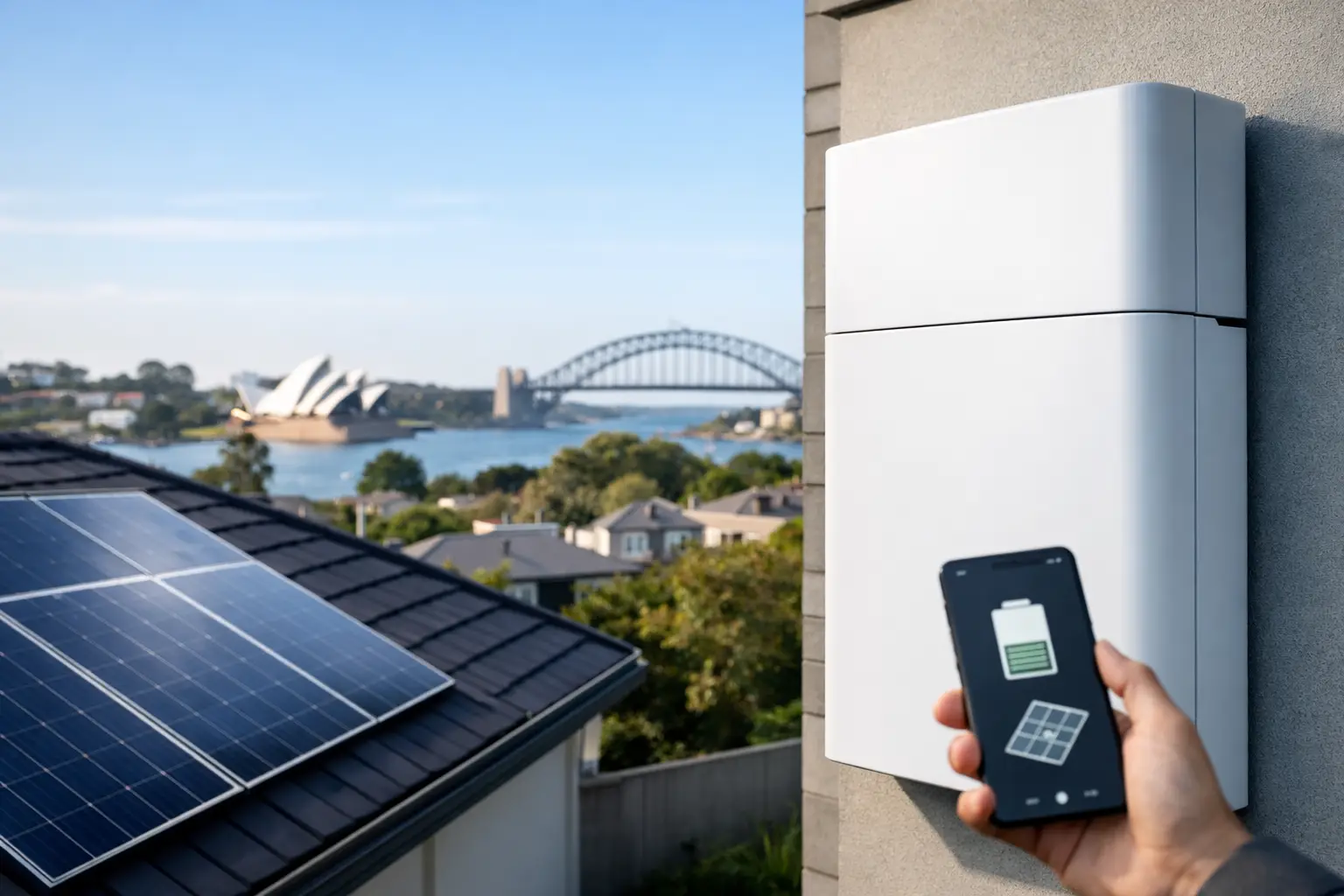
Power bills rarely wait for the right time to rise. If you already have solar, or you are planning a new system, battery rebate Australia programs can make the numbers work far better than many households and small businesses expect.
The catch is that there is no single national battery rebate with one set of rules. Australia has a patchwork of state programs, loan schemes, VPP incentives and network-based offers. Some reduce the upfront cost, some spread repayments over time, and some only apply if your battery meets specific technical standards. That is where many property owners get stuck – not on whether a battery is useful, but on which incentive actually applies to their situation.
How battery rebate Australia programs actually work
When people search for a battery rebate, they usually mean any government-backed incentive that makes battery storage cheaper to buy and install. In practice, that can include an upfront point-of-sale discount, a low-interest or no-interest loan, a subsidy tied to approved products, or an incentive linked to joining a virtual power plant.
That difference matters because each structure changes your return on investment. A direct rebate lowers your initial outlay straight away. A loan helps cash flow but does not reduce the total system price in the same way. A VPP payment can be valuable, but only if you are comfortable allowing part of your battery capacity to be used to support the grid at certain times.
For most homeowners, the real question is not just, “Is there a rebate?” It is, “What is the net installed cost after incentives, and how quickly does the battery pay for itself?” That is the number worth focusing on.
Why battery incentives vary so much by state
Australia’s energy market is national in some respects and highly local in others. State governments set their own priorities, budgets and eligibility settings. Electricity pricing also differs from one network area to another, which affects how attractive battery storage is in the first place.
A household in South Australia, for example, may value backup power and solar self-consumption differently from a business in New South Wales facing high daytime demand charges. The same battery can deliver very different savings depending on tariff structure, export limits, blackout risk and how much solar generation would otherwise be sent back to the grid for a modest feed-in tariff.
This is why battery rebate Australia searches often lead to confusion. People expect one answer, but the right answer depends on your postcode, your retailer setup, your switchboard, your solar size, and whether the battery is being added to an existing system or installed as part of a new solar package.
What affects your eligibility
Most battery incentive programs are not open-ended. They usually come with conditions designed to manage safety, performance and public spending.
The first filter is location. Many rebates or loans are only available in a particular state or for selected distribution areas. The second is product approval. Governments and program administrators often require batteries and inverters to be on an approved list and installed by appropriately accredited professionals. If a system is cheap but not compliant, it can cost more in the long run because it may miss out on incentives entirely.
Income thresholds, property type and existing solar arrangements can also affect access. Some schemes target owner-occupiers. Others include landlords, strata properties or small businesses. In some cases, you must not have received a previous incentive for the same site. In others, battery size limits apply, which can influence system design.
That is why the paperwork matters almost as much as the hardware. A well-designed battery system that misses one eligibility requirement can lose a meaningful chunk of value.
The rebate is only one part of the financial picture
A battery should not be chosen on rebate size alone. The better approach is to assess the full financial result over time.
If your household uses a lot of electricity after sunset, a battery can store excess daytime solar and reduce the amount you buy from the grid at night. If your feed-in tariff is low, that stored energy is often worth much more in your home than it is when exported. For small businesses, the case can be even stronger where evening loads, refrigeration, equipment use or tariff demand structures make battery cycling more valuable.
A rebate can shorten payback, but the underlying economics still need to stack up. Battery capacity, usable storage, round-trip efficiency, warranty terms, backup capability and smart controls all influence value. A smaller battery with the right cycling profile can outperform an oversized one that sits half-used for most of the year.
Battery rebate Australia and VPP offers
Some of the strongest battery incentives in Australia are tied to virtual power plants. A VPP connects many battery systems so stored energy can be coordinated to support the grid during peak periods.
For some customers, that is a smart trade-off. Joining a VPP may unlock an additional upfront incentive or ongoing credits. It can improve the economics of battery ownership and help the broader grid become more stable.
But it is not automatically the best fit for everyone. The terms vary. Some VPPs retain more control over battery discharge than others. If your main goal is backup reserve during outages or maximum self-use of your own solar, you need to understand exactly how much battery capacity remains available to you and under what conditions. A good incentive should support your energy goals, not work against them.
Installation quality can make or break rebate value
A battery rebate looks attractive on paper, but the result depends heavily on the installation itself. Poor system design can leave savings on the table even when the incentive is approved.
The battery needs to match your solar production, consumption pattern and switchboard configuration. The inverter setup matters. Backup circuits matter if resilience is part of the reason you are buying. Monitoring matters too, because battery performance is easiest to improve when you can see how and when energy is flowing.
This is where working with an installer who handles both technical delivery and rebate administration makes a practical difference. Instead of chasing forms, compliance documents and product checks yourself, you get a clearer path from quote to installation to incentive claim. That reduces delays and avoids one of the biggest frustrations in this market – discovering a missing detail after the system is already underway.
How to decide if now is the right time
The right time to install a battery is not the same for every property. It depends on your current power bills, your solar export levels, whether blackouts are a concern, and what incentives are active at the time you are ready to proceed.
If you are exporting a lot of solar during the day and buying it back at a much higher rate at night, the case for storage is usually strong. If your current solar system is ageing or undersized, a battery upgrade may make more sense as part of a broader solar redesign rather than as a standalone add-on. For businesses, upcoming tariff changes or load growth can shift the equation quickly.
There is also a timing question around rebate availability. Programs can change, funding can be capped, and eligibility settings can tighten. Waiting may deliver a better battery product in future, but it can also mean missing a current incentive and paying higher power bills in the meantime. The best decision is usually based on today’s numbers, not the hope of a better scheme later.
What to ask before you sign
Before committing to any battery proposal, ask for the installed cost before and after incentives, the estimated annual savings, the expected payback range, and a clear explanation of how the battery will operate in your home or business. If a VPP is involved, ask what control rights you keep. If backup is important, confirm which circuits will stay on during an outage.
Also ask who is responsible for the rebate paperwork, compliance evidence and any post-install support. That part often gets overlooked, yet it has a direct impact on whether the process feels straightforward or becomes a headache.
A good battery investment is not just about buying storage. It is about buying a smarter energy setup with fewer surprises. When the system is designed properly, the incentive is correctly applied, and the savings are modelled honestly, a battery can do more than trim bills – it can give you far more control over how your property uses power.
If you are looking at battery storage now, treat the rebate as a bonus that strengthens a solid decision, not as the only reason to make one.