When the grid is not available – or you simply do not want to rely on it – an off-grid solar system has to do every job the network would normally handle for you. That is why the question, how do off grid solar systems work, is really a question about generation, storage, timing and control. A well-designed system does not just make electricity during the day. It also stores enough power for the evening, manages peak loads, and keeps essential appliances running through changing weather.
How do off grid solar systems work in real life?
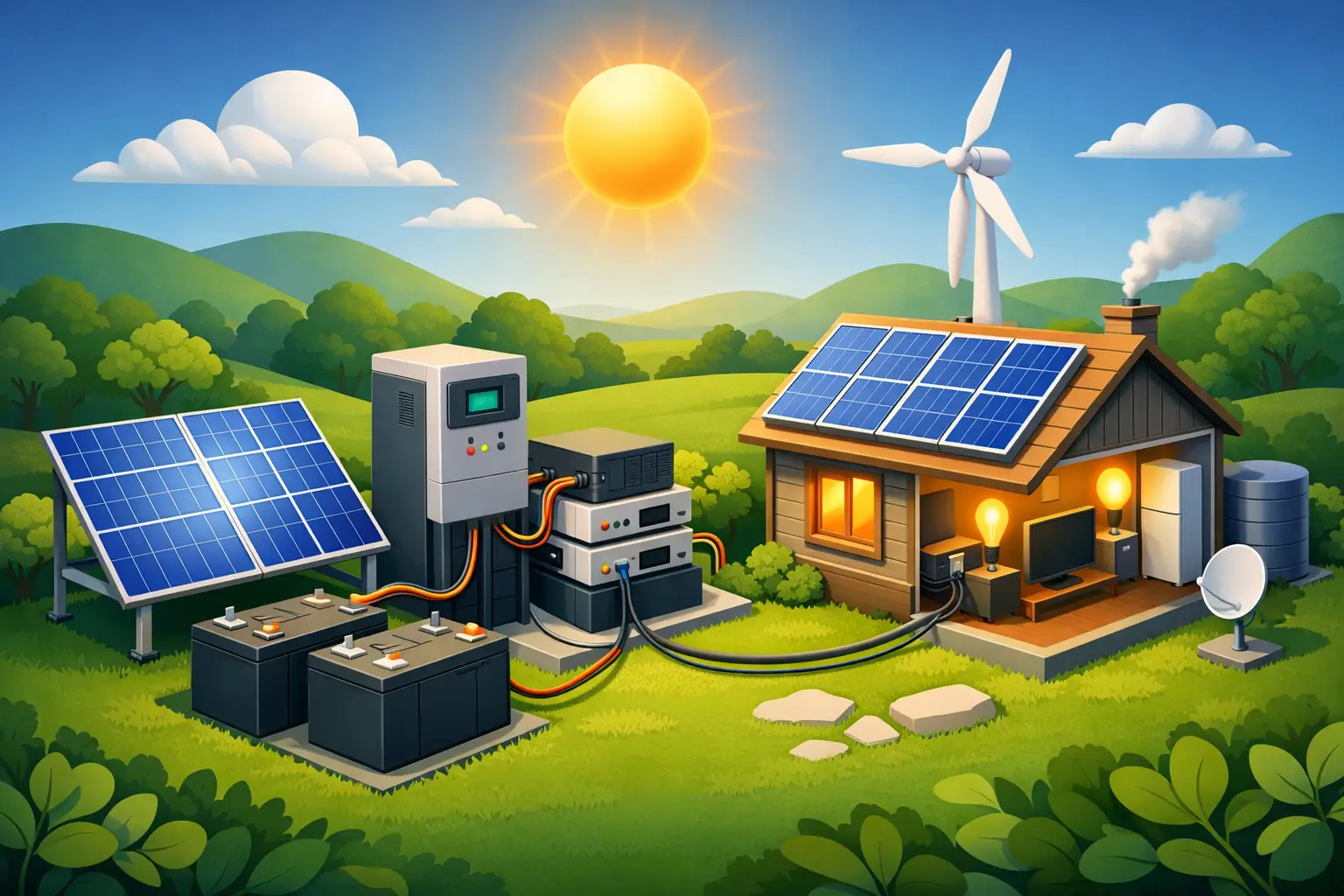
At a basic level, an off-grid solar system collects energy from solar panels, sends that energy through charge control equipment, stores it in batteries, and then uses an inverter to supply usable 230V electricity to your property. Unlike a standard grid-connected setup, there is no safety net from the network when solar production drops. Your system has to be sized to cover daily use, overnight demand and periods of poor solar output.
That is the part many people miss. Off-grid is not just solar panels on a roof. It is a complete energy system, designed around your actual consumption patterns.
During daylight hours, solar panels generate DC electricity. That power first goes to the battery system, either directly or through a solar charger depending on the equipment design. If the batteries need charging, the system prioritises that. Once charging is satisfied, the inverter supplies AC power to the loads in the home or business. At night, or during heavy cloud, the batteries take over and continue feeding the inverter so lights, fridges, pumps and other appliances keep operating.
If the battery state of charge gets too low, some off-grid systems also include a backup generator. That extra layer matters more than many buyers expect, especially for rural properties, workshops, farms and small commercial sites where losing power is more than an inconvenience.
The main parts of an off-grid solar system
Every off-grid setup relies on the same core components, but the quality and size of each one make a major difference to performance.
Solar panels
The panels are the generation source. They produce electricity when sunlight hits the cells, with output varying by panel capacity, roof angle, shading, season and local weather. In Australia, summer production can be strong and consistent, but winter sizing is where off-grid design gets serious. If a system only works well in perfect weather, it is not properly designed.
Battery storage
The battery is what turns daytime generation into round-the-clock supply. Without storage, an off-grid property would only have power when the sun is shining. Battery capacity needs to match how much energy the site uses, how much backup is required overnight, and how many low-solar days the owner wants to ride through without needing generator support.
This is why battery-led system design is so important. Panels generate energy, but batteries provide control, resilience and usable independence.
Inverter
The inverter converts DC electricity from the batteries into AC electricity for normal appliances and circuits. In off-grid systems, the inverter is central to overall system stability. It has to handle startup surges from pumps, fridges, air conditioners and machinery, not just average daily consumption.
A property might only use a modest amount of electricity over 24 hours but still need a powerful inverter because several larger loads start at once.
Charge controller or hybrid control equipment
This component regulates the energy flow from the solar array to the battery bank, protecting the batteries from overcharging and improving charging efficiency. In modern systems, some of this functionality is built into integrated inverter-battery platforms.
Backup generator
Not every system includes one, but many should. A generator gives you a practical safety margin during extended rain, unusually heavy power use or battery maintenance. For remote homes and commercial operations, that backup can protect food storage, water pumping, communications and business continuity.
What happens across a normal day
The easiest way to understand how do off grid solar systems work is to follow the energy through a typical day.
In the morning, the batteries may already be partially discharged after running overnight loads. As sunlight increases, the solar panels begin recharging the battery bank and supporting any active appliances. Around the middle of the day, solar production is usually strongest, so this is the best time to run larger loads such as washing machines, water pumps or workshop equipment.
By late afternoon, solar output starts falling. The system then shifts to battery supply for evening use. Overnight, the batteries carry the property until the sun returns the next day. If there have been several cloudy days in a row, battery reserves may run low, and the generator may need to start if one is installed.
That cycle sounds simple, but good design is what makes it reliable. The system has to account for seasonal variation, not just one sunny day in February.
Why off-grid systems need careful sizing
Sizing is where off-grid projects are won or lost. If the system is undersized, you will deal with flat batteries, unnecessary generator use and constant load management. If it is oversized, you may spend far more than needed.
The right design starts with a proper load assessment. That means looking at how much energy the property uses each day, when it uses it, and which appliances create the biggest spikes. A rural home with tank pumps, a cool room or workshop tools will behave very differently from a suburban weekender. A small business with refrigeration or long operating hours needs a different battery strategy again.
There is also a trade-off between convenience and budget. More battery storage usually means greater autonomy, but it also increases upfront cost. More solar capacity can reduce generator runtime, but only if the roof or ground space supports it and the battery can absorb the extra production. The best result is usually not the biggest system. It is the system that matches the property.
Off-grid vs grid-connected solar
A grid-connected system can export excess solar and import electricity when needed. That makes it cheaper and simpler because the network acts like a backup. Off-grid systems do not have that option. They must be self-sufficient.
That difference changes everything about the design. In a grid-connected home, battery storage is useful. In an off-grid property, battery storage is essential. In a grid-connected home, a cloudy week means more electricity bought from the retailer. Off-grid, a cloudy week has to be managed by battery reserves, smart load use and sometimes generator support.
This is also why off-grid is not always the right choice for every property. If grid access is available and affordable, a hybrid solar and battery system may deliver better financial returns with lower complexity. But where connection costs are extreme, reliability matters more than tariffs, or true energy independence is the goal, off-grid can make excellent sense.
Common mistakes people make
The biggest mistake is assuming energy use will stay low without checking actual habits. Many people underestimate what appliances consume, especially air conditioning, electric hot water, pool pumps and workshop equipment. Another common issue is focusing too heavily on panel count while overlooking battery quality, inverter capability and backup planning.
There is also a tendency to treat all loads as equal. They are not. Essential circuits, discretionary appliances and high-demand equipment should be considered separately. That gives you more control and helps protect battery life.
A strong off-grid system should also include monitoring. If you can see solar production, battery state of charge and load behaviour clearly, you can make smarter decisions and spot issues early. That matters for both savings and reliability.
Is an off-grid solar system right for you?
If your property is remote, if connecting to the grid would be expensive, or if you want a high level of control over your own power supply, off-grid solar can be a practical long-term investment. The value is not only lower power bills. It is also resilience, predictability and independence.
For homeowners and small businesses, the key is getting the design right from the start. That means understanding your loads, choosing quality components, planning for winter performance and allowing for real-life usage rather than idealised estimates. A provider with strong battery expertise and clear installation support can make that process much simpler.
Off-grid solar works best when it is treated as a complete power system, not a panel package. If the design matches the way you actually live or operate, it can deliver reliable energy for years – with far less guesswork than most people expect.