
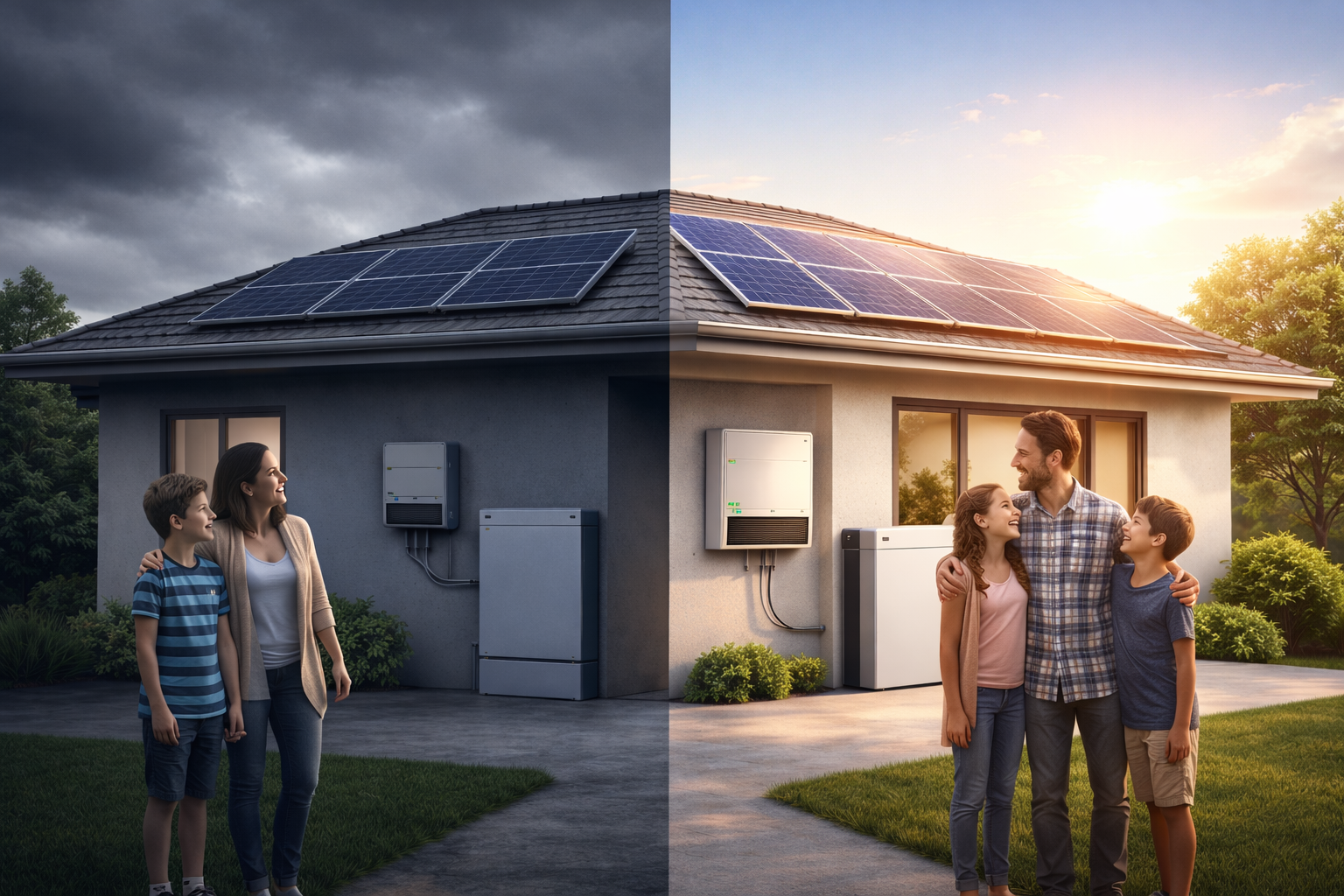
Solar battery storage is one of the fastest-growing segments of Australia’s renewable energy revolution — yet battery storage, solar backup power myths and misconceptions still sway buyers away from confident decisions. Historically, solar panels couldn’t deliver backup power during blackouts, creating confusion about what modern systems can and can’t do today.
But advances in battery technology mean storages like PylonTech, Tesla, Alpha ESS, and other can provide reliable energy storage, long service life, and backup power when the grid fails — homeowners has immense options now. Despite these advances, misconceptions persist about cost, lifespan, backup capability, and practicality.
Why Solar Battery Myths Still?
Solar battery myths continue to influence homeowner decisions because they are rooted in early limitations of solar technology and outdated grid regulations. Many of these assumptions no longer apply, yet they persist due to lack of updated awareness.
This blog debunks the biggest solar battery backup myths that need to die, explaining the facts behind the fear. From the false belief that backups aren’t worth having to errors about system compatibility and capacity, here GridFree clarify why these ideas are outdated or simply incorrect. Whether you’re considering adding a battery to your existing solar system or planning a new install, understanding the facts empowers better decisions and maximizes your investment.
Myth 1 — Solar Battery Backup Isn’t Worth the Cost
Many homeowners believe solar battery backup is too expensive to justify, but this myth is based on outdated pricing. Today, solar battery costs in Australia are lower, electricity prices are higher, and government rebates make systems more affordable. A battery helps store excess solar energy, reduce grid dependence, and protect against rising peak tariffs. Beyond bill savings, backup power during outages adds real value. When viewed as long-term energy security rather than a short-term expense, solar battery backup becomes a practical and worthwhile investment. [Also Read: Know If Grid Free Solar Worth It in Victoria]
Here is the Reality: Modern batteries reduce bills, offer backup, and rebate support makes them more affordable.
- Economic view of battery value and rebates
- Increasing value as grid prices rise (bill savings + peak avoidance)
Myth 2 — Solar Batteries Can’t Provide Real Backup Power
A common question is, “Do solar batteries work in a blackout?” The confusion comes from older grid-tied solar systems that shut down during outages. Modern solar battery backup systems are designed to operate safely during blackouts when installed with the right inverter. These systems automatically disconnect from the grid and continue powering essential appliances. With proper setup, solar batteries provide reliable backup power when the grid fails, making this myth completely outdated.
Here Is the Reality: Properly sized systems can sustain essential loads during outages for hours or days.
- Advanced load management spread
- Longer durations than early systems ever could
Myth 3 — Batteries Don’t Last or Need Frequent Maintenance
Many people assume solar batteries degrade quickly or require frequent maintenance. In reality, modern lithium-ion solar batteries are built for long-term performance. Most come with 10-year warranties and are designed to handle thousands of charge cycles. Maintenance is minimal, often limited to simple monitoring through an app. With correct installation and normal usage, solar batteries offer dependable energy storage for years, making them far more reliable than this myth suggests.
Here Is the Reality: Modern lithium-ion batteries often come with 10+ year warranties and minimal maintenance.
- Long service life
- Minimal upkeep needed
Myth 4 — You Must Go Fully Off-Grid to Benefit
One of the biggest solar battery misconceptions is that batteries only make sense for off-grid living. In truth, most Australian homes benefit from staying grid-connected. A grid-connected solar battery allows homeowners to store solar energy, use it during peak pricing hours, and rely on the grid only when needed. This hybrid approach delivers savings, backup power, and flexibility—without the cost or complexity of going fully off-grid.
Here Is the Reality: Most homeowners enjoy hybrid benefits while staying grid-connected.
- Improved grid independence
- Flexibility and reliability
Myth 5 — All Batteries Perform the Same
Not all solar batteries perform the same, despite what many believe. Differences in battery chemistry, usable capacity, efficiency, and warranty impact long-term performance. Some batteries are designed for longer lifespan and safety, while others focus on higher energy density. Choosing the right solar battery system depends on your energy usage and backup needs. Understanding these differences helps homeowners avoid poor performance and get the most value from their solar investment.
Here Is the Reality: Battery brands, chemistry, and design affect efficiency, lifespan, and performance.
- Differences in lithium-ion, LFP, and other chemistries
Myth 6 — You Can’t Add Batteries to Existing Solar
Many homeowners think installing solar years ago means missing out on battery storage. This myth is incorrect. Most modern solar battery systems can be added to existing solar setups through AC-coupled designs. This allows homeowners to upgrade without replacing their entire system. Retrofitting makes solar batteries more accessible and lets homeowners adopt energy storage when it suits their budget and energy needs.
Here Is the Reality: Retrofit options allow adding batteries later, supporting flexibility.
- AC coupling and retrofitting explained
Myth 7 — Backup Means Whole-House Only
Some believe solar battery backup is only useful if it powers the whole house, which leads to oversized and expensive systems. In reality, most systems are designed to support essential circuits like lighting, refrigeration, and internet. This targeted approach delivers effective blackout protection without unnecessary cost. Smart load selection ensures reliable backup power while keeping solar battery systems efficient and affordable.
Here Is the Reality: Battery backup is scalable — essential circuits can be backed up efficiently without overdesign.
- Smart system designs reduce costs and improve performance.
| Myth | Reality |
|---|---|
| Solar batteries don’t work during blackouts | Modern systems provide backup power when installed correctly |
| Solar battery backup isn’t worth the cost | Falling prices, rising energy bills, and rebates improve value |
| Solar batteries don’t last long | Most come with 10-year warranties and long cycle life |
| You must go fully off-grid | Grid-connected batteries offer flexibility and savings |
| All solar batteries are the same | Performance varies by chemistry, capacity, and design |
| Batteries can’t be added later | Many systems support retrofitting |
| Backup must power the whole house | Essential-load backup is more efficient and affordable |
People Also Ask:
Q: Do solar batteries work in blackouts?
Yes.
Q: How long do solar batteries last?
Yes.
Q: Are solar batteries worth the cost?
Yes.
Q: Can I add a battery to my existing solar system?
Yes.
Conclusion
Solar battery storage has transformed the way Australian homes use renewable energy. The myths around backup power, lifespan, cost, and utility performance are rooted in outdated technology or misunderstanding. Today’s systems deliver reliable backup, savings, and peace of mind. Debunking these myths helps victoran homeowners make informed decisions that maximise energy independence and financial benefit. With rebates and technological advances continuing, the future of solar battery backup looks brighter — and far more efficient — than ever.
 Ready to secure your Battery & Panel rebate. Contact GridFree Solar today for a free eligibility check and tailored quote.