Table of Contents
- How Shade Affects Solar Panel Efficiency
- Partial vs. Total Shading: What’s the Difference?
- Solar Panel Efficiency in Shade and Energy Yield
- Microinverters vs String Inverters for Shaded Roofs
- Assessing Your Roof’s Solar Potential
- ROI and Payback Period With Afternoon Shade
- Solar System Monitoring and Maintenance Services
- When Shade Is Too Much for Solar
- Frequently Asked Questions
Last Updated: August 23, 2026
How Shade Affects Solar Panel Efficiency
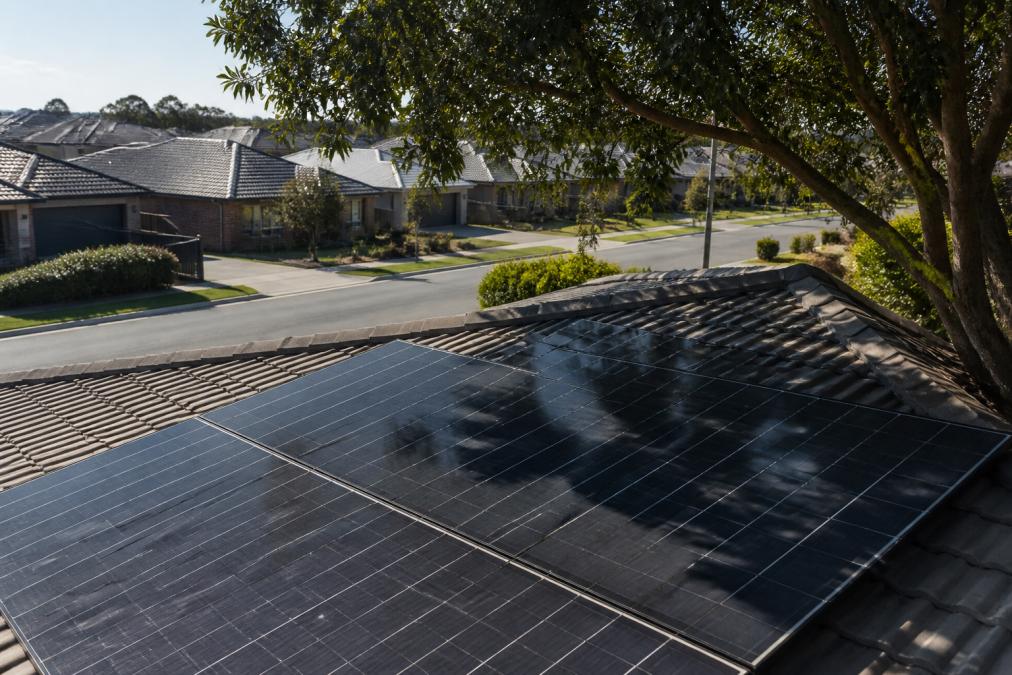
Afternoon shade is one of the most common concerns for Australian homeowners considering solar. Shade reduces the amount of direct sunlight reaching your photovoltaic panels, which directly limits energy production. A panel in full afternoon shade might produce 10-20% of its rated capacity, while partial shade could reduce output by 30-50% or more.
The timing of shade matters significantly. Morning shade is less damaging because peak electricity demand and pricing typically occur in the late afternoon and evening. Afternoon shade hits during peak hours when your home likely consumes the most power and grid electricity costs the most. Peak sun hours in Australia typically occur between 10am and 3pm (bom.gov.au). If afternoon shade blocks your roof during this window, you’re losing energy during the period when your panels would normally perform strongest.
Modern technology has solutions. Microinverters, power optimizers, and advanced string inverter designs can substantially reduce the impact of partial shading. Without these technologies, a single shaded panel can drag down the performance of your entire array. With them, shaded and unshaded sections operate independently, preserving energy yield from the parts of your system that receive direct sunlight.
Partial vs. Total Shading: What’s the Difference?
Partial shading occurs when only part of your solar array receives shade at any given time, while total shading means the entire system or a large section is blocked from direct sunlight. This distinction fundamentally changes whether solar is worth pursuing on your property.
Partial shading is the more common scenario. A tree might cast a shadow across one or two panels during afternoon hours, or a chimney might block one corner of your array. Modern solar systems handle partial shading reasonably well, especially when equipped with power optimizers or microinverters. The shaded section underperforms, but the rest of the array continues generating at full capacity.
Total shading is a different problem entirely. If your entire roof receives shade during peak hours, solar becomes significantly less viable. You’re not just losing some production; you’re losing it during the hours that matter most for your electricity bills and grid dynamics.
A system with partial afternoon shade might still deliver meaningful bill reductions and reach payback in 8-12 years. A system under total afternoon shade could take 15+ years to break even, if it ever does.
GridFree Solar conducts detailed shading analysis for every site we assess. We use software that models shadow casting throughout the year, accounting for seasonal variations in sun angle and tree growth. This analysis shows exactly which panels will be affected, when, and for how long.
Solar Panel Efficiency in Shade and Energy Yield
Solar panel efficiency, the percentage of incoming sunlight converted to electricity, is a theoretical metric that assumes full, unobstructed sunlight. In real-world conditions with shade, what matters is actual energy yield your system produces, not the panel’s rated efficiency.
A high-efficiency panel rated at 22% efficiency still produces zero power when completely shaded. Conversely, a standard 18% efficiency panel in full sunlight outperforms the premium panel in shade. This is why system design and technology matter far more than panel specs alone when shade is a factor.
Energy yield is measured in kilowatt-hours (kWh) produced per year. A typical residential system without shade might produce 4,000-5,500 kWh annually (cleanenergycouncil.org.au). The same system with significant afternoon shade could produce 2,500-3,500 kWh, a loss of 30-50% or more. This yield loss directly affects your savings proportionally.
The key is understanding your specific shade pattern. A homeowner with shade from 3pm onwards loses less than someone with shade from 1pm onwards. Similarly, shade that appears only in winter is less damaging than year-round shade, since winter electricity demand is lower in most of Australia.
Diffuse light, the scattered sunlight on cloudy days, does reach shaded panels to some degree. A panel that’s 50% shaded still produces roughly 50% of its potential output, not zero.
Microinverters vs String Inverters for Shaded Roofs
The inverter technology you choose determines how severely shade impacts your system’s overall performance. This is one of the most important technical decisions for shaded installations.
String inverters are the traditional approach. Multiple panels are wired together in a series string, and one central inverter converts all the DC power to AC simultaneously. They’re cost-effective and simple to install, but have a critical weakness in shaded conditions: if one panel is shaded and underperforms, it reduces the output of the entire string.
Microinverters mount directly on each panel and convert DC to AC at the panel level. Each panel operates independently, so shade on one panel doesn’t affect its neighbours. If one panel produces 50% power due to shade, the others continue at full capacity.
Power optimizers sit between string inverters and microinverters. They’re attached to each panel and optimize its output before sending power to a central string inverter. Optimizers provide much of the shading benefit of microinverters at a lower cost.
For afternoon-shaded roofs, microinverters or optimizers are usually worth the extra cost. A system with microinverters might cost 15-20% more than a string inverter system, but the additional energy yield could be 20-30% higher if shade is significant. Over 25 years, that productivity gain translates to real savings.
GridFree Solar recommends microinverters for most shaded installations because they maximise energy yield and provide better monitoring granularity. Each panel’s performance is tracked individually, so you can see exactly which areas are affected by shade and when.
Assessing Your Roof’s Solar Potential
Determining whether your roof is suitable for solar despite afternoon shade requires a systematic assessment beyond simple visual inspection.
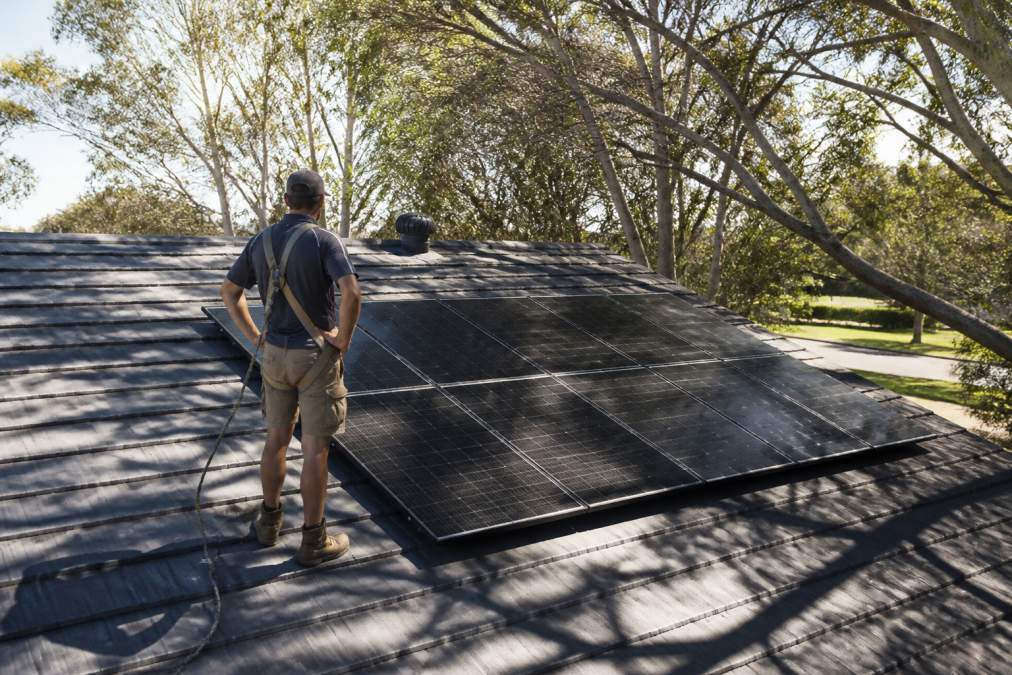
Roof orientation and pitch are your starting point. In Australia, north-facing roofs receive the most direct sunlight year-round and are ideal for solar. East-facing roofs capture morning sun, while west-facing roofs capture afternoon sun. South-facing roofs receive minimal direct sunlight and are generally unsuitable for residential solar. A pitch between 20 and 30 degrees optimises solar irradiance capture.
Shade mapping is essential for afternoon-shaded properties. This involves identifying every object that casts shade on your roof: trees, buildings, chimneys, antennas, and roof features. Shade that appears at 4pm affects fewer peak hours than shade at 2pm. Seasonal variation also changes the picture; winter shade from deciduous trees is less problematic than permanent shade from buildings.
Professional shading analysis uses software that models sun position throughout the year and calculates the percentage of each panel affected by shade at each hour. This analysis produces a detailed report showing energy loss estimates based on your specific shade pattern.
Roof condition and structural capacity must also be evaluated. Solar panels weigh roughly 20 kilograms each, plus mounting hardware and wiring. Your roof must be structurally sound and have sufficient remaining lifespan to justify a 25-year solar investment.
Usable roof space is another practical constraint. A heavily shaded roof might have only a small unshaded area suitable for panels. If that area is insufficient for a system large enough to meet your needs, shade becomes a more serious barrier.
GridFree Solar conducts comprehensive roof assessments covering all these factors. We provide a detailed report with shading analysis, energy yield estimates, and specific recommendations for system design.
ROI and Payback Period With Afternoon Shade
The return on investment (ROI) for solar with afternoon shade depends on several factors: the degree of shade, your electricity consumption, local electricity prices, available government rebates, and the technology you choose.
Payback period is the time it takes for your system to generate enough savings to cover its cost. Without shade, a typical residential system in Australia reaches payback in 5-7 years (cleanenergycouncil.org.au). With significant afternoon shade, payback might extend to 8-12 years or longer.
This longer payback period doesn’t make solar uneconomical; it just means you’re looking at a longer timeline before the system pays for itself. Many homeowners are comfortable with a 10-year payback, particularly if they plan to stay in their home for 15+ years.
Your electricity consumption pattern matters significantly. If you consume most power in the afternoon and evening, afternoon shade is more damaging because you’re losing production during your peak usage hours. Local electricity prices also affect ROI; in areas with high rates, the value of each kilowatt-hour produced is higher, improving ROI even for shaded systems.
Government rebates and incentives substantially improve ROI. The Small-scale Renewable Energy Scheme (SRES) provides tradeable certificates for solar installations, which reduces your upfront cost. These incentives can improve payback by 2-3 years or more.
Battery storage integration changes the ROI equation further. A shaded solar system paired with battery storage allows you to store the power you do generate and use it during peak-rate hours, maximising the value of every kilowatt-hour produced.
GridFree Solar provides detailed ROI calculations for every system design, accounting for your specific shade pattern, consumption profile, local electricity rates, and available incentives.
Solar System Monitoring and Maintenance Services
Once your solar system is installed, ongoing monitoring and maintenance ensure it continues performing at its design capacity. This is particularly important for shaded systems, where performance variations are more noticeable.
System monitoring tracks real-time and historical energy production, alerting you to any significant performance drops. Modern systems include monitoring apps that show hourly, daily, and monthly generation data. For shaded systems, this data reveals exactly when shade impacts production and confirms that your system is performing as designed.
Microinverter systems provide panel-level monitoring, so you can see the output of each individual panel. If one panel consistently underperforms compared to identical panels in the same shade conditions, it might indicate a wiring issue, inverter fault, or physical damage requiring repair.
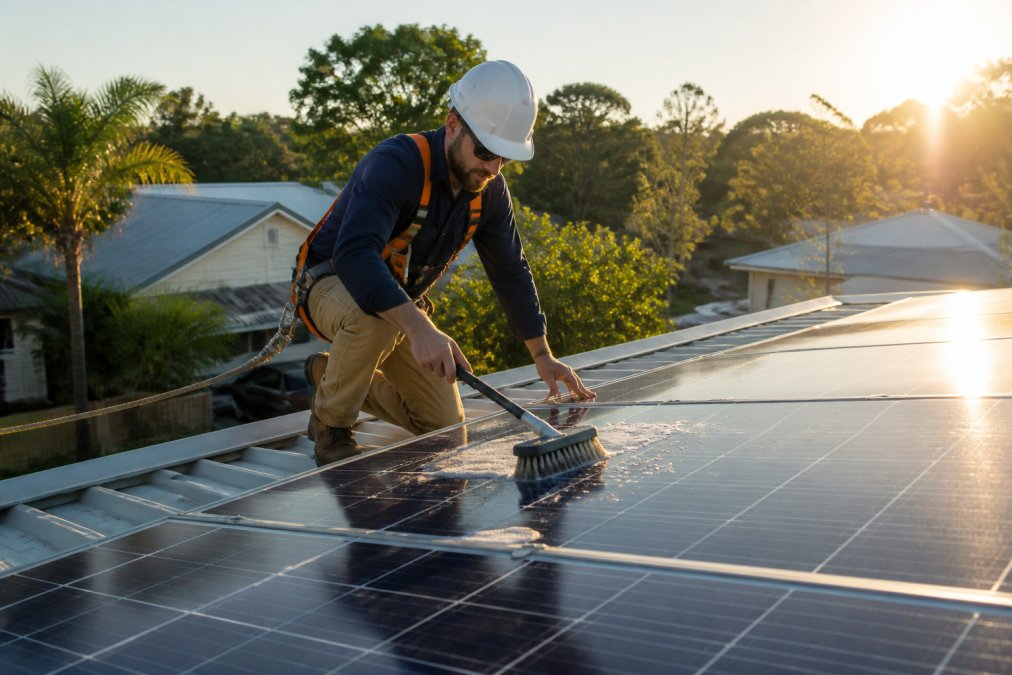
Maintenance for solar systems is minimal but important. Panels benefit from occasional cleaning to remove dust, pollen, and bird droppings that reduce light transmission. In Australia’s dry climate, dust accumulation can reduce output by 5-10% if left unaddressed. Professional cleaning is recommended annually or after periods of heavy dust.
Electrical connections should be inspected periodically to ensure they remain tight and corrosion-free. Battery systems (if installed) require more active maintenance, including regular capacity testing and software updates.
GridFree Solar offers comprehensive monitoring and maintenance services, including remote performance tracking, alert notifications, and scheduled professional inspections. Our CEC-accredited technicians can diagnose and resolve issues quickly, minimising downtime and protecting your investment.
When Shade Is Too Much for Solar
There’s a threshold beyond which afternoon shade makes solar economically unviable. Understanding this threshold helps you make an informed decision about whether to pursue solar on your property.
Total afternoon shade is the primary disqualifier. If your entire roof receives shade from 1pm onwards throughout the year, solar becomes very difficult to justify financially. You’re losing production during the hours when it’s most valuable.
Shade affecting more than 50% of usable roof space during peak hours presents a serious challenge. This limits system size and total production, potentially below the threshold needed to meet your electricity needs or justify the investment.
Permanent structural shade from buildings, dense tree lines, or topography is harder to solve than temporary shade from deciduous trees. Deciduous trees lose their leaves in winter, reducing shade during cooler months. Permanent shade provides no such seasonal relief.
Roof orientation combined with shade can be disqualifying. A south-facing roof already receives minimal sunlight. If that south-facing roof also has afternoon shade, solar is almost certainly not viable.
The decision point is typically a calculated payback period exceeding 12-15 years. If your analysis shows payback in 15+ years, solar is probably not the best use of capital. You might achieve better returns through energy efficiency improvements or by waiting until technology costs drop further.
However, non-financial factors sometimes justify solar despite poor financial returns. If environmental sustainability is your primary motivation, or if you value energy independence highly, a shaded system might still align with your goals.
GridFree Solar’s assessment process helps you identify this threshold for your specific situation. We provide honest analysis of whether solar makes financial sense on your property, and we’re willing to recommend against solar if the numbers don’t support it.
Is solar worth it with afternoon shade? The answer depends entirely on your specific situation: the degree and timing of shade, your electricity consumption and rates, available incentives, and your financial and environmental priorities. A shaded system rarely matches the ROI of an unshaded one, but it can still deliver meaningful savings and environmental benefits over its 25-year lifespan.
GridFree Solar specialises in designing systems that work despite real-world constraints like afternoon shade. Our CEC-accredited team conducts detailed shading analysis, designs optimised systems with microinverters or power optimizers, and guides you through available rebates and incentives. We provide transparent ROI projections and ongoing monitoring to ensure your system performs as promised. Connect Now to discuss your specific roof and receive a detailed assessment of whether solar is right for your home.
Frequently Asked Questions
Does afternoon shade really impact solar panel efficiency?
Yes. Afternoon shade directly reduces solar irradiance reaching your photovoltaic cells, lowering energy yield during peak afternoon hours. Even partial shading can significantly reduce system performance because solar panels are wired in strings, shade on one panel affects the entire string’s output. The degree of impact depends on shading duration, density, and whether you have power optimizers or microinverters to mitigate the effect.
Can I still save money on my electricity bill with a shaded roof?
Yes, but the payback period will be longer. A shaded system produces less kilowatt-hours annually, reducing your energy bill savings. However, if your afternoon shade is limited (a few hours daily) and your system is properly sized with microinverters or power optimizers, you can still achieve positive ROI. Battery storage integration also helps, storing morning and midday production for afternoon use maximises the value of your system.
What’s the difference between microinverters and string inverters for shaded systems?
String inverters process all panels as one unit, so shade on one panel reduces output from the entire string. Microinverters are installed on individual panels, so shaded panels operate independently without dragging down unshaded panels’ performance. For afternoon shade, microinverters typically deliver more energy yield than string inverters, though they cost more upfront. Power optimizers offer a middle-ground solution.
How do I know if my roof has too much shade for solar to be worthwhile?
If your roof receives less than 4 peak sun hours daily on average, or if shade covers more than 25% of your array for extended periods, solar becomes marginal. Professional shading analysis tools map shadow casting throughout the year. If afternoon shade blocks direct sunlight for more than 6 hours daily during peak generation months, the system efficiency drops below economical thresholds. A site assessment from an accredited installer can determine your specific solar potential.
This article was written using GrandRanker