
Table of Contents
- What the Small-scale Renewable Energy Scheme Actually Pays in 2026
- Solar Victoria Rebate Eligibility and How It Stacks With Federal STCs
- How to Reduce Electricity Bills With a Right-Sized Solar and Battery System
- Payback Period, Return on Investment and the Costs Rebates Do Not Cover
- Grid-Export Tariffs, Feed-In Rates and Off-Grid vs On-Grid Rebate Differences
- Verdict: Who Gets Real Value From the Small-scale Renewable Energy Scheme in 2026
- Frequently Asked Questions
Last Updated: September 28, 2026
What the Small-scale Renewable Energy Scheme Actually Pays in 2026
The Small-scale Renewable Energy Scheme is a federal incentive that lowers the upfront cost of eligible solar and battery systems through tradeable certificates, and for most households it remains worth claiming in 2026. This guide from GridFree Solar breaks down what it pays, who qualifies, and where the maths stops working in your favour.
How STCs Work as a Point-of-Sale Discount
An STC is a tradeable certificate representing one megawatt-hour of eligible renewable electricity (Small-scale technology certificates). A solar PV system, solar hot water, or eligible battery earns a set number of certificates based on its expected output.
The STC Multiplier and Deeming Period Explained
The deeming period is how many years of expected generation the certificates cover. It shortens each year toward 2030, so the same system earns fewer certificates the later you install it.
Solar Victoria Rebate Eligibility and How It Stacks With Federal STCs
Solar Victoria rebate eligibility rules are separate from the federal scheme, and the two can be combined. Federal STCs reduce your upfront cost automatically, while the state program applies its own criteria on top.
How to Reduce Electricity Bills With a Right-Sized Solar and Battery System
Knowing how to reduce electricity bills starts with sizing, not shopping. An oversized system wastes capital; an undersized one leaves your biggest loads on grid power at peak rates.
Matching System Capacity to Household Energy Consumption
Start with your household energy consumption, measured in kilowatt-hours across a full year. Your bill shows this. Then look at when you use power, not just how much.
- Daytime-heavy usage: solar alone covers most of your load
- Evening-heavy usage: battery storage shifts your solar into peak hours
- Mixed usage: a mid-sized solar PV system plus battery delivers the best return
Check your feed-in tariff before sizing your battery. If your retailer pays well for exports, a smaller battery can outperform a larger one because you profit from selling rather than storing.
Payback Period, Return on Investment and the Costs Rebates Do Not Cover
Most well-sized systems pay back in a reasonable timeframe, but the honest figure includes costs the rebates ignore. Return on investment depends on your tariff, usage pattern, and what happens after installation, the section most quotes skip, and where the ‘worth it’ question is decided.
How to Build a Realistic Payback Calculation
A simple payback calculation is upfront cost divided by annual savings. The mistake is using the sticker price before STCs with best-case savings. Do it in this order:
- Start with the quoted price after the point-of-sale STC discount. That is your true upfront cost.
- Subtract any state rebate you qualify for (for example, a Solar Victoria rebate applied at the point of sale).
- Estimate annual bill savings from self-consumption first. Multiply the kilowatt-hours you use on site by your retail tariff. Self-consumption savings are the most reliable part of the return because they do not depend on a retailer’s feed-in rate.
- Add export income second, and discount it. Feed-in rates change, so treat export income as a bonus rather than the foundation of your payback.
- Subtract annual maintenance and a sinking fund for replacements. This is the step almost every quote omits.
What Rebates Do Not Cover
What rebates do not cover:
- Inverter replacement, typically needed once over a system’s life
- Panel cleaning and occasional fault repairs
- Battery degradation and eventual replacement
- Monitoring subscriptions on some systems
- Insurance premium changes and any switchboard or wiring upgrades your installer identifies
Post-rebate maintenance costs are the gap most quotes skip. A cheap quote that ignores a future inverter replacement isn’t actually cheaper.
| Cost Category | Covered by Rebates? | Typical Timing | Effect on Payback |
|---|---|---|---|
| Panels and mounting | Partly, via STCs | Upfront | Reduces upfront cost |
| Battery storage | Partly, via state and federal programs | Upfront | Reduces upfront cost |
| Inverter replacement | No | Once over system life | Extends payback |
| Cleaning and repairs | No | Ongoing | Small annual drag |
| Battery replacement | No | Later in system life | Largest single future cost |
| Switchboard or wiring upgrade | No | Usually upfront | Adds to upfront cost |
Why Self-Consumption Beats Export for ROI
Return on investment is driven far more by how much solar you use on site than by how much you export. Every kilowatt-hour consumed on site avoids a retail tariff, typically several times the value of a feed-in tariff; every kilowatt-hour exported earns the much lower feed-in rate.
Before you accept a payback figure, ask the installer to show the calculation with self-consumption savings separated from export income. If the two are blended into one number, the payback is being flattered by an export rate that may not last.
The Maintenance Line Most Owners Forget
Solar panels are low-maintenance, not maintenance-free. Inverter replacement most often surprises owners, because the inverter typically has a shorter service life than the panels. Battery systems add a second replacement cycle.
A payback figure that assumes zero maintenance and zero replacement is not a payback figure, it is a marketing number. Ask for the version that includes them.
Putting It Together
A system is worth it when self-consumption is high, the upfront cost has been reduced by every rebate you qualify for, and you have budgeted for the parts that wear out. It is weaker value when self-consumption is low, export income does most of the work, and future replacement costs are left out.
Grid-Export Tariffs, Feed-In Rates and Off-Grid vs On-Grid Rebate Differences
Exporting power changes your return, and the tariff structure matters as much as the system itself. Most rebate guides ignore this half of the ‘worth it’ calculation: rebates reduce what you pay, while feed-in tariffs determine what you earn.
How Feed-In Tariffs Actually Work in 2026
A feed-in tariff is the rate your retailer pays you for electricity you export to the grid. In 2026, most offers fall into one of three structures:
- Single-rate (flat) feed-in tariff: one rate for every exported kilowatt-hour, regardless of time. Simple, but usually the lowest value.
- Time-varying feed-in tariff: a higher rate during a defined evening peak window and a lower rate outside it. Rewards systems that can export late in the day.
- Dedicated battery export or VPP-style arrangement: a specific rate paid for exporting from a battery during a nominated window, often paired with a retailer’s own hardware or plan conditions.
Why Export Timing Matters More Than Export Volume
Two households with identical systems and generation can have very different returns purely because of when their exports land. Midday export coincides with the grid’s highest solar generation, when wholesale prices, and feed-in rates, tend to be lowest. Evening export coincides with peak demand, when rates tend to be highest.
Off-Grid vs On-Grid: The Rebate Difference Most Guides Miss
This gap matters if you are considering a standalone system.
A high feed-in tariff is not guaranteed for the life of your system. Retailers adjust rates, and plan conditions change. Build your payback maths around self-consumption first and treat export income as a bonus, not a foundation.
How to Compare Offers Properly
Compare the whole package, not just the system price:
- The post-STC price, so you are comparing like with like.
- The feed-in tariff structure offered by your retailer, including whether it is flat or time-varying.
- Whether your system can shift exports into the high-value window, which usually means a battery.
- Whether you are on-grid or off-grid, because the rebate treatment differs.
A cheaper system on a poor feed-in structure can return less than a slightly dearer one on a good structure. The rebate is one side of the coin; the tariff is the other.
Verdict: Who Gets Real Value From the Small-scale Renewable Energy Scheme in 2026
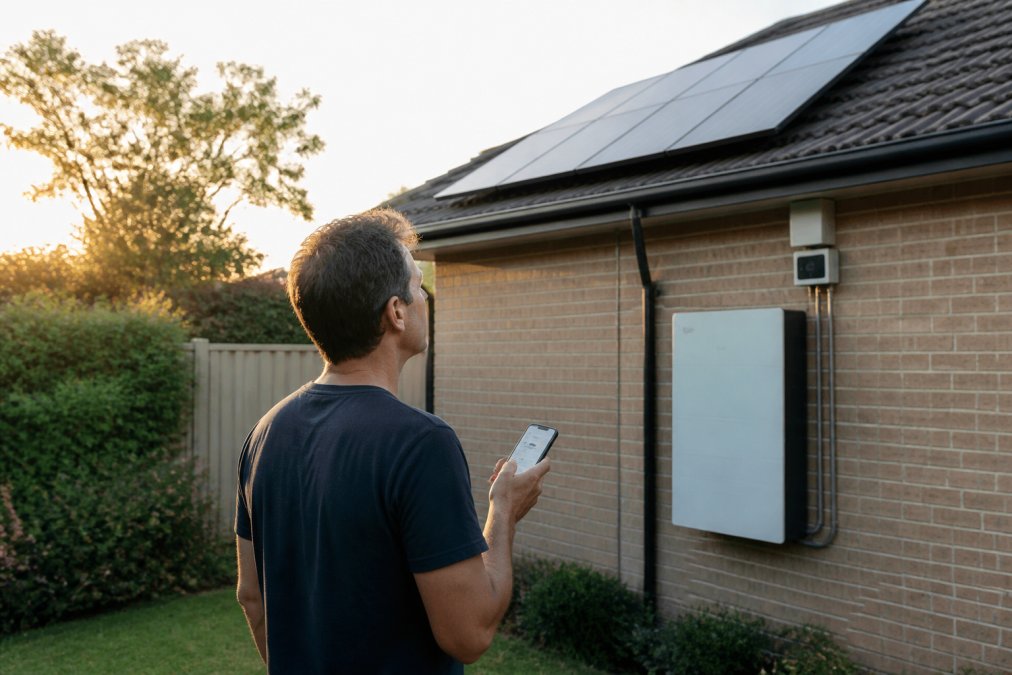
The scheme is worth it when self-consumption is high. Size for your actual usage, claim every rebate you qualify for, and budget for the maintenance costs no quote mentions.
Frequently Asked Questions
Are solar rebates reducing in 2026?
Yes, the federal STC incentive steps down each year as the Renewable Energy Target winds toward 2030. The deeming period shortens annually, so the number of Small-scale Technology Certificates a system generates falls. A solar PV system installed in 2026 earns fewer STCs than one installed in 2024. Solar Victoria’s state programs also have capped budgets and can pause when allocations are exhausted, so timing matters. Locking in a quote early in the year usually secures a larger upfront discount.
How do STCs work under the Small-scale Renewable Energy Scheme?
STCs are tradeable certificates created per kilowatt of system capacity, multiplied by your postcode’s climate zone and the deeming period. Most installers apply them as a point-of-sale rebate, so the discount comes off your quote rather than requiring you to trade certificates yourself. The Clean Energy Regulator oversees the scheme. Values fluctuate with market demand, so the final figure depends on the STC price on your installation date.
What is the difference between federal STCs and state-based solar rebates?
Federal STCs come from the Small-scale Renewable Energy Scheme and apply nationwide to eligible solar PV, solar hot water and battery storage. State-based programs, such as Solar Victoria’s rebates and interest-free loans, sit on top and target local priorities like battery storage or low-income households. You can usually stack both, but each has its own eligibility criteria, installation standards and application process, so confirm the current rules before signing a contract.
Does the Small-scale Renewable Energy Scheme apply to battery storage?
STCs apply to eligible battery storage alongside solar PV, and the Cheaper Home Batteries Program has expanded support for batteries in recent years. A battery must be paired with a new or existing solar system, meet the relevant Australian standards, and be installed by a Clean Energy Council accredited installer. Eligibility criteria, system capacity limits and paperwork requirements shift, so check the Clean Energy Regulator’s current guidance before committing.
Is 10kW solar enough to run a house and make the scheme worth it?
A 10kW system suits many larger households with pools, air conditioning or electric vehicles, but the right size depends on your household energy consumption, roof orientation and shading. Oversizing without matching daytime usage can push exports into low feed-in tariff territory. A properly sized 6kW to 10kW system, paired with battery storage to shift solar into the evening peak, usually delivers a shorter payback period than a system sized purely for maximum capacity.
The challenge isn’t deciding whether the scheme is worth it, it’s sizing a system that actually pays you back. GridFree Solar designs solar and battery systems around your real consumption, handles your rebate applications, and backs the install with CEC accredited work and ongoing monitoring. Get started with GridFree Solar and turn your rooftop into a system that earns its keep.