
Table of Contents
- Step 1: Calculate Your Home Energy Consumption
- Step 2: Reduce Energy Demand Before You Generate
- Step 3: Install Solar Panels and a Photovoltaic System
- Step 4: Choose the Best Solar Battery for Home Backup
- Step 5: Understand Off-Grid Solar System Cost Australia
- Step 6: Manage Energy with Smart Monitoring and Load Balancing
- Step 7: Financial ROI, Rebates and Payback Periods
- Step 8: Maintenance and Lifecycle Management for Long-Term Energy Independence
- Frequently Asked Questions
Last Updated: September 23, 2026
Step 1: Calculate Your Home Energy Consumption
Energy self-sufficiency starts with measurement, not hardware. You cannot size a solar and battery system for a home without knowing exactly how much power that home consumes, and when.
This is the step most homeowners skip, and it is the single biggest cause of oversized systems, disappointing savings, and quotes that never quite deliver what was promised.
Start with two data sources:
- Your electricity bills. Pull the last 12 months. Look past the total dollar figure to the kilowatt-hour (kWh) usage on each bill. Seasonal swings matter enormously for system sizing, so a summer-only snapshot will mislead you.
- Your meter data. Most distributors now let you download half-hourly or 15-minute interval data from a consumer portal. This shows not just how much you use, but when. That timing profile determines whether battery storage will actually save you money or just sit idle.
A home energy audit is the professional version of this exercise. A qualified auditor inspects insulation, draughts, appliance loads, and lighting, then produces a report identifying where energy is wasted and what it would cost to fix. For homeowners serious about energy independence, this report becomes the blueprint for every later decision.
Australian Government energy.gov.au guidance on home energy assessments
Step 2: Reduce Energy Demand Before You Generate
The cheapest kilowatt-hour is the one you never use. Reducing energy demand first means you can install a smaller, cheaper solar and battery system and still reach the same level of energy independence.
This is the contrarian part of the process.
Thermal Insulation and Passive Design
Thermal insulation slows the transfer of heat through your home’s thermal envelope, the barrier formed by walls, roof, floors, and windows. Better insulation means less heating in winter and less cooling in summer, which directly shrinks your energy demand.
Electrification and Efficient Appliances
Electrification means replacing gas appliances with efficient electric alternatives, most commonly a heat pump for hot water and heating, and induction cooking for the kitchen. Heat pumps move heat rather than generating it, so they deliver far more heating per unit of electricity than resistive elements.
Step 3: Install Solar Panels and a Photovoltaic System
A photovoltaic system converts sunlight directly into electricity, and it is the generation engine of any energy self-sufficiency plan. Sizing it correctly matters more than maximising panel count.
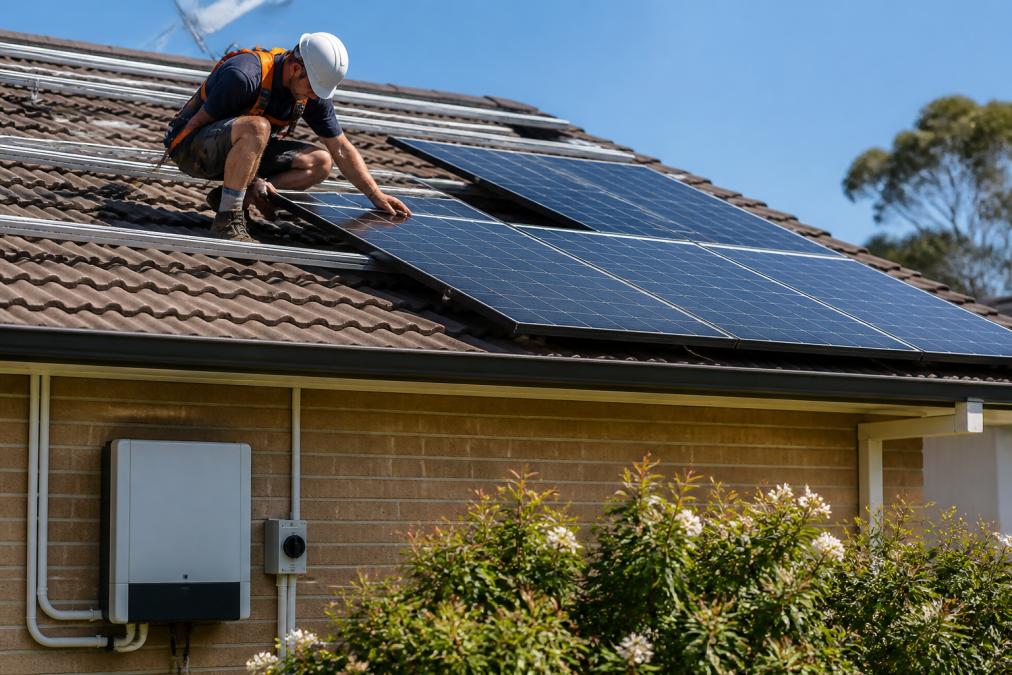
Three components determine performance:
- Panel array: total kilowatts of generation capacity, matched to your daytime consumption and roof space.
- Inverter: converts direct current from the panels into usable alternating current. String inverters are cheaper; microinverters handle shading better.
- Mounting and orientation: north-facing panels generate most in the southern hemisphere, but east-west splits can better match morning and evening demand.
Step 4: Choose the Best Solar Battery for Home Backup
The best solar battery for home backup is the one sized to your evening and overnight consumption, not the largest capacity you can afford. Oversizing battery storage wastes money; undersizing leaves you buying from the grid at peak rates.
| Specification | What It Determines | Why It Matters |
|---|---|---|
| Usable capacity (kWh) | Overnight coverage | Too small means grid reliance at peak |
| Power rating (kW) | Appliances supported at once | Too low trips on heavy loads |
| Cycle life | Lifespan before degradation | Higher cycles means longer service |
| Chemistry | Safety and thermal behaviour | Lithium iron phosphate runs cooler |
Step 5: Understand Off-Grid Solar System Cost Australia
A realistic cost structure looks like this:
- Generation array: off-grid arrays are typically oversized by 30-50% relative to grid-tied systems to recharge the bank through cloudy stretches. Panel and mounting costs scale accordingly.
- Battery bank: the dominant cost. A home consuming 15-20 kWh per day with three days of autonomy needs roughly 45-60 kWh of usable storage, which is several times a typical grid-tied backup battery.
- Backup generator: most off-grid homes retain a generator for extended low-sun periods. This is not a failure of the design, it is standard practice and should be budgeted from the outset.
- Balance of system: switchboards, DC cabling, charge controllers, and compliance work scale with system size and add a meaningful percentage on top of hardware.
Off-grid systems are not eligible for the same grid-connection rebates as grid-tied systems, and the Small-scale Renewable Energy Scheme treats them differently. Confirm current eligibility through official sources before signing a quote.
Regulatory reality also differs. An off-grid installation still requires compliance with AS/NZS 3000 wiring rules and, where batteries are installed, AS/NZS 5139:2019. Some councils require separate approval for standalone power systems, and insurance policies often need explicit notification. These are not optional extras, they are conditions of a lawful installation.
If a quote arrives without a stated days-of-autonomy figure and a generator contingency, it is not an off-grid design, it is a grid-tied system with a larger battery.
Step 6: Manage Energy with Smart Monitoring and Load Balancing
Smart home energy monitoring turns a passive system into an actively managed one. Without monitoring, you are guessing. With it, you can see generation, consumption, battery state, and grid import/export in real time.
The practical setup most homeowners benefit from:
- Install consumption monitoring at the switchboard
- Configure battery charge and discharge windows around your tariff
- Automate high-draw appliances to run during peak generation
- Review monthly reports and adjust settings seasonally
Step 7: Financial ROI, Rebates and Payback Periods
Payback periods for energy self-sufficiency depend on your consumption, tariff structure, system cost, and available incentives. There is no universal figure, and any installer quoting one without reviewing your bills is guessing. Optimizing your current usage patterns remains the most effective way to reduce home energy bills while you evaluate the long-term financial viability of a standalone power installation.
Three levers shorten payback:
- Government incentives. The Small-scale Renewable Energy Scheme and the Cheaper Home Batteries Program both reduce upfront cost. Eligibility and current amounts change, so confirm details through official sources rather than relying on a quote alone.
- Self-consumption. Every kilowatt-hour you use from your own generation instead of buying from the grid is a full retail-rate saving.
- Export and grid benefits. Some retailers pay for exported power, and time-of-use tariffs reward avoiding peak-period grid use.
Australian Government Cheaper Home Batteries Program information
Step 8: Maintenance and Lifecycle Management for Long-Term Energy Independence
Long-term energy resilience depends on maintenance, not just installation. This is the section most guides omit entirely, and it is where the real cost of ownership lives.
Component lifespans and what drives them
- Solar panels: typically warranted for 25 years of performance, with degradation of roughly 0.5% per year for mainstream modules. Panels rarely fail outright; they slowly underperform. Occasional cleaning matters in dusty or high-pollen areas, and micro-cracking from poor installation is the main premature-failure cause.
- Inverters: the shortest-lived major component. String inverters commonly carry 5-10 year warranties and are often replaced once during a system’s life. Microinverters typically carry longer warranties but cost more upfront. Fault codes should be checked rather than ignored, a derated inverter silently reduces generation.
- Batteries: degrade with both cycling and calendar age. Lithium iron phosphate chemistry generally tolerates more cycles and higher temperatures than older lithium chemistries. A battery rated for a set number of cycles will eventually need replacement, and planning for that cost now avoids a nasty surprise later.
The lifecycle plan most homeowners never write
A practical plan tracks four things:
- Warranty documentation for panels, inverter, and battery, stored together with serial numbers
- Service records for every inspection, clean, and firmware update
- Monitoring history exported periodically, so degradation trends are visible
- Replacement budget set aside annually, sized to the expected battery replacement year
When performance drops, that history is what supports a warranty claim. Without it, claims are frequently refused on the basis that the owner cannot demonstrate the system was maintained within specification.
Battery warranties commonly require the system to remain connected to monitoring and may specify temperature and depth-of-discharge limits. Exceeding those limits, even unintentionally through poor configuration, can void coverage.
Regulatory and safety obligations
Battery installations must comply with AS/NZS 5139:2019, which sets requirements for location, ventilation, signage, and fire separation. Inverters and DC isolators must meet AS/NZS 3000. These are not one-off installation checks, signage fades, ventilation can be blocked by stored items, and any alteration to the battery enclosure may breach the original compliance. An annual visual check against the original installation documentation is a low-cost way to stay compliant.
Frequently Asked Questions
What are the essential components of an energy self-sufficient home?
A self-sufficient home typically combines solar panels, a battery storage system, an inverter, and a smart energy management system. Thermal insulation and efficient appliances reduce the energy demand you need to meet. For homes that want full independence, an off-grid solar system with sufficient energy storage capacity replaces the grid connection entirely. Most suburban homes start with a grid-tied system and add battery storage to increase energy resilience and lower bills.
Is it possible to be 100% energy self-sufficient in a suburban home?
Yes, but it depends on your roof space, shading, battery capacity, and energy habits. A well-designed photovoltaic system paired with adequate battery storage can cover most or all of your annual energy consumption. However, winter months and consecutive cloudy days may require grid backup or a larger battery. Many homeowners aim for high self-sufficiency rather than total independence, which balances cost and reliability.
What government rebates are available for home energy storage?
The Cheaper Home Batteries Program provides a rebate on eligible battery installations, and the Small-scale Renewable Energy Scheme offers certificates for solar and battery systems. These rebates reduce upfront costs and improve your payback period. Eligibility depends on system size, installer accreditation, and compliance with standards like AS/NZS 5139:2019. A CEC-accredited installer can confirm which rebates apply to your situation.
How does energy self-sufficiency impact electricity bills?
Generating and storing your own solar energy reduces the amount you draw from the grid, which lowers your bills. If your retailer offers a feed-in tariff, exporting excess power can earn credits. For example, some plans pay around 15c per kWh for exports during peak evening hours. Combining battery storage with smart load balancing lets you avoid peak tariffs and maximise the value of every kilowatt-hour you generate.