
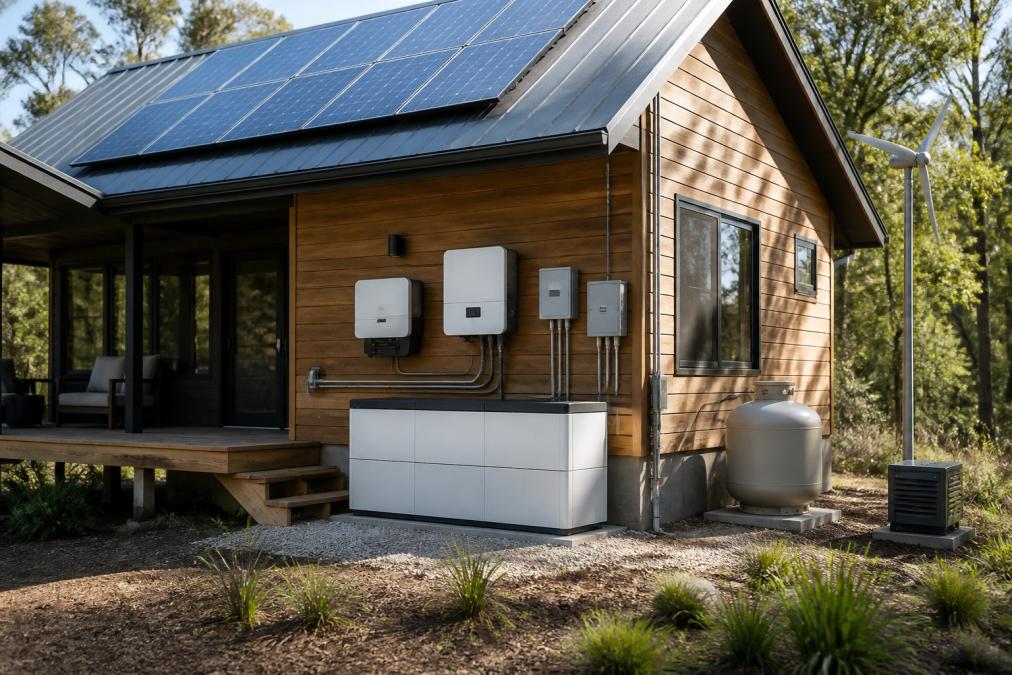
Table of Contents
- Quick Comparison: Grid Power Alternatives for Small Homes
- Solar Power Systems and Battery Storage for Small Homes
- Stand-Alone Power Systems (SAPS) Cost and What It Covers
- Renewable Energy Rebates Australia: What You Can Claim
- Wind, Micro-Hydro and Hybrid System Integration
- Load Profile Analysis: Sizing Your Off-Grid System
- Regulatory and Zoning Hurdles for Disconnecting from the Grid
- Frequently Asked Questions
Last Updated: September 26, 2026
Quick Comparison: Grid Power Alternatives for Small Homes
The best alternatives to grid power for small homes are stand-alone solar with battery storage, hybrid solar-battery systems, small wind turbines, micro-hydro where water is available, and portable power stations for very light loads. Solar is the practical starting point for most households because it scales to any roof and works in almost any climate. This guide breaks down what each option covers, and which suits your load profile.
The critical decision isn’t which technology sounds best. It’s how much energy you actually use, and when.
| Alternative | Best For | Typical Setup | Main Trade-Off |
|---|---|---|---|
| Solar + battery bank | Most small homes | Panels, inverter, storage | Upfront cost |
| Hybrid system | Keeping grid as backup | Solar, battery, grid connection | Complexity |
| Small wind turbine | Windy, exposed sites | Tower, turbine, controller | Intermittency |
| Micro-hydro | Properties with flowing water | Turbine, penstock, intake | Site-specific |
| Portable power station | Cabins, sheds, light loads | All-in-one unit | Limited capacity |
Below, we’ll show you exactly how to size each option against your own consumption, and where most guides get the sizing wrong.
Solar Power Systems and Battery Storage for Small Homes
A solar power system with battery storage is the most common grid alternative for small homes because photovoltaic panels generate power silently, need almost no maintenance, and pair with a battery bank to cover evening demand. A charge controller manages the flow into deep cycle batteries, and an inverter handles DC-to-AC conversion for household appliances.
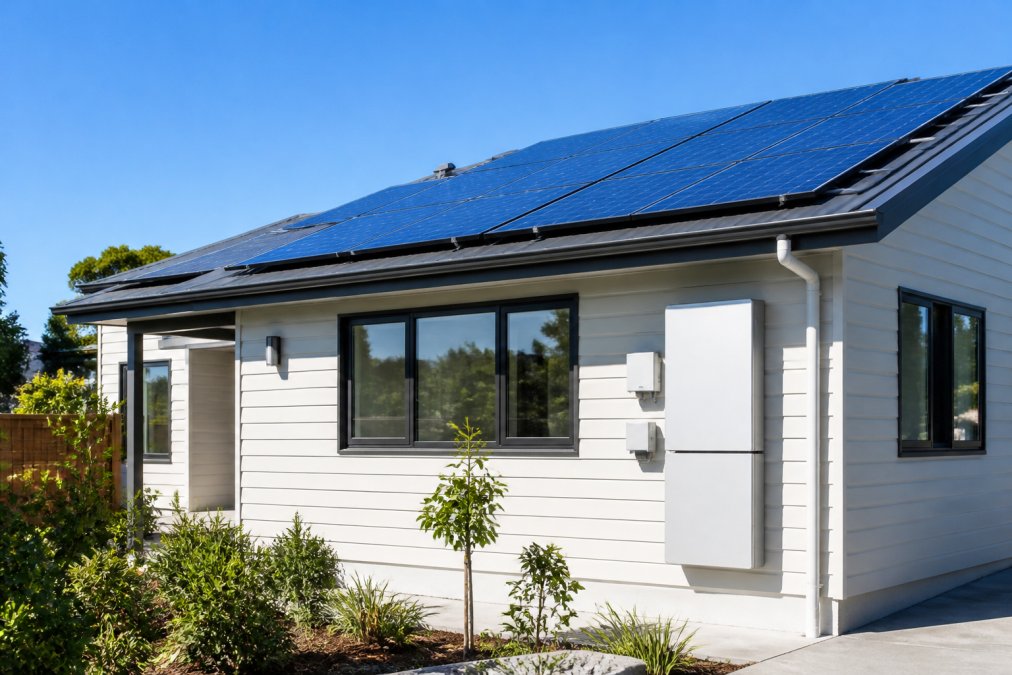
Sizing starts with your daily energy consumption in kilowatt-hours. A small home running lights, a fridge, a laptop and a washing machine typically lands somewhere between 5 and 15 kWh per day, though that figure swings widely with climate and appliance age.
What most guides miss is the gap between generation and demand. Panels produce most at midday; households draw most in the evening. Without storage, you export cheaply and buy back expensively. With a battery bank sized to your evening load, you cover that gap directly.
Check your last four electricity bills before sizing anything. Your daily average in kilowatt-hours is the single number that determines whether a system works or disappoints.
Stand-Alone Power Systems (SAPS) Cost and What It Covers
Stand-alone power systems (SAPS) cost depends on your daily load, battery capacity, and whether you need a backup generator. A SAPS runs your home with no grid connection at all, covering generation, storage, and conversion in one system.
Pricing varies by configuration, so treat any single figure with suspicion. The variables that move cost most are battery bank size, inverter capacity, and whether you include a fossil fuel backup generator for extended cloudy periods. For current pricing on a system matched to your home, the Clean Energy Council’s guide to accredited installers explains what accreditation means and why it matters for compliance.
A SAPS covers:
- Generation through photovoltaic panels, wind, or micro-hydro
- Energy storage in a battery bank sized for overnight and cloudy days
- DC-to-AC conversion through an inverter rated for your peak demand
- Backup power from a generator or second storage bank for worst-case weather
The honest limitation: a SAPS sized for average conditions will fail in an unusual week. Size for your worst month, not your average one.
Renewable Energy Rebates Australia: What You Can Claim
Renewable energy rebates Australia offers through federal schemes can reduce the upfront cost of solar and battery storage, but eligibility rules and amounts change, so always confirm current figures with the official source before budgeting.
Two schemes matter most for small homes, and they work in completely different ways.
The Small-scale Renewable Energy Scheme (SRES) issues small-scale technology certificates (STCs) for eligible solar panel installations. The number of STCs is calculated from the system’s rated capacity, the zone rating for your postcode, and the number of years remaining in the scheme’s deeming period. Installers almost always quote a price with the STC discount already applied, then claim the certificates themselves, so the rebate is invisible on your invoice but baked into the number. If a quote looks unusually low, check whether the STC discount has actually been applied or whether you are being asked to assign certificates separately.
The Cheaper Home Batteries Program provides support for eligible battery installations, with the benefit applied through your installer at the point of sale.
Small-scale Renewable Energy Scheme
Cheaper Home Batteries Program
What actually moves your rebate amount:
- System size, larger solar arrays earn more STCs, but the battery rebate is capped per installation
- Postcode zone rating, sunnier zones earn fewer STCs per kilowatt because the scheme assumes more generation over the deeming period
- Installation date, the STC deeming period steps down each year, so the same system earns less the longer you wait
- Battery model, only batteries on the approved list qualify for the battery program
- Installer accreditation, only Clean Energy Council accredited installers can assign STCs on your behalf
Rebate amounts change. A figure you saw six months ago may no longer apply. Confirm current eligibility on the official program page before signing a contract, or you may budget for a discount that no longer exists.
Wind, Micro-Hydro and Hybrid System Integration
Wind, micro-hydro and hybrid system integration extend a solar setup when your site has the right conditions. A small wind turbine suits exposed, windy properties where solar generation dips in winter. Micro-hydro power delivers the most consistent output of any renewable source, but only if you have flowing water with adequate head and flow.
| Source | Output Pattern | Site Requirement |
|---|---|---|
| Solar | Daytime peak, seasonal dip | Unshaded roof or ground mount |
| Wind | Variable, often stronger at night | Exposed site, tower height |
| Micro-hydro | Near-constant | Flowing water, head, flow rate |
What to watch for.
- Controller compatibility, each source needs a controller matched to its output characteristics, and they must all charge the same battery bank safely
- Dump loads, wind and hydro cannot simply be switched off when the battery is full, so a dump load or diversion controller is essential to avoid overcharging
- Tower and intake costs, the turbine or hydro unit is often the smaller part of the bill; towers, guy wires, penstocks and intakes dominate
- Maintenance, moving parts need servicing, unlike solar, which has no moving parts at all
Load Profile Analysis: Sizing Your Off-Grid System
Load profile analysis is the process of mapping not just how much energy your home uses, but when it uses it, and it is the step most off-grid guides skip entirely. Two homes with identical monthly consumption can need very different systems depending on whether their peak demand lands at midday or after dark.
Size for your worst week, not your average day. A system built around average consumption will leave you without power the first time you get three cloudy days in a row.
Regulatory and Zoning Hurdles for Disconnecting from the Grid
Key hurdles to clear:
- Network approval to disconnect or decommission your connection point
- Council planning permission for towers, ground-mounted arrays, or structures
- Electrical compliance with AS/NZS 5139:2019 for battery installations and AS/NZS 3000 for wiring
- A Certificate of Electrical Safety issued by a licensed electrician on completion
Removing your grid connection without distributor approval can trigger penalties and leave the property non-compliant at sale. Get written approval before any work begins.
One more consideration most guides ignore: end-of-life battery disposal. Battery banks have a finite cycle life, and planning for safe removal and recycling at purchase time avoids a costly problem a decade later. Ask your installer what happens to the battery at end of life before you sign.
Frequently Asked Questions
What is the best option for off-grid power for a small home?
There is no single best option; it depends on your location, budget and energy needs. Solar power systems with battery storage suit most small homes because they scale easily and benefit from renewable energy rebates Australia. Stand-alone power systems (SAPS) combine solar, batteries and a backup generator for full energy independence. In windy or hilly areas, wind turbines or micro-hydro can supplement solar. A load profile analysis will show which mix works for you.
Are stand-alone power systems (SAPS) cost-effective for tiny homes?
SAPS can be cost-effective for tiny homes if you have good solar access and manage heavy loads. The stand-alone power systems (SAPS) cost includes solar panels, a battery bank, an inverter, a charge controller and often a backup generator. While the upfront cost is higher than a small grid connection, you avoid ongoing supply charges and gain energy independence. Rebates and the falling price of lithium batteries improve the payback period.
How do I calculate the energy needs for a small off-grid home?
Start with a load profile analysis. List every appliance and its wattage, then estimate daily hours of use to get kilowatt-hours per day. Add a safety margin of 20-30% for cloudy days and efficiency losses. This total determines your solar array size, battery bank capacity and inverter rating. Tools like energy monitors or a qualified installer can help you measure actual consumption. Accurate sizing prevents overspending and power shortages.
Is it legal to disconnect from the electricity grid in Australia?
Yes, you can disconnect from the grid, but you must follow state and local regulations. In most areas, you need approval from your network distributor and your local council. Stand-alone power systems must comply with AS/NZS 3000 and AS/NZS 5139:2019 for battery installations. Some councils have zoning rules about renewable energy infrastructure. Check with your installer and local authorities before going off-grid to ensure compliance.
What are the maintenance requirements for off-grid battery storage?
Off-grid battery storage needs regular checks to stay safe and efficient. Inspect connections for corrosion, clean solar panels, and monitor battery state of charge. Lithium batteries require less maintenance than lead-acid, but all systems should be checked annually by a professional. Software updates for inverters and monitoring apps help track performance. Proper maintenance extends battery life and prevents costly failures.