Solar can cut a data centre’s reliance on grid electricity, but it isn’t a replacement for its backup systems. For commercial solar for data centres in Victoria, Australian systems up to 100 kW may be eligible for Small-scale Technology Certificates under the Small-scale Renewable Energy Scheme, according to the Clean Energy Regulator. Systems above 100 kW aren’t eligible for STCs, but may create Large-scale Generation Certificates if accredited by the regulator.
Powering a data centre around the clock makes it essential to match solar generation and battery storage to the site’s demand. Batteries can help manage peak demand, but they do not replace uninterruptible power supplies or generators.
This guide covers how incentives apply, what solar panels can contribute and how battery storage may support a facility’s energy strategy. It also explains the factors that shape system design and project costs in Victoria, helping you assess potential value against your site’s operating requirements.
Key Takeaways
- Assess incentives against system size and eligibility to understand how they could affect a project’s value.
- Size solar around interval meter data, usable roof area, structural capacity and network export limits, not a headline capacity alone.
- Compare the value of on-site solar with your facility’s operating profile and the conditions of Victoria’s commercial solar market.
- Consider battery storage for managing peak demand, while keeping the data centre’s backup power requirements distinct.
What commercial solar incentives are available?
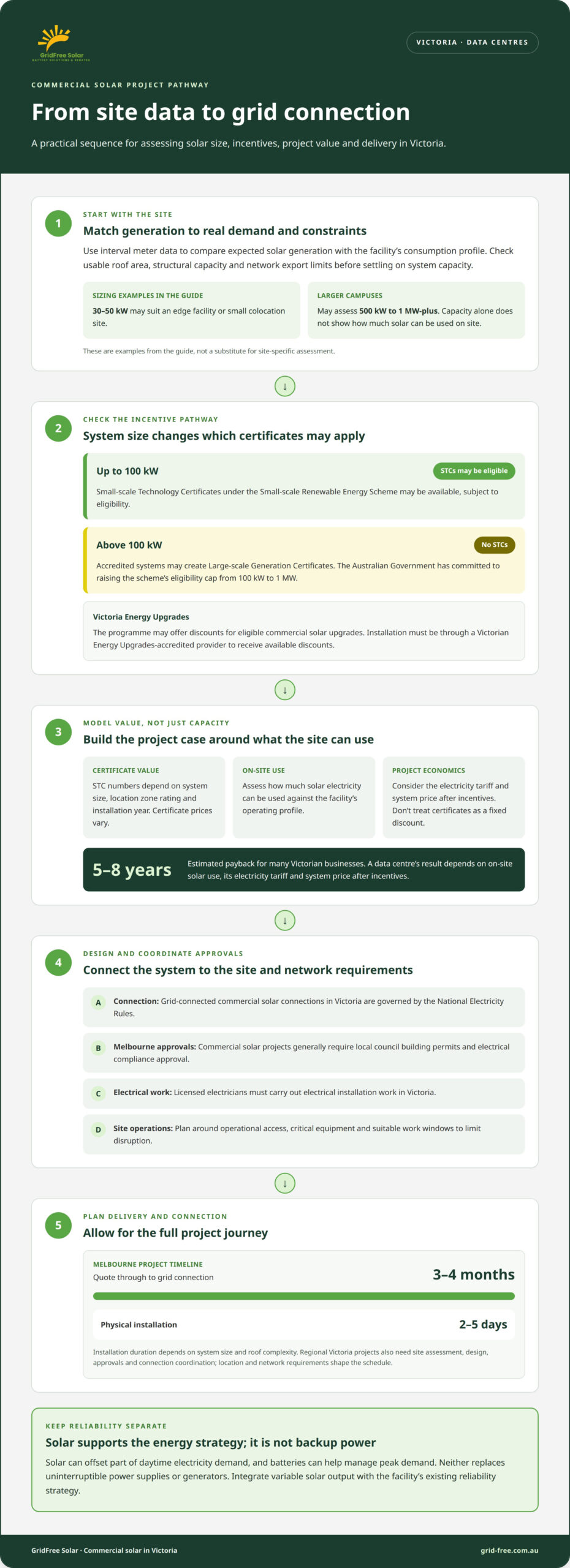
Australian commercial solar systems up to 100 kW may be eligible for Small-scale Technology Certificates under the Small-scale Renewable Energy Scheme, according to the Clean Energy Regulator. Certificate numbers depend on system size, location zone rating and installation year, while certificate prices vary. Model the potential certificate value alongside expected on-site consumption, rather than treating it as a fixed discount.
For systems above 100 kW, the Clean Energy Regulator says STCs aren’t available, but accredited systems can create Large-scale Generation Certificates. The Australian Government Department of Climate Change, Energy, the Environment and Water has committed to raising the scheme’s eligibility cap from 100 kW to 1 MW. Victoria’s Energy Upgrades program may also offer discounts for eligible commercial solar upgrades. Victorian commercial solar PV systems must be installed through a Victorian Energy Upgrades-accredited provider to receive available discounts.
In Melbourne, a commercial project may take 3-4 months from quote to grid connection. Physical installation typically takes 2-5 days, depending on system size and roof complexity. Regional Victoria projects also need site assessment, design, approvals and connection coordination, with the location and network requirements shaping the schedule. Plan installation around operational access, critical equipment and suitable work windows to limit disruption.
Payback for many Victorian businesses is estimated at 5-8 years. For a data centre, the result depends on how much solar electricity is used on site, the electricity tariff and the system price after incentives. Design work should consider interval meter data, roof structure, usable area and network export limits. Grid-connected commercial solar connections in Victoria are governed by the National Electricity Rules.
Choose an installer who can assess data centre consumption, explain the connection process and coordinate system design, approvals and installation. Licensed electricians must carry out electrical installation work in Victoria. Plan the project schedule around site operations and grid connection requirements.
What are the Benefits of Solar Panels for Data Centres?
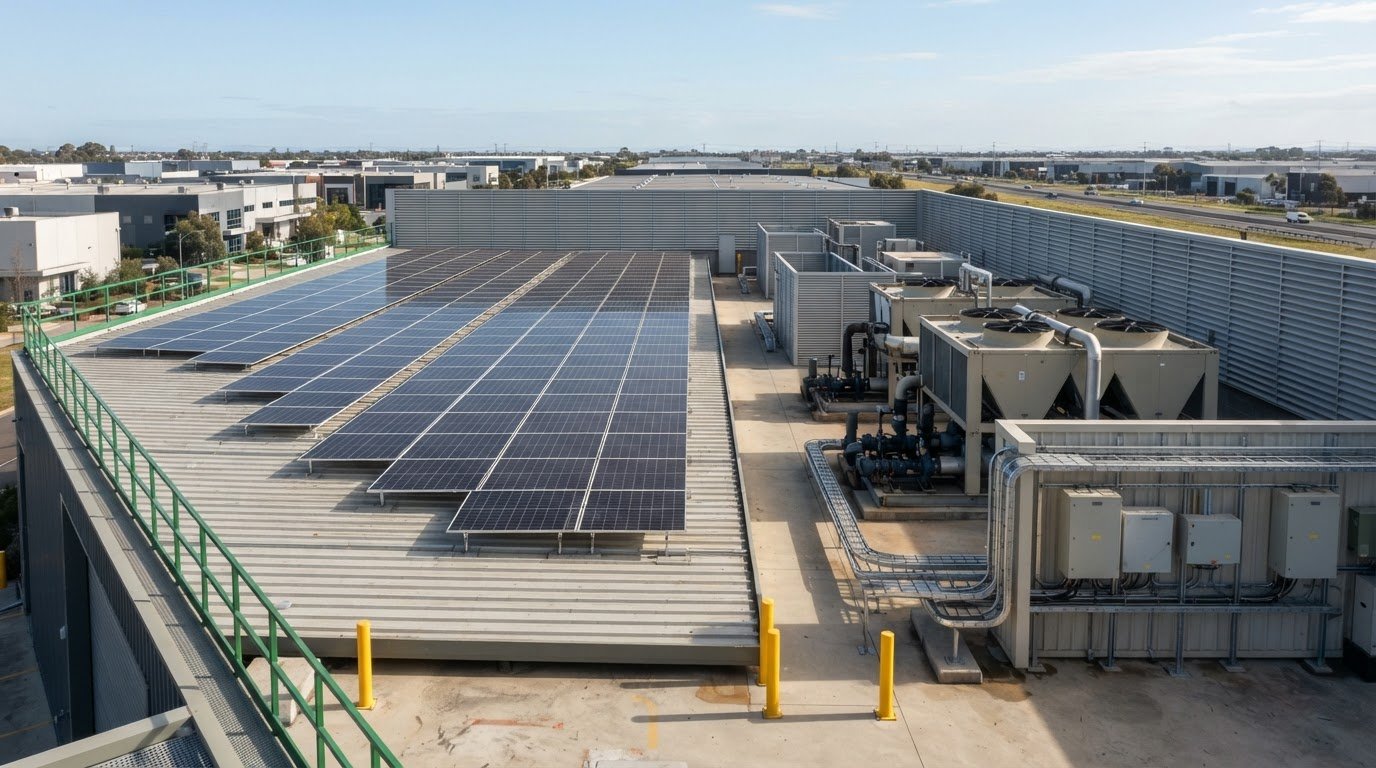
Solar panels can offset part of a facility’s daytime electricity demand, but system size must reflect actual site conditions. Assess interval meter data, roof area and structure, plus network export limits. These inputs show how much generation can be used on site and what a grid connection can accommodate. A 30 to 50 kW system may suit an edge facility or small colocation site; larger campuses may assess 500 kW to 1 MW-plus.
Feasibility depends on usable roof space, structural capacity and the share of total load solar can serve. A 50+ kW system may suit a data centre, but capacity alone doesn’t show its value. Compare expected generation with the facility’s consumption profile, then consider how incentives and renewable energy investments fit its wider energy plan. Solar contributes generation; it doesn’t replace a data centre’s backup power arrangements.
Victoria’s planning requirements also shape site feasibility. New data centres must remain at least 150 metres from homes, and the Action Plan prohibits facilities on residential-zoned land. Rural-zoned sites are also excluded, except where nearby critical infrastructure can service the data centre. The plan applies to future projects, not those already underway or being assessed.
Planning applications may involve several referral authorities. WorkSafe Victoria, VicGrid, Fire Rescue Victoria and relevant water corporations are to become referral authorities, while the Environment Protection Authority already has statutory referral status. Commercial solar projects in Melbourne generally require local council building permits and electrical compliance approval. Licensed electricians must carry out electrical installation work in Victoria.
Roof loading and electrical safety belong in the design assessment: structural capacity must suit the proposed panels, while compliant installation helps address electrical risks. Grid-connected systems must meet AS/NZS 4777. Solar output varies with sunlight, so it should be integrated with the facility’s existing reliability strategy, not treated as continuous backup. A site-specific design connects these considerations to upgrades, demand and network limits.
Commercial and industrial solar market in Victoria
Victoria’s commercial solar market is increasingly shaped by data centre growth and energy planning. The Victorian Sustainable Data Centre Action Plan was released on 22 September 2026. It requires future data centres to match new electricity demand with new investment in renewable energy and storage. More than 50 data centres operate in Victoria, and their electricity demand almost doubled in the 12 months to June 2026.
This growth puts commercial solar within a broader infrastructure decision, not just a rooftop upgrade. AEMO forecasts data centre electricity demand could rise from around 2% of National Electricity Market demand today to 10% by 2050. For operators, the practical task is to assess how on-site solar panels can contribute alongside other renewable energy investments. Rooftop generation should be measured against the facility’s total load, not presented as if it covers the whole operation.
Investment figures underline the sector’s scale. The Victorian Government said data centres delivered A$5.8 billion in capital expenditure into Victoria last year. The Federal Government valued Australia’s national data centre investment pipeline at A$150 billion. That activity brings power requirements, network connections and project planning into sharper focus for operators and surrounding communities.
Victoria’s approach links new demand with new generation, while data centre developments must pay their own connection and network upgrade costs. That makes early energy planning material to project design. Commercial solar can contribute on-site generation, but its role depends on usable roof space, consumption patterns and export limits. A system below or above 100 kW may have different incentive pathways, so size and project economics belong in the same assessment. The takeaway: evaluate panels as one component of a wider energy and connection strategy, aligned with the site’s load and Victoria’s planning direction.
Commercial solar options for data centres in Victoria, Australia
Data centres in Victoria can consider rooftop solar, battery storage or a combined system. The best fit depends on how much electricity the site uses while panels are generating. Review interval meter data alongside roof area, structural capacity and network export limits. This helps establish how much solar can serve on-site demand and whether export constraints will affect the design.
If the roof is suitable, rooftop panels can contribute daytime generation, though they may not meet the facility’s full electricity demand. Compare expected output with the data centre’s demand profile, then assess the network connection. Costs depend on system capacity, roof type, structural requirements and connection needs. These project-specific factors matter more than headline system size.
Battery storage adds another option. Commercial batteries in 50 kWh and MWh-plus ranges can support peak-demand shaving, shifting stored energy to periods when site demand is higher. They aren’t substitutes for uninterruptible power supply systems or backup generators. A combined solar-and-battery design should therefore treat energy cost management and critical-load backup as separate functions.
For data centre operators, compare each option by how it could contribute to the facility’s total electricity use. Solar alone may suit a site with daytime demand and available roof space. A battery can add flexibility when peak demand is a concern, while a combined system brings generation and storage together. Victoria’s grid connection requirements and export limits also affect what can be installed and how it operates.
Bring the options together through a site-specific assessment of interval data, roof conditions, network capacity and operating priorities. That creates a clearer basis for comparing solar generation with storage, rather than choosing equipment by capacity alone. Plan a data-centre solar assessment around your facility’s load, roof and connection requirements.
GridFree Solar: Commercial Solar Solutions
GridFree Solar provides Commercial Solar Solutions for Victorian businesses considering on-site generation for data centres. Once you have reviewed electricity demand, roof capacity and network connection requirements, the team can help develop an installation suited to the site.
If storage is part of the plan, GridFree Solar also provides solar and battery installation. Battery Upgrade & Replacement can address existing battery systems. The right approach depends on whether the priority is adding solar generation, integrating storage or replacing an existing battery. These services address different project needs, and solar does not replace critical backup systems.
Bring your site requirements and energy priorities into the conversation to explore a suitable direction. Contact GridFree Solar to discuss commercial solar for your data centre.
Turn your site’s energy plan into a project brief
To plan commercial solar for data centres in Victoria, turn the site’s priorities into a clear project scope. Define what the facility needs from on-site generation, how storage fits its operating strategy, and which connection or planning constraints affect the design. This gives the project team a practical basis for developing a site-specific solution, rather than treating panel capacity as the only decision.
GridFree Solar provides commercial solar solutions, battery upgrade and replacement, and residential solar panel installation. For a data centre project, focus on the commercial requirements and the potential role of storage. A clear project brief helps move the discussion from broad possibilities to practical design considerations.
Contact GridFree Solar to discuss your project and take the next step towards a solar plan shaped around your facility.
Frequently Asked Questions
What are the next steps?
Begin by defining the project’s goals: reducing grid consumption, managing peak demand or adding renewable generation. Gather interval meter data, roof plans, structural information and existing connection details in a project brief. These inputs help the design team assess the site’s load profile and constraints before proposing a system. Include planned site expansion, as future demand can affect the value of the design.
What does this mean for data centre developers and operators?
Victoria’s planning direction makes energy strategy part of project planning, rather than a later add-on. Developers of future facilities need to account for matching new electricity demand with new investment in renewable energy and storage. Operators can use this requirement to align on-site generation with broader procurement plans. Connection and network upgrade costs also sit with data centre developments, so early coordination between energy, engineering and planning teams is important.
Solar power system size and generation for a data centre in Victoria
System size depends on the facility’s interval demand, suitable roof space, structural capacity and network export limits. Indicative options range from 30 to 50 kW for smaller edge or colocation sites, to 99 to 250 kW for mid-scale facilities. Large campuses may assess 500 kW to 1 MW-plus. These figures describe system capacity, not guaranteed generation. Actual output depends on the final design and site conditions.
Commercial solar installation costs and payback period in Victoria
For commercial solar for data centres in Victoria, installation costs depend on system size, roof type, structural requirements and grid connection needs. Pricing varies by project and is provided after a quote request. Payback depends on how much solar electricity the facility uses on site, its electricity tariff and the system price after incentives. Daytime consumption affects how much generated power can be used directly.
Victoria commercial solar rebates, grants and tax incentives for data centres
Potential support includes STCs for eligible systems, Victorian Energy Upgrades discounts for qualifying commercial upgrades, and LGCs for accredited systems above 100 kW. STCs and LGCs cannot both be claimed for the same system. The Australian Government Department of Climate Change, Energy, the Environment and has committed to raising the scheme cap from 100 kW to 1 MW from October. Commercial solar assets may also be depreciable under ATO rules, subject to business circumstances.
Solar and battery storage options for data centres with 24/7 power demand
Solar can contribute daytime generation, while commercial batteries in 50 kWh and MWh-plus ranges can support peak-demand shaving. Storage should not be treated as a replacement for a data centre’s UPS systems or backup generators. For commercial solar for data centres in Victoria, the design should account for the facility’s load profile and intended storage use. Keep energy cost management and critical-load backup as distinct parts of the site’s power strategy.