
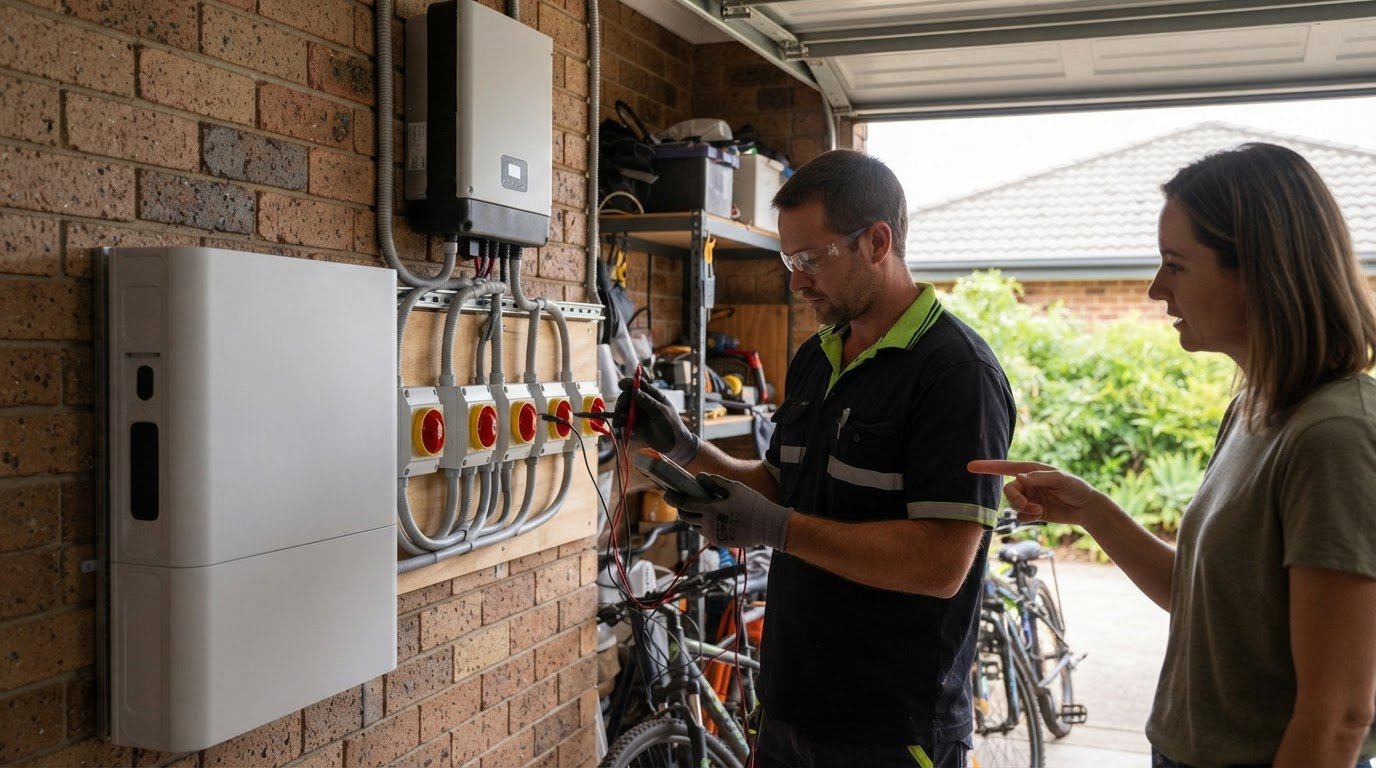
A solar warranty isn’t one blanket promise. After-sales support for solar systems in Melbourne means understanding which warranty applies when a component fails, who handles the claim and what happens if the system needs attention. Panel performance warranties commonly run for 25 years, while product warranties for panels and inverters vary.
It’s reasonable to expect clear answers after installation, not just a system that switches on. This guide to after-sales support for solar systems in Melbourne explains how component and workmanship warranties differ, what to do when equipment stops working, and how servicing and technical support fit into residential and commercial solar ownership.
You’ll learn what to look for in Australian-based support and how warranty terms can shape your next step. The practical approach is to understand the paperwork, identify the issue and decide whether a solar or battery upgrade may be relevant.
Key Takeaways
- Separate panel, inverter and workmanship warranties so you know which terms apply when something fails.
- Eligible owner-occupiers can access a rebate of up to A$1,400 through the Victorian Solar Homes Program, according to Solar Victoria.
- When a system underperforms, gather its records and fault details to help identify whether the issue relates to equipment, installation or operation.
- For a home or business system, clarify who handles technical support and how the system’s needs affect the right next step.
Whole-of-system warranty and product failure contacts
Warranty cover depends on the component, the installation work and the terms recorded at signing. Keep your system documents together so you can match a fault to the right contact.
Panel, inverter and battery warranties
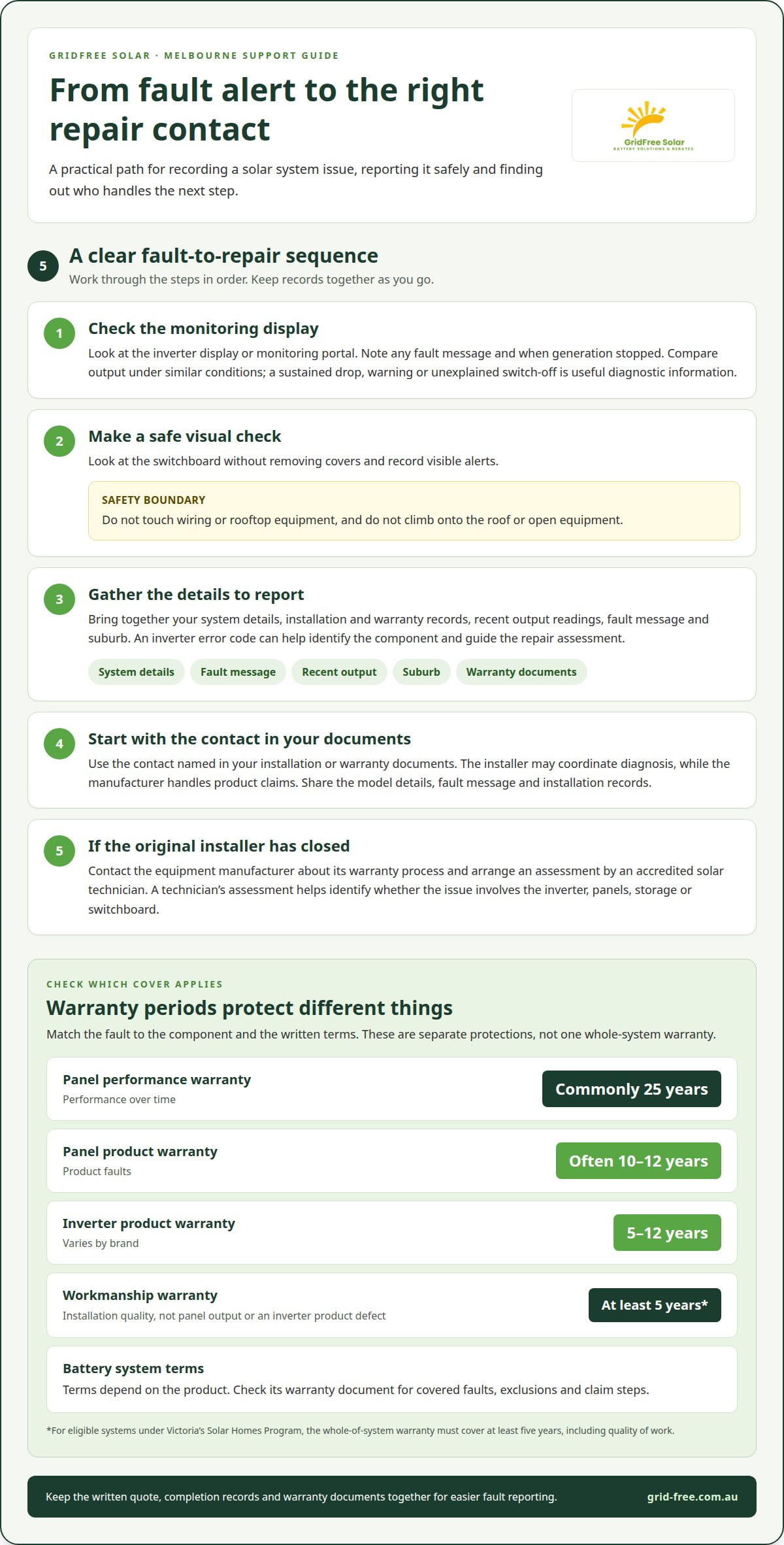
Panel performance warranties commonly run for 25 years, while panel product warranties are often 10 to 12 years. Inverter warranties vary by brand, from 5 to 12 years. Battery system terms also depend on the product, so review its warranty document for covered faults, exclusions and claim steps. These periods describe different protections, not one whole-system warranty.
Workmanship warranty coverage
A workmanship warranty covers the quality of the installation, not a panel’s output or an inverter’s product defect. For eligible systems under Victoria’s Solar Homes Program, the whole-of-system warranty must cover at least five years, including quality of work. Read the installation warranty for its coverage, exclusions and claim process. Keep the written quote and completion records with the warranty documents.
Reviewing warranty support
Before signing, compare the stated warranty periods for panels, inverter, battery and installation work. Check who receives each claim, what evidence is required and whether the support plan explains fault assessment and repair coordination. To compare Melbourne installers on customer support, reviews and service plans, look for clear warranty contacts, specific service processes and recurring feedback about support after installation. Solar Victoria says the Victorian Solar Homes Program offers eligible owner-occupiers a rebate of up to A$1,400. The Department of Climate Change, Energy, the Environment and Water says the federal Cheaper Home Batteries Program provides an upfront discount of approximately 30% for eligible residential storage systems.
Product failure repair contacts
For a panel or inverter fault, start with the contact named in your installation or warranty documents. The installer may coordinate diagnosis, while the manufacturer handles product claims. If the original installer has closed, contact the equipment manufacturer about its warranty process and arrange an assessment by an accredited solar technician. Share the model details, fault messages and installation records. An inverter error code, for example, can help identify the component and guide the repair assessment.
After-sales support, servicing and repairs
Support can include complaint handling, fault assessment and access to installation records. Clear contact details make it easier to identify the right next step.
Retailer after-sales service
NETCC approval covers sales conduct, system design, installation quality, warranties and after-sales support under a consumer code. The code is voluntary, so approval is one useful way to assess a retailer’s support approach. Retailers must provide a written statement confirming the system is complete, functional and installed to the design requirements and customer quote. Ask what the service plan covers, including fault triage and repair coordination.
Local service contacts and areas
For a Melbourne system, use the retailer and installer contacts in your quote, completion statement and warranty documents. These records help direct a fault to the right team. Victoria requires solar installers to hold Solar Accreditation Australia accreditation. Solar panel and battery installers must hold an unrestricted A Grade electrical licence issued by Energy Safe Victoria, or an equivalent Australian-issued licence recognised by Energy Safe. When reporting an issue, provide your suburb, system type and inverter fault message.
Service coverage and call-out charges depend on the location, site access and work required. A technician’s assessment may also vary depending on whether the issue involves the inverter, panels, storage or switchboard.
System servicing and cleaning
Servicing can include reviewing inverter alerts, checking system output and assessing visible equipment for damage. Cleaning is separate from electrical fault diagnosis, so avoid climbing onto the roof or opening equipment. To monitor performance, review the inverter display or monitoring portal and compare output under similar conditions. A sustained drop, warning message or unexplained switch-off gives the technician useful diagnostic information.
There is no single Melbourne call-out price. The fault, site access, diagnostic work and any replacement parts affect the cost. A written estimate should describe the proposed work and relevant charges.
Troubleshooting a system outage
First, check the monitoring display for a fault message and note when generation stopped. Look at the switchboard without removing covers, then record any visible alerts. Don’t touch wiring or rooftop equipment. Send the installer or retailer your system details, the error message and recent output readings. This information helps distinguish a temporary interruption from an equipment fault and guides the repair assessment.
For a new system designed around your household’s electricity use and storage needs, explore residential solar installation.
Checking Australian-based technical support
Support matters when a system shows a fault, stops exporting electricity or a home battery behaves unexpectedly. For after-sales support for solar systems in Melbourne, identify whether the retailer has a local technician and whether equipment manufacturers provide Australian support. These contacts help clarify who can assess a fault and explain the next step.
Ask how the retailer handles a technical issue from the first report through to diagnosis. A useful process identifies the right contact, records an inverter or battery fault message, and explains whether the manufacturer or a technician handles the next stage. This provides a clearer pathway than a general support address with no named responsibility.
- Identify the retailer’s technical support contact and local technician pathway.
- Record the equipment brand, model and fault message before reporting an issue.
- Find the manufacturer’s Australian support channel for panels, inverters and batteries.
- Keep the quote, warranty documents and installation records accessible.
For a warranty claim, support teams may need product details, the installation date and a description of the problem. A photo of an inverter display or a saved monitoring alert can help show what has changed. Keep the original message and note when the issue began, particularly if reliability or household electricity use is affected.
Victoria’s solar market includes systems with different equipment brands and support arrangements. Ask which party receives a fault report, who assesses the equipment and how updates are provided. For a home battery, clarify whether the retailer or manufacturer coordinates technical assistance. Knowing the support route in advance makes it easier to respond if a fault occurs.
Reliable after-sales support for solar systems in Melbourne starts with clear contact roles, an Australian manufacturer support option and a process for escalating unresolved faults. If the retailer can explain how it handles an inverter warning or battery fault, you can judge whether its support model suits your system and expectations.
After-sales support for residential and commercial systems
Residential and commercial systems have different operating demands, but both need clear records and a defined support pathway. A useful service process reflects how each site uses its solar electricity.
For a home, support can focus on household consumption, inverter alerts and whether a battery system is operating as expected. Keep monitoring screenshots and note changes in daytime electricity use. These details help you describe a concern clearly, rather than relying on a general impression that the system seems weaker.
Commercial sites need a broader view. A business may have several operating areas, higher daytime demand or equipment that depends on a stable electricity supply. Useful records include monitoring data, dates of output changes and any affected operations. The support process should clarify who receives the report, who assesses the system and how the business receives updates.
Installation and connection records matter for both residential and commercial properties. In Victoria, Solar Homes Program retailers must use accredited installers and eligible products. Before grid connection, the retailer must obtain approval from the distribution network service provider. Keep the design, quote, completion statement and connection paperwork together. These records help a technician understand the original system configuration and investigate changes.
Rebates can also affect installation paperwork. For a residential system, keep documents relating to any rebate application with your equipment and connection records. A business should make its system design and commissioning information accessible to the people responsible for facilities or energy. This helps staff report faults accurately, even when staff or site managers change.
The clearest takeaway: match support to the site. A household needs an understandable route for equipment questions; a commercial operator needs documented contacts and updates that fit business operations. For a system planned around a home or business’s energy needs, explore residential and commercial solar solutions.
GridFree Solar
GridFree Solar can help when your system needs more than warranty guidance. If an existing battery needs upgrading or replacing, or you’re considering a new solar installation, its residential and commercial solutions can be matched to your property’s energy needs. For a new setup, solar and battery installation brings generation and storage together in one project.
Use the warranty and fault details you’ve gathered to work out whether you need a product claim, a repair assessment or a system change. For an existing product failure, follow the relevant warranty pathway. If your energy requirements have changed, discuss an upgrade or new installation with GridFree Solar.
Contact GridFree Solar to discuss the solar or battery solution that fits your home or business.
Make ongoing support part of your solar plan
Solar ownership continues after installation. As household routines or business operations change, review how your system performs against your current energy needs. Keep its records organised and note changes in electricity use or monitoring results. This gives future support conversations a useful starting point, especially if you’re considering an upgrade or a different system configuration.
Planning for after-sales support for solar systems in Melbourne means considering not only what happens when equipment fails, but how your energy needs may evolve. A well-informed next step starts with your priorities: resolve an existing concern, adapt an older setup or plan a new solar project. GridFree Solar can help you consider suitable solar and battery options for your property. Discuss your solar needs with GridFree Solar and take the next step with a clearer plan.
Frequently Asked Questions
What warranties cover solar panels, inverters, batteries, and installation in Australia?
Solar warranties distinguish equipment performance, product faults and installation workmanship. Panel documents may separate an output guarantee from cover for product defects, while inverter and battery terms are set out separately by their manufacturers. Installation cover relates to the work itself. Check the quote and warranty documents for the covered component, start date, exclusions, claim contact and required evidence, then keep them with your system records.
How quickly do Melbourne solar companies respond to faults and repair requests?
Response times depend on the fault, the support pathway and whether diagnosis requires the retailer, installer or manufacturer. An inverter warning with a clear error message may follow a different route from a suspected wiring fault that needs a site assessment. When reporting an issue, include the system model, alert, when it began and any monitoring information. This helps support teams assess urgency and determine the next step.
How can I check whether my Melbourne solar system is under warranty?
Use the installation date and equipment details to match your system to its warranty documents. The original quote, completion statement, invoices and product labels can help identify the panel, inverter and battery models. If you can’t find the paperwork, contact the retailer or manufacturer with the property address, installation records and equipment serial numbers. Keep fault messages and repair reports with those records in case you need to make a claim.
What Australian consumer protections apply to solar installation and after-sales service?
Australian solar buyers may use the protections in the contract and the Australian Consumer Law, alongside any applicable retailer code commitments. The New Energy Tech Consumer Code is voluntary; approved sellers commit to standards covering sales, quotes, contracts, installation, warranties and support. In Victoria’s Solar Homes Program, participating retailers must use accredited installers and eligible products. Keep written system and installation records, including the retailer’s completion statement.
How do Melbourne solar installers compare on customer support, reviews, and service plans?
Compare warranty contacts, specific service processes and recurring customer feedback about support after installation. Check whether the service plan explains fault triage and repair coordination.
What does solar system servicing or a technician call-out cost in Melbourne?
There is no single Melbourne call-out price. Costs depend on the fault, site access, diagnostic work and any replacement parts. Ask for a written estimate that describes the proposed work and charges.