
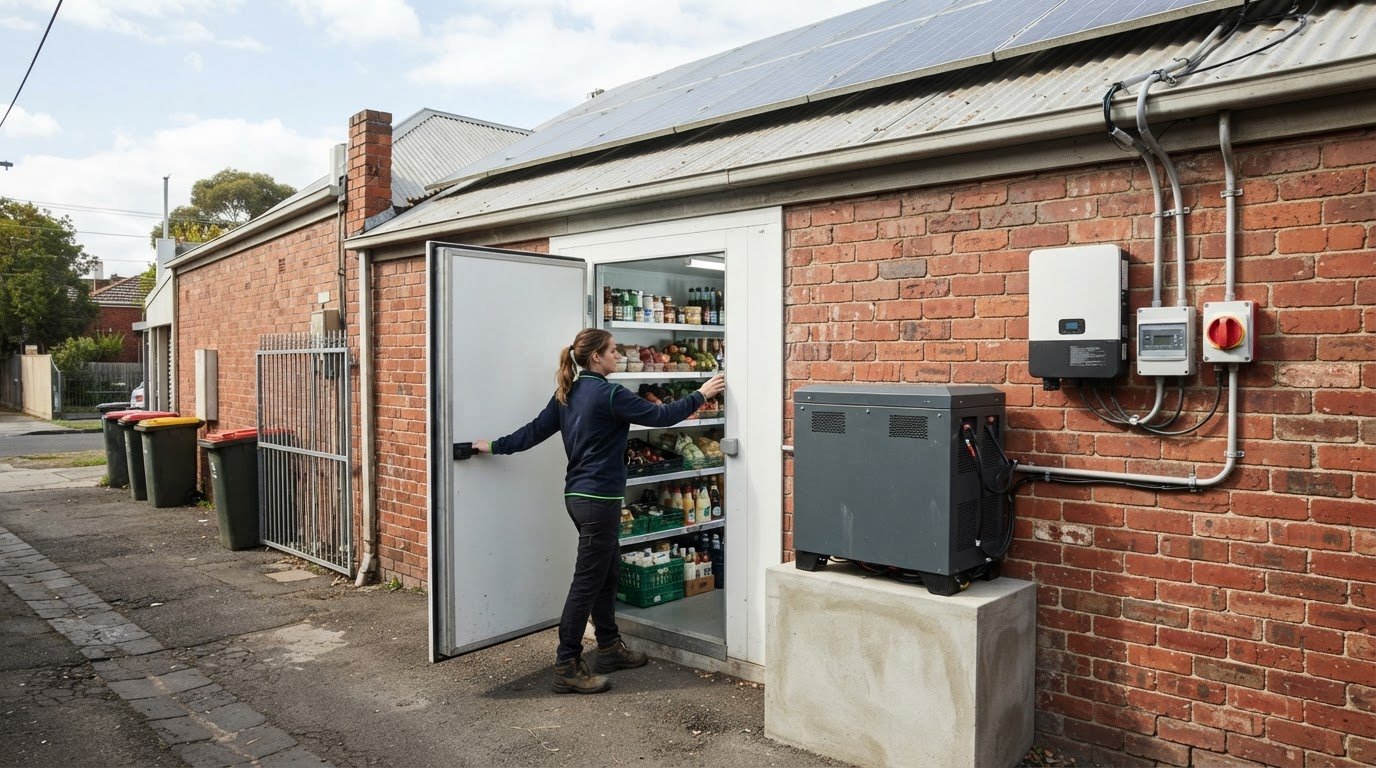
A battery can support your business by storing energy from onsite solar or the grid. A solar battery for uninterrupted business operations can supply selected equipment during an outage, but adding one to an existing system depends on its inverter and electrical infrastructure. A grid-connected solar-only system usually shuts down during a blackout, so backup requires a battery system designed to disconnect from the grid.
It makes sense to want reliable power while making use of the solar system already on your roof. A battery can often be added to an existing commercial array, with the right setup controlling how energy is stored, released and directed to essential equipment.
This guide explains how solar and grid charging work, what affects compatibility and backup coverage, and how battery capacity and power output shape performance. You’ll also learn what a professional assessment considers, from switchboards and network connections to the loads your business needs to keep running.
Key Takeaways
- Learn how switchboards, protection changes and network connections can shape a commercial battery upgrade.
- See why backup design centres on the equipment your business needs to keep running, not automatically the whole site.
- Understand how battery power output affects which loads can operate at the same time, and how stored energy can help manage peak demand.
- Find out how charging schedules can draw on available solar generation or grid electricity to suit your business’s energy use.
How easy is it to add a battery to an existing solar system?
Adding a battery starts with assessing the existing inverter, switchboard and network connection. For a Melbourne business, these factors shape compatibility, installation requirements and how the system can support future needs.
Compatibility and future expansion
Compatibility means matching battery storage to the solar inverter and the site’s electrical infrastructure. An assessment checks whether the inverter is battery-ready and identifies any potential switchboard, protection or metering changes.
The design should account for future machinery, equipment and operating hours. Commercial solar returns depend on energy consumption, business hours and system design, so the site’s load profile is important when assessing potential savings. Planning for expansion can help the system accommodate changing demand, rather than only today’s equipment.
Islandable system options
An islandable solar and battery system disconnects from the grid during an outage and can continue supplying the property. Solar panels can recharge the battery when sunlight is available.
This setup may provide electricity over multiple days if the business carefully manages consumption. Islanding isn’t automatic with every battery addition: the design must account for the existing connection and how stored energy will supply the site during an outage. That makes backup requirements an important part of the initial system assessment.
Commercial battery choices and requirements
Lithium-ion batteries are a common commercial option in Australia. Lead-acid batteries cost less but have shorter lifespans and lower energy density, while flow batteries use liquid electrolytes and are known for long cycle life and extended power delivery.
Commercial battery projects can involve planning approvals, network connection requirements, engineering studies and fire safety measures. Requirements depend on the project and site.
Installation costs depend on battery capacity, inverter compatibility, switchboard work, metering and site requirements; the price is provided after a quote request. Assessing these factors helps align the battery choice and system design with a Melbourne business’s operating needs.
Backup power during outages
A solar battery for uninterrupted business operations can supply selected equipment when grid power fails. Its backup capability depends on battery capacity, system configuration and the loads the business prioritises.
Powering critical loads
Critical-load backup directs battery power to selected circuits through a dedicated panel. This can keep essential equipment operating without powering the entire facility.
A business might prioritise refrigeration, communications or control systems. A properly sized commercial battery can run critical loads for several hours or even days. Coverage depends on available capacity, equipment demand and how carefully electricity use is managed during the outage.
Keeping business operations running
Backing up selected operations means designing around the work that must continue, rather than treating the whole building as one load. This can preserve essential functions while limiting unnecessary battery discharge.
For example, a warehouse could prioritise refrigeration and communications, while an office might focus on network equipment and essential lighting. Matching circuits to operational priorities directs stored renewable energy where it matters most.
Reducing generator reliance
Battery backup can reduce reliance on a fuel-based generator by supplying selected loads during a grid failure. It can also cover the generator’s start-up delay while it detects the outage, starts and transfers the load.
For a solar battery for uninterrupted business operations, capacity and equipment demand determine how long battery power can support the site. A generator may still contribute during longer outages when battery storage alone cannot meet ongoing needs.
Comparing continuity options
A solar battery, generator and uninterruptible power supply (UPS) serve different roles. A UPS can bridge a brief interruption for sensitive equipment, while a commercial battery supplies selected circuits. A generator provides another source after starting and transferring the load.
The right mix depends on the equipment and required backup duration. A battery can reduce generator reliance, while a UPS can support sensitive loads. Commercial solar and battery planning can bring these needs together in one system design.
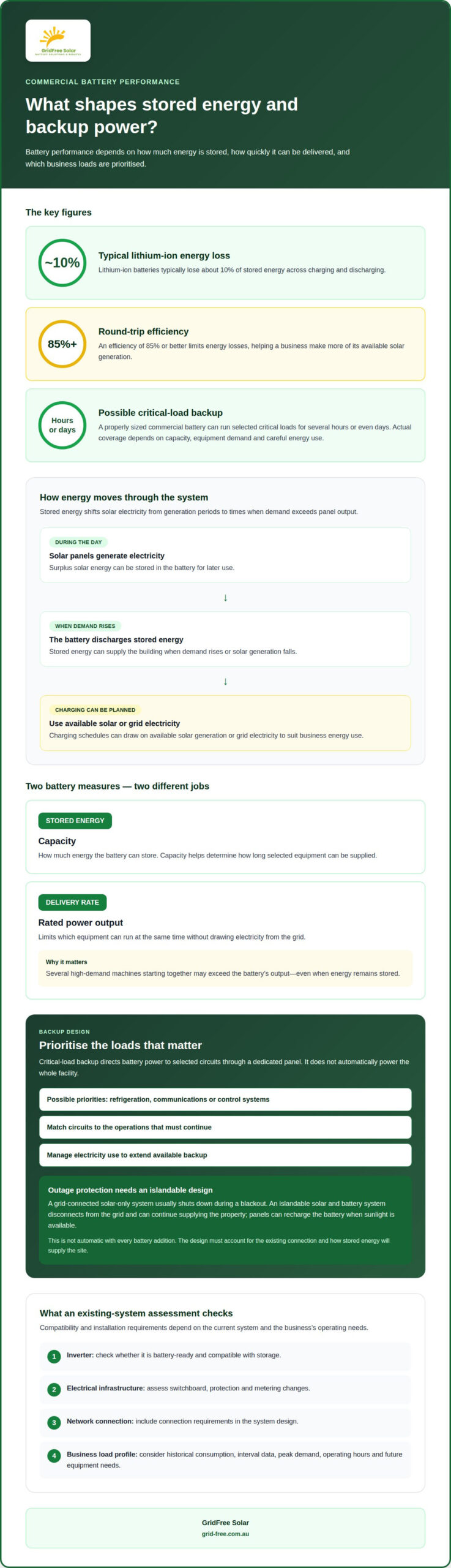
How commercial solar batteries store and discharge energy
Commercial battery storage shifts solar electricity from generation periods to times when business demand exceeds panel output. The amount it can deliver depends on capacity and rated power output.
Storing and discharging energy
Panels generate electricity during the day, and the battery stores surplus solar energy for later use. When demand rises or generation falls, the system discharges stored energy to supply the building.
Lithium-ion batteries typically lose about 10% of stored energy during charging and discharging. A commercial battery with round-trip efficiency of 85% or better limits these losses, helping businesses make more of their available solar generation.
Discharge power matters as much as stored capacity. A battery’s rated power output limits which equipment can run simultaneously without drawing electricity from the grid. For example, several high-demand machines starting together may exceed that output even when the battery still holds energy.
Sizing batteries to business energy profiles
Battery sizing matches storage capacity and power output to a business’s electricity use. Design considers historical consumption, interval data, peak demand, electrical infrastructure and retail electricity arrangements.
Analysing electricity bills from the past 12 months helps identify when energy use rises and falls. A business with strong daytime consumption may use solar directly; one with evening demand may value stored energy for later operations.
A 50-80% share of daily energy consumption is a common battery-sizing guideline, not a substitute for analysing the site’s load profile. The right capacity depends on when the business uses electricity and how much solar energy its system can generate.
During high-demand periods, battery discharge can help manage instantaneous electricity demand and reduce demand-based network charges where applicable. After commissioning, monitoring solar generation, battery operation and building consumption helps refine charging and discharging schedules as operating patterns change.
Charging batteries from solar or the grid
A commercial battery can charge from onsite solar generation or the electricity grid. That flexibility matters when a business’s panels produce more at some times than others.
During daylight, solar panels supply the site’s electricity demand, and excess generation can charge the battery. Later, the battery discharges stored energy when panel output drops or consumption rises. For a business operating beyond daylight hours, this shifts solar energy into another part of its operating schedule.
Grid charging adds another input. If solar generation is low, the system can draw electricity from the grid to charge the battery. This can help maintain a planned outage reserve or prepare storage for an expected period of demand. The charging source affects available energy, not the battery’s capacity.
In a commercial solar system, the inverter converts the panels’ DC electricity into AC electricity used by most business equipment, and vice versa for battery storage. Compatibility between an existing inverter and the battery setup matters when designing charging from both sources.
A charging schedule should reflect operating patterns, not just the solar peak. For example, a site with evening demand may store daytime excess, while a site with limited solar output may use grid charging. Interval consumption data and retail electricity arrangements help determine when charging and discharging best suit business operations.
During an outage, grid charging stops with the grid supply, so backup depends on stored energy and the system’s outage configuration. An islandable system can also recharge from available solar generation when sunlight permits. This distinction helps businesses understand how each charging source contributes to continuity.
To plan how solar and grid charging can fit your site, map out a commercial battery charging strategy around your operating profile.
GridFree Solar
GridFree Solar helps businesses plan battery systems around their existing solar setup, energy use and outage priorities. If you’re considering battery storage, an upgrade to an existing system or commercial solar and battery installation, the team can help shape a practical solution.
The right design considers how the battery will charge, which equipment needs backup and how the system fits the site’s electrical infrastructure. GridFree Solar provides commercial solar solutions and battery upgrades and replacements, connecting these needs with the broader energy system.
Bring your business’s operating needs and priorities to guide the next steps. Contact GridFree Solar to discuss a commercial solar and battery solution for your site.
Make your next energy decision with confidence
Think of a solar battery for uninterrupted business operations as one part of a broader energy plan. The next step is to connect your continuity priorities with how your site uses power now and how its needs may change. That gives a commercial battery design a clear purpose, rather than treating storage as a standalone addition.
GridFree Solar offers Battery Upgrade & Replacement, Residential Solar Panel Installation and Commercial Solar Solutions. For a business considering battery storage, the key is how the system fits its existing solar setup and operational priorities. A professional design can turn those priorities into a practical plan for your site.
Build a plan around the work your business needs to keep moving. Contact GridFree Solar to discuss battery storage and take the next step towards a more prepared energy system.
Frequently Asked Questions
What is a commercial battery?
A commercial battery is part of a battery energy storage system (BESS), which combines energy storage with controls that manage how the system operates. It isn’t just the battery cells: the wider installation connects storage to the site’s electrical equipment and energy supply. This distinction matters when planning a system, because its controls and configuration shape how it can serve business needs.
What should you consider before installing a BESS?
Plan the installation around safe access, maintenance and emergency response. The system layout should account for thermal management, cable routes and separation from other equipment. Commercial projects can also involve engineering studies, planning approvals and network connection requirements. For a busy Melbourne workplace, installation planning should coordinate site access and work around ongoing operations while keeping the battery location accessible for future servicing.
How can a solar battery keep an Australian business operating during a grid outage?
A solar battery for uninterrupted business operations needs a clear priority list of the equipment that must remain available. Identify the business processes that cannot pause, then define the minimum equipment needed to support them. For instance, a food business may prioritise temperature monitoring alongside refrigeration. This makes outage planning practical: it connects backup design to the tasks staff must continue, not simply to a building-wide power target.
What battery capacity and power output does a business need for backup power?
Use a realistic outage scenario to set the backup requirement. Map essential equipment, its operating schedule and any restart sequence, then consider which loads can be paused to preserve stored energy. A business that needs to maintain refrigeration overnight has a different backup plan from one that only needs to protect data and complete a safe shutdown. These scenarios give system design a practical operating target.
What are the payback periods and business energy bill savings for commercial solar batteries?
Assess payback by comparing projected bill savings with the system’s installed cost over its expected operating life. A useful financial model separates the value of solar energy used onsite from other possible savings, then considers how changes in business activity affect the result. For a Melbourne business, the model should reflect its actual electricity arrangements and operating plans rather than rely on a generic payback estimate.
Can commercial solar batteries provide true uninterrupted power, or is a transfer interruption unavoidable?
A battery system alone doesn’t guarantee that every connected process will experience no interruption. The transfer arrangement and each device’s tolerance determine whether power continuity is sufficient. For critical controls or computing equipment, define what interruption the process can withstand and include that requirement in the system design. This helps distinguish equipment that can restart safely from systems requiring a no-break power arrangement.