
Table of Contents
- Why Tree Cover Changes Your Solar Panel Maintenance Plan
- How to Clean Under Solar Panels and Around the Array
- How to Safely Clean Solar Panels on Your Roof
- Tree Trimming for Solar Panels: What You Can Do and When to Call an Arborist
- Solar Panel Output Monitoring: How to Prove Shade Is Costing You
- A Seasonal Maintenance Calendar for Shaded Systems
- Wildlife, Fire and Drainage Risks Under Tree Cover
- Frequently Asked Questions
Last Updated: October 20, 2026
Why Tree Cover Changes Your Solar Panel Maintenance Plan
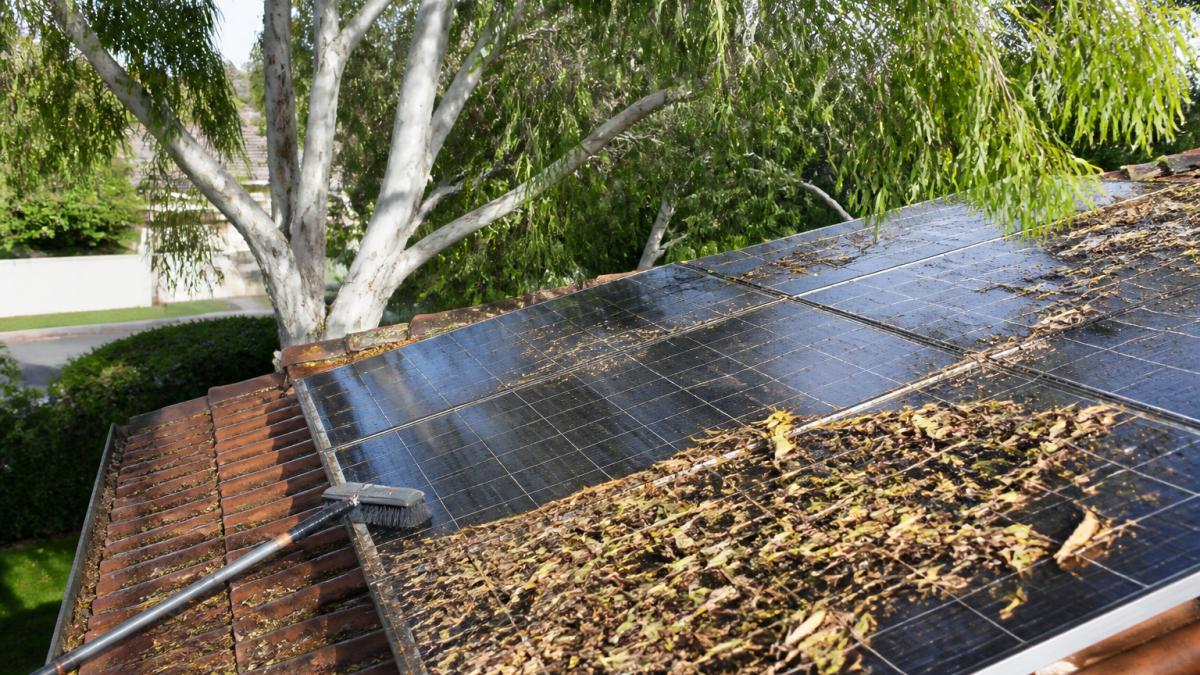
Tree cover is the single biggest reason a solar array underperforms in ways owners never spot on a bill. Shade doesn’t just cut output when a branch crosses the sun. It changes what lands on the glass, how often you need to clean it, and how quickly debris builds up around the frame.
At GridFree Solar, we design systems around real roof conditions. The key point: a shaded array isn’t a lost cause. It just needs a different maintenance rhythm.
Here’s what most guides get wrong. They treat cleaning as the whole job. Under trees, cleaning is maybe half the work. The rest is managing what the trees drop, how much sun actually reaches the panels, and what’s collecting underneath.
- Leaves and twigs trap moisture against the glass and frame.
- Pollen sticks in a fine film that rain won’t shift.
- Bird droppings bake on and create hot spots.
- Overhanging branches throw moving shade across the array all day.
That combination means your maintenance plan has to cover more than a bucket and a brush. Below, we break down exactly what to do, in what order, and when to call in help.
How to Clean Under Solar Panels and Around the Array
Cleaning under solar panels matters as much as cleaning the glass. Debris trapped beneath the array holds moisture, blocks airflow, and gives pests somewhere to nest. The good news: most of this work happens at ground level.
Start with a visual check from below. Look for:
- Piles of leaves or twigs caught between the roof and the panel frame
- Nests, wasp activity, or rodent droppings near mounting points
- Water stains or pooling marks on the roof surface
- Loose cable ties or sagging conduit
Clear debris with a soft brush or gloved hands. Never poke sharp tools into the gap under the panels. You can damage cabling or the mounting hardware, and that’s a repair bill you don’t want.
Poking a garden hose hard into the gap under a panel can force water into the roof cavity or junction box. Rinse gently from the top edge and let gravity do the work.
For anything beyond surface debris, especially nests or wiring, stop and book a professional inspection. Safety first, savings second.
How to Safely Clean Solar Panels on Your Roof
The safest way to clean rooftop solar panels is from the ground, using a long-handled soft brush and a garden hose. Stay off the roof unless you’re trained and harnessed. Falls are the real risk here, not the panels.
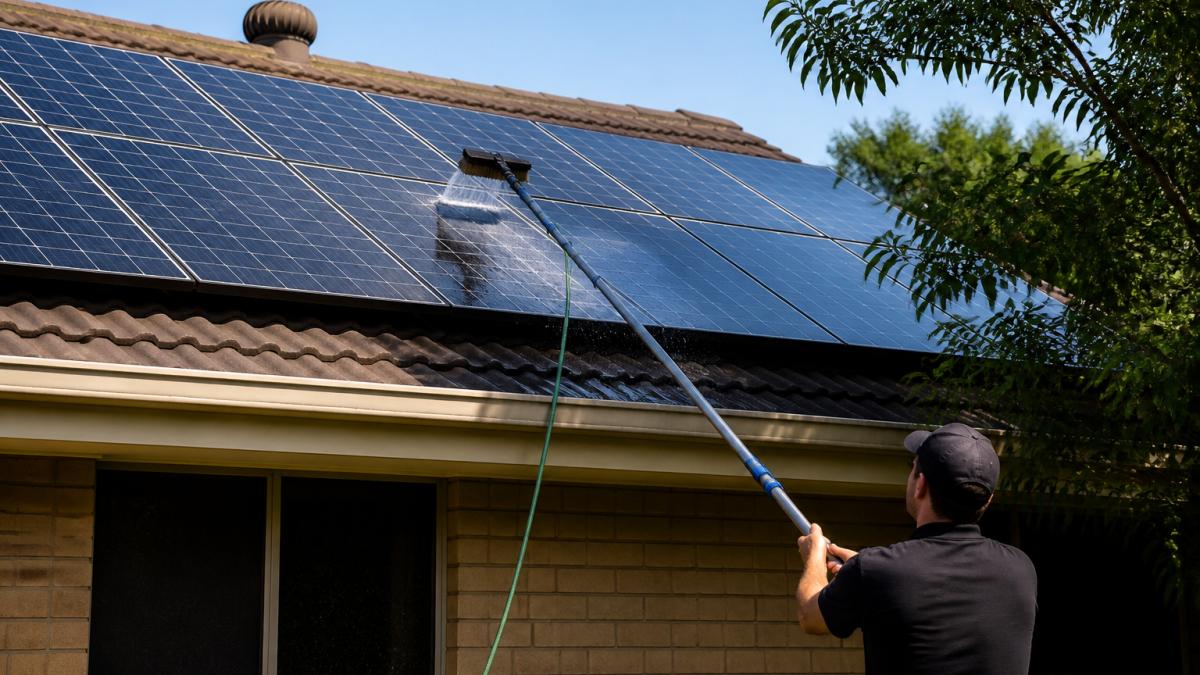
Follow this sequence:
- Check the inverter first. Confirm the system is producing and note the current output.
- Work early morning or late afternoon. Cool glass cleans better and avoids thermal shock.
- Rinse loose debris off with a plain water spray, top to bottom.
- Wash with mild soap and water using a soft, non-abrasive brush.
- Rinse again to remove soap film, which attracts dust.
- Squeegee or air-dry to reduce streaking.
Skip abrasive pads, scouring powders, and harsh chemicals. They scratch the glass coating and void warranties. Avoid high-pressure sprays too, which can force water past the seals.
Clean in the cooler part of the day. Cold water on hot glass can cause stress cracks, and soap dries too fast to lift dirt.
Tree Trimming for Solar Panels: What You Can Do and When to Call an Arborist
Tree trimming for solar panels is a job you can partly do yourself, but only for small, reachable branches. Anything near powerlines, above roof height, or on a large tree needs a qualified arborist. This is where DIY goes wrong most often, not because homeowners lack effort, but because they misjudge what a branch will do when it falls.
A useful rule of thumb: if you cannot prune the branch while keeping both feet on the ground or on a stable step ladder, it is not a DIY job. The same applies if the branch is thicker than your wrist, if it overhangs the roof, or if cutting it would leave a stub that could drop onto the array.
What you can handle safely:
- Pruning low shrubs and saplings that shade the array
- Clearing fallen branches from around the base
- Trimming hedges on your own property at ground level
- Removing small dead twigs from gutters using a long-handled gutter tool while standing on the ground
What needs a professional:
- Any branch overhanging the roof
- Work near powerlines or service cables
- Large or protected trees with council rules attached
- Anything requiring a chainsaw above shoulder height
- Trees on neighbouring property, where you need the neighbour’s consent and possibly a council permit
Before you cut, check whether the tree is protected. Many councils require a permit to prune or remove significant trees, and some strata or community-title schemes have their own rules. Pruning without approval can attract fines and, in some cases, an order to replace the tree. If the tree is on a boundary, confirm ownership and get written agreement from the neighbour before any work starts.
Vegetation management isn’t just about sun. Overhanging branches drop debris year-round and become a fire risk in dry conditions. Keep a clear zone around the array and check growth after each season. When you do prune, aim for a clean cut just outside the branch collar rather than a flush cut, which invites rot. Never top a tree to reduce shade, it triggers fast, dense regrowth that can leave you worse off within a season.
If an arborist is needed, ask for a quote that covers both the pruning and the safe removal of cuttings from the roof and gutters. A common pattern is for the arborist to prune and for a separate solar technician to inspect the array afterwards for dislodged debris or damaged mounting hardware.
Solar Panel Output Monitoring: How to Prove Shade Is Costing You
Solar panel output monitoring turns guesswork into evidence. Your inverter app shows daily and hourly production. Compare a shaded array’s output on a clear day against a nearby unshaded system, or against your own system before a tree grew.
Look for these patterns:
- Sharp dips at the same time each day point to a fixed shadow.
- Lower morning or afternoon output suggests directional tree cover.
- Big swings between sunny days hint at moving shade or dirty panels.
Record a baseline after cleaning. Then compare week to week. If output stays low on bright days, shade is likely the cause, not dirt.
Clean the panels, then measure. If output doesn’t recover on clear days, the problem is shade, and no amount of scrubbing will fix it.
This data is also your proof when you talk to an installer about repositioning panels or adding optimisers. Numbers make the conversation concrete.
A Seasonal Maintenance Calendar for Shaded Systems
A fixed calendar beats reacting to problems. Shaded systems need more frequent checks than open ones, so build the rhythm around the seasons, and around what the trees on your block actually do. The table below is a starting point, but the notes underneath explain the mechanism so you can adjust it to your own trees.
| Season | Key Task | Why It Matters |
|---|---|---|
| Spring | Clear pollen and inspect after storms | Pollen film and storm debris cut output |
| Summer | Trim growth, check for nests | Fast growth and wildlife activity peak |
| Autumn | Clear fallen leaves weekly | Leaf build-up traps moisture |
| Winter | Low-angle shade check, clean glass | Low sun makes shade worse |
Spring. Pollen is the quiet performer here. A fine yellow film coats the glass and rain alone will not shift it, because the film is slightly sticky and bonds to the surface. If you live near flowering eucalypts, pines, or wattles, expect a heavier load than a generic calendar suggests. Clean after the main flowering window rather than before it, or you will simply repeat the job.
Summer. Growth is fastest now, so a branch that was clear in spring can be casting shade by mid-summer. Check for nests under the array, birds and possums favour the warm, sheltered gap between panel and roof. Do not disturb active nests yourself; in most states, native wildlife is protected and a licensed handler or pest controller should be called.
Autumn. Leaf fall is the heaviest debris load of the year for deciduous trees. Weekly checks while leaves are dropping are not overkill, leaves trap moisture against the glass and frame, and wet leaves left in place can stain the glass and accelerate frame corrosion.
Winter. The sun sits lower, so tree shade reaches further across the array than at any other time of year. A tree that causes no problem in summer can cut output significantly in winter. Use the inverter app to compare winter output against your summer baseline; a larger-than-expected drop points to low-angle shade rather than dirt.
A simple decision rule. If a scheduled check finds nothing, note it and move on. If it finds debris, clear it the same day. If output has dropped and cleaning does not recover it, the problem is shade or equipment, not dirt, book an inspection rather than repeating the clean.
Wildlife, Fire and Drainage Risks Under Tree Cover
Tree cover brings wildlife, and wildlife brings risk. Birds nest under panels, possums travel along branches, and rodents chew cabling. Add dry leaf litter and you have a genuine fire and drainage concern.
Watch for these:
- Nests under the array, which block airflow and create fire fuel
- Chewed cable insulation, a shock and fault risk
- Leaf-blocked gutters, which cause overflow and roof damage
- Pooling water where debris dams the flow
Keep gutters clear, especially before storm season. Remove leaf litter from the roof and around the array. Never handle nests or wiring yourself; book an inspection.
A build-up of dry leaves under panels is a fire risk in hot, dry weather. Clear it before summer, not after.
If you’re unsure whether your setup is safe, a professional check is cheap insurance.
Shade and debris quietly erode solar savings, and most owners only notice when the bill climbs. GridFree Solar designs and maintains systems built for real roof conditions, with CEC Accredited Installers, compliance with AS/NZS 5139:2019 and AS/NZS 3000, and smart energy monitoring that shows exactly what your array is doing. Our team also handles rebate guidance and battery upgrades so your system keeps earning. Connect with GridFree Solar.
Frequently Asked Questions
How often should solar panels under trees be cleaned?
Inspect the array every few weeks and clean when you can see a visible film of dust, pollen or bird droppings. Under heavy tree cover, most systems need cleaning two to four times a year, with extra cleans after storms or high-pollen periods. If output monitoring shows a drop of more than 5% against your usual baseline on clear days, clean sooner rather than waiting for the calendar. Heavy leaf drop in autumn often means an additional clean before winter.
Can tree shade damage solar panels?
Shade itself does not physically damage panels, but it does reduce output and can create hot spots. When part of a panel is shaded, the shaded cells resist current from the lit cells, which builds heat in that section. Over years this can degrade the panel and shorten its lifespan. Persistent bird droppings and leaf litter also cause localised shading and staining. Trimming overhanging branches and keeping the panel surface clean limits both risks.
How can I tell if leaves or branches are reducing my solar output?
Use your inverter app or energy monitoring portal to compare daily generation on clear days against a clean baseline. A sudden drop that recovers after cleaning points to surface debris. A gradual drop that persists after cleaning suggests growing shade from trees. Check the same time each day and note the weather. If output falls noticeably in the afternoon while mornings stay steady, afternoon tree shade is the likely cause.
Should I trim trees that shade my solar panels?
Trim branches that overhang the array or cast shadow on it during peak sun hours, roughly 9am to 3pm. Keep cuts modest and within your council’s tree protection rules, since many trees require a permit before removal or major pruning. For anything within falling distance of the roof or near powerlines, use a qualified arborist. Never climb a tree or work near the roof edge yourself to reach a branch.