
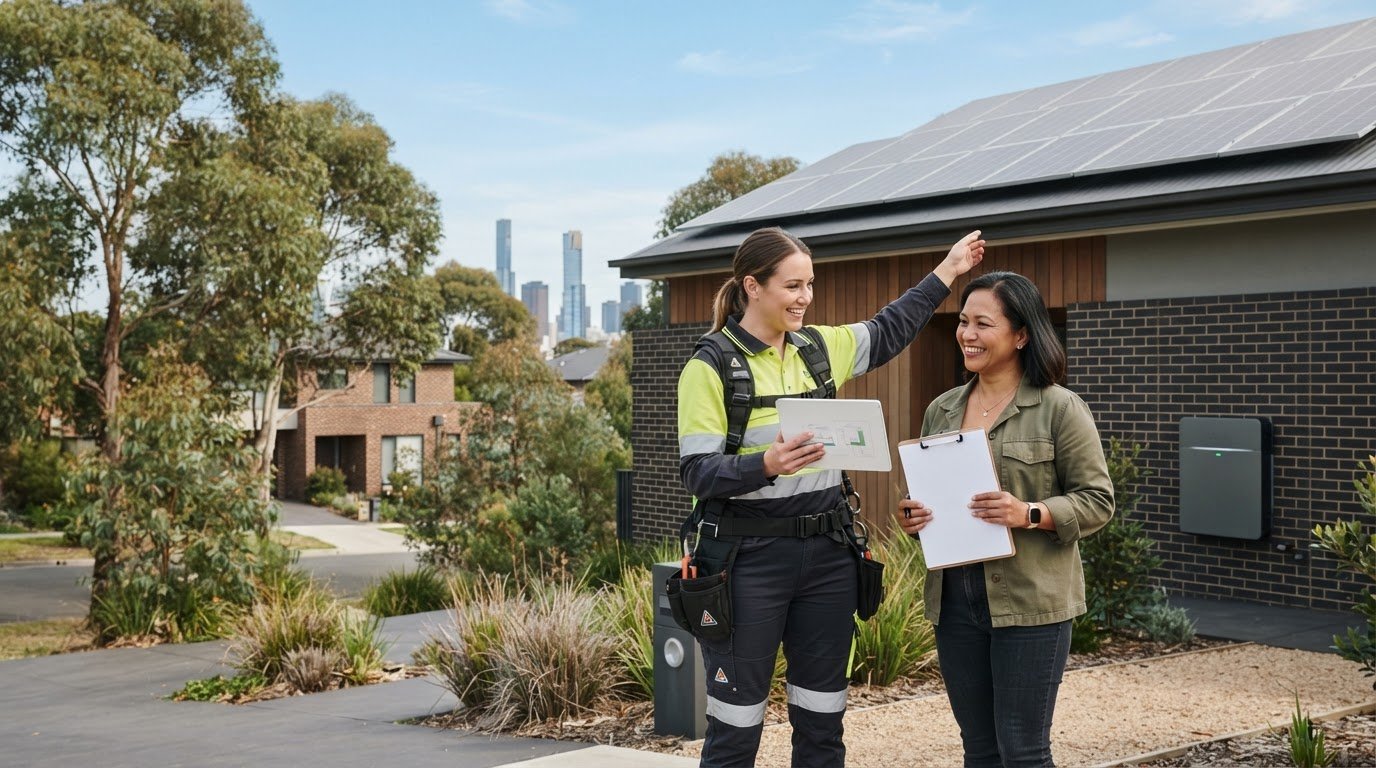
A polished solar quote can tell you less than the evidence behind it. Choosing a trusted solar company Victoria homeowners can rely on means looking beyond confident marketing to check business details, installation requirements and whether the proposed system suits your property and energy use.
It’s reasonable to want more than a sales promise. You need clear project advice before installation and a good understanding of what support is available afterwards. In Victoria, rebate requirements and solar rules also make it important to know who’s responsible for each part of the process.
This guide sets out practical checks for assessing a solar company, reviewing a proposal and weighing credentials and claims. You’ll also learn how GridFree Solar’s residential and commercial solar projects, integrated solar and battery installations, battery upgrades and replacements, and rebate guidance can support Melbourne customers. Use these checks to make a more informed decision about your next step.
Key Takeaways
- Assess whether a trusted solar company Victoria homeowners can rely on provides verifiable business details, clear project advice and accountable support, not just polished marketing.
- Match the proposed system to your energy goals, property and roof. Look for a design explanation that makes the project scope easy to understand.
- Compare quotes using equivalent assumptions, including design, inclusions and support, rather than judging by system size or a single customer rating.
- Gather details about your energy use, existing solar system and battery plans, then check current rebate conditions with official Victorian sources.
- Explore how GridFree Solar’s residential and commercial installations, integrated solar and battery projects, and battery upgrades can suit different customer needs in Melbourne.
What makes a solar company trusted in Victoria?
Trust is more than a polished website or a strong star rating. For a solar project, it means you can verify the business, understand why its advice fits your property and energy needs, and see what the proposal includes. It also means knowing what support is available after installation. These checks help separate reassuring marketing from evidence you can use.
A trustworthy solar company has verifiable business details, gives design advice suited to your site and energy use, and clearly explains the project scope and customer support. A directory entry can help identify the business you’re dealing with. It can’t show whether the proposed panel layout, system size or battery plan makes sense for your particular home or business.
What does a Victorian authorised retailer listing tell you?
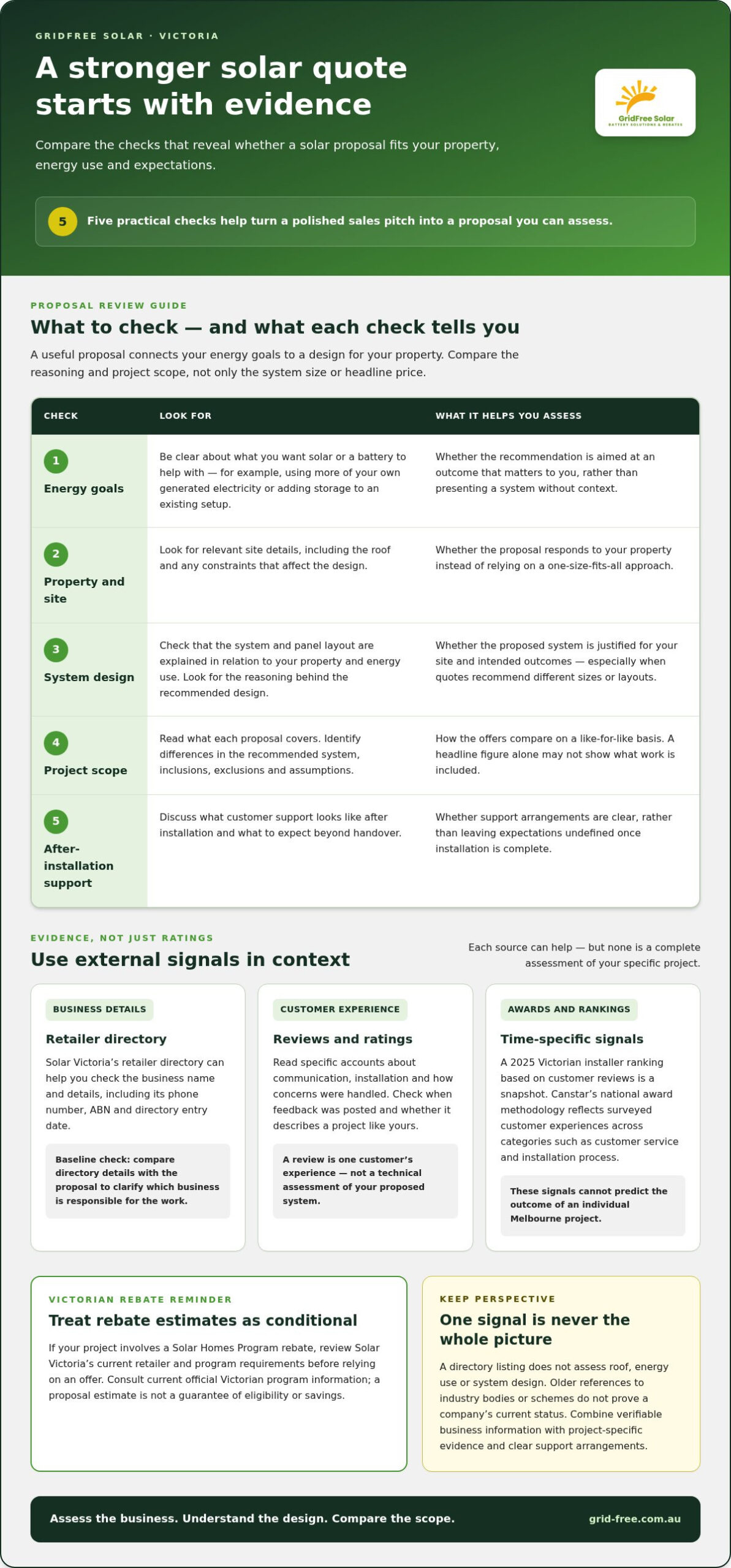
Solar Victoria’s retailer directory can help you check a business’s name and details, including its phone number, ABN and directory entry date. If your project involves a Solar Homes Program rebate, review Solar Victoria’s current retailer and program requirements before relying on an offer. Compare the directory details with those on the proposal so it’s clear which business is responsible for the work.
This is a useful baseline, not a verdict on quality. A listing doesn’t assess your roof, energy use, system design or how clearly the project is explained. Treat directory information as one piece of evidence, then examine the proposal and support arrangements separately. The Clean Energy Council (CEC) has a significant history in Australia’s clean energy sector, but older references to industry bodies or schemes aren’t proof of a company’s current status.
How much weight should you give rankings and reviews?
Customer reviews can offer clues about communication, installation and how concerns were handled. Read specific accounts rather than relying on the overall score alone. Check when the feedback was posted and whether it describes a project like yours. A review is one customer’s experience, not a technical assessment of your proposed system.
Awards and rankings provide a different signal. A 2025 Victorian installer ranking based on customer reviews is a time-specific snapshot, not a universal or current verdict on every company. Canstar’s national award methodology reflects surveyed customer experiences across categories such as customer service and installation process. That may indicate how customers rated their experience overall, but it can’t predict the outcome of an individual Melbourne project.
Use these signals as prompts to look more closely. Check whether the advice is tailored, the written scope makes inclusions and exclusions understandable, and the proposed system is explained in relation to your property and energy needs. Then review the support arrangements. A sound assessment combines verifiable business information with project-specific evidence, rather than relying on a directory listing, award or ranking alone.
How to assess a solar company’s advice and project plan
A useful proposal connects your energy goals to a design for your property. It shouldn’t simply present a system size and price without explaining the recommendation. Work through the advice in order to spot assumptions, understand the proposed solution and compare offers on a like-for-like basis.
A sound solar proposal explains how the system design responds to the property, energy use and outcomes you want. That link matters whether you’re considering a new solar and battery installation or adding storage to an existing system.
- Define your energy goals. Decide what you want solar or a battery to help with, such as using more of your own generated electricity or adding storage to an existing setup.
- Assess the property. Look for an explanation of relevant site details, including the roof and any constraints that affect the design.
- Review the system design. Check that the proposed system and panel layout are explained in relation to the property and your energy use, rather than presented as a one-size-fits-all solution.
- Compare the scope. Read what each proposal says the project covers. Note differences in the recommended system, inclusions or assumptions.
- Discuss support. Understand what customer support looks like after installation, so you know what to expect beyond handover.
What should a clear solar proposal explain?
Look for a defined project scope, a rationale for the design and an explanation of key assumptions. You should be able to understand what the solar or battery system is intended to achieve and why the recommended approach fits the site. If two proposals recommend different system sizes or layouts, compare the reasoning behind each, not just the headline figures.
Project documents don’t all need to follow the same template. Focus on whether the information provided makes the proposed work understandable. If an assumption affects the recommendation, such as when you use electricity, it should be clear enough for you to judge whether it reflects your circumstances. For current Victorian program conditions and rebate information, consult Solar Victoria. Treat a proposal’s rebate estimate as conditional, not as a guarantee of eligibility or savings.
How should existing solar owners assess battery advice?
A new integrated solar and battery project raises a broad design question: how should generation and storage work together for this property and its energy needs? For an existing solar owner, the starting point is different. The advice should account for the current system and explain how a battery upgrade or replacement relates to your storage goals. Advice for a new installation may not suit an established system.
Gather what you know about your solar setup and decide what you want storage to do. Then look for a clear explanation of the recommended approach. If you’re weighing up an existing battery, this solar battery replacement guide can help you consider the decision. To explore a tailored solar and battery project, see residential solar and battery options.
Compare Victorian solar companies beyond the headline rating
A rating can help you shortlist solar companies, but it can’t tell you whether a proposal fits your roof, energy use or business operations. Compare the explanations and documents behind each offer. Ask the same questions about each proposal, then record what the evidence shows.
The fairest comparison is between proposals with clearly stated, comparable scopes. A larger headline system size doesn’t automatically mean a better fit. Before comparing recommendations, check that each proposal uses similar assumptions about the site, energy needs and intended outcome.
| What to compare | What to look for | What it can tell you |
|---|---|---|
| Authorisation checks | Current details in relevant official Victorian program information | Whether the business meets the stated requirements for that program. It doesn’t assess your system design. |
| Design explanation | A clear link between the proposed layout, property and energy needs | Whether the recommendation is explained for your project, rather than presented as a standard solution. |
| Scope clarity | What each proposal says the project includes and the assumptions behind it | Whether the offers are genuinely comparable or differ in their stated scope. |
| Support | Information about customer support after installation | What to expect if you need assistance after handover. |
| Customer evidence | Specific reviews, their dates and the type of experience described | What some customers report, not a guarantee of your outcome. |
Which trust signals are useful, and what can they prove?
Official directory details help verify basic business information and, where relevant, program participation. Reviews can describe reported experiences with communication or installation. Awards provide a broader customer-satisfaction signal shaped by the organisation’s survey or ranking method. None proves that a particular proposal is suitable or that an installation will deliver a specific result.
Keep dates and context in view. A Victorian ranking reflects its stated method and the period in which its evidence was collected, not a current verdict on every project. A national award reflects experiences gathered through its survey, not the needs of every local household or business. Treat these signals as background, then give greater weight to the clarity and relevance of the project in front of you.
How to compare residential and commercial solar proposals
For a home, compare proposals against household energy use and goals, including whether battery storage is part of the plan. For a business, consider site demand and operating priorities as well. A system suited to one type of property or schedule may not suit another.
For a commercial project, assess whether the design rationale addresses how the site uses energy and what the business wants the system to achieve. GridFree Solar provides commercial solar solutions, and this commercial solar installation guide explores considerations for Melbourne businesses. Compare proposals like for like before using a rating to break a tie. This is a more practical way to assess a trusted solar company Victoria customers can feel confident considering.
What Melbourne and Victorian customers should check before proceeding
A little preparation helps turn an initial solar conversation into useful, property-specific advice. Gather what you know about your energy use, roof and existing system before comparing options. These details give the project discussion a clearer starting point, whether you’re planning a new installation, adding a battery or replacing existing storage.
Use this checklist to organise the information you have:
- Energy goals: Note what you want solar or battery storage to support, and whether the project is for a home or business.
- Electricity use: Gather recent electricity bills to show your usage over time. If you know when the property uses the most energy, include that too.
- Existing equipment: Record available details about your solar panels, inverter and battery, if installed. Photos or system documents can help explain what’s already on site.
- Property and future plans: Share what you know about the roof and any planned changes that could affect energy use, such as new household needs or business operations. Note whether you’re considering a battery now or later.
These details are a starting point, not a substitute for a project-specific assessment. Roof shape, available space and other site conditions vary, so don’t assume a design or outcome based on what’s common elsewhere in Melbourne. A clear picture of your goals and existing setup makes the design discussion more relevant.
What information helps a Melbourne solar project move forward?
Bring recent bills, details of existing solar or battery equipment, and a short list of priorities. Are you planning a new solar system, considering integrated solar and battery installation, or looking at a battery upgrade for an existing system? Mention any expected changes in how the property will be used. This context helps shape a discussion around your circumstances rather than a generic system recommendation.
How should you approach Victorian rebate information?
Rebate eligibility and program rules can change. Check current requirements directly with Solar Victoria before relying on information in an advertisement, older article or proposal. Treat any rebate estimate as conditional until you’ve reviewed the applicable rules. Don’t assume a particular household, property or system will qualify, or that an estimated saving or approval is assured.
GridFree Solar provides guidance to help customers navigate and claim relevant solar and battery rebates. This Victorian battery rebate guide can help you understand what to review, while official program information remains the source for current conditions. Choosing a trusted solar company Victoria customers can have confidence in also means making decisions with current, project-relevant information.
Once you’ve gathered your details and clarified your goals, explore solar and battery installation options with GridFree Solar for your Melbourne property.
How GridFree Solar supports a confident solar decision
A confident solar decision starts with a project that reflects your property and what you want your energy system to do. GridFree Solar serves Melbourne with residential and commercial solar installation, integrated solar and battery solutions, and battery upgrades and replacements for customers with existing systems.
The right starting point depends on your situation. A household planning new solar may be focused on daily energy use and whether storage fits its goals. A business may need to consider site demand and operating priorities. If you already have solar and are weighing up battery storage, your existing system and storage goals shape a different discussion.
Residential solar, commercial projects and battery upgrades
GridFree Solar’s residential and commercial solar projects can include solar and battery installation, with the approach shaped around the customer’s property and energy needs. For existing solar owners, a battery upgrade or replacement considers storage in the context of the system already in place. The project scope should make the proposed work clear, without relying on broad claims or assumptions about equipment and outcomes.
Rebates can also form part of the customer journey. GridFree Solar provides guidance to help customers navigate and claim relevant solar and battery rebates. Program rules and eligibility can change, so use current official information when assessing what may apply. Guidance can help you understand the process, but it doesn’t guarantee approval, eligibility or a particular saving.
Before proceeding, bring together your energy goals, available property and system details, and any plans for battery storage. Use these to assess whether the project explanation connects to your circumstances. Review the stated scope closely and include post-installation support in your decision criteria, so you understand the support arrangements for the project.
Take the next step with GridFree Solar
Choosing a trusted solar company Victoria customers can have confidence in means weighing relevant project advice, a clear scope and practical information about the customer journey, including rebate guidance where relevant. GridFree Solar’s residential and commercial solar work in Melbourne, integrated solar and battery solutions, and battery upgrades and replacements support a range of project needs.
Ready to explore a project? Start with your goals and the details you’ve gathered, then take a closer look at solar and battery solutions with GridFree Solar.
Make your next solar decision with confidence
The best next step isn’t choosing a system on the spot. It’s turning what you know about your property and energy priorities into a clear project conversation. A trusted solar company Victoria customers can feel confident considering should connect those priorities to a practical scope, so you can make an informed decision without relying on broad promises.
GridFree Solar serves Melbourne with residential and commercial solar installation, battery upgrades and replacements, and guidance through solar and battery rebate claims. Bring your energy goals and any existing system details into the discussion. Current rebate eligibility and outcomes depend on the applicable program rules, so use official guidance when assessing your options.
Ready to take a considered next step? Explore solar and battery solutions with GridFree Solar and start shaping a project around your needs.
Frequently Asked Questions
How do I check whether a solar company is authorised in Victoria?
Use Solar Victoria’s current retailer directory to check the business details and whether it’s authorised for the relevant Solar Homes Program requirements. Match the listed business name and ABN against the written proposal, as a trading name may differ from the legal entity. Authorisation is a program-related check, not an assessment of the design or workmanship for your particular project.
Are customer reviews enough to identify a trusted solar company?
No. Reviews can help you understand how customers describe communication, installation and issue resolution, but they don’t verify the technical fit of your proposal. To assess a trusted solar company Victoria homeowners can rely on, read several recent reviews and look for details relevant to your project. Then assess the proposal separately, including its assumptions and how it addresses your property’s needs.
What should a solar company proposal include?
A proposal should let you understand what’s being offered, why it’s recommended and what the stated project scope covers. Check that the system’s intended purpose is clear and that the design explanation relates to your property and energy use. If something discussed verbally differs from the written proposal, ask for the document to reflect the agreed scope before you decide.
Can I compare solar companies by their award rankings?
You can use rankings as background, but don’t treat them as a project assessment. A national award reflects the outcomes of its particular customer research; a Victorian ranking may be based on reviews gathered for a specific period. Neither tells you whether a proposal suits your home or business. Compare the recommendation, scope and assumptions in each offer alongside any award information.
Do Victorian solar rebates apply to every household?
No. Eligibility depends on the specific program and its current rules, which may consider factors such as the household, property or equipment. Solar and battery incentives can also have different conditions. Check the latest guidance from Solar Victoria or the relevant official program before making a decision based on an estimated rebate. Treat eligibility and any potential saving as conditional on meeting the program’s requirements.
How can I tell whether a solar battery upgrade is right for my system?
Start by clarifying what you want storage to do, then consider how that goal relates to your existing solar setup. Gather any system documents you have and note how the property uses electricity, including any changes you expect. Battery upgrade or replacement advice should account for the current system, rather than assume a new integrated installation is the right fit. A project-specific discussion can help clarify the options.
Does a trusted solar company also help after installation?
It should explain what support is available after handover and how to raise a question or concern. Before proceeding, check that the proposal or customer information makes responsibilities clear, including who your point of contact is for installation-related follow-up. Support arrangements matter because questions can arise after a system is operating. Don’t rely on a general promise of “ongoing support” without understanding what it means in practice.
Should I choose a solar company in Melbourne or compare providers across Victoria?
Compare providers based on how well their proposed work suits your property and whether they serve your area, rather than location alone. For a Melbourne project, a provider familiar with local customers may offer relevant context, but the proposal still needs to address your site and energy goals. GridFree Solar serves Melbourne, so local homeowners and businesses can explore its solar and battery project options.