
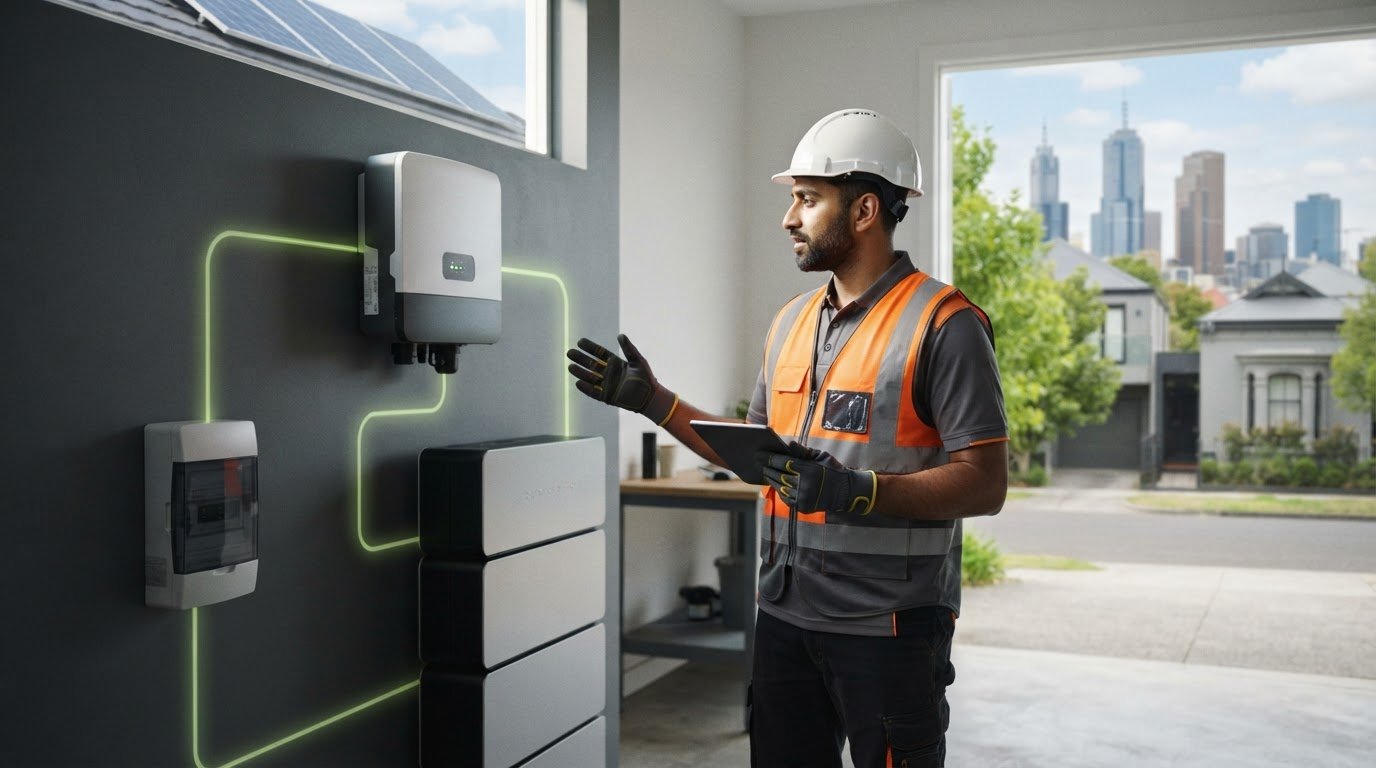
The right fronius inverter isn’t necessarily the one with the biggest output. For a Melbourne home, the better fit depends on how your solar system is configured, whether you plan to add a battery and what you expect to keep running during a grid outage. Choosing by model name alone can leave important compatibility and backup questions unanswered.
It’s easy to find the options confusing, especially when comparing standard and hybrid inverters or replacing equipment connected to existing solar panels. This guide explains the practical differences between Fronius inverter options, including the GEN24 and GEN24 Plus, and what to assess before installing or upgrading a system. You’ll see how battery compatibility, household energy use, backup requirements and local installation considerations shape the decision. The key is to plan the whole energy system, not just the inverter. GridFree Solar designs solar and battery systems for Melbourne homes and businesses, bringing those elements together so the system suits your current needs and future plans.
Key Takeaways
- A fronius inverter does more than convert solar electricity. Its role in managing household energy depends on the system configuration.
- Compare GEN24 and GEN24 Plus by their battery options and the level of backup power you need.
- Before choosing a model, list your existing solar equipment, energy-use patterns and storage plans to identify compatibility questions early.
- For a Melbourne installation or upgrade, include phase supply, switchboard condition, site conditions and network requirements in your planning.
- A whole-system design can align solar generation, battery storage and backup expectations with your household goals.
What does a Fronius inverter do in a home solar system?
Solar panels generate electricity, but most household appliances can’t use that power in its original form. The inverter converts it and helps manage how solar energy moves through the system. A solar inverter is the link between the panels and your home’s electrical circuits.
In brief: a standard inverter converts solar electricity for household use; a hybrid inverter can also connect with and manage compatible battery storage. The exact functions depend on the model and system design. An inverter’s capabilities alone don’t determine whether your whole home will have power during a grid outage.
How a solar inverter handles household electricity
Solar panels produce direct current (DC), where electricity flows in one direction. Household circuits in Australia use alternating current (AC), which regularly changes direction. The inverter acts as a translator, converting the panels’ DC electricity into AC power that appliances such as lights, fridges and televisions can use.
In a typical setup, electricity travels from the panels to the inverter, then supplies household demand. If the panels produce more than the home is using, the system may send surplus electricity to the grid or direct it to a connected battery. The outcome depends on the equipment, settings and system configuration.
Generation and demand rarely line up perfectly. Solar output changes through the day, while household use may rise in the evening. With compatible equipment, system controls can direct available solar electricity towards current use or storage. That’s why it’s useful to consider the inverter as part of the wider system, rather than as a simple one-way converter.
What makes a Fronius hybrid inverter different?
Fronius GEN24 and GEN24 Plus are models in the manufacturer’s inverter family. GEN24 Plus models are hybrid inverters, designed to connect with compatible battery storage. The standard GEN24 has different battery capabilities, so don’t assume models with similar names offer the same storage options or can be configured in the same way.
Battery connection depends on the specific inverter, battery and system configuration. In the GEN24 range, connectivity may also depend on the model and its features or upgrades. Existing equipment is particularly important if you’re replacing an inverter or adding storage to an established solar system.
Backup is a separate consideration. Some configurations provide limited backup power, while broader backup requires compatible equipment and system design. Having a hybrid inverter doesn’t mean every circuit or appliance will keep operating during an outage. Consider your backup expectations alongside battery compatibility and the planned system configuration.
For a Melbourne property, assess how the inverter fits with your panels, household use and storage plans as a complete system. That context is more useful than choosing by model name alone.
Fronius GEN24 and GEN24 Plus: compare backup and battery options
GEN24 and GEN24 Plus can look similar on a product list, but their battery and backup options aren’t identical. The difference matters if you’re upgrading an existing system, planning to add storage later or expecting solar to keep essential appliances running during an outage.
Fronius offers different GEN24 configurations for households with different storage and backup needs. Compare the exact model and the components it requires, rather than relying on the family name alone. Backup capability depends on the complete system, not the inverter alone.
GEN24 versus GEN24 Plus: what changes for the household?
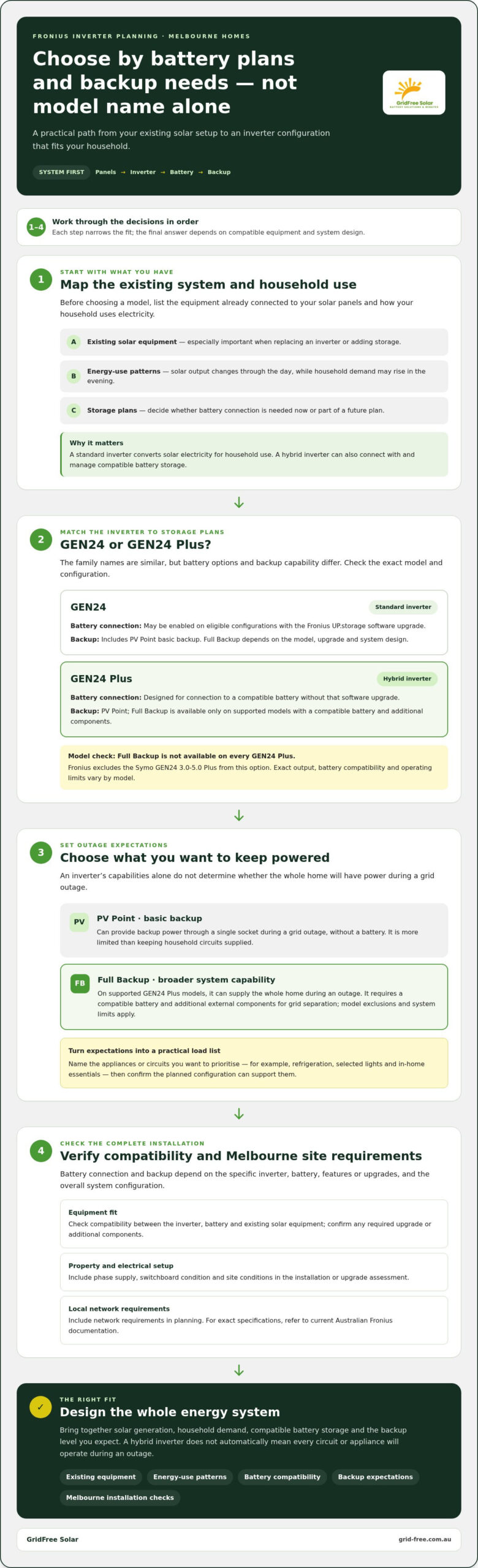
The standard GEN24 includes PV Point basic backup. Battery connectivity and Full Backup may require an eligible GEN24 model and the Fronius UP.storage software upgrade. GEN24 Plus is the hybrid option, designed for battery connection without that upgrade. Battery and backup functions still depend on compatible components and the specific configuration.
| Option | Inverter type | Battery connection | Backup capability |
|---|---|---|---|
| GEN24 | Standard inverter | May be enabled on eligible configurations with a software upgrade | PV Point basic backup; Full Backup depends on model, upgrade and system design |
| GEN24 Plus | Hybrid inverter | Designed for compatible battery connection | PV Point; Full Backup on supported models with a compatible battery and additional components |
Full Backup isn’t available on every GEN24 Plus model. Fronius excludes the Symo GEN24 3.0-5.0 Plus from this option. Exact output, battery compatibility and operating limits vary by model, so refer to current Australian Fronius documentation when comparing specifications or planning an installation.
PV Point and Full Backup: understand the practical difference
PV Point is the basic option. It can provide backup power through a single socket during a grid outage, without a battery. That’s more limited than keeping household circuits supplied. Its usefulness depends on what you need to power and the system’s operating conditions.
Full Backup is a broader system capability. On supported GEN24 Plus models, it can supply the whole home during an outage, but requires a compatible battery and additional external components for grid separation. Model exclusions and system limits apply. Don’t assume the “Plus” name means every appliance will run.
Start by naming the loads you want to prioritise, such as refrigeration, selected lights and internet, or a wider range of household circuits. This helps define the backup design and keeps battery and inverter choices grounded in your needs. For Melbourne solar and battery planning, GridFree Solar brings these elements together through solar and battery system design, treating the inverter as part of the overall system.
Is a Fronius inverter right for your solar and battery plans?
The right choice depends less on the brand name than on how your household uses electricity and what you want the system to do. A Fronius inverter may suit your plans if its capabilities match your existing panels, battery intentions and backup priorities. No model is automatically the best fit for every Melbourne property.
Separate two goals that are often bundled together. Battery readiness means planning for a compatible battery connection, now or in the future. It doesn’t mean a battery is installed or that the system can provide backup during an outage. Everyday self-consumption is about using more of your solar generation at home. Backup is about keeping selected loads supplied when the grid is unavailable. Each goal can affect equipment and system design differently.
When battery readiness and backup matter most
If you expect to add storage later, consider compatibility as part of the initial system design. Don’t assume any battery will connect to any inverter. Planning around future storage can help avoid mismatched components, but you’ll still need to select a compatible battery and configuration when you’re ready to install it.
Be specific about your priorities. Do you mainly want to use stored solar energy in the evening, or do you also want power during outages? Backup needs may affect which circuits are supported and what additional equipment is required. Thinking through these needs early helps shape the system around your household, rather than adding features without a clear purpose.
When replacing an existing inverter needs extra care
A replacement isn’t always a simple like-for-like swap. The existing panels, inverter and any installed battery all affect compatibility. Gather equipment labels, model details and system records where available. These provide a useful starting point for assessing how new equipment may work with the existing installation.
Consider the whole setup, including monitoring, wiring and configuration. A new inverter may change how the system communicates or how its components operate together. If the battery is ageing, include its condition and compatibility in the upgrade plan rather than focusing on the inverter alone.
- Solar panels: note their make, model and how they’re arranged across the roof.
- Existing inverter: record the model and any available system or monitoring details.
- Battery: identify its model and connection type, if your home has storage.
- Household priorities: list typical energy-use patterns, future storage plans and essential loads for an outage.
These details can help clarify whether your priority is maintaining existing solar generation, preparing for storage or changing how the household uses energy. If you’re replacing an inverter and planning a battery upgrade, assess the components together so the new configuration supports both immediate needs and longer-term plans.
GridFree Solar designs solar and battery systems for Melbourne homes, including upgrades to existing systems. A whole-system assessment brings panel, inverter and storage compatibility into one plan, without assuming battery readiness or a particular inverter model is right for every property.
What to check before installing or upgrading a Fronius inverter in Melbourne
A successful inverter change starts with the property and existing system, not just a model comparison. Panels, battery plans, electrical setup and local network requirements all shape the right configuration. Use this checklist to organise the details for a new installation or upgrade.
Gather system details before planning an inverter change
Collect information from equipment labels, handover documents or monitoring records. A site assessment can then establish how the pieces may work together. An online specification alone can’t account for the condition and layout of your home’s system.
- 1. Record existing equipment. Note the solar panel and inverter models, plus any battery make and model. Include approximate installation dates if known.
- 2. Describe your energy use. Consider when the household uses the most electricity, such as during the day or evening. This helps clarify whether your priority is using more solar power at home or planning for storage.
- 3. Set your backup priorities. List the essential appliances or circuits you’d want available during an outage. Backup design depends on the loads you want supported, not simply the inverter label.
- 4. Decide on battery timing. Be clear about whether you want storage installed now or want the system designed with future battery plans in mind. Battery readiness doesn’t mean a battery is already connected.
These details are particularly useful when replacing a Fronius inverter in an established system. The change can affect how existing panels, storage, wiring and monitoring operate together, so the design needs to account for the full installation.
Account for Melbourne site and network conditions
Property conditions can influence equipment placement and system configuration. A site assessment should consider roof orientation and shading, available installation space, switchboard condition and capacity, and whether the home has single-phase or three-phase supply. Treat these as items to assess, not assumptions based on the property’s age or appearance.
- 5. Review the site. Roof layout and shading can affect solar generation. Available space can influence where inverter and battery equipment may be located.
- 6. Assess the electrical setup. The switchboard, phase supply and existing wiring help determine how a new inverter can connect to the property.
- 7. Check network requirements. The local electricity distributor and connection requirements may affect inverter settings and export limits. Requirements can vary, so verify the current rules for the property before finalising the design.
If you’re also planning a new solar system, consider the panels, inverter and future storage together rather than treating each as a separate purchase. Where a battery is part of the plan, applicable Victorian incentives may also be relevant alongside the system design.
GridFree Solar designs and installs solar and battery systems in Melbourne, including upgrades to existing systems. Plan your solar or battery upgrade around your property, existing equipment and energy goals.
Plan your Fronius inverter project with a whole-system design
An inverter decision affects more than the conversion of solar electricity. It needs to work with the panels, household energy use, existing equipment and plans for battery storage or backup. GridFree Solar designs solar and battery systems for Melbourne homes and businesses, bringing these elements together before installation rather than treating the inverter as a stand-alone choice.
How whole-system planning supports a better inverter decision
Start with the property and how you use energy. Panel generation depends on roof layout and site conditions, while household demand changes throughout the day. A system design considers these factors alongside inverter capability and whether storage is planned now or may be added later. If you’re planning a new system, broader solar panel installation in Melbourne guidance can help you understand the project beyond the equipment list.
Future plans matter, too. For example, a household expecting to add a battery later should consider compatible equipment and the intended system configuration at the outset. If outage backup is a priority, that goal needs to be considered separately from everyday use of stored solar energy. The right design makes these trade-offs clear before decisions are finalised.
Fronius model features are product-specific. GridFree Solar designs and installs solar and battery systems, assessing how the chosen equipment fits the property and project goals. An inverter’s advertised capability doesn’t establish compatibility with every existing panel, battery or electrical setup.
Your next step for a Melbourne solar or battery project
A practical project moves from understanding the property to designing, installing and configuring the system. GridFree Solar assesses the existing setup or planned installation, including relevant equipment and household priorities. The design brings solar generation, storage plans and energy goals into one configuration. Each stage informs the next.
Before planning a project, gather any available details about your existing panels, inverter and battery. Note when your household uses electricity, whether you’re considering storage now or later, and which appliances or circuits matter most during an outage. These details help clarify the brief, whether you’re planning a new residential or commercial system or considering a battery upgrade or replacement.
You don’t need to settle on a Fronius inverter model before planning the whole system. Begin with what the property needs to do, then assess how equipment options fit those goals. This can surface compatibility questions early and align current decisions with future plans.
Planning solar or battery installation, or upgrading storage in Melbourne? Share your property and energy goals with GridFree Solar to map out a system design for your project.
Make your next solar decision with confidence
Turn equipment options into a plan for how you want your property to use energy, both now and as your needs change. A fronius inverter is one part of that decision. The wider design should reflect the home or business, existing equipment and future storage goals, rather than locking you into features you may not need.
GridFree Solar brings together residential and commercial solar and battery installation, as well as battery upgrades and replacements for Melbourne projects. Start with the details you have and the outcomes you want. The system design can then take shape around your property and priorities.
A well-considered plan puts you in a stronger position to choose equipment that works for your property today and remains useful as your energy needs evolve.
Frequently Asked Questions
Is a Fronius inverter a good choice for a home solar system?
It can be a good choice if the model’s functions suit your household, existing equipment and future plans. A household that mainly wants to run appliances from daytime solar may prioritise different features from one planning battery storage or outage backup. Compare the specifications with your system design rather than choosing by brand alone. GridFree Solar can assess solar and battery plans for Melbourne homes as part of a whole-system design.
What is the difference between Fronius GEN24 and GEN24 Plus?
GEN24 Plus is the hybrid option, while standard GEN24 models have different battery functionality. Depending on the specific GEN24 model, battery connectivity may require the Fronius UP.storage software upgrade. Both ranges have model-specific capabilities, so check current Australian documentation for the exact model number before comparing battery or backup options. This is especially relevant when weighing an inverter-only installation against a system designed for storage.
Can a Fronius GEN24 inverter work with a battery?
Some GEN24 configurations can connect to a battery, but the answer depends on the model and setup. Standard GEN24 may need the UP.storage software upgrade to enable battery connectivity; GEN24 Plus models are designed for compatible high-voltage batteries. Compatibility examples include Fronius Reserva and BYD Battery-Box Premium HVS/HVM. These inverters aren’t compatible with low-voltage 48V batteries, so identify the exact equipment before planning an upgrade.
Does a Fronius inverter provide backup power during a blackout?
Some models can provide backup, but the available power and circuits depend on the system configuration. During an outage, a grid-connected solar system normally won’t operate as usual unless it has a suitable backup function. GEN24 PV Point can supply a single socket; broader backup needs compatible equipment and, for Full Backup, a battery and additional components. Decide which appliances matter most, then match the design to those priorities.
Can I replace my existing inverter with a Fronius inverter?
A replacement can often be planned, but it isn’t automatically a direct swap. The existing panels, wiring, switchboard, battery and monitoring equipment can all affect integration. For example, a battery connected to the old inverter may not be compatible with the replacement. Gather equipment labels and system records where possible. A property and system assessment can identify configuration changes before installation is planned.
How do I know what size Fronius inverter my home needs?
The appropriate size depends on your solar panel array, household energy use and electrical setup, not just your electricity bill. A home with three-phase supply or plans to add storage may have different design considerations from a smaller single-phase system. Share recent electricity-use information, panel details and future goals during system planning. These can be assessed alongside site conditions and current model specifications to determine a suitable configuration.
Do I need network approval to install a solar inverter in Melbourne?
Grid-connected solar installations may require approval or a connection process with the local electricity distributor, and requirements can vary by property and system. In Melbourne, identify the relevant distributor and connection conditions before finalising inverter settings or export arrangements. Don’t assume an existing approval covers a changed system. Include network requirements in the project assessment so the proposed installation can be planned for the property’s current conditions.
Ready to plan a solar or battery project in Melbourne? Plan your solar and battery system with GridFree Solar.