
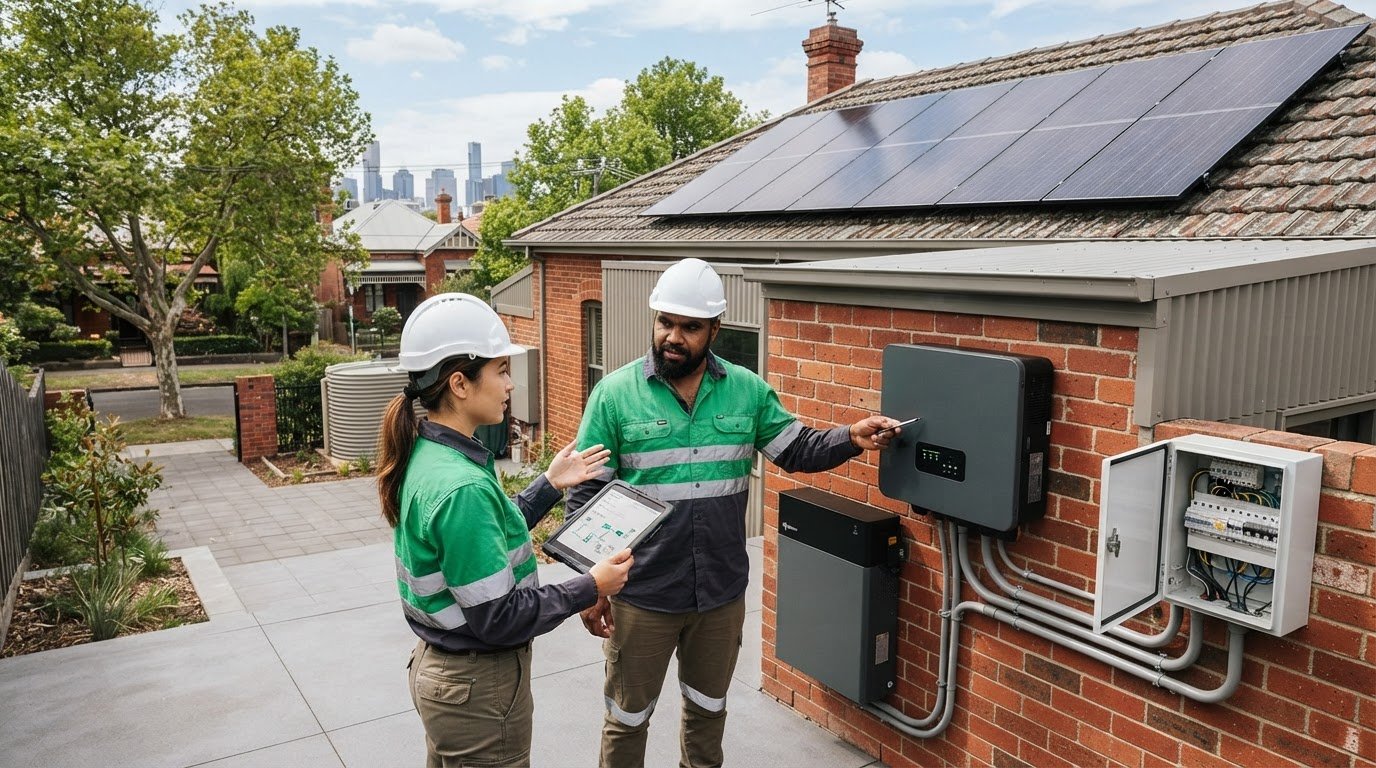
Your existing solar inverter may not need replacing to add a battery. If you’re searching “upgrading my solar inverter for a battery Melbourne”, the right answer depends on your system’s design, not its age alone. A battery may work with your current inverter, while other homes are better suited to a hybrid inverter upgrade.
It’s worth checking whether working equipment really needs to go. Hybrid and AC-coupled systems work differently, so compare them against your existing setup, household energy use and future plans, as well as the cost of changing equipment.
This guide explains how to assess your current system, compare the main upgrade pathways and gather useful details before speaking with an installer. It also covers installation requirements, approvals, local considerations and incentives. Victoria’s interest-free battery loan is closed to new applications, while federal support is provided as an upfront discount. Check current eligibility and claim requirements before making a decision. A system assessment can clarify which battery setup is compatible with your solar and suited to your Melbourne home.
Key Takeaways
- Check your inverter model, solar panel capacity and battery requirements to see which equipment can work together.
- Compare an AC-coupled battery with a hybrid inverter by considering system design, energy conversion and how you want the system to operate.
- Before requesting advice on upgrading my solar inverter for a battery Melbourne, gather recent electricity bills and details of your current system.
- Ask for a site assessment that considers your switchboard, equipment locations, wiring and backup power expectations.
- Include installation approvals and current rebate eligibility in your battery upgrade planning.
Upgrading a solar inverter for a battery in Melbourne: when is it needed?
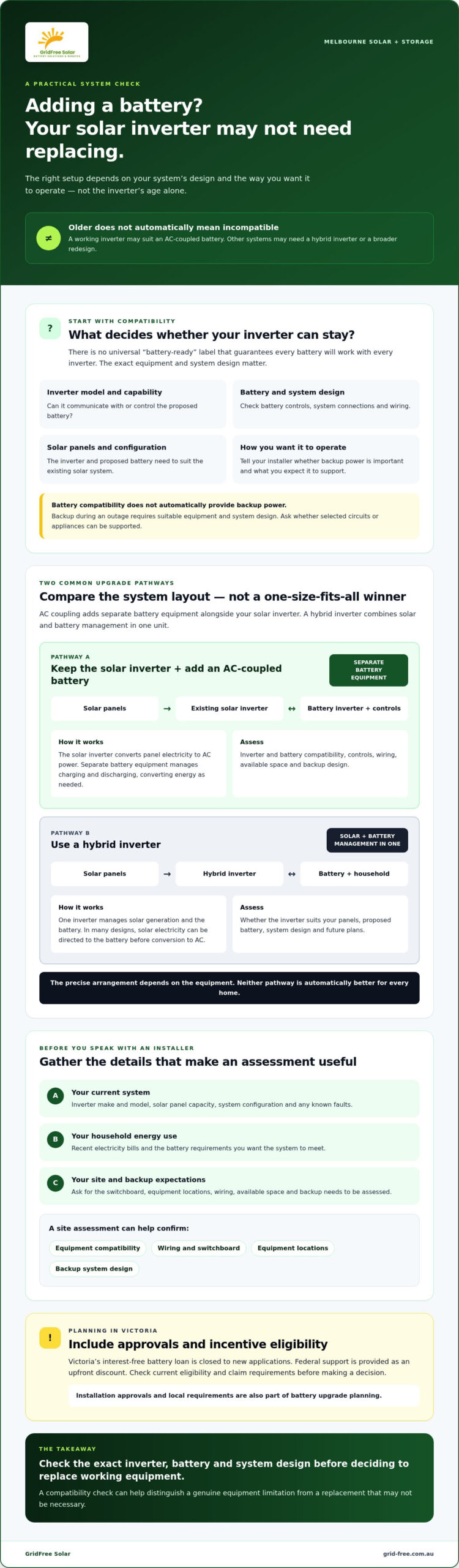
You don’t automatically need an inverter upgrade when adding battery storage. Whether your existing solar inverter can stay depends on its model and capabilities, the battery design, how the system is wired and how you want it to operate. A compatible AC-coupled battery may work alongside your current inverter. Other setups may need a hybrid inverter or a broader redesign.
Adding a battery is also a separate decision from replacing a failing inverter. If your inverter is faulty, or your system needs changes to support a planned expansion, those issues need to be assessed on their own. Don’t assume a working inverter must be replaced simply because it’s older. If you’re weighing up “upgrading my solar inverter for a battery Melbourne”, start with compatibility and your household’s needs, not age alone.
What does battery-ready mean for an existing solar system?
Battery-ready solar is a system whose inverter, wiring and controls can work with a compatible battery in the intended operating mode. It isn’t a universal label that guarantees every battery will suit every inverter. The inverter model, battery controls, system connections and energy management all matter. For a technical overview of inverter types, including hybrid inverters, see Wikipedia’s explanation of solar inverters.
Battery compatibility doesn’t automatically mean you’ll have backup power during an outage. Backup requires suitable equipment and system design. Tell your installer if keeping selected circuits or appliances powered is a priority, so they can assess whether the proposed setup supports it.
When might a Melbourne home need an inverter upgrade?
An upgrade may be worth considering if your existing inverter can’t communicate with or control the proposed battery, or if its configuration doesn’t support the way you want the system to operate. A different inverter or system design may also be needed to address faults or planned changes to an older solar setup.
Age alone doesn’t confirm incompatibility. A functioning older inverter may suit an AC-coupled battery, while a newer model may not support a particular battery or operating mode. Ask an installer to check the exact inverter model, system wiring, battery compatibility and relevant warranty conditions. This helps distinguish a genuine equipment limitation from a replacement that may not be necessary.
How hybrid and AC-coupled battery upgrades work with your inverter
AC coupling adds a battery system alongside your solar inverter; a hybrid inverter combines solar and battery management in one unit. That’s the architectural difference, not a guarantee that either option will perform better in every home.
| Pathway | How it works | What to assess |
|---|---|---|
| Existing solar inverter plus AC-coupled battery | Your solar inverter converts panel electricity into AC power. Separate battery equipment manages charging and discharging, converting energy as needed to store it in or draw it from the battery. | Compatibility with the existing inverter, battery controls, wiring, available space and backup design. |
| Hybrid inverter | One inverter manages solar generation and the battery. In many designs, solar electricity can be directed to the battery before conversion to AC, though the precise arrangement depends on the equipment. | Whether the inverter suits your panels, proposed battery, system design and future plans. |
What changes when you add an AC-coupled battery?
This pathway may let you keep a functioning solar inverter while adding a separate battery inverter and controls. The existing inverter converts solar electricity to AC, then the battery equipment manages energy for storage or household use. Conversion and control arrangements vary by product. Ask the installer to check compatibility, space for the additional equipment and whether the proposed design can meet your backup expectations.
When does a hybrid inverter make more sense?
A hybrid inverter may be worth considering if you’re already replacing an inverter or planning a broader system redesign. It combines solar and battery management in one component, but that doesn’t make it suitable for every existing system. Panel configuration, battery compatibility, electrical design and warranty conditions all matter. Your existing panels should only be retained if they work with the proposed system as intended.
If you’re comparing options for upgrading my solar inverter for a battery Melbourne, ask an installer to assess both system designs against your actual equipment and goals. A tailored solar and battery installation assessment can clarify the design before you decide whether to retain or replace your inverter.
Need to replace your inverter? Compare upgrade pathways
Before replacing a working inverter, check whether it can support a suitable battery system. The right choice may be to keep it, add compatible battery equipment, or replace or redesign part of the system. Let compatibility, operating goals and the condition of your existing equipment guide the decision. A battery doesn’t always require a new inverter.
| Pathway | Potential advantages | Trade-offs and checks |
|---|---|---|
| Retain the inverter | Keeps existing equipment in place if it suits the planned system. | Confirm the inverter supports the proposed battery setup and intended operation. It may limit future system changes. |
| Add compatible battery equipment | May allow a functioning solar inverter to remain while separate equipment manages the battery. | Check component compatibility, available installation space, wiring and backup requirements. More equipment needs to be integrated. |
| Replace or redesign the inverter system | Can provide a more unified design and may better suit a wider system change. | Serviceable equipment may be removed. Confirm panel and battery suitability, electrical design and any effect on existing warranties. |
Can you keep your current solar inverter?
Start with the inverter’s make, model and age, along with your solar system configuration, including its panels and existing connections. Compare those details with the proposed battery manufacturer’s compatibility information. A brand name or age alone can’t confirm whether the equipment will work together. Ask the installer to explain what can stay and what needs to change.
What are the trade-offs of an inverter replacement?
A replacement may simplify system design or suit a planned redesign, but it could mean removing equipment that still works. Changes may also affect warranty conditions, so check the terms for both retained and new components. If you’re weighing up upgrading my solar inverter for a battery Melbourne, request a written scope that lists the equipment to be retained and installed, and explains how commissioning will be handled.
If you’re also considering whether your storage needs replacing, read this solar battery replacement guide. Comparing inverter and battery decisions together can help you understand the overall system plan before agreeing to work.
What to check before upgrading your solar inverter for a battery in Melbourne
Before requesting a quote, gather the details an installer needs to assess your system and recommend a suitable option. If you’re researching “upgrading my solar inverter for a battery Melbourne”, use this checklist to prepare for a more useful first discussion.
- Recent electricity bills: Gather several bills if available. They can help show household usage patterns and how much electricity you import from the grid.
- Inverter details: Note the make, model and approximate age. Photos of the inverter label and any installation records can help identify its capabilities.
- Solar panel information: Find the panel make and model, total system capacity and records of any later additions or changes.
- Documents: Set aside warranty information and other system paperwork so the installer can check existing equipment and conditions.
- Battery goals: Decide whether your priority is managing bills, using more solar generation at home or having backup capability. These goals can affect system design.
What should a site assessment confirm?
Documents are a useful starting point, but the property also needs to be assessed. Ask the installer to check the switchboard, existing wiring and proposed locations for the battery and other equipment. Be specific about backup expectations: keeping selected circuits operating during an outage can require suitable equipment and a design intended for that purpose. Ask them to confirm battery compatibility and any limits imposed by your current system.
Which Melbourne and Victorian requirements should be verified?
Your electricity distributor, also known as the distribution network service provider (DNSP), depends on your property’s location. Ask the installer to identify the distributor for your address and verify the current connection, export and approval requirements for the proposed system. Requirements for another property or suburb may not apply to yours.
Ask the installer to check which standards apply to the equipment and work, including AS/NZS 4777.1 and AS/NZS 5139, and confirm the current requirements for your specific installation. Rebate conditions can also change. Before relying on eligibility, verify the latest Solar Victoria or Australian Government programme rules, including product, property and claim requirements. Victoria’s earlier battery loan programme is closed to new applications, so check what support is currently available rather than assuming a previous offer still applies.
Bring your bills, system records and battery priorities to an assessment. Request a solar and battery system assessment to discuss which upgrade pathway may suit your Melbourne home.
Plan your Melbourne inverter and battery upgrade with GridFree Solar
A considered upgrade starts with an assessment of your existing solar system. Once the inverter, panels, wiring and household priorities are understood, you can compare compatible battery and inverter pathways without assuming every component needs replacing. For homeowners searching “upgrading my solar inverter for a battery Melbourne”, the priority is a clear system plan, not simply a list of equipment.
GridFree Solar provides solar and battery installation, battery upgrades and replacements, and rebate guidance. An integrated assessment can connect equipment selection with system design and installation planning, helping you understand how the proposed components are intended to work together. For broader storage planning, explore this Melbourne energy storage guide.
What should a clear inverter upgrade proposal include?
Ask for the proposed design in writing. It should identify which existing components will remain and which will change, and explain how the selected battery and inverter are expected to work together. Check that backup operation, monitoring, warranties and commissioning are described clearly. If any part of the system won’t provide backup, or depends on specific equipment, ask for that limitation to be stated.
The proposal should also record its assumptions and exclusions, any approvals to be addressed, and the conditions attached to potential rebate eligibility. GridFree Solar offers rebate guidance, but eligibility depends on current programme rules and your circumstances. Use the Victorian battery rebate guide as a starting point, then verify current conditions before relying on a discount or other support.
How to move from assessment to installation
Prepare your property details, inverter and panel information, electricity bills and battery priorities before requesting an assessment. When comparing proposals, look beyond equipment labels. Check that the system suits your existing setup, review the written scope and clarify what support is included and how compliance and commissioning will be handled. A clear proposal makes it easier to compare options and understand the next steps.
Ready to clarify which pathway may suit your home? Discuss your solar and battery upgrade with GridFree Solar and request an assessment of your existing setup.
Make your next battery upgrade a considered one
Adding a battery doesn’t automatically mean replacing your inverter. Check compatibility, then compare keeping your existing inverter with an AC-coupled battery or moving to a hybrid design. Your system’s condition, future plans and backup needs should shape the decision.
If you’re researching “upgrading my solar inverter for a battery Melbourne”, gather your inverter and panel details, recent electricity bills and battery priorities before seeking advice. A site assessment can clarify which equipment may stay, what needs to change and which installation requirements and rebate conditions to verify.
GridFree Solar provides residential and commercial solar and battery installation, as well as battery upgrade and replacement services. The team also offers guidance to help customers navigate solar and battery rebates, subject to current eligibility rules.
Take the next step with an assessment of your existing system. Discuss your Melbourne solar and battery upgrade with GridFree Solar and move forward with a clearer plan for your home.
Frequently Asked Questions
Can I add a battery to my existing solar inverter?
Yes, in some cases you can add a battery and keep your existing solar inverter. An AC-coupled battery has separate equipment to manage storage and may work alongside a compatible solar inverter. Whether it suits your home depends on the inverter model, wiring, battery controls and intended operation. Ask an installer to assess your system before choosing equipment or assuming the inverter needs replacing.
Do I need a hybrid inverter for a solar battery?
No, a hybrid inverter isn’t always necessary. It combines solar and battery management, while an AC-coupled battery may pair with a separate, existing solar inverter. The suitable design depends on your current equipment, battery compatibility and what you want the system to do. If you’re replacing an inverter or redesigning the system, ask an installer to compare both options for your Melbourne home.
How do I know if my solar inverter is compatible with a battery?
Check the inverter’s make and model against the battery manufacturer’s compatibility information, then ask an installer to assess the system wiring and controls. Compatibility can depend on the proposed battery, inverter configuration and whether you want features such as backup power. If you’re researching “upgrading my solar inverter for a battery Melbourne”, gather your inverter details and installation records before seeking advice. Age alone can’t confirm compatibility.
Can I keep my existing solar panels when upgrading the inverter for a battery?
Often, existing panels can remain, but an installer needs to confirm they suit the proposed inverter and battery design. Panel make and model, system capacity, wiring and the condition of other equipment may affect the final configuration. Share your system records and ask which components will be retained or changed. A written proposal should explain any compatibility limits and whether panel changes are included.
How long does it take to upgrade a solar inverter for a battery in Melbourne?
There isn’t one timeframe that applies to every Melbourne home. The work can vary depending on whether the inverter is retained, battery equipment is added or the system is redesigned. Site conditions, equipment requirements and applicable connection or approval steps can also affect scheduling. Ask the installer for an estimated timeline after they assess your property, and clarify what it covers, from preparation through commissioning.
Can I claim a battery rebate when upgrading my solar inverter in Victoria?
Possibly, if your project includes an eligible battery and meets the current programme rules. Changing an inverter alone doesn’t qualify for a battery discount. As of September 2026, the federal Cheaper Home Batteries Program provides an upfront discount for eligible systems. Solar Victoria’s interest-free battery loan is closed to new applications. Check current product, property and claim requirements before committing, as eligibility and programme conditions can change.
Will my solar battery provide backup power during a blackout?
Not automatically. A battery needs suitable equipment and system design to provide backup during a grid outage, and not every setup powers the whole home. Tell your installer which circuits or appliances you want to keep running, then ask how the proposed system is designed to respond during a blackout. Confirm backup limitations in writing before installation, including which parts of the home will and won’t be supplied.