
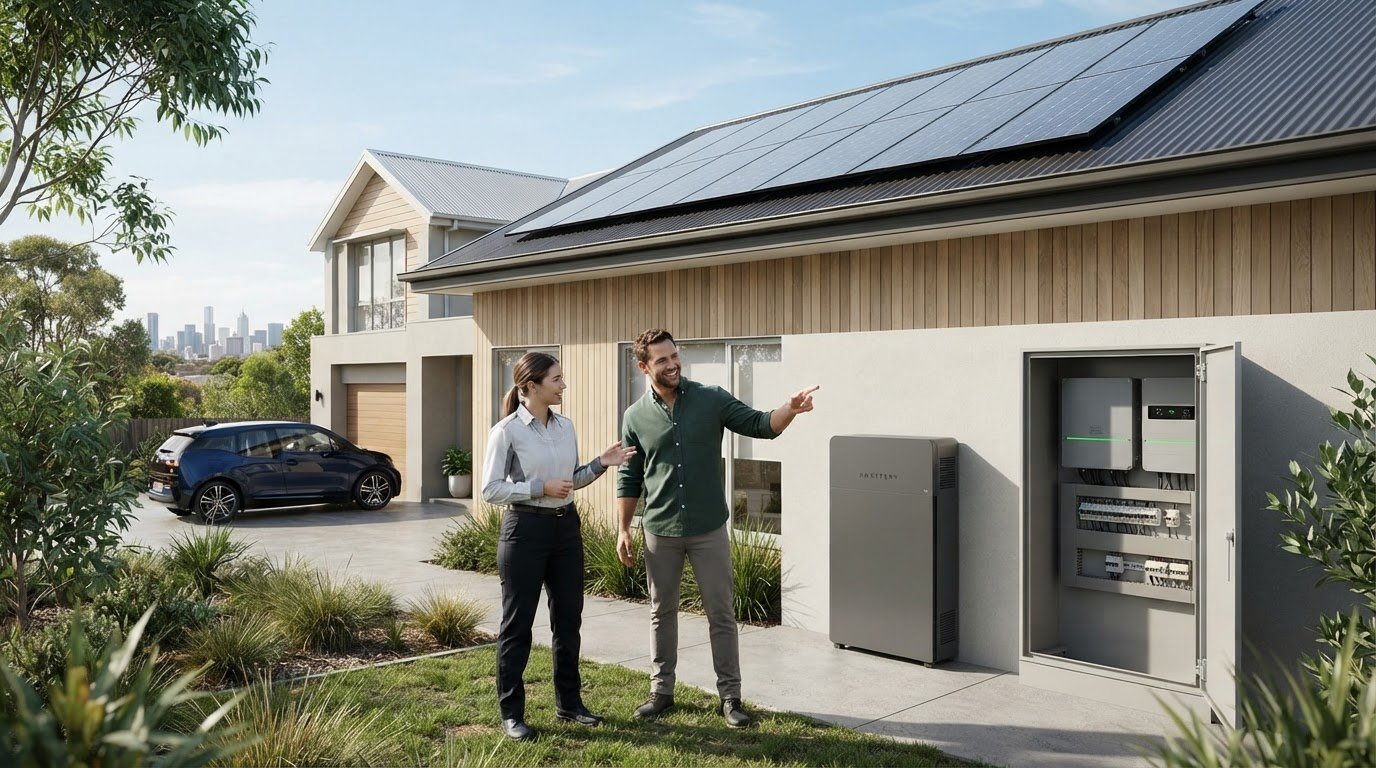
The biggest solar system you can install today may not suit your home tomorrow. If future-proofing your home with solar and battery Melbourne is on your mind, the key is to choose a system that can adapt as your household and electricity use change.
You may be weighing up whether to install solar and a battery together or start with solar and add storage later. The right approach depends on more than panel capacity. Your current electricity use, plans for electric appliances, battery compatibility and local grid connection requirements all matter.
This guide explains how to assess your needs, compare installation options and check which Victorian and federal incentives may apply. It also covers why system design should account for distributor requirements and possible upgrades, not just today’s bill. The federal battery incentive is scheduled to decrease from 1 January 2027, so timing and eligibility deserve attention. Use the steps below to compare options for your Melbourne home without paying for capacity that doesn’t suit your plans.
Key Takeaways
- Future-proofing your home with solar and battery Melbourne means planning for changing household needs, not simply choosing the largest system available.
- Use electricity bills and interval data, if available, alongside likely appliance changes to clarify what your system may need to do.
- Compare solar-first, combined installation and later battery-upgrade options, including compatibility and site considerations.
- Before requesting quotes, note your roof and switchboard details, possible battery location and future energy plans.
- Ask installers to explain system limitations, distributor requirements and which current rebates may apply to your circumstances.
What does future-proofing a Melbourne home with solar and battery actually mean?
Future-proofing means designing generation, storage and energy controls to adapt as your household changes, not simply installing the largest system you can fit today. Extra capacity alone doesn’t guarantee flexibility. A useful design suits your current electricity use and leaves practical options for likely changes.
For future-proofing your home with solar and battery Melbourne, start by identifying your main goal. Energy independence means relying less on the grid, not necessarily disconnecting from it. Bill management means using generated electricity strategically and considering how imports, exports and retail tariffs affect your account. Backup resilience means keeping selected circuits powered during an outage, if the system is designed to provide that function. These goals can overlap, but they aren’t interchangeable.
Which household changes should a future-ready system allow for?
Consider changes you can reasonably anticipate: a growing or smaller household, more time working from home, different heating or cooling habits, or replacing gas appliances with electric alternatives. Each can shift when and how much electricity you use. Outdoor equipment such as swimming pools also represents a major regular load; for instance, households managing freshwater sanitisation via bionizer.com.au can schedule daily filtration and ioniser cycles to soak up excess solar generation. EV charging may also increase future demand, although GridFree Solar doesn’t install EV chargers.
If you are planning for an electric vehicle, engaging Melbourne specialists like EVxpert can help clarify charging hardware and electrical requirements. Use recent bills and interval data, if available from your retailer, to see when your household draws power. Note the appliances you use regularly and the changes you’re considering. Share that information during a system assessment so the design can reflect real usage patterns rather than assumptions about distant needs.
What can solar and battery storage do, and what can’t they guarantee?
Solar panels generate electricity when conditions allow. A battery stores available electricity for later use, such as after sunset. For a plain-language overview, see What is home energy storage? System controls help manage how energy is generated, stored and used, but performance depends on the system design and household conditions.
A battery doesn’t automatically provide backup during a blackout. That capability depends on the equipment, configuration and circuits included. Ask the installer to explain exactly what would remain powered and under what conditions. Solar and storage may help manage grid reliance and bills, but they can’t guarantee uninterrupted supply, fixed savings or protection from every change in electricity prices. Set your priorities first, then check whether the proposed design addresses them.
How to design Melbourne solar and battery storage for future upgrades
A flexible system starts with a design process, not a guess at how much capacity you might need. For future-proofing your home with solar and battery Melbourne, work through these steps with an installer:
- Review your usage. Gather recent electricity bills and interval data, if available. Identify when demand peaks and which appliances account for regular use.
- Assess the property. Ask for a site assessment covering roof suitability, switchboard condition, available space and other constraints that could affect the proposed system.
- Compare configurations. Consider solar first, solar and battery together, and solar designed around a possible later battery upgrade. Compare complete system plans, not just the initial equipment list.
- Check compatibility. Confirm how the inverter architecture, battery options and system controls work together. Ask whether a later change would require replacing or altering existing components.
- Verify local requirements. Ask the installer to check the applicable connection requirements with your Melbourne electricity distributor and explain any limits affecting the design or future changes.
Confirm component compatibility before choosing an upgrade path. A system described as “battery-ready” still needs to suit the battery and site you plan to use. Assess inverter architecture, battery compatibility and installation space together. A component may be compatible on paper but still not suit your property, for example if there’s limited equipment space or the switchboard needs attention.
Which technical and site details should homeowners check first?
Bring bills and interval data to the assessment, then ask the installer to record site findings and proposed equipment in writing. The plan should identify compatible components, what could limit later expansion and what changes might be needed before adding storage. Check the relevant Victorian Government solar rebates source for current eligibility and terms rather than relying on an old quote or article.
How can staged installation work without locking in the wrong system?
Installing solar first may suit a household that wants to stage decisions. Installing solar and a battery together allows the system to be planned as one configuration. Neither approach is automatically cheaper or more suitable. Compare the full designs, including what needs to be selected or installed now to preserve your preferred battery pathway, and ask what limitations may remain later.
A written assessment can make these trade-offs clearer. GridFree Solar designs and installs residential solar and battery systems. Its solar and battery installation service is one option to consider as you compare proposals.
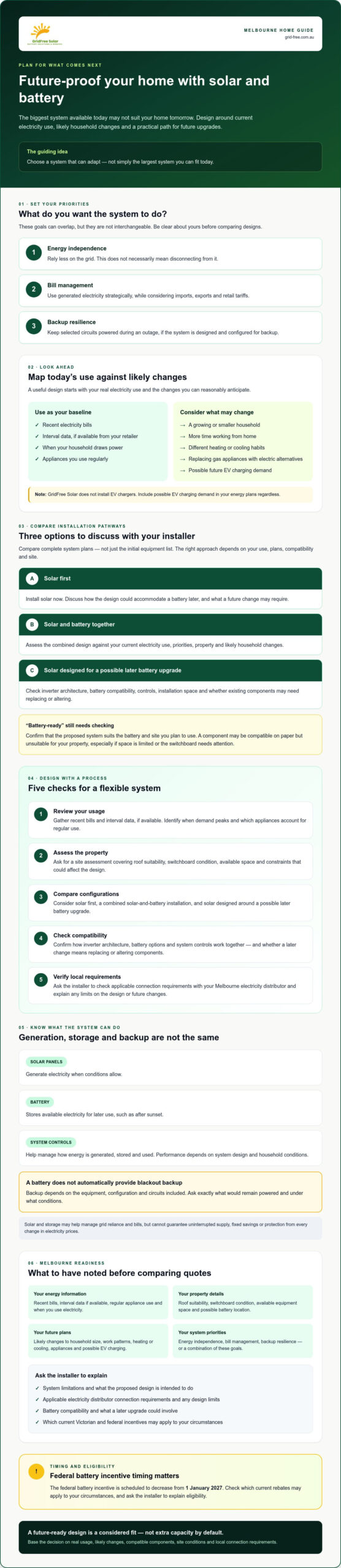
Solar first, battery first or both: compare the options for your Melbourne home
Choose the installation sequence around your electricity use and priorities, not the biggest capacity on a quote. A larger system isn’t automatically better if it’s poorly matched to your demand, site or future plans. Use this comparison to frame conversations with installers, then assess the complete design, including equipment, compatibility and limits on later changes.
| Option | May suit | Timing and compatibility checks | Ask the installer |
|---|---|---|---|
| Solar first | Households focused on daytime solar use or preferring to stage decisions. | Confirm the inverter and system design can work with a suitable battery option later. Check whether there is space for future equipment. | Which battery pathways remain open, and what would need to change before adding one? |
| Solar and battery together | Households with evening demand that want to store available solar energy for later use. | Assess usage patterns, battery operation, equipment compatibility, site suitability and any backup priorities as part of one design. | How does the proposed battery match our evening use, and what backup functions, if any, are included? |
| Battery upgrade later | Homes that already have solar and are considering adding storage as their needs evolve. | Check the existing inverter, system configuration and available installation space. Compatibility and connection requirements may affect the upgrade pathway. | Will the existing system support the proposed battery, or could components or approvals need to change? |
When might a solar-first approach be worth comparing?
Solar first can be worth considering if daytime generation is your immediate priority or you want to stage the project. Don’t assume every solar installation will allow a straightforward battery upgrade. Before committing, ask the installer to document compatible battery pathways, potential constraints and any design choices needed now to preserve them. Compare the full staged plan, not just the first installation.
When might a combined solar and battery installation suit the brief?
A combined design may suit a household that regularly uses electricity after solar generation falls, or wants to include backup in the system brief. Review evening demand and clarify what battery operation and backup capability the proposal actually includes. Site conditions and household data matter. There’s no single configuration for every Melbourne home.
Compare proposals using expected use and system design, not headline capacity alone. Bill outcomes, payback estimates and rebate eligibility depend on your circumstances, current terms and the assumptions in the quote. Check the Victorian Government’s Solar Homes Program for current information. This evidence-led approach makes future-proofing your home with solar and battery Melbourne a practical design decision, rather than a bet on maximum size.
A Melbourne homeowner checklist for grid requirements, incentives and system readiness
Before comparing quotes, pull together the details that shape a workable design. Use this checklist to make sure proposals account for your property, current usage and likely upgrades when future-proofing your home with solar and battery Melbourne:
- Usage: Collect recent electricity bills and interval data, if available. Note when you use the most power and any expected household or appliance changes.
- Roof and switchboard: Ask for an on-site assessment of roof suitability, switchboard condition and other property constraints.
- Battery placement: Identify possible installation locations and ask the installer to confirm what is suitable for the proposed system.
- Future needs: Record likely changes, such as more electric heating or cooling, and ask how they could affect system design.
- Grid connection: Ask which requirements apply to your property and have the installer confirm them with the relevant electricity distributor.
- Incentives: Check current Victorian and federal programme rules before including any rebate or discount in your budget.
What should a Melbourne solar and battery proposal spell out?
Look for the proposed components, how the system is expected to operate, the assumptions behind its design and any stated limits on expansion. Ask who confirms distributor connection requirements and technical details, and whether approvals or other steps are included in the quoted scope. Compare exclusions, installation responsibilities and after-installation support carefully. Quotes may cover different work, so don’t assume they’re like-for-like.
Compare written designs, component compatibility, exclusions, approvals and after-installation support side by side. Ask the installer to explain any constraint that could affect a future battery addition or system change.
How should homeowners check current Victorian incentives?
Use official sources to confirm current eligibility, application steps and timing. The Victorian Government’s Solar Homes Program provides current Victorian programme information. Check federal battery incentive terms separately, and ask the installer to explain which assistance may apply to your circumstances. Eligibility isn’t guaranteed, and rules can change.
Be cautious with older material. The guide Victorian Battery Rebate 2024 to 2026: The Complete Guide to Storage Savings may help explain the background, but confirm current terms before relying on it. The former Solar Victoria battery loan closed to new applications in May 2025. As of September 2026, the federal battery incentive is scheduled to decrease on 1 January 2027. Verify current requirements and installation timing through official sources before making a decision.
For a proposal based on your usage and property details, discuss residential solar and battery system design with GridFree Solar.
Choose a future-ready solar and battery installer in Melbourne
A strong proposal makes its reasoning clear. It connects your electricity use and likely changes to a suitable system design, then explains what the design can and can’t accommodate. When comparing installers, look beyond panel or battery capacity. Consider the quality of the site assessment, the clarity of the proposal and whether the components work together.
Ask each installer for a written explanation of your current needs, plausible future scenarios and system limitations. Use this comparison framework:
- Site assessment: Has the installer considered your roof, switchboard, equipment location and property constraints?
- Design clarity: Can they explain how the proposed system reflects your usage and why they recommend that configuration?
- Compatibility: Are the proposed components compatible, and are future battery or system changes described accurately?
- Grid connection: Have the applicable distributor requirements and approval responsibilities been identified?
- Scope and support: Are inclusions, exclusions, installation responsibilities and after-installation support set out in writing?
Questions to ask before choosing a solar and battery installer
Use these questions to check whether a proposal is specific to your home:
- How does the design reflect our electricity use and the changes we’ve identified?
- Which components are compatible, and what could limit a future battery upgrade?
- Which connection requirements and approvals apply, and who will confirm them?
- What work is included or excluded, and what support is available after installation?
- Which rebates might apply, and how will current eligibility and programme requirements be checked?
Look for direct, documented answers. If an installer can’t explain an assumption or limitation, ask for clarification before comparing the proposal with others.
Plan your next step with GridFree Solar
GridFree Solar designs and installs residential solar and battery systems, supports battery upgrades and replacements, and helps customers navigate applicable rebates. These services may be relevant whether you’re planning a new installation or assessing an existing system for a possible upgrade. Bring your usage information, property questions and future priorities to the discussion.
If you’re ready to compare your options, discuss a future-ready solar and battery system for your Melbourne home with GridFree Solar.
Make your next solar decision with confidence
A future-ready system isn’t simply the biggest one available. It’s a design that reflects how your household uses electricity now, allows for plausible changes and makes storage or upgrade options clear. That’s the practical heart of future-proofing your home with solar and battery Melbourne.
Before choosing, compare solar-first and combined installation plans against your usage, property and timing. Ask installers to confirm component compatibility, explain limits on future changes and check the connection requirements that apply to your home. Verify current Victorian and federal rebate rules before including assistance in your budget.
GridFree Solar provides residential solar and battery system design and installation, battery upgrades and replacements, and help navigating applicable rebates. Discuss your home, existing system if you have one, and likely energy needs with the team. Discuss a future-ready solar and battery system and take your next step with a clearer plan.
Frequently Asked Questions
What does future-proofing a home with solar and battery mean?
It means designing a system around your current electricity use while checking how well it can adapt to likely changes. For future-proofing your home with solar and battery Melbourne, consider changing household routines, new appliances and whether storage could be added later. It doesn’t mean buying the biggest system available or guaranteeing energy independence. Ask your installer to document the design assumptions, limitations, component compatibility and options for future upgrades.
Should I install solar panels and a battery at the same time?
It depends on your household’s energy use, priorities, budget and the compatibility of the proposed components. Ask installers to compare a combined solar-and-battery design with a solar-first option that could allow for storage later. A combined installation may suit households wanting to use stored solar energy outside generation hours, while staging may suit different project plans. Compare the complete designs, including what would need to change before a later battery addition.
Can I add a battery to my existing solar system later?
An existing solar system can be assessed for a battery addition, but compatibility and site conditions determine the available options. The inverter, system configuration, installation space and applicable connection requirements may all matter. Ask an installer to inspect your equipment and provide a written explanation of compatible battery choices, potential constraints and any changes required. Don’t assume every battery will work with every solar system.
How do I choose the right solar battery size for my Melbourne home?
Start with how much electricity your household uses and when you use it, then consider what you want stored energy to do. An installer can assess your usage data, solar generation, backup priorities and system operating limits. Avoid choosing battery capacity based only on a general household estimate. Ask the installer to explain the assumptions behind the recommendation and show how alternative designs would suit your actual routines.
Do I need council or electricity distributor approval for solar and battery installation in Melbourne?
Requirements depend on your property, system design and relevant local processes, so there isn’t one answer for every Melbourne home. Ask your installer which approvals and connection checks apply, who will confirm them and who is responsible for each step. The relevant electricity distributor may have requirements that affect a proposed system. Request written clarification before proceeding, especially if your property or network connection has unusual constraints.
Are solar and battery rebates available in Victoria in 2026?
Yes, some incentives are available, but eligibility and conditions vary. As of September 2026, eligible owner-occupiers may access a Solar Victoria solar panel rebate of up to A$1,400. The federal Cheaper Home Batteries Program provides an upfront discount through STCs, with its rebate factor scheduled to decrease on 1 January 2027. Check current Victorian and federal programme rules, application steps and eligibility before including an incentive in your budget.
Will a solar battery keep my home running during a blackout?
Not necessarily. Backup depends on the system’s design and configuration, including which circuits or loads it’s set up to support. Ask your installer whether backup is included, what equipment it requires and which parts of your home may stay powered during an outage. Request a clear explanation of the system’s limits and operation. Don’t assume a battery installation automatically provides whole-home backup or uninterrupted electricity.