
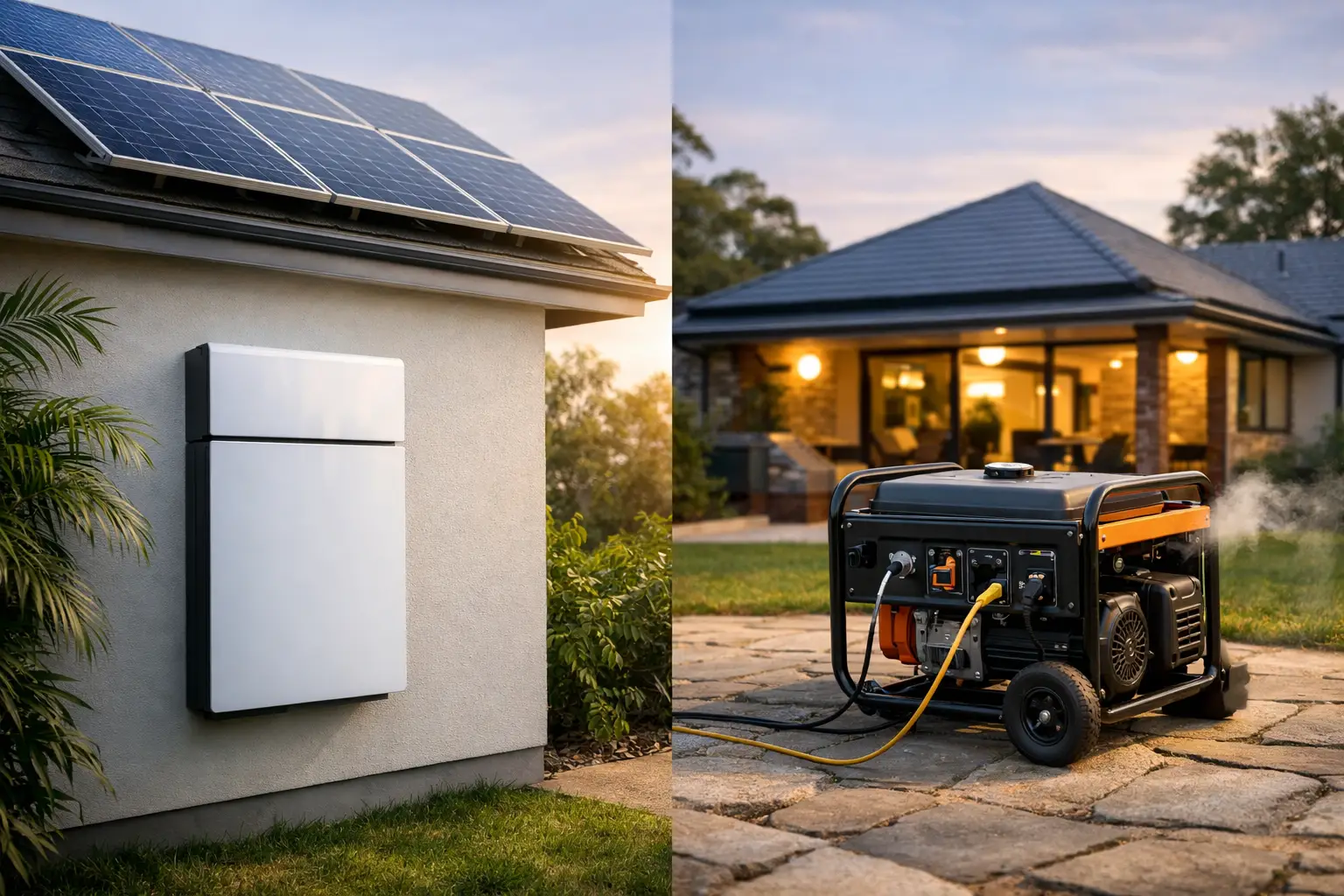
A blackout can turn a normal evening into a scramble: the fridge stops, the internet drops out and a home office or small business loses its rhythm. The solar battery vs generator decision is really about how you want to handle that moment – and how much control you want over your energy costs every other day of the year.
For many Australian properties, a generator remains a familiar emergency-backup option. But a battery connected to solar can do more than keep essential circuits running during an outage. It can store lower-cost solar energy, reduce evening grid purchases and help you use more of the power produced on your own roof.
Solar Battery vs Generator: The Core Difference
A generator makes electricity when it is running, usually by burning petrol, diesel or LPG. It is designed primarily for occasional backup power and can be highly effective when outages are infrequent but lengthy, particularly where fuel is readily available.
A solar battery stores electricity for later use. It is typically charged from your solar system, although some systems can also charge from the grid when tariffs are favourable. During the day, surplus solar that would otherwise be exported can be stored. In the evening, or during a blackout when the system has backup capability, that stored energy can supply the home or business.
The practical difference is simple. A generator is an emergency appliance that needs fuel, operation and maintenance at the time of an outage. A battery is part of an integrated energy system that can work quietly every day to reduce grid reliance.
There is no universal winner. The right answer depends on your electricity usage, existing solar system, outage risk, budget, site layout and whether lower ongoing power bills are a priority.
Upfront Cost Versus Ongoing Value
A portable generator is usually less expensive to buy than a solar battery system. This can make it appealing for a holiday home, a shed, a property with rare outages or a business that only needs to protect a single critical load for short periods.
However, the purchase price is only part of the calculation. Generators need fuel, regular servicing, oil changes and periodic testing. Fuel also needs to be stored safely, and availability can become an issue during a widespread storm or emergency. A generator that has not been tested may not be reliable when it is most needed.
A battery has a higher upfront investment, particularly when backup circuits, a compatible inverter and switchboard work are required. Yet it can provide value on ordinary days, not just in an emergency. By storing excess daytime solar for use after sunset, a well-sized battery can reduce the electricity you buy at peak evening rates.
For eligible Australian households and businesses, government battery incentives or state-based programs may reduce the initial cost. Availability, eligibility and rebate values change, so the system design should account for the current rules rather than relying on a headline figure. The administrative side matters too: correct documentation, compliant installation and approved equipment can affect whether an incentive is available.
Backup Power: What Will Actually Keep Running?
Backup power is where assumptions can cause disappointment. Not every solar battery provides whole-home backup, and not every solar system continues operating when the grid goes down.
Standard grid-connected solar panels usually shut down during an outage for safety. This protects electricians and network crews working on the lines. To keep using solar during a blackout, you generally need a battery system with blackout backup capability and the right inverter configuration.
Most battery systems are designed around essential loads. These commonly include lighting, refrigeration, internet, selected power points and possibly a home office. Depending on the battery size and backup design, you may also run items such as a garage door, television or small appliances. High-demand equipment – including ducted air conditioning, electric ovens, large pool pumps and some EV chargers – can drain a battery quickly or exceed its backup output.
A generator can also be configured to support selected circuits or, with professional electrical design, larger loads. Its advantage is duration: as long as it has fuel and is operated safely, it can keep generating. That can suit remote properties or sites where outages can last days.
A battery’s backup duration depends on usable storage capacity, household demand, weather and whether the solar panels can recharge it during daylight. On a sunny day, solar generation can extend battery-backed power significantly. During several cloudy days, careful load management becomes more important.
Noise, Safety and Everyday Practicality
Generators are noisy by nature. Even quiet inverter generators create sound, exhaust and heat, which can be difficult in close suburban blocks. They must be operated outdoors in a well-ventilated area, away from doors, windows and air intakes. Carbon monoxide risk makes indoor or garage operation unsafe.
They also need hands-on attention. Someone has to start the generator, manage fuel and monitor the load. An automatic standby generator reduces that effort, but adds installation cost and still relies on fuel supply and servicing.
A battery operates silently and automatically. When paired with monitoring, you can see solar production, battery charge and household consumption from a mobile app. This visibility helps you spot when energy use is high and make more informed decisions about running appliances.
For households with young children, neighbours nearby, medical equipment, refrigerated medication or work-from-home requirements, the quiet and automatic nature of battery backup can be a major advantage. For a small business, it can also help avoid disruption to EFTPOS, communications, lighting and security systems during a short outage.
Environmental Impact and Energy Independence
The environmental difference is straightforward. A fuel generator produces emissions every time it runs. It may be justified as a backup tool, but it does not reduce the amount of grid electricity your property needs throughout the year.
A solar battery allows you to capture more of your own renewable generation. Instead of exporting surplus solar for a modest feed-in rate and buying power back later at a higher retail rate, you can use stored energy when it is more valuable to you.
This does not mean a battery makes a property completely independent from the grid. Winter production, overnight use, large appliances and extended poor weather still influence how much grid power is needed. But it can give you greater control, especially when the system is designed around your real consumption patterns rather than a one-size-fits-all battery size.
Some battery owners can also participate in a virtual power plant. In the right circumstances, this can provide additional financial benefits for making stored capacity available to support the grid. It is worth reviewing the program terms carefully, including export arrangements, battery reserve settings and any impact on how much energy remains available for your own backup needs.
When a Generator Makes More Sense
A generator may be the better choice if your main goal is low-cost, occasional emergency power. It can be practical for a property without solar, a site with very limited budget, or a rural location where long outages are common and fuel can be stored and managed safely.
It may also suit operations with a high and continuous power demand that would require an unusually large battery system. In these cases, a generator can provide a useful contingency layer even where solar and batteries are installed.
The trade-off is that it does little to lower normal electricity bills. It is insurance, not an everyday energy strategy.
When a Solar Battery Is the Better Investment
A battery is often the stronger long-term option when you already have solar panels that export significant energy during the day, but buy substantial power in the late afternoon and evening. It is also well suited to households that value automatic backup, quiet operation and better visibility over energy use.
For a small commercial site, batteries can help shift solar energy into trading hours that matter most, reduce exposure to peak electricity rates and protect selected business-critical circuits. The financial case should be based on interval data or electricity bills, expected solar generation, tariff structure and realistic usage – not just the battery’s advertised capacity.
GridFree Solar approaches this as a complete system decision. The battery, inverter, solar array, switchboard, backup loads and available rebates need to work together. A quality installation should include clear advice on what will be backed up, how long it may run and how the system will perform after sunset as well as during an outage.
Choose for the Outage You Expect and the Bills You Pay
The best decision is rarely based on blackout protection alone. A generator can be a sensible safety net, particularly for long and infrequent outages. A solar battery costs more initially, but can provide daily savings, automatic backup and a practical path towards using more of the energy you generate.
Before choosing either option, identify the appliances you truly need during an outage, review when your property uses electricity and ask for a system design that makes the limits as clear as the benefits. That clarity is what turns backup power from a purchase into dependable energy control.