
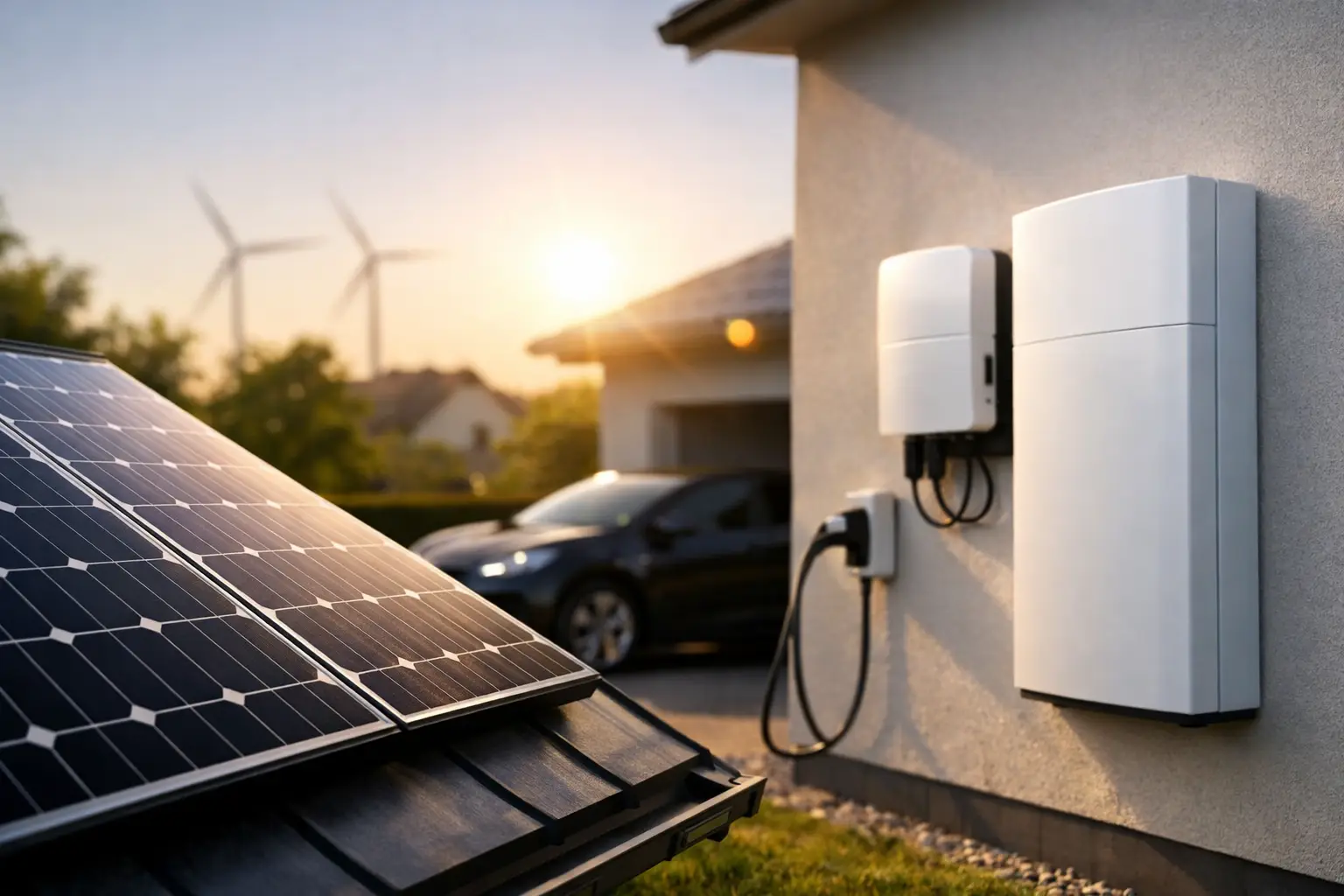
A solar and battery package is not simply panels plus a battery on the wall. It is a complete energy system designed around when your property uses power, how much solar it can produce, what you currently pay for electricity and how much independence you want from the grid. Get those decisions right at the beginning and the system can reduce bills, store more of your own energy and provide useful backup when it matters.
For Australian households and small businesses, the biggest missed opportunity is often exporting low-value solar during the middle of the day, then buying electricity back at higher evening rates. A properly designed package changes that pattern. Your solar powers daytime loads first, charges the battery with surplus generation and allows stored energy to cover more of your evening use.
What should a solar and battery package include?
A complete package starts with a site assessment, not a standard price card. Roof orientation, shading, switchboard condition, available space, household consumption and future plans all affect the right design. An electric vehicle, pool pump, induction cooktop, air conditioning upgrade or growing business can change the required system size considerably.
The solar component should include appropriately sized panels, a compatible inverter, mounting equipment and electrical protection. Panel capacity is measured in kilowatts, while actual production varies with roof direction, weather, shading and season. A north-facing roof can perform well, but east and west panels may be equally valuable when they better match morning and afternoon demand.
The battery component should state both its usable storage capacity and its power output. Capacity, measured in kilowatt-hours, tells you how much energy can be stored. Power, measured in kilowatts, tells you how much the battery can supply at one time. A large-capacity battery with limited output may not run several high-demand appliances together, while a smaller battery with stronger output can better support critical loads during an outage.
A quality package also includes the installation work that makes the system safe and useful: switchboard upgrades where required, isolators, metering arrangements, monitoring setup, commissioning and compliance documentation. These details should never be treated as optional extras discovered after installation day.
Size the system around your energy habits
The right battery is not always the biggest battery available. The best value usually comes from matching storage to the surplus solar your property produces and the electricity you use after sunset.
Start with your interval data or electricity bills. Look beyond the total quarterly figure and consider when energy is consumed. A household where everyone is out during the day may export significant solar and draw heavily from the grid between 5 pm and 10 pm. That profile can suit battery storage well. A home that already uses most of its solar during the day may benefit first from additional panels, load shifting or a smaller battery.
For small commercial sites, the pattern may be different. Businesses with strong daytime demand can often use solar directly, reducing the need for large storage. Batteries may still be worthwhile where evening operations, demand management, backup requirements or tariff structures support the investment.
It also pays to plan ahead. If you expect to buy an EV within a few years, electrify hot water or replace gas appliances, design for that extra load now. This does not always mean installing the maximum system immediately. It means choosing equipment and a layout that can be expanded without creating unnecessary cost or compatibility problems later.
Battery capacity is only one part of the decision
A battery’s usable capacity matters more than its headline capacity. Some systems reserve part of their storage to protect battery health or maintain backup power. Warranty terms also deserve close attention, including the warranted energy throughput, years of coverage and expected retained capacity over time.
Ask how the system will operate through winter, when solar production is lower and household demand may be higher. A battery cannot create energy. If the roof does not generate enough surplus power to charge it regularly, extra capacity may sit underused. In some cases, more panels are the more productive investment. In others, a balanced increase in solar and storage delivers the stronger result.
Backup power needs a clear plan
Many people assume any battery will keep the entire house running during a blackout. That is not automatically the case. Backup capability depends on the battery model, inverter configuration, switchboard design and which circuits are connected.
A critical-load backup setup may support essentials such as lights, selected power points, the fridge, internet, garage door and certain medical equipment. Whole-home backup can cover more circuits, but it requires careful assessment of large loads such as ducted air conditioning, ovens, electric hot water and pool equipment. Running every appliance as normal during an outage can demand more battery power than the system is designed to provide.
The right question is not simply, “Does it have backup?” It is, “What will remain powered, for how long and under what conditions?” A clear answer should be provided before you commit. If backup is a priority, it needs to be included in the design rather than added as an afterthought.
Savings depend on tariffs, exports and control
Solar savings are driven by self-consumption: using energy generated on your own roof instead of purchasing it from the grid. Batteries can increase self-consumption by shifting solar from the middle of the day into the evening.
The financial outcome still depends on your electricity tariff, feed-in rate, consumption pattern and system cost. If exported solar earns only a modest credit while imported evening electricity costs much more, storing surplus can make sense. Time-of-use tariffs can make battery scheduling even more valuable, allowing the system to prioritise solar charging and reduce purchases during expensive peak periods.
Smart monitoring turns this from a guess into an ongoing decision. A good app should show solar generation, battery charge, grid imports, exports and household usage in a clear format. It helps identify waste, test whether scheduled appliances are running at the right time and confirm that the system is performing as expected.
Some eligible systems may also participate in a virtual power plant. VPP participation can provide incentives or other benefits, but it comes with terms around how and when stored energy may be used. It is worth comparing the expected return with the level of control you want to retain over your battery.
Rebates and compliance should not be left to you
Australian solar and battery incentives can reduce upfront cost, but the rules vary by state, territory, equipment type and eligibility. Solar incentives commonly involve Small-scale Technology Certificates, while battery programs and other support arrangements may be available in particular locations or at particular times.
The paperwork can be confusing because eligibility often depends on approved products, accredited installation, property details and application timing. A reputable provider should explain what support may apply, what has been included in the quoted price and which requirements you need to meet. No installer should promise a rebate before confirming eligibility.
Compliance is just as important as savings. Your installation should be completed by appropriately qualified and accredited professionals, with the necessary electrical work, network application and documentation handled properly. This protects your warranty, safety and ability to connect the system as designed.
Compare packages on value, not just the advertised price
Two quotes with the same panel count and battery capacity can deliver very different outcomes. One may include quality hardware, backup circuits, monitoring, switchboard work, rebate administration and a clear workmanship warranty. Another may exclude key electrical upgrades or use a design that does not suit your consumption profile.
Before choosing, confirm the panel and battery brands, usable battery capacity, continuous power output, backup inclusions, warranty conditions, monitoring access and all installation allowances. You should also understand the estimated generation and savings assumptions. A forecast is useful, but it should be grounded in your roof, tariff and actual energy use rather than a best-case sales figure.
GridFree Solar approaches system design as a long-term energy upgrade, combining solar generation, battery storage, certified installation, rebate support and monitoring so customers can make a decision with fewer unknowns.
A package that keeps working after installation
Installation day is the start of the system’s working life, not the end of the service. Once the system is live, check the monitoring app during the first few weeks to see how solar production, battery charging and household demand interact. You may find easy improvements, such as running the dishwasher, washing machine or pool pump while solar generation is high.
Over time, review your energy plan, particularly if your retailer changes tariffs or your household adds major electrical loads. A solar and battery package should give you flexibility: more control over when you use energy, less exposure to rising grid costs and a practical path towards greater resilience. The most useful next step is a tailored assessment that starts with your roof and your bills, then designs the system around the way you actually live or work.