
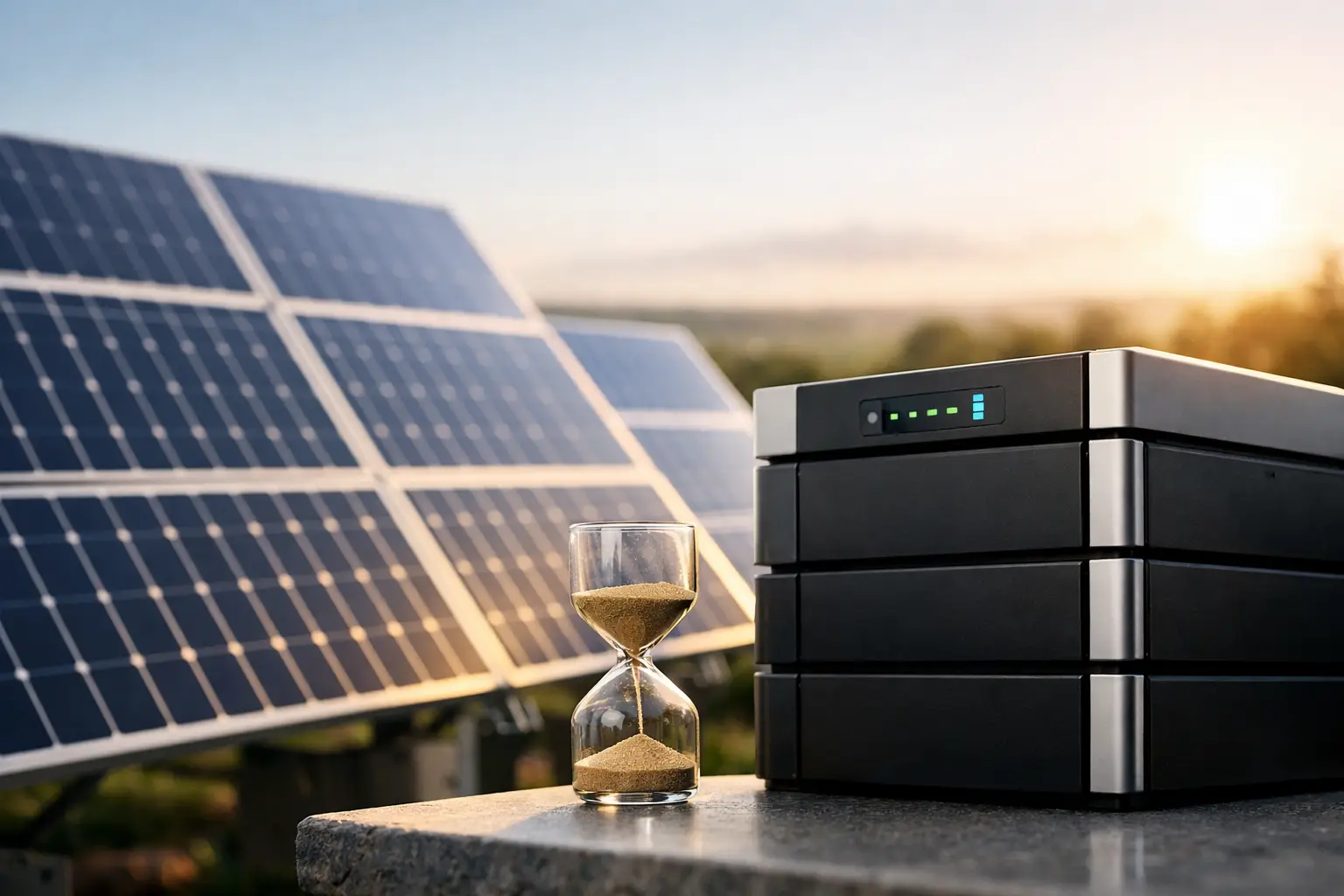
If you are weighing up battery storage, one question matters more than most: how long do solar batteries last? It is a fair question, because a battery is not just another add-on. It is the part of your solar system that stores value, keeps more of your own power on site, and can give you backup support when the grid lets you down.
The short answer is that most modern solar batteries last around 10 to 15 years. But that number only tells part of the story. Real battery life depends on the chemistry, how often it cycles, the temperature it operates in, how well the system is designed, and whether the battery is being pushed hard every day or used more strategically.
How long do solar batteries last in real homes?
For most Australian homes, lithium-ion solar batteries are now the standard, and for good reason. They typically deliver the best mix of lifespan, usable storage, efficiency and low maintenance. In a properly designed system, you can reasonably expect a quality lithium battery to perform well for at least a decade, and often longer.
Older lead-acid batteries usually have a shorter lifespan, often closer to 3 to 7 years depending on the setup and maintenance. They can still suit some off-grid applications, but for grid-connected homes and small businesses focused on long-term savings, lithium is usually the better investment.
What matters just as much as the number of years is how the battery performs over time. Batteries do not usually stop working overnight. Instead, they gradually lose storage capacity. That means a battery that once stored 10 kWh may only hold 8 or 9 kWh after years of regular use. It still works, but it stores less energy than it did when new.
Battery lifespan is measured in more than years
When people ask how long do solar batteries last, they often mean calendar life. Manufacturers, however, also talk about cycle life. A cycle is one full charge and discharge. If a battery is charged during the day from solar and discharged at night, that usually counts as one cycle.
Many quality home batteries are rated for several thousand cycles. Depending on your energy habits, that can translate to 10 years or more of daily use. A battery with 6,000 cycles, for example, could last well beyond 10 years in a typical residential setup.
That is why the best way to judge battery value is not just the sticker price. You need to look at usable capacity, cycle life, warranty terms, and how the battery fits your property’s energy profile. A cheaper battery that wears out sooner can cost more over time than a premium system that keeps performing year after year.
What affects how long a solar battery lasts?
The biggest factor is battery chemistry. Lithium iron phosphate and other modern lithium chemistries generally outlast lead-acid options and hold their performance better over time. They also cope better with regular cycling, which is exactly what a home battery is meant to do.
Depth of discharge also matters. This refers to how much of the battery’s stored energy is used before it recharges. Batteries that are regularly drained right down tend to wear faster than those operating within a healthier range. Good battery management systems help control this automatically, which is one reason product quality and installation quality matter.
Temperature plays a major role as well. Australian conditions can be harsh, especially in garages, external walls or plant areas exposed to heat. Batteries generally last longer when they are installed in suitable locations with proper ventilation and within the manufacturer’s recommended operating range.
System design is another big one. An oversized battery that rarely fills properly, or an undersized battery that gets hammered every evening, may not deliver the lifespan or savings the owner expected. The right battery size should match your solar generation, evening consumption, tariff structure and backup goals.
Warranties tell you a lot, but not everything
Most quality solar batteries come with a product warranty of around 10 years. That gives many buyers confidence, and rightly so, but it is worth reading the fine print.
Battery warranties usually cover one or more of these points: time period, cycle count, and retained capacity. For example, a manufacturer may warrant that after 10 years the battery will still retain 70 per cent of its original capacity, provided it has operated within the stated conditions.
That means warranty length is helpful, but it is not the whole story. Two batteries may both offer 10-year warranties, yet one may allow more cycles, deliver a better retained capacity guarantee, or include stronger support from the installer and manufacturer.
A battery is only as dependable as the support behind it. If there is an issue five or seven years down the track, you want clear warranty handling, local technical support and an installer who will still be there to assist.
How to make your solar battery last longer
Battery lifespan is not just luck. A lot of it comes down to choosing the right product and having it installed correctly from the start.
A battery paired with the right solar array, inverter and monitoring platform will usually perform better than one added as an afterthought. Smart monitoring is especially useful because it shows charging patterns, discharge behaviour and system performance in real time. That makes it easier to spot issues early and ensure the battery is being used efficiently.
Usage habits matter too. If your system is set up to preserve some stored energy for outages instead of emptying the battery every night, that may reduce wear depending on how it is configured. Likewise, if your battery is participating in a virtual power plant, you need to understand how often it will cycle and what that means for long-term performance versus short-term financial return.
Routine servicing is usually minimal with modern lithium batteries, but periodic checks still help. Firmware updates, inverter settings and performance reviews can all contribute to better battery health over time.
Is a battery still worth it if it degrades?
Yes, in many cases it is. Every battery degrades gradually, but that does not mean it stops delivering value. If your battery helps you use more of your own solar, avoid expensive peak tariffs, reduce grid reliance and provide backup support, it can still make strong financial sense even as capacity slowly declines.
The bigger question is whether the battery was selected for the right reason in the first place. If you are buying battery storage purely for payback, the numbers need to be carefully assessed. If you also value blackout protection, energy independence and better control over rising electricity costs, the case often becomes stronger.
For small businesses, battery lifespan can be especially important because the load profile may be more demanding. A café, office or workshop using stored energy in the evening or during high-tariff periods needs a battery system sized around actual operating hours and usage patterns, not just a generic estimate.
Choosing a battery with long-term value
If you are comparing systems, do not focus only on the advertised lifespan. Ask what chemistry the battery uses, how much capacity is usable, how many cycles it is rated for, what the warranty guarantees at year 10, and how the system will be monitored after installation.
You should also ask how the battery integrates with your solar panels, whether it can support backup circuits, and whether it is eligible for any available rebates or incentive programs. These details affect both value and performance.
This is where working with an experienced installer makes a real difference. A properly designed battery system should do more than just store power. It should fit your property, reduce wasted solar exports, support your household or business during peak demand, and keep performing reliably over the long term. That is why companies such as GridFree Solar focus on the whole energy setup, not just the battery unit on its own.
The practical answer
So, how long do solar batteries last? In most cases, expect around 10 to 15 years from a quality lithium battery, with performance gradually reducing over time rather than dropping off suddenly. Some systems will do better, some will do less, and the difference usually comes down to product quality, installation standards, environmental conditions and how the battery is used every day.
If you want a battery to last, the best decision is rarely the cheapest one. It is the system that has been properly sized, professionally installed, backed by a clear warranty and matched to the way you actually use energy. Get that part right, and your battery can keep delivering savings and control for many years after the panels are on the roof.