
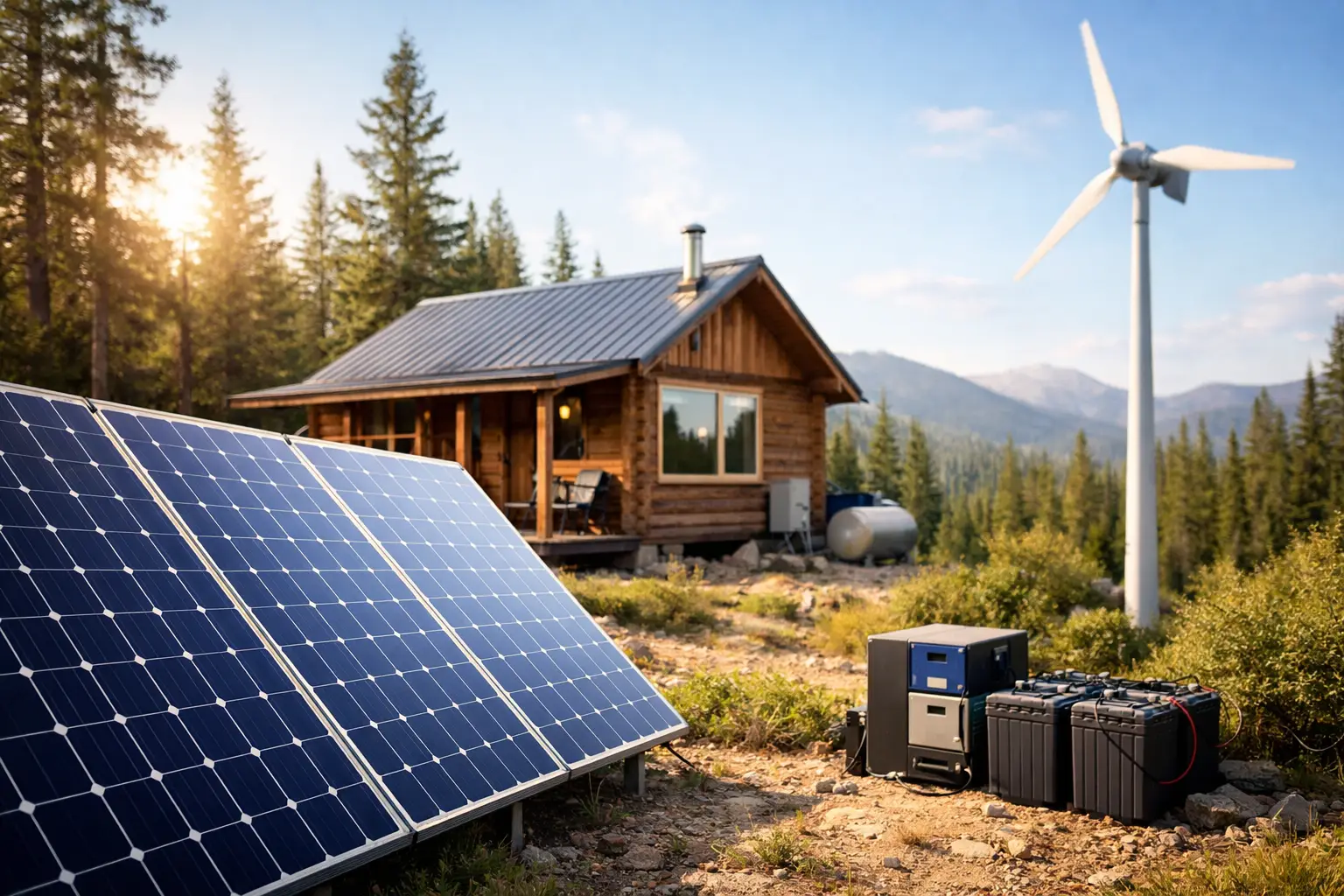
A cabin with no reliable power connection sounds peaceful until the lights dim, the fridge warms up and the battery runs flat halfway through the weekend. That is why off grid solar systems for cabins need to be designed around real use, not guesswork. A system that looks fine on paper can still disappoint if the battery is too small, the inverter is underpowered or winter solar production has been ignored.
For most cabin owners, the goal is simple. You want dependable power for lighting, refrigeration, charging devices, maybe a water pump, and in some cases air conditioning or cooking appliances, without relying on a noisy generator every second day. The right system can absolutely do that. The wrong one turns energy independence into a maintenance headache.
What off grid solar systems for cabins actually need to do
An off-grid setup is not just solar panels on a roof. It is a complete energy system made up of panels, battery storage, an inverter, charge control, switchgear, mounting, monitoring and backup planning. Each part affects how well the cabin performs during cloudy weather, peak demand and seasonal changes.
This is where many people get caught out. They focus on how many panels they can fit, when the real question is how much energy they use and when they use it. A cabin used one weekend a month has a very different load profile from one used as a full-time residence. The first may be able to run comfortably on a modest battery-led system. The second may need a much larger battery bank, more solar generation and a generator backup strategy for winter.
Reliability matters more than headline panel capacity. If your cabin loses power overnight because the battery cannot support the evening load, it does not matter how well the system performs at midday.
Start with your loads, not the equipment
The most practical way to size off grid solar systems for cabins is to work backwards from appliance use. Lighting, a fridge, a pressure pump, a television, laptop charging and a few kitchen appliances may be straightforward. Electric hot water, reverse-cycle air conditioning, induction cooking and large workshop tools change the equation quickly.
A common mistake is underestimating surge loads. Fridges, pumps and power tools often need a sharp burst of power when they start. That means your inverter must be selected for both continuous demand and startup demand. If it is too small, you may trip the system even when daily energy use seems low.
There is also a difference between reducing usage and restricting lifestyle. Good system design helps you do the first without forcing the second. Efficient appliances, sensible load scheduling and battery capacity matched to your habits usually deliver a better result than trying to ration every watt.
Battery storage is the heart of the system
For cabins, battery performance is often more important than panel count. Solar generation only happens during daylight. Your battery carries the site through the evening, overnight and poor weather. If energy independence is the objective, battery sizing deserves serious attention.
Lithium batteries are now the preferred choice for most quality off-grid systems because they offer better usable capacity, longer cycle life and smarter monitoring than older battery types. They also handle regular cycling more effectively, which matters when a cabin depends on stored energy every day.
That said, bigger is not always better. Oversizing batteries without enough solar generation can create another problem – the system may struggle to fully recharge. Undersizing them leads to frequent deep discharge and reduced comfort. The balance between panel output and battery storage is what determines system resilience.
A well-designed battery-led setup should also include monitoring. Being able to see generation, battery state of charge and load behaviour gives owners far more control. It also makes fault finding and maintenance much simpler.
Solar production changes with season and location
Cabin owners often think about average daily sunshine, but averages can be misleading. Winter production is usually the real test. A system that works beautifully in summer may fall short during shorter days, lower sun angles and extended cloud cover.
Location matters across Australia. A cabin in regional Victoria faces different production patterns from one in inland Queensland. Tree cover, roof angle, shading and orientation all influence performance too. Even partial shading can drag down output more than expected if panel layout is not planned properly.
This is why proper design should account for your worst practical periods, not just your best ones. If the cabin is mostly used in cooler months, winter sizing becomes even more important. If it is used seasonally in summer, the system may be optimised differently.
When a generator still makes sense
A lot of people want a pure solar-and-battery solution with no backup at all. Sometimes that is achievable. Sometimes it is technically possible but financially inefficient. There is a trade-off.
If you want to cover every rare stretch of bad weather without any generator support, the battery bank and solar array may need to be significantly larger. That increases upfront cost and may not offer the best return if those conditions only happen a few times each year. In many cases, a quality off-grid system with generator backup provides the best balance of reliability and cost control.
That does not mean the generator becomes the main power source. It means you have a safety net for exceptional demand or poor weather. The right setup keeps generator use low while protecting battery health and maintaining power supply when conditions are not ideal.
Common mistakes with cabin solar systems
Most underperforming systems fail for predictable reasons. They are undersized, poorly matched to the appliances on site, or built without enough attention to battery behaviour. Sometimes the issue is cheaper hardware with limited support and weak monitoring. Sometimes it is simple overconfidence – assuming a cabin uses very little power because it is small.
Cabins often include hidden loads that add up quickly. Pumps cycle more often than expected. Old fridges run inefficiently. Mobile chargers, routers, security systems and standby loads quietly consume power around the clock. Once a toaster, microwave or kettle enters the picture, short bursts of high demand can become just as important as daily energy totals.
Installation quality also matters. Off-grid systems are not a place to cut corners on protection, compliance or battery integration. Good design should make the system safe, serviceable and easy to understand, not just technically functional.
What a properly designed system feels like in practice
When an off-grid cabin system is working well, you stop thinking about power all the time. Lights come on, the fridge stays cold, your battery status makes sense and bad weather does not immediately trigger anxiety. That level of confidence usually comes from planning, not from buying the biggest panels available.
For many property owners, the best outcome is not maximum self-denial or maximum hardware. It is a system that matches the way the cabin is actually used, with enough storage to carry overnight loads, enough generation to recover properly, and enough transparency to know how it is performing.
That is also where experienced installation support matters. A tailored design, quality battery integration, compliance management and clear advice around usage patterns can save far more than trying to piece together a system from generic online estimates. If the site is remote, the value of getting it right the first time only increases.
Is an off-grid cabin system worth it?
If the alternative is expensive grid connection works, frequent generator fuel costs or ongoing inconvenience, often yes. Off-grid solar can be a practical long-term investment for cabins, especially where reliable daytime generation and battery storage can cover the majority of use. The value is not just in lower running costs. It is also in control, comfort and knowing your power supply is designed for your property rather than borrowed from a temporary workaround.
Still, every cabin is different. Usage patterns, site conditions, appliance choices and budget all shape what makes sense. Some owners need a lean weekend system. Others need a fully independent setup that behaves more like a conventional home. The best result comes from being honest about how you live, what you expect the system to handle and how much backup margin you want.
If you are planning a cabin power upgrade, treat the battery, inverter and load profile with the same seriousness as the panels. That is usually the difference between a system that merely works and one you can rely on every time you turn the key in the door.